















Search History
Clear History
{{item.search_key}}
Hot Searches
Change
{{item.name}}
{{item.english_name}}
Subscribe eNews
Once A Week Once Every Two Weeks
{{sum}}
Login Register

Applications

Franplast introduces biocompatible TPEs for medical sector

MAS launches flagship platform for food-grade PET recycling

3D-printed sculptural coffee table with bio-based transparent polyamide

Products

EuCIA launches Carbon Fiber Europe alliance

Gurit inaugurates Advanced Composites R&D Center in Tianjin, China

COLINES cast film line installed at LyondellBasell’s Cincinnati Technology Center

Activities

  • Fakuma to celebrate 30th anniversary edition in October 2026

  • Italy pavilion at Plast Eurasia proves its rising presence in Turkish market

  • CHINAPLAS 2026: Grand stage for new material, smart manufacturing and green solutions

Pictorial

Industry Topic

ASEAN: The Next Manufacturing Hub

Innovative and Sustainable Packaging

Green Plastics: News & Insights

CHINAPLAS

CHINAPLAS 2025 Focus

CHINAPLAS 2024 Focus

CHINAPLAS 2023 Focus

Exhibition Topic

K 2025 FOCUS

CHINA INSIGHT

Fakuma 2024 Highlights

News Videos

Magnetic mold changing system developed in-house by Shanghai Qiaotian

Xiamen LFT Composite's plastic solutions as alternative to steel

Ausell highlights car-to-car closed-loop recycling technology

Conference Videos

【Mandarin session:Webinar playback】HUSKY: Molding the Future of Drug Delivery: Solutions for the Evolving Autoinjector

[Live Replay] Star Plastics: A Global Solution Provider of Sustainable Material for Your Circular Economy.

[Live Replay] Wanhua Chemical: Green Horizons, Health Guardians - Advancing ESG and Low-Carbon Transition, Innovating Medical Material Solutions

Corporate/Product Videos

ARBURG new electric machine – ALLROUNDER TREND will start mass production in Pinghu, Zhejiang in 2026.

Jiangsu Liside New Material Co., Ltd.

Dow 45 years in China

Exhibition

Playback TECHHUB 2025@CPRJ Live Streaming for CHINAPLAS

Playback TECHHUB@CPRJ Live Streaming for CHINAPLAS

Events

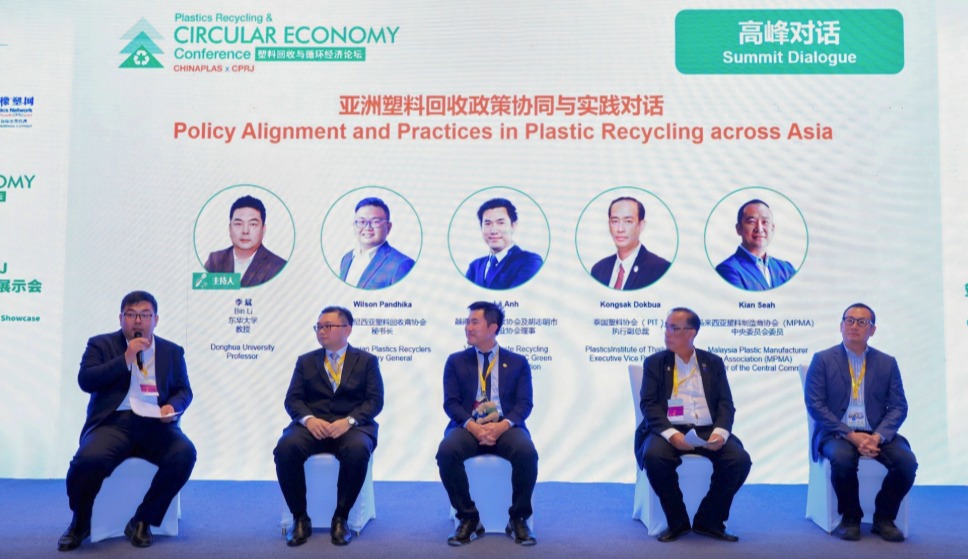
Playback On April 14, the "6th Edition CHINAPLAS x CPRJ Plastics Recycling and Circular Economy Conference and Showcase" at the Crowne Plaza Shenzhen Nanshan is currently being livestreamed!

Playback 5th Edition CHINAPLAS x CPRJ Plastics Recycling and Circular Economy Conference and Showcase

Home > News > Packaging

Global wine packaging demand to reach US$22.8 billion by 2020, forecasts Freedonia

Source:Source: CPRJ Editorial Team Date :2016-08-08 Editor :(AL)

Global demand for wine packaging including containers, closures, and accessories is projected to increase 2.3% per year to US$22.8 billion in 2020, according to market research institute Freedonia.

Growth will be sustained by continued, albeit moderate, increases in global wine production, despite declining per capita consumption rates in Europe, which accounted for about 60% of consumption and nearly 65% of production in 2015.

Ongoing changes in where wine is produced and how it is packaged will lead to significant opportunities for newer packaging formats, the report noted.

Glass bottles have long been the preferred wine container, as they have excellent barrier properties and can protect wine nearly indefinitely. Also, glass bottles are considered by many to be an essential part of the wine experience. As a result, glass continues to dominate the container segment, accounting for about 85% of the global total in 2015.

However, this share is declining. Glass bottles are heavy, adding to shipping costs.  Also, most of the still wine produced around the world is consumed not long after it is made, meaning that while many consumers might prefer bottles, they are not always necessary. These factors have led to the rise of alternatives, including bag-in-box containers, aseptic cartons, plastic bottles, cans, and cups.

Europe will continue to be the largest regional wine packaging market for the foreseeable future, while North America and the Asia Pacific region will offer better growth opportunities through 2020, said Freedonia.

In North America, growth in US wine production will be well above the global average, mainly due to the increased popularity of wine, which is now seen more as an everyday beverage rather than something only for holidays or special events.

In the Asia Pacific region, China has become one of the largest producers and consumers of wine, although consumption rates remain very low by global standards. Australia and New Zealand are the other major wine packaging markets in the region.

Australia illustrates the duality of the wine packaging market in countries where much of the wine produced is exported. Wine for the country's domestic market is often in bag-in-box containers, which dominate young wines sold at lower prices.

While glass bottles are still widely used, they are usually sealed with a screw cap instead of a cork. At the same time, Freedonia pointed out that much of Australia's exported wine is packaged to cater to preferences of consumers in destination markets, some of which, such as the UK, are generally receptive to wine that is not classically bottled in glass and sealed with a cork.

Shipping wine is expensive, made more so by its packaging. This has led to a move to lighter weight containers, including lighter glass bottles, but it has also increased the appeal of shipping wine in bulk. A number of major wine producing countries – including Spain, Chile, South Africa, and Australia – ship a considerable share of the wine they export in bulk.

This wine is packaged in or near the country in which it will be consumed and has led to a significant shift in where packaging is used. As a result, the wine packaging markets in some countries, such as Chile and South Africa, are small relative to their production levels. Conversely, the packaging market in the UK is fairly appreciable despite very little domestic wine production.


 Like 丨  {{details_info.likes_count}}
Packaging
 FCS-Group      
 HAITIAN INTERNATIONAL HOLDINGS LIMITED      
 MOTAN TAICANG CO., LTD.      

The content you're trying to view is for members only. If you are currently a member, Please login to access this content.   Login

Source:Source: CPRJ Editorial Team Date :2016-08-08 Editor :(AL)

Global demand for wine packaging including containers, closures, and accessories is projected to increase 2.3% per year to US$22.8 billion in 2020, according to market research institute Freedonia.

Growth will be sustained by continued, albeit moderate, increases in global wine production, despite declining per capita consumption rates in Europe, which accounted for about 60% of consumption and nearly 65% of production in 2015.

Ongoing changes in where wine is produced and how it is packaged will lead to significant opportunities for newer packaging formats, the report noted.

Glass bottles have long been the preferred wine container, as they have excellent barrier properties and can protect wine nearly indefinitely. Also, glass bottles are considered by many to be an essential part of the wine experience. As a result, glass continues to dominate the container segment, accounting for about 85% of the global total in 2015.

However, this share is declining. Glass bottles are heavy, adding to shipping costs.  Also, most of the still wine produced around the world is consumed not long after it is made, meaning that while many consumers might prefer bottles, they are not always necessary. These factors have led to the rise of alternatives, including bag-in-box containers, aseptic cartons, plastic bottles, cans, and cups.

Europe will continue to be the largest regional wine packaging market for the foreseeable future, while North America and the Asia Pacific region will offer better growth opportunities through 2020, said Freedonia.

In North America, growth in US wine production will be well above the global average, mainly due to the increased popularity of wine, which is now seen more as an everyday beverage rather than something only for holidays or special events.

In the Asia Pacific region, China has become one of the largest producers and consumers of wine, although consumption rates remain very low by global standards. Australia and New Zealand are the other major wine packaging markets in the region.

Australia illustrates the duality of the wine packaging market in countries where much of the wine produced is exported. Wine for the country's domestic market is often in bag-in-box containers, which dominate young wines sold at lower prices.

While glass bottles are still widely used, they are usually sealed with a screw cap instead of a cork. At the same time, Freedonia pointed out that much of Australia's exported wine is packaged to cater to preferences of consumers in destination markets, some of which, such as the UK, are generally receptive to wine that is not classically bottled in glass and sealed with a cork.

Shipping wine is expensive, made more so by its packaging. This has led to a move to lighter weight containers, including lighter glass bottles, but it has also increased the appeal of shipping wine in bulk. A number of major wine producing countries – including Spain, Chile, South Africa, and Australia – ship a considerable share of the wine they export in bulk.

This wine is packaged in or near the country in which it will be consumed and has led to a significant shift in where packaging is used. As a result, the wine packaging markets in some countries, such as Chile and South Africa, are small relative to their production levels. Conversely, the packaging market in the UK is fairly appreciable despite very little domestic wine production.

全文内容需要订阅后才能阅读哦~
立即订阅

Recommended Articles

Packaging
The bio-based reusable cups can be chemically recycled
 2025-11-27
Packaging
Chanel's sustainable cosmetic closures manufactured on KraussMaffei machines
 2025-11-24
Packaging
Corvaglia and Wisecap partner to produce beverage closures in Europe
 2025-11-21
Packaging
SACMI’s digital production lines for caps and preforms at Drink Japan
 2025-11-19
Packaging
Amcor introduces roll-ons with new lightweight design and PCR content
 2025-11-17
Packaging
Henkel Packaging RecycLab launches in China to drive recycling
 2025-11-05

You May Be Interested In

Change

  • People
  • Company
loading... No Content

{{[item.truename,item.truename_english][lang]}} {{[item.company_name,item.company_name_english][lang]}} {{[item.job_name,item.name_english][lang]}}
{{[item.company_name,item.company_name_english][lang]}} Company Name    {{[item.display_name,item.display_name_english][lang]}}  

Polyurethane Investment Medical Carbon neutral Reduce cost and increase efficiency CHINAPLAS Financial reports rPET INEOS Styrolution Evonik Borouge Polystyrene (PS) mono-material Sustainability Circular economy BASF SABIC Multi-component injection molding machine All-electric injection molding machine Thermoforming machine

Global wine packaging demand to reach US$22.8 billion by 2020, forecasts Freedonia

识别右侧二维码,进入阅读全文
下载
x 关闭
订阅
亲爱的用户,请填写一下信息
I have read and agree to the 《Terms of Use》 and 《Privacy Policy》
立即订阅
Top
Feedback
Chat
News
Market News
Applications
Products
Video
In Pictures
Specials
Activities
eBook
Front Line
Plastics Applications
Chemicals and Raw Material
Processing Technologies
Products
Injection
Extrusion
Auxiliary
Blow Molding
Mold
Hot Runner
Screw
Applications
Packaging
Automotive
Medical
Recycling
E&E
LED
Construction
Others
Events
Conference
Webinar
CHINAPLAS
CPS+ eMarketplace
Official Publications
CPS eNews
Media Kit
Social Media
Facebook
Linkedin