








Search History
Clear History
{{item.search_key}}
Hot Searches
Change
{{item.name}}
{{item.english_name}}
Subscribe eNews
Once A Week Once Every Two Weeks
{{sum}}
Login Register

Applications

FORVIA and Sinopec Capital partner to accelerate hydrogen growth in China

Mars Materials CO2-derived product can be turned into raw material for carbon fiber

Beijing Transwest Automation as exclusive Chinese distribution partner of EyeC

Products

Zhengzhou Huilin supplies odorless targeted odor control/deodorizer

Sesotec releases white paper on foreign object inspection with AI for food production

Arkema starts new Rilsan Clear transparent polyamide unit in Singapore

Activities

  • Fakuma to celebrate 30th anniversary edition in October 2026

  • Italy pavilion at Plast Eurasia proves its rising presence in Turkish market

  • CHINAPLAS 2026: Grand stage for new material, smart manufacturing and green solutions

Pictorial

Industry Topic

ASEAN: The Next Manufacturing Hub

Innovative and Sustainable Packaging

Green Plastics: News & Insights

CHINAPLAS

CHINAPLAS 2025 Focus

CHINAPLAS 2024 Focus

CHINAPLAS 2023 Focus

Exhibition Topic

CHINA INSIGHT

K 2025 FOCUS

Fakuma 2024 Highlights

News Videos

Haitian South China Headquarters opening

BEILIJIA Double Walled Corrugated Pipe Plant

Magnetic mold changing system developed in-house by Shanghai Qiaotian

Conference Videos

【Mandarin session: Webinar playback】SACMI: Your Digitalized Manufacturing, Your Future Today

[Live Replay] LK Group: Smart Manufacturing, New Chapters in Southeast Asia: High-Efficiency Solutions in PET Preform & Thin-Wall Packaging

[Live Replay] Fu Chun Shin (FCS): Data-Driven Digital Rebirth and Intelligent Future of Injection Molding

Corporate/Product Videos

Henan Hengfei - Pulse Mold Waterway Cleaning Machine

DR-24T Cap Compression Molding Machine

leading solutions for large diameter pipe extrusion

Exhibition

Playback TECHHUB 2025@CPRJ Live Streaming for CHINAPLAS

Playback TECHHUB@CPRJ Live Streaming for CHINAPLAS

Events

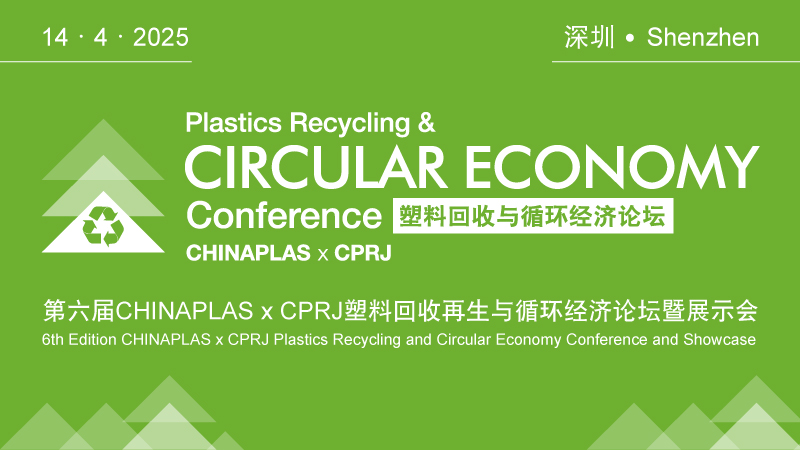
Playback On April 14, the "6th Edition CHINAPLAS x CPRJ Plastics Recycling and Circular Economy Conference and Showcase" at the Crowne Plaza Shenzhen Nanshan is currently being livestreamed!

Playback 5th Edition CHINAPLAS x CPRJ Plastics Recycling and Circular Economy Conference and Showcase

Home > News > Recycling

(Market Report) Recycling and Renewable – technology keywords that are gaining strength

Source:Source: CPRJ Editorial Team Date :2016-04-15 Editor :

According to statistics, global use of plastics will reach 500 million tons in 2016. Global consumption of plastics was predicted to grow by 8% by every year. By 2030, annual consumption of plastics may exceed 700 million tons, while 260 to 300 million tons of plastic waste will be discarded every year.


China is currently the world’s largest recycler of waste plastics. According to statistics provided by the China Scrap Plastics Association, China had recycled a total of 120 million tons of scrap plastic since 2006. Assuming that each ton of synthetic polymer consumes about 3 tons of crude oil to produce, this meant that this recycling effort helped reduce crude oil consumption by 360 million tons. China is home to over 10,000 manufacturers engaged in scrap plastics processing. Of which, medium and large enterprises processed more than half of the total scrap plastics recycled. In addition to the 5 commonly used plastics and polymers, other functional and high quality engineering plastics such as nylon, polycarbonates, organic glass, polyoxymethylene, polyvinyl butyral (PVB) films, and fluoride plastics are recycled. Key enterprises are being established for the entire industry. Scrap plastics processing is becoming more centralized, integrated, and cleaner.


Industrial-wide dilemma


Since 2014, the scrap plastics industry has faced challenges that have never been encountered during the last 30 years. Sudden changes in gas prices, exchange rates, and stock exchanges continued to lower the prices of raw and recyclable materials for plastics. These issues, compounded with the numerous barriers and issues that must be overcome, have led to an industry-wide dilemma.


The CSPA pointed out that low gas prices greatly limited the market for scrap plastics. The scrap plastics recycling industry, which could once rely solely on “cost advantages”, is now facing challenges that would shake the very core of its survival. The industry has now entered a stage where it would need to solve the 2 core issues of “cost advantages” as well as “environmental advantages”. The implementation of Operation Green Fence also fueled rapid developments of plastics recycling industries in developed countries and Southeast Asia. While Operation Green Fence spurred the expansion of scrap plastics industries in other countries, it also offered foreign investment opportunities for Chinese capital. Many new scrap plastics processing companies in developed countries and Southeast Asia were established with the support of Chinese enterprises. New changes and new trends will drive companies to reform new competitive advantages. In the long-term, it is inevitable for the industry to shift from capacity expansion and price competition models to a new phase of quality-based and differentiated competition.


The industry also made substantial advancements in 2015. For example, many member companies of the CSPA became formally listed in the New Third Board, including Jiangsu Suzhou Jiulong Recy.&Tech., Shandong Longfu Recycling Energy Scientech, Shandong Sinoter Environmental Energy, and Fujian Xiamen Luhai Pro-environment. All these companies are thus regarded as benchmarks in the entire industry. Many keystone companies, such as Zhejiang Cixi Jindao Plastic Chemical, Sinoter Environmental Energy, and Luhai Pro-environment also achieved technical breakthroughs that gave outstanding performances. Future prospects for development and growth remain promising. However, the only avenue to success is to improve corporate competitiveness.


The many highlights of the “Recycling Technology Zone”


Over 150 companies have showcased advanced recycling technologies in this year’s CHINAPLAS. The organizer established a dedicated “Recycling Technology Zone” that exhibited technologies, machinery, and equipment that cover every step of the scrap plastics recycling process from sorting, grinding, filtering, cleaning, dewatering, dehydration, and pelleting. This exhibit is designed to help scrap plastics processing companies to weather and seek positive growth in the new business environment of 2016.


Feature 1: Sorting. The AUTOSORT automatic sorting machinery exhibited by the Norwegian company of TOMRA Sorting Solutions (Xiamen) (exhibit station: W3J25) is a multi-functional and synchronized sorting system capable of referring to feed material and color signals on a real time basis. This machinery demonstrated the ability to select valuable materials from mixed wastes, single-type wastes, packaged wastes, scrap paper, and domestic wastes.


Feature 2: Crushing. The DYSSG pipe crusher and shredder unit offered by the Suzhou Dyun Recycling Machinery Co., Ltd. (W3K21) could be used to shred PE, PP, and PVC pipes with sizes up to a diameter of 1200 mm and lengths of 3 to 6 meters. Secondary crushing could also be achieved in order to obtain crushed pellets of the desired size.


Feature 3: Recycling equipment. The next-gen INTAREME ? TVEplus? plastics recycling equipment offered by EREMA from Austria gave an outstanding triple exhaust and filtering performance that allowed it to be used for applications that would prove impossible to solutions offered by its competitors. These applications include the ability to process scraps generated in the production of thick printing films, composite films, and aluminized films. The quality of the final recycled pellet is capable of meeting the specifications needed for film blowing and pulling processes. This equipment is displayed in the Austrian area of Hall W1 (W1A41).


Feature 4: Wood-plastic composites. Recycled plastics can be seen in various industries, such as textiles, automobiles, food and beverage packaging, and electronics. For example, the waste recycling and scrap tray production line of Zhangjiagang Lianguan Recycling Science & Technology integrates machinery, production, and craftsmanship into a single unit. Recycled scraps were modified, pelleted, and organically combined with scrap wood, rice husks, and rice straw to produce environmentally friendly wooden products that could be used either for landscaping or indoor decor.

 Like 丨  {{details_info.likes_count}}
Recycling
 SACMI (SHANGHAI) MACHINERY EQUIPMENT CO., LTD.      
 JUHESHUN ADVANCED MATERIALS CO., LTD.      
 SHANGHAI HAWKWAY PROCESS SOLUTIONS CO., LTD      
 GUANGXI HENGYI NEW MATERIALS CO., LTD.      
 GUANGXI WUZHOU GUOLONG RECYCLABE RESOURCES DEVELOPMENT CO., LTD.      
 ANHUI ZHONGXIN HONGWEI TECHNOLOGY CO.,LTD      
 FUJIAN NAN'AN STAR RUBBER&PLASTIC MACHINERY CO., LTD.      

The content you're trying to view is for members only. If you are currently a member, Please login to access this content.   Login

Source:Source: CPRJ Editorial Team Date :2016-04-15 Editor :

According to statistics, global use of plastics will reach 500 million tons in 2016. Global consumption of plastics was predicted to grow by 8% by every year. By 2030, annual consumption of plastics may exceed 700 million tons, while 260 to 300 million tons of plastic waste will be discarded every year.


China is currently the world’s largest recycler of waste plastics. According to statistics provided by the China Scrap Plastics Association, China had recycled a total of 120 million tons of scrap plastic since 2006. Assuming that each ton of synthetic polymer consumes about 3 tons of crude oil to produce, this meant that this recycling effort helped reduce crude oil consumption by 360 million tons. China is home to over 10,000 manufacturers engaged in scrap plastics processing. Of which, medium and large enterprises processed more than half of the total scrap plastics recycled. In addition to the 5 commonly used plastics and polymers, other functional and high quality engineering plastics such as nylon, polycarbonates, organic glass, polyoxymethylene, polyvinyl butyral (PVB) films, and fluoride plastics are recycled. Key enterprises are being established for the entire industry. Scrap plastics processing is becoming more centralized, integrated, and cleaner.


Industrial-wide dilemma


Since 2014, the scrap plastics industry has faced challenges that have never been encountered during the last 30 years. Sudden changes in gas prices, exchange rates, and stock exchanges continued to lower the prices of raw and recyclable materials for plastics. These issues, compounded with the numerous barriers and issues that must be overcome, have led to an industry-wide dilemma.


The CSPA pointed out that low gas prices greatly limited the market for scrap plastics. The scrap plastics recycling industry, which could once rely solely on “cost advantages”, is now facing challenges that would shake the very core of its survival. The industry has now entered a stage where it would need to solve the 2 core issues of “cost advantages” as well as “environmental advantages”. The implementation of Operation Green Fence also fueled rapid developments of plastics recycling industries in developed countries and Southeast Asia. While Operation Green Fence spurred the expansion of scrap plastics industries in other countries, it also offered foreign investment opportunities for Chinese capital. Many new scrap plastics processing companies in developed countries and Southeast Asia were established with the support of Chinese enterprises. New changes and new trends will drive companies to reform new competitive advantages. In the long-term, it is inevitable for the industry to shift from capacity expansion and price competition models to a new phase of quality-based and differentiated competition.


The industry also made substantial advancements in 2015. For example, many member companies of the CSPA became formally listed in the New Third Board, including Jiangsu Suzhou Jiulong Recy.&Tech., Shandong Longfu Recycling Energy Scientech, Shandong Sinoter Environmental Energy, and Fujian Xiamen Luhai Pro-environment. All these companies are thus regarded as benchmarks in the entire industry. Many keystone companies, such as Zhejiang Cixi Jindao Plastic Chemical, Sinoter Environmental Energy, and Luhai Pro-environment also achieved technical breakthroughs that gave outstanding performances. Future prospects for development and growth remain promising. However, the only avenue to success is to improve corporate competitiveness.


The many highlights of the “Recycling Technology Zone”


Over 150 companies have showcased advanced recycling technologies in this year’s CHINAPLAS. The organizer established a dedicated “Recycling Technology Zone” that exhibited technologies, machinery, and equipment that cover every step of the scrap plastics recycling process from sorting, grinding, filtering, cleaning, dewatering, dehydration, and pelleting. This exhibit is designed to help scrap plastics processing companies to weather and seek positive growth in the new business environment of 2016.


Feature 1: Sorting. The AUTOSORT automatic sorting machinery exhibited by the Norwegian company of TOMRA Sorting Solutions (Xiamen) (exhibit station: W3J25) is a multi-functional and synchronized sorting system capable of referring to feed material and color signals on a real time basis. This machinery demonstrated the ability to select valuable materials from mixed wastes, single-type wastes, packaged wastes, scrap paper, and domestic wastes.


Feature 2: Crushing. The DYSSG pipe crusher and shredder unit offered by the Suzhou Dyun Recycling Machinery Co., Ltd. (W3K21) could be used to shred PE, PP, and PVC pipes with sizes up to a diameter of 1200 mm and lengths of 3 to 6 meters. Secondary crushing could also be achieved in order to obtain crushed pellets of the desired size.


Feature 3: Recycling equipment. The next-gen INTAREME ? TVEplus? plastics recycling equipment offered by EREMA from Austria gave an outstanding triple exhaust and filtering performance that allowed it to be used for applications that would prove impossible to solutions offered by its competitors. These applications include the ability to process scraps generated in the production of thick printing films, composite films, and aluminized films. The quality of the final recycled pellet is capable of meeting the specifications needed for film blowing and pulling processes. This equipment is displayed in the Austrian area of Hall W1 (W1A41).


Feature 4: Wood-plastic composites. Recycled plastics can be seen in various industries, such as textiles, automobiles, food and beverage packaging, and electronics. For example, the waste recycling and scrap tray production line of Zhangjiagang Lianguan Recycling Science & Technology integrates machinery, production, and craftsmanship into a single unit. Recycled scraps were modified, pelleted, and organically combined with scrap wood, rice husks, and rice straw to produce environmentally friendly wooden products that could be used either for landscaping or indoor decor.
全文内容需要订阅后才能阅读哦~
立即订阅

Recommended Articles

Recycling
Mars Materials CO2-derived product can be turned into raw material for carbon fiber
 2026-01-16
Recycling
Borealis and BlueAlp partner to advance chemical recycling
 2025-12-29
Recycling
SKZ launches research project “CloseT” for sustainable textile recycling
 2025-12-18
Recycling
RadiciGroup, LYCRA and Triumph recycle mixed-fiber garments
 2025-12-17
Recycling
TOMRA's flakes solutions boost post-consumer food tray-to-tray recycling
 2025-12-16
Recycling
BASF and partners to advance circularity in footwear with new TPU films
 2025-12-15

You May Be Interested In

Change

  • People
  • Company
loading... No Content
{{[item.truename,item.truename_english][lang]}} {{[item.company_name,item.company_name_english][lang]}} {{[item.job_name,item.name_english][lang]}}
{{[item.company_name,item.company_name_english][lang]}} Company Name    {{[item.display_name,item.display_name_english][lang]}}  

Polyurethane Investment Medical Carbon neutral Reduce cost and increase efficiency CHINAPLAS Financial reports rPET INEOS Styrolution Evonik Borouge Polystyrene (PS) mono-material Sustainability Circular economy BASF SABIC Multi-component injection molding machine All-electric injection molding machine Thermoforming machine

(Market Report) Recycling and Renewable – technology keywords that are gaining strength

识别右侧二维码,进入阅读全文
下载
x 关闭
订阅
亲爱的用户,请填写一下信息
I have read and agree to the 《Terms of Use》 and 《Privacy Policy》
立即订阅
Top
Feedback
Chat
News
Market News
Applications
Products
Video
In Pictures
Specials
Activities
eBook
Front Line
Plastics Applications
Chemicals and Raw Material
Processing Technologies
Products
Injection
Extrusion
Auxiliary
Blow Molding
Mold
Hot Runner
Screw
Applications
Packaging
Automotive
Medical
Recycling
E&E
LED
Construction
Others
Events
Conference
Webinar
CHINAPLAS
CPS+ eMarketplace
Official Publications
CPS eNews
Media Kit
Social Media
Facebook
Linkedin