







Importance of Containment-Secure Feeding of Toxic Raw Materials when Producing Battery Materials

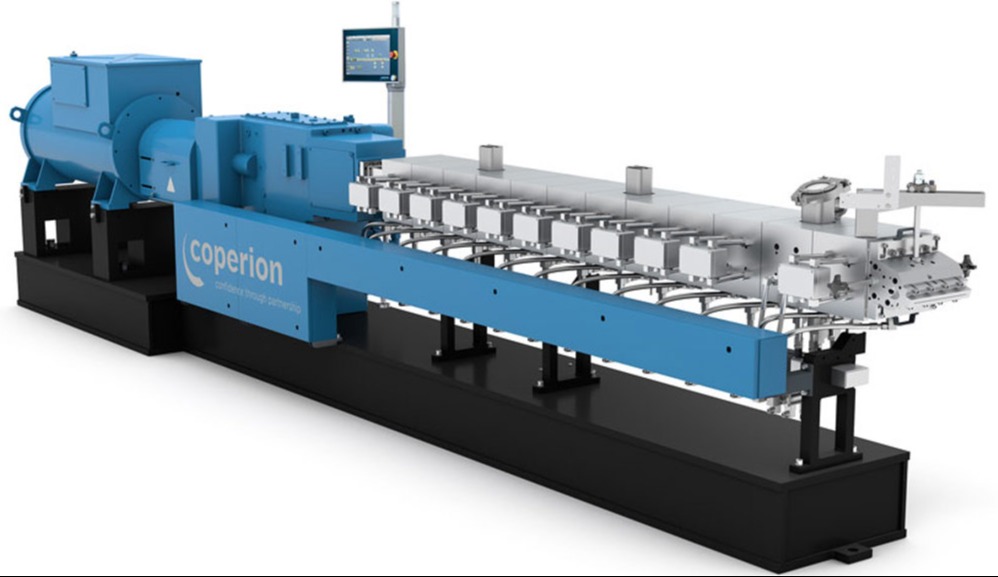
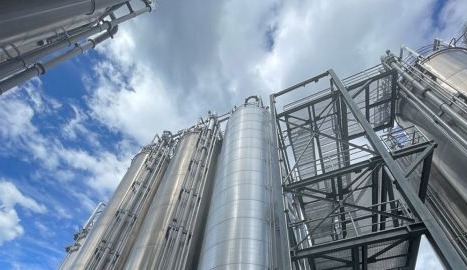
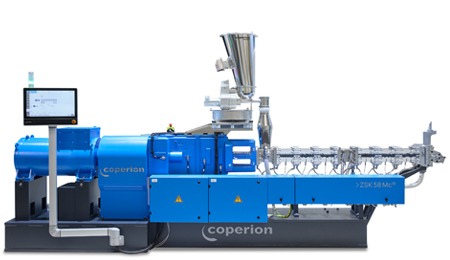
When producing battery masses there are several challenges manufacturers have to take care of. One challenge is that the process must ensure continuous high product quality and needs to be designed with a high level of containment to prevent the escape of toxic materials into the environment. Continuously operating system solutions from Coperion and Coperion K-Tron are designed especially for this area of application. They encompass many areas of the manufacturing process — from secure containment bulk material handling to dustproof and extremely accurate feeding on to extrusion of the battery masses themselves.
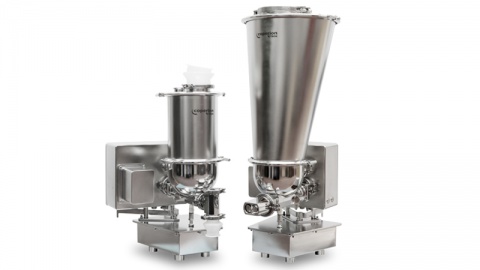
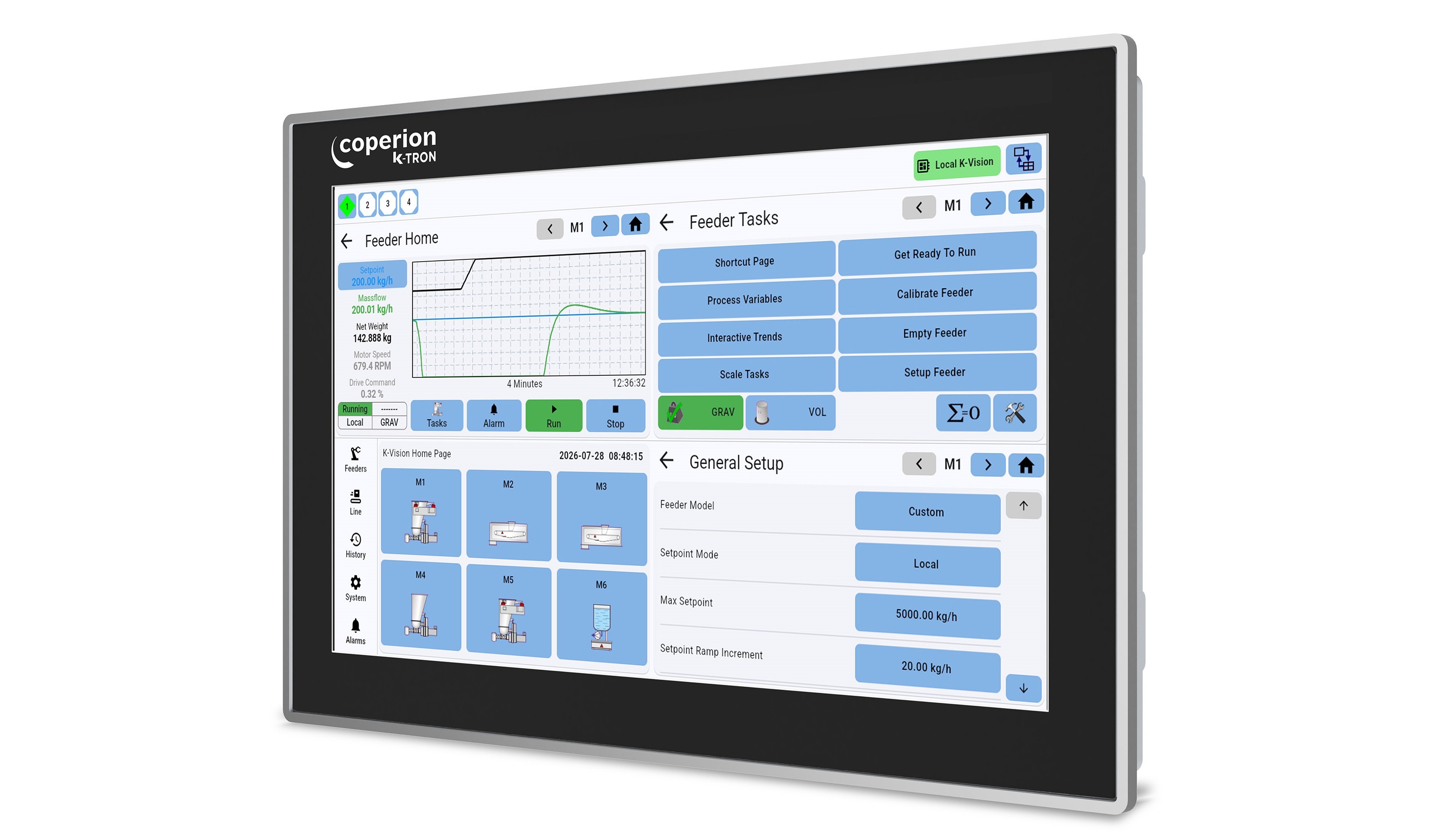
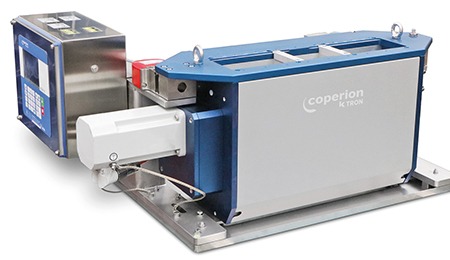
One key aspect of the production process is the feeding of raw materials into the process. Coperion K-Tron offers a variety of suitable feeding solutions for this application.
When it comes to feeding powders, there can be some challenges: Solids tend to compress and change form, even to degrade or de-mix while being handled. This means great care has to be taken to not disturb them while keeping a consistent material form. A suitable feeder and the best choice for this task is an accurate twin screw feeder as:
• Powders have a tendency to adhere to surfaces and a twin screw can self-clean.
• Powders tend to flow poorly and twin screws have a greater inlet volume compared to a single screw, and carry the material to the outlet more reliably.
• Twin screws commonly have a double winding (two profiles on each screw element). This reduces the pulsing effect at the screw discharge, improving short term accuracy.
• Twin screws are very versatile as changing a screw profile many forms of material can be fed successfully.
The challenges in feeding a liquid are very different to those in feeding a bulk solid. Liquids are mainly incompressible, which means their form and specific gravity do not alter during handling, and the challenge is really all about getting the material into the weighed tank and then getting it out again in the right proportion. For this, it is important that there are many pump types available, each optimal for a certain type of liquid. Particular attention needs to be paid to the viscosity of the liquid. In battery applications the binder or solvent solutions generally have quite low viscosities, less than 100cPs, so using a gear-pump or screw-pump provides an excellent solution.
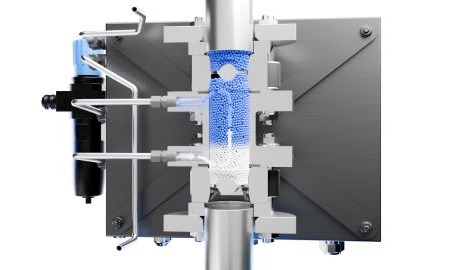
With toxic materials in either liquid or solid form, containment is essential. It is critical that containment designs be practically implemented so that the equipment can be handled and cleaned. While interfaces may have to be sealed to avoid contamination, they also have to be easy to dismantle. The approach to the design is to have a gas-tight system. The feeder hopper and bowl can be considered as a closed vessel, and with the addition of jet-filter ventilation, essential for a loss-in-weight feeder, the unit can be allowed to breathe, while not allowing dust particles to escape into the atmosphere. If required, the whole unit can then be set under a nitrogen blanket so that the material is handled in an inert environment. Upstream and downstream process connections then interface with the plant or the rest of the processing steps. Provided that those connections are closed, also dust-tight, then the entire system can safely contain the toxic material. Coperion K-Tron’s high-accuracy loss-in-weight feeders are exceptionally suited for highly precise, reliable feeding of even the most difficult flowing ingredients used in the manufacturing of electrode compounds.
System solutions from Coperion and Coperion K-Tron are specially tailored for the reliable and safe continuous production process. Based on many years of experience, they can offer the suitable solution for any individual task.