





Search History
Clear History
{{item.search_key}}
Hot Searches
Change
{{item.name}}
{{item.english_name}}
Subscribe eNews
Once A Week Once Every Two Weeks
{{sum}}
Login Register

Applications

Trinseo and RWDC jointly develop PHA dispersions for barrier coatings

US-ASEAN Business Council: Regional alignment is core to accelerate Southeast Asia’s circular economy

Franplast introduces biocompatible TPEs for medical sector

Products

WACKER opens technology center for specialty silanes in China

ENGEL opens clearmelt-Competence-Center for PUR projects

EuCIA launches Carbon Fiber Europe alliance

Activities

  • Fakuma to celebrate 30th anniversary edition in October 2026

  • Italy pavilion at Plast Eurasia proves its rising presence in Turkish market

  • CHINAPLAS 2026: Grand stage for new material, smart manufacturing and green solutions

Pictorial

Industry Topic

ASEAN: The Next Manufacturing Hub

Innovative and Sustainable Packaging

Green Plastics: News & Insights

CHINAPLAS

CHINAPLAS 2025 Focus

CHINAPLAS 2024 Focus

CHINAPLAS 2023 Focus

Exhibition Topic

K 2025 FOCUS

CHINA INSIGHT

Fakuma 2024 Highlights

News Videos

Magnetic mold changing system developed in-house by Shanghai Qiaotian

Xiamen LFT Composite's plastic solutions as alternative to steel

Ausell highlights car-to-car closed-loop recycling technology

Conference Videos

【Mandarin session:Webinar playback】HUSKY: Molding the Future of Drug Delivery: Solutions for the Evolving Autoinjector

[Live Replay] Star Plastics: A Global Solution Provider of Sustainable Material for Your Circular Economy.

[Live Replay] Wanhua Chemical: Green Horizons, Health Guardians - Advancing ESG and Low-Carbon Transition, Innovating Medical Material Solutions

Corporate/Product Videos

ARBURG new electric machine – ALLROUNDER TREND will start mass production in Pinghu, Zhejiang in 2026.

Jiangsu Liside New Material Co., Ltd.

Dow 45 years in China

Exhibition

Playback TECHHUB 2025@CPRJ Live Streaming for CHINAPLAS

Playback TECHHUB@CPRJ Live Streaming for CHINAPLAS

Events

Playback On April 14, the "6th Edition CHINAPLAS x CPRJ Plastics Recycling and Circular Economy Conference and Showcase" at the Crowne Plaza Shenzhen Nanshan is currently being livestreamed!

Playback 5th Edition CHINAPLAS x CPRJ Plastics Recycling and Circular Economy Conference and Showcase

Home > News > Recycling

CEFLEX launches plan for next generation recycling plant by 2023

Source:Adsale Plastics Network Date :2022-01-14 Editor :VC

CEFLEX, a circular economy project with more than 180 European companies, associations and organisations from the entire value chain, developed Quality Recycling Process (QRP) to offer a more valuable way to mechanically recycle a higher proportion of plastic from flexible packaging.


It uses combination of four steps each delivered by an existing technology, including advanced sorting techniques, hot washing, extrusion with extra filtration and deodorisation.


However, while these technologies have been successfully trialled and implemented in different facilities throughout Europe, they have yet to feature in the same commercial site.


“The QRP enables a much greater percentage of flexible packaging to be returned to the economy – and in the quantities and the qualities needed to meet the requirements of new end markets,” said Dana Mosora, technology workstream lead at CEFLEX.


“Today, there is no single plant which has all four technologies in a sequence, which would make it a fully blown Quality Recycling Process and enable the highest quality recyclate possible from flexible packaging,” explained Dana.


Over the last several years, CEFLEX has tested its QRP in new and existing waste streams, including the so-called ‘310 bale’ of flexible packaging, which is a bundle of materials often made up of different types of PE films.

1_r.jpg

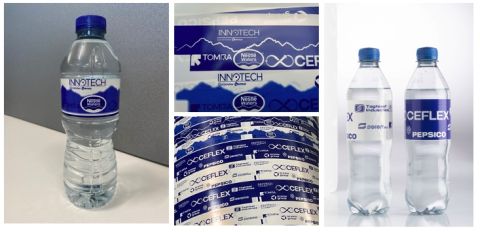
CEFLEX is looking to create the first commercial waste processing plant based around Quality Recycling Process (QRP).


CEFLEX found that if a single 310 bale went through QRP, a minimum of 20-25% of recyclate would be produced to one of the highest grades (PE Film Natural) and about 60-55% of the remaining material would be leftover for other rigid commercial activities, such as making laundry baskets or bottle caps.


If QRP’s four steps were all at the same plant, it could create a more efficient and steadier supply of circular materials for the marketplace. CELEX believes that having such a plant would also send a powerful economic current across the sector and incentivize even greater collection for recycling or flexible packaging, providing even more materials.


Dana explains that this is why CEFLEX has now embarked on the journey to build an industrial scale QRP demonstration plant with a goal to be running commercially by end of 2023.


“This will help us demonstrate the economic viability of the solution at a large industrial scale,” said Dana, adding that CEFLEX are now looking for more partners to join and help co-design, fund, manage and run the plant.


Foundations of success


The business model for a new circular plant already has a strong economic foundation after CEFLEX funded research that found any investments made into the project can eventually be offset by the profits generated in the long run.


The researchers used a range of market data to create a model that analyzed the composition of a typical 310 bale of flexible packaging and how much it would cost for it to go through a QRP plant and the revenues this could then generate.


This analysis found that it could cost around €520 for each ton of a ‘310’ materials to pass through a QRP plan, which incorporates the capital investment in QRP technologies like hot and cold washing, as well as additional sorting processes.


However, if the output experiences high enough demand it could see a revenue generated upwards of €600 per ton, leaving a net profit of €80 per ton and enough income to guarantee long-term profitability.


The research also found similar results for other bales of flexible packaging waste consisting of polyolefins (PO) and polypropylene (PP).


Building the business case


The final piece of the QRP’s commercial puzzle is having established and profitable markets for recycled flexible packaging materials. This saw CEFLEX work with another group of researchers to explore how QRP could supply new and existing markets with a source of materials that can compete with virgin plastic.


In a range of trials on using the recycled output from 310 bales, it was found that the reclaimed materials can be used for new packaging film applications as well as robust film and injection moulding too.


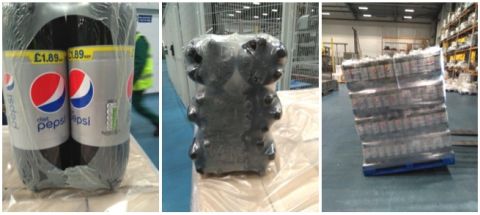
A PE collation shrink film has been made with 30% recycled content blended from the QRP materials, and performed very well when wrapped around a bundle of Pepsi bottles.

2_r.jpg

The PE collation shrink film made with 30% recycled content blended from QRP materials performed well when wrapped around a bundle of Pepsi bottles.


The trials were also able to demonstrate a 30% threshold of recycled content in resealable PP pouches, which Prof. Ragaert described as good enough to meet the needed functionality and production process.


Increasingly, plastic businesses are calling for a 30% minimum threshold of recycled materials in packaging, which they argue is needed to galvanise the supply and demand for circularity – in September, Plastics Europe went one step further and demanded a mandatory EU recycled content target for plastics packaging of 30% by 2030.


Recycled PE through QRP is increasingly showing the sector that this is economically possible and that their trials are just a sample of a more circular future. Researchers have also examined applications for PO and PP, as well as how such recycled polymers can be used for more high value rigid applications, where they found a range of other valuable markets that can reinforce the business model for QRP.



 Like 丨  {{details_info.likes_count}}
Packaging
Recycling
Circular economy
 SACMI (SHANGHAI) MACHINERY EQUIPMENT CO., LTD.      
 HANGZHOU JUHESHUN NEW MATERIAL CO., LTD.      
 FCS-Group      
 HAITIAN INTERNATIONAL HOLDINGS LIMITED      
 GUANGXI WUZHOU GUOLONG RECYCLABE RESOURCES DEVELOPMENT CO., LTD.      
 MOTAN TAICANG CO., LTD.      
 ANHUI ZHONGXIN HONGWEI TECHNOLOGY CO.,LTD      

The content you're trying to view is for members only. If you are currently a member, Please login to access this content.   Login

Source:Adsale Plastics Network Date :2022-01-14 Editor :VC

CEFLEX, a circular economy project with more than 180 European companies, associations and organisations from the entire value chain, developed Quality Recycling Process (QRP) to offer a more valuable way to mechanically recycle a higher proportion of plastic from flexible packaging.


It uses combination of four steps each delivered by an existing technology, including advanced sorting techniques, hot washing, extrusion with extra filtration and deodorisation.


However, while these technologies have been successfully trialled and implemented in different facilities throughout Europe, they have yet to feature in the same commercial site.


“The QRP enables a much greater percentage of flexible packaging to be returned to the economy – and in the quantities and the qualities needed to meet the requirements of new end markets,” said Dana Mosora, technology workstream lead at CEFLEX.


“Today, there is no single plant which has all four technologies in a sequence, which would make it a fully blown Quality Recycling Process and enable the highest quality recyclate possible from flexible packaging,” explained Dana.


Over the last several years, CEFLEX has tested its QRP in new and existing waste streams, including the so-called ‘310 bale’ of flexible packaging, which is a bundle of materials often made up of different types of PE films.


1_r.jpg

CEFLEX is looking to create the first commercial waste processing plant based around Quality Recycling Process (QRP).


CEFLEX found that if a single 310 bale went through QRP, a minimum of 20-25% of recyclate would be produced to one of the highest grades (PE Film Natural) and about 60-55% of the remaining material would be leftover for other rigid commercial activities, such as making laundry baskets or bottle caps.


If QRP’s four steps were all at the same plant, it could create a more efficient and steadier supply of circular materials for the marketplace. CELEX believes that having such a plant would also send a powerful economic current across the sector and incentivize even greater collection for recycling or flexible packaging, providing even more materials.


Dana explains that this is why CEFLEX has now embarked on the journey to build an industrial scale QRP demonstration plant with a goal to be running commercially by end of 2023.


“This will help us demonstrate the economic viability of the solution at a large industrial scale,” said Dana, adding that CEFLEX are now looking for more partners to join and help co-design, fund, manage and run the plant.


Foundations of success


The business model for a new circular plant already has a strong economic foundation after CEFLEX funded research that found any investments made into the project can eventually be offset by the profits generated in the long run.


The researchers used a range of market data to create a model that analyzed the composition of a typical 310 bale of flexible packaging and how much it would cost for it to go through a QRP plant and the revenues this could then generate.


This analysis found that it could cost around €520 for each ton of a ‘310’ materials to pass through a QRP plan, which incorporates the capital investment in QRP technologies like hot and cold washing, as well as additional sorting processes.


However, if the output experiences high enough demand it could see a revenue generated upwards of €600 per ton, leaving a net profit of €80 per ton and enough income to guarantee long-term profitability.


The research also found similar results for other bales of flexible packaging waste consisting of polyolefins (PO) and polypropylene (PP).


Building the business case


The final piece of the QRP’s commercial puzzle is having established and profitable markets for recycled flexible packaging materials. This saw CEFLEX work with another group of researchers to explore how QRP could supply new and existing markets with a source of materials that can compete with virgin plastic.


In a range of trials on using the recycled output from 310 bales, it was found that the reclaimed materials can be used for new packaging film applications as well as robust film and injection moulding too.


A PE collation shrink film has been made with 30% recycled content blended from the QRP materials, and performed very well when wrapped around a bundle of Pepsi bottles.


2_r.jpg

The PE collation shrink film made with 30% recycled content blended from QRP materials performed well when wrapped around a bundle of Pepsi bottles.


The trials were also able to demonstrate a 30% threshold of recycled content in resealable PP pouches, which Prof. Ragaert described as good enough to meet the needed functionality and production process.


Increasingly, plastic businesses are calling for a 30% minimum threshold of recycled materials in packaging, which they argue is needed to galvanise the supply and demand for circularity – in September, Plastics Europe went one step further and demanded a mandatory EU recycled content target for plastics packaging of 30% by 2030.


Recycled PE through QRP is increasingly showing the sector that this is economically possible and that their trials are just a sample of a more circular future. Researchers have also examined applications for PO and PP, as well as how such recycled polymers can be used for more high value rigid applications, where they found a range of other valuable markets that can reinforce the business model for QRP.


全文内容需要订阅后才能阅读哦~
立即订阅

Recommended Articles

Recycling
US-ASEAN Business Council: Regional alignment is core to accelerate Southeast Asia’s circular economy
 2025-12-02
Recycling
MAS launches flagship platform for food-grade PET recycling
 2025-12-01
Recycling
Swedish textile recycler to build gigascale factory in Vietnam
 2025-11-26
Recycling
Teijin uses solvent-based recycling to develop high-quality rPC
 2025-11-26
Recycling
Clariant catalysts support Europe-first waste-to-methanol plant
 2025-11-24
Recycling
Norway opens new national facility for plastic packaging sorting
 2025-11-21

You May Be Interested In

Change

  • People
  • Company
loading... No Content

{{[item.truename,item.truename_english][lang]}} {{[item.company_name,item.company_name_english][lang]}} {{[item.job_name,item.name_english][lang]}}
{{[item.company_name,item.company_name_english][lang]}} Company Name    {{[item.display_name,item.display_name_english][lang]}}  

Polyurethane Investment Medical Carbon neutral Reduce cost and increase efficiency CHINAPLAS Financial reports rPET INEOS Styrolution Evonik Borouge Polystyrene (PS) mono-material Sustainability Circular economy BASF SABIC Multi-component injection molding machine All-electric injection molding machine Thermoforming machine

CEFLEX launches plan for next generation recycling plant by 2023

识别右侧二维码,进入阅读全文
下载
x 关闭
订阅
亲爱的用户,请填写一下信息
I have read and agree to the 《Terms of Use》 and 《Privacy Policy》
立即订阅
Top
Feedback
Chat
News
Market News
Applications
Products
Video
In Pictures
Specials
Activities
eBook
Front Line
Plastics Applications
Chemicals and Raw Material
Processing Technologies
Products
Injection
Extrusion
Auxiliary
Blow Molding
Mold
Hot Runner
Screw
Applications
Packaging
Automotive
Medical
Recycling
E&E
LED
Construction
Others
Events
Conference
Webinar
CHINAPLAS
CPS+ eMarketplace
Official Publications
CPS eNews
Media Kit
Social Media
Facebook
Linkedin