





Search History
Clear History
{{item.search_key}}
Hot Searches
Change
{{item.name}}
{{item.english_name}}
Subscribe eNews
Once A Week Once Every Two Weeks
{{sum}}
Login Register

Applications

Franplast introduces biocompatible TPEs for medical sector

MAS launches flagship platform for food-grade PET recycling

3D-printed sculptural coffee table with bio-based transparent polyamide

Products

EuCIA launches Carbon Fiber Europe alliance

Gurit inaugurates Advanced Composites R&D Center in Tianjin, China

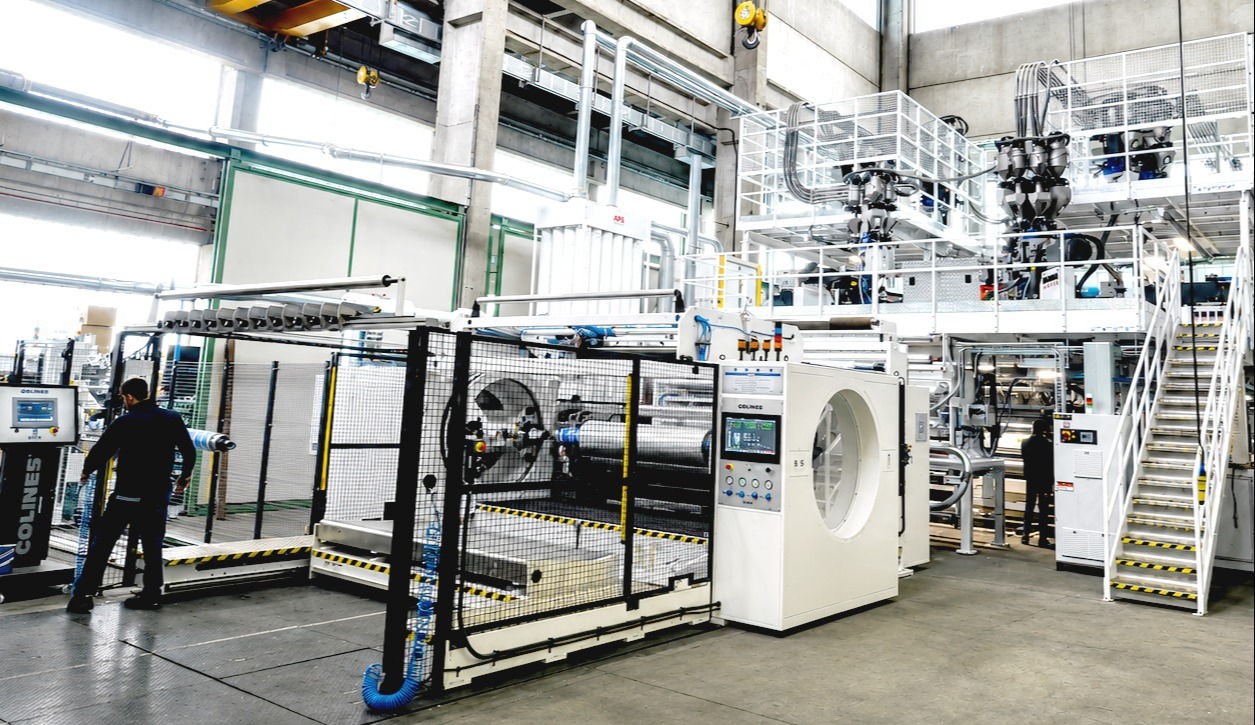
COLINES cast film line installed at LyondellBasell’s Cincinnati Technology Center

Activities

  • Fakuma to celebrate 30th anniversary edition in October 2026

  • Italy pavilion at Plast Eurasia proves its rising presence in Turkish market

  • CHINAPLAS 2026: Grand stage for new material, smart manufacturing and green solutions

Pictorial

Industry Topic

ASEAN: The Next Manufacturing Hub

Innovative and Sustainable Packaging

Green Plastics: News & Insights

CHINAPLAS

CHINAPLAS 2025 Focus

CHINAPLAS 2024 Focus

CHINAPLAS 2023 Focus

Exhibition Topic

K 2025 FOCUS

CHINA INSIGHT

Fakuma 2024 Highlights

News Videos

Magnetic mold changing system developed in-house by Shanghai Qiaotian

Xiamen LFT Composite's plastic solutions as alternative to steel

Ausell highlights car-to-car closed-loop recycling technology

Conference Videos

【Mandarin session:Webinar playback】HUSKY: Molding the Future of Drug Delivery: Solutions for the Evolving Autoinjector

[Live Replay] Star Plastics: A Global Solution Provider of Sustainable Material for Your Circular Economy.

[Live Replay] Wanhua Chemical: Green Horizons, Health Guardians - Advancing ESG and Low-Carbon Transition, Innovating Medical Material Solutions

Corporate/Product Videos

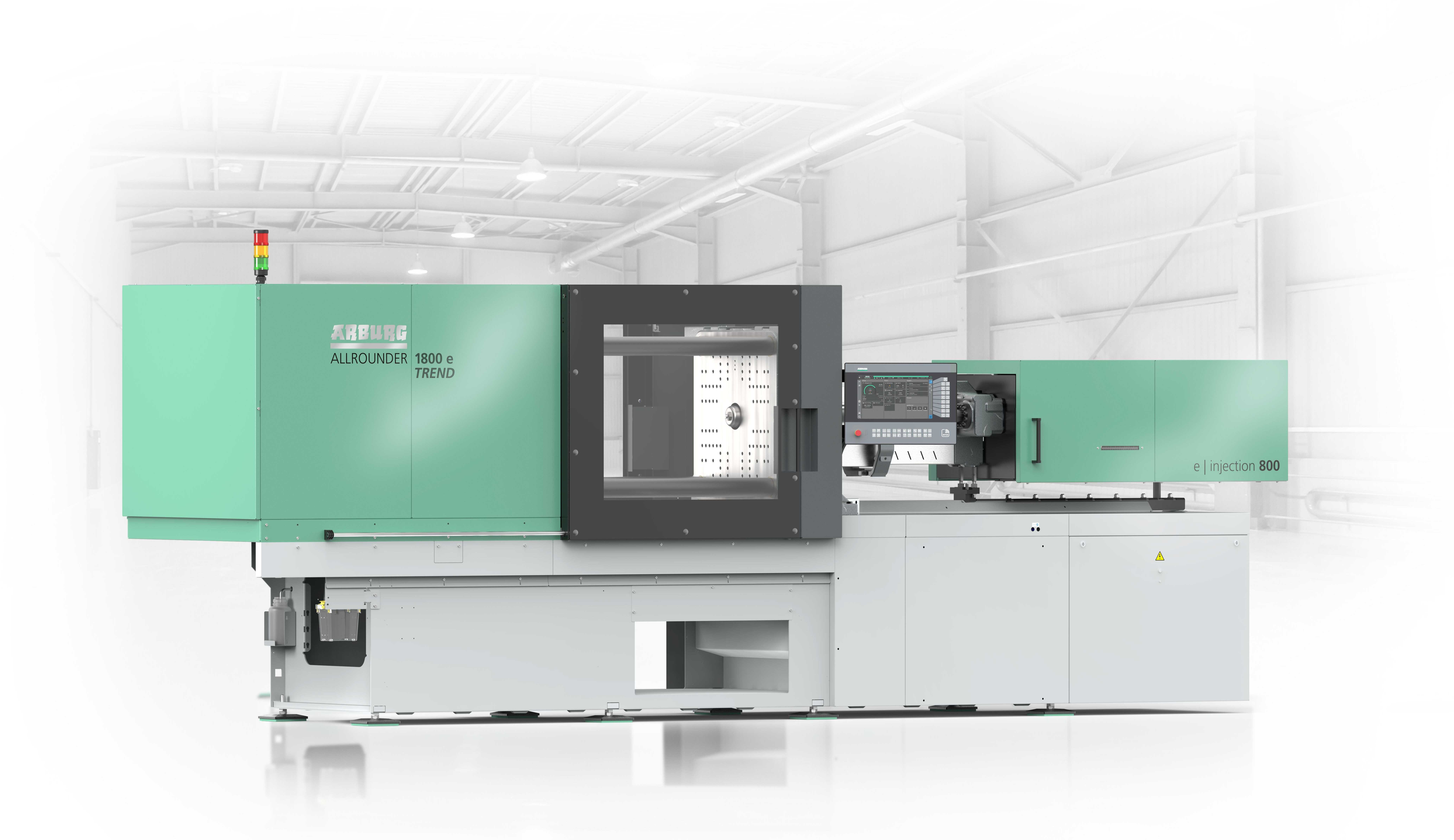
ARBURG new electric machine – ALLROUNDER TREND will start mass production in Pinghu, Zhejiang in 2026.

Jiangsu Liside New Material Co., Ltd.

Dow 45 years in China

Exhibition

Playback TECHHUB 2025@CPRJ Live Streaming for CHINAPLAS

Playback TECHHUB@CPRJ Live Streaming for CHINAPLAS

Events

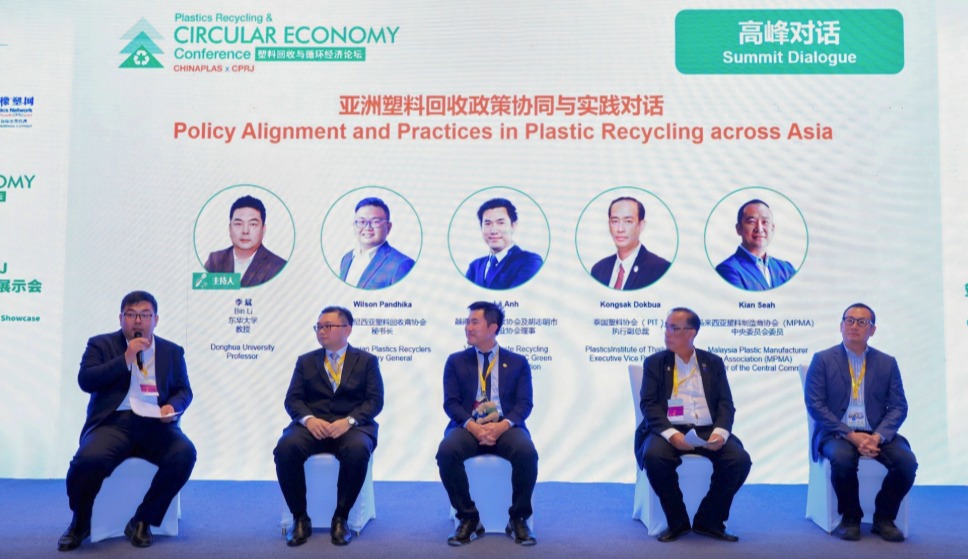
Playback On April 14, the "6th Edition CHINAPLAS x CPRJ Plastics Recycling and Circular Economy Conference and Showcase" at the Crowne Plaza Shenzhen Nanshan is currently being livestreamed!

Playback 5th Edition CHINAPLAS x CPRJ Plastics Recycling and Circular Economy Conference and Showcase

Home > News > Packaging

Interview: High tide of post-consumer PET bottle recycling continues

Source:Adsale Plastics Network Date :2021-11-18 Editor :JK, VC

The report “Global plastic bottle recycling market research report 2021”, added on marketreportsworld.com recently, forecasts the global plastic bottle recycling market (valued at US$3673 million in 2020) to reach US$6105.9 million by the end of 2027, growing at a CAGR of 7.5% during 2021-2027.


In particular, PET bottle recycling witnessed a rapid growth and is anticipated to continue growing. PET has become the most favorable material for beverage packaging, and bottle-to-bottle recycling technology of post-consumer PET packaging materials has made a remarkable progress in recent years.


Sought-after larger and high-end machines


Starlinger is a leading supplier of bottle-to-bottle recycling equipment, which witnessed the change of requirements of the machines in the past two years, and one of the phenomenal changes is the larger size of the machines.


As Commercial Head of Starlinger recycling technology Paul Niedl pointed out, the company mainly installed projects with 10,000-15,000 tpa capacity in the past but 20,000-25,000 tpa now.


Nevertheless, he does not expect the capacities to rise beyond 25,000 or 30,000 tpa due to logistics restraints of the recycling facilities.


Another emerging trend observed is the increasing demand for high quality machines.


“Over the years we became well known for high-end rPET chip quality. Whereas in previous years there was also interest in our entry level equipment, nowadays there is only interest in the high-end solutions,” he said.
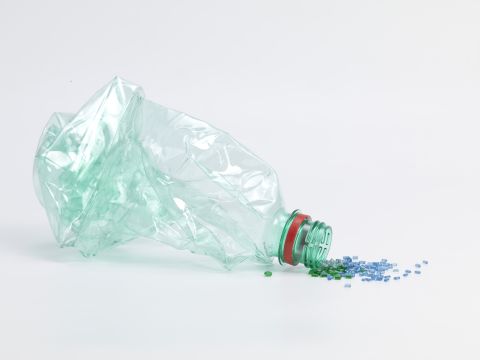

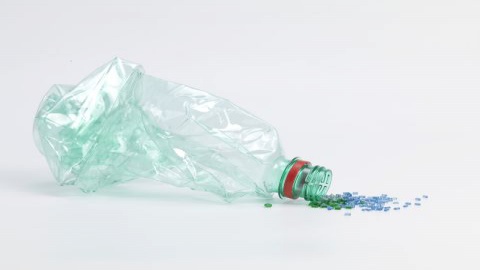
2_PET bottle_regranulate_web.jpg

PET bottle recycling technology has been advanced swiftly.


The Austrian-based supplier also builds machines for the woven plastic bag sector and develops solutions to produce woven bags from recycled PET bottles and post-consumer big bags.


At present, about a third of post-consumer PET bottles are recycled for applications in the textile industry. It is good in the first loop as it saves raw materials, but it is a “dead end” in most cases as textiles are mostly polyester-cotton mixtures, Paul Niedl commented when talking about upcycling PET efficiently.


“This makes it impossible to recycle them with mechanical recycling technologies, and it is also not feasible with chemical recycling technologies,” he noted.


He urged policy makers to work on regulations, such as quotas and minimum recycling content, to prevent such kind of downcycling.


Still limited food-grade PCR plastic applications


Although rPET has been gaining more applications, Paul Niedl thinks that the applications of food-grade PCR plastics are still quite limited currently and there is huge potential for these circular materials.


“The main limiting factor is the absence of realistic food contact decontamination limits for PE applications,” he commented. “The EFSA (European Food Safety Authority) is clearly lacking behind its US counterpart FDA which has realistic levels in place that allows the HDPE food contact recycling sector to grow.”


As we understand, the FDA requires submission of test results that prove the HDPE recycling process reduces potential contaminants to certain limits that do not pose risk to human health. The EFSA, however, has no final assessment for the recycling of HDPE food contact materials.


Paul Niedl remarked another challenge that raw material price rallies with ups and downs. “The regranulate price develops separately as the costs of collection and recycling process are not swinging with the price of chemical polymer building blocks,” he explained.


In his opinion, unless there is either political pressure based on mandatory recycling content or strong demand from FMCG brand owners that is based on positive consumer perception of recycling, the recycling industry will not be able to grow to the levels required by EU recycling quotas.


Besides, he suggests to further strengthen communication and lobbying work in the consumer market as “most of the consumers are not aware that there is recycling technology out there that provides pellets safe for direct food contact”.


Meanwhile, Starlinger will continue develop solutions for food contact recycled plastics which are not limited to rPET, as well as technology for odor reduction of PCR plastics.
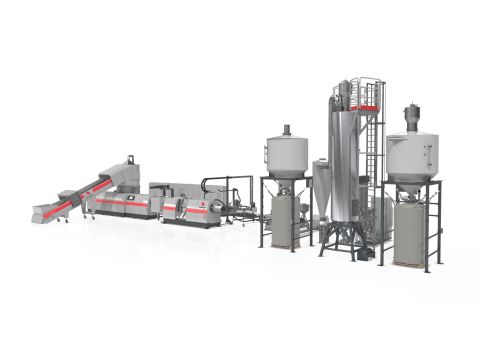
3_Starlinger recoSTAR dynamic_C-VAC_odourRED_web.jpg

With Starlinger’s odor reduction technology, post-consumer plastics can be turned into high-quality recycled material.


Design for Recycling leads to successful packaging recycling


Paul Niedl also underscored the significance of DfR (Design for Recycling) in successful packaging recycling. “We need mono-material instead of multi-material, extrusion laminating instead of glue, stronger materials instead of many layers, vacuuming or gas technology instead of multi-material packaging to increase the shelf life of food,” he said.


He further noted that the industry, over decades, has “over-engineered” plastic packaging to create even longer shelf life that nobody actually needs, and in return, the multi-layer/multi-material packaging cannot be recyclable, or at least not in a feasible way.


Packaging also needs to be designed in a way for easy label removal on drinking bottles, he added.


In addition, Paul Niedl brought up the issue of the anti-plastic trend with creating wood-paper-glue-plastic packaging connections. “Consumers think it is green because plastic was reduced or totally avoided, but in reality this packaging is hard or impossible to be recycled,” he explained.


Bag-to-bag rPP solutions for FIBC sector


Another focus of Starlinger on circular packaging is bag-to-bag rPP solutions for post-consumer big bags. It has built the rPP project team to map out the requirements and challenges to promote circular packaging in the FIBC (flexible intermediate bulk container) sector.
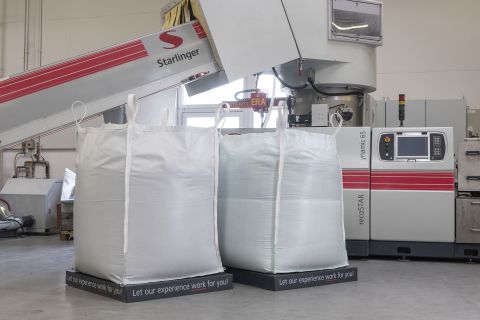

1_rPP_Big_Bags_web.jpg 

Used big bags can be recycled with Starlinger’s PP recycling technology.


The company focuses on both the recycling and fabric production processes in the machine-related developments, and has by far achieved good results with rPP.


According to Project Manager-rPP Andreas Anderl, it is possible to supplement more than 50% of the virgin PP with rPP using the company’s technology. Same technical parameters can be achieved without any loss in strength or increased material usage.

 Like 丨  {{details_info.likes_count}}
Packaging
Recycling
Starlinger
PET
 SACMI (SHANGHAI) MACHINERY EQUIPMENT CO., LTD.      
 HANGZHOU JUHESHUN NEW MATERIAL CO., LTD.      
 FCS-Group      
 HAITIAN INTERNATIONAL HOLDINGS LIMITED      
 GUANGXI WUZHOU GUOLONG RECYCLABE RESOURCES DEVELOPMENT CO., LTD.      
 MOTAN TAICANG CO., LTD.      
 ANHUI ZHONGXIN HONGWEI TECHNOLOGY CO.,LTD      

The content you're trying to view is for members only. If you are currently a member, Please login to access this content.   Login

Source:Adsale Plastics Network Date :2021-11-18 Editor :JK, VC

The report “Global plastic bottle recycling market research report 2021”, added on marketreportsworld.com recently, forecasts the global plastic bottle recycling market (valued at US$3673 million in 2020) to reach US$6105.9 million by the end of 2027, growing at a CAGR of 7.5% during 2021-2027.


In particular, PET bottle recycling witnessed a rapid growth and is anticipated to continue growing. PET has become the most favorable material for beverage packaging, and bottle-to-bottle recycling technology of post-consumer PET packaging materials has made a remarkable progress in recent years.


Sought-after larger and high-end machines


Starlinger is a leading supplier of bottle-to-bottle recycling equipment, which witnessed the change of requirements of the machines in the past two years, and one of the phenomenal changes is the larger size of the machines.


As Commercial Head of Starlinger recycling technology Paul Niedl pointed out, the company mainly installed projects with 10,000-15,000 tpa capacity in the past but 20,000-25,000 tpa now.


Nevertheless, he does not expect the capacities to rise beyond 25,000 or 30,000 tpa due to logistics restraints of the recycling facilities.


Another emerging trend observed is the increasing demand for high quality machines.


“Over the years we became well known for high-end rPET chip quality. Whereas in previous years there was also interest in our entry level equipment, nowadays there is only interest in the high-end solutions,” he said.


2_PET bottle_regranulate_web.jpg

PET bottle recycling technology has been advanced swiftly.


The Austrian-based supplier also builds machines for the woven plastic bag sector and develops solutions to produce woven bags from recycled PET bottles and post-consumer big bags.


At present, about a third of post-consumer PET bottles are recycled for applications in the textile industry. It is good in the first loop as it saves raw materials, but it is a “dead end” in most cases as textiles are mostly polyester-cotton mixtures, Paul Niedl commented when talking about upcycling PET efficiently.


“This makes it impossible to recycle them with mechanical recycling technologies, and it is also not feasible with chemical recycling technologies,” he noted.


He urged policy makers to work on regulations, such as quotas and minimum recycling content, to prevent such kind of downcycling.


Still limited food-grade PCR plastic applications


Although rPET has been gaining more applications, Paul Niedl thinks that the applications of food-grade PCR plastics are still quite limited currently and there is huge potential for these circular materials.


“The main limiting factor is the absence of realistic food contact decontamination limits for PE applications,” he commented. “The EFSA (European Food Safety Authority) is clearly lacking behind its US counterpart FDA which has realistic levels in place that allows the HDPE food contact recycling sector to grow.”


As we understand, the FDA requires submission of test results that prove the HDPE recycling process reduces potential contaminants to certain limits that do not pose risk to human health. The EFSA, however, has no final assessment for the recycling of HDPE food contact materials.


Paul Niedl remarked another challenge that raw material price rallies with ups and downs. “The regranulate price develops separately as the costs of collection and recycling process are not swinging with the price of chemical polymer building blocks,” he explained.


In his opinion, unless there is either political pressure based on mandatory recycling content or strong demand from FMCG brand owners that is based on positive consumer perception of recycling, the recycling industry will not be able to grow to the levels required by EU recycling quotas.


Besides, he suggests to further strengthen communication and lobbying work in the consumer market as “most of the consumers are not aware that there is recycling technology out there that provides pellets safe for direct food contact”.


Meanwhile, Starlinger will continue develop solutions for food contact recycled plastics which are not limited to rPET, as well as technology for odor reduction of PCR plastics.

3_Starlinger recoSTAR dynamic_C-VAC_odourRED_web.jpg

With Starlinger’s odor reduction technology, post-consumer plastics can be turned into high-quality recycled material.


Design for Recycling leads to successful packaging recycling


Paul Niedl also underscored the significance of DfR (Design for Recycling) in successful packaging recycling. “We need mono-material instead of multi-material, extrusion laminating instead of glue, stronger materials instead of many layers, vacuuming or gas technology instead of multi-material packaging to increase the shelf life of food,” he said.


He further noted that the industry, over decades, has “over-engineered” plastic packaging to create even longer shelf life that nobody actually needs, and in return, the multi-layer/multi-material packaging cannot be recyclable, or at least not in a feasible way.


Packaging also needs to be designed in a way for easy label removal on drinking bottles, he added.


In addition, Paul Niedl brought up the issue of the anti-plastic trend with creating wood-paper-glue-plastic packaging connections. “Consumers think it is green because plastic was reduced or totally avoided, but in reality this packaging is hard or impossible to be recycled,” he explained.


Bag-to-bag rPP solutions for FIBC sector


Another focus of Starlinger on circular packaging is bag-to-bag rPP solutions for post-consumer big bags. It has built the rPP project team to map out the requirements and challenges to promote circular packaging in the FIBC (flexible intermediate bulk container) sector.


1_rPP_Big_Bags_web.jpg 

Used big bags can be recycled with Starlinger’s PP recycling technology.


The company focuses on both the recycling and fabric production processes in the machine-related developments, and has by far achieved good results with rPP.


According to Project Manager-rPP Andreas Anderl, it is possible to supplement more than 50% of the virgin PP with rPP using the company’s technology. Same technical parameters can be achieved without any loss in strength or increased material usage.

全文内容需要订阅后才能阅读哦~
立即订阅

Recommended Articles

Packaging
The bio-based reusable cups can be chemically recycled
 2025-11-27
Packaging
Chanel's sustainable cosmetic closures manufactured on KraussMaffei machines
 2025-11-24
Packaging
Corvaglia and Wisecap partner to produce beverage closures in Europe
 2025-11-21
Packaging
SACMI’s digital production lines for caps and preforms at Drink Japan
 2025-11-19
Packaging
Amcor introduces roll-ons with new lightweight design and PCR content
 2025-11-17
Packaging
Henkel Packaging RecycLab launches in China to drive recycling
 2025-11-05

You May Be Interested In

Change

  • People
  • Company
loading... No Content

{{[item.truename,item.truename_english][lang]}} {{[item.company_name,item.company_name_english][lang]}} {{[item.job_name,item.name_english][lang]}}
{{[item.company_name,item.company_name_english][lang]}} Company Name    {{[item.display_name,item.display_name_english][lang]}}  

Polyurethane Investment Medical Carbon neutral Reduce cost and increase efficiency CHINAPLAS Financial reports rPET INEOS Styrolution Evonik Borouge Polystyrene (PS) mono-material Sustainability Circular economy BASF SABIC Multi-component injection molding machine All-electric injection molding machine Thermoforming machine

Interview: High tide of post-consumer PET bottle recycling continues

识别右侧二维码,进入阅读全文
下载
x 关闭
订阅
亲爱的用户,请填写一下信息
I have read and agree to the 《Terms of Use》 and 《Privacy Policy》
立即订阅
Top
Feedback
Chat
News
Market News
Applications
Products
Video
In Pictures
Specials
Activities
eBook
Front Line
Plastics Applications
Chemicals and Raw Material
Processing Technologies
Products
Injection
Extrusion
Auxiliary
Blow Molding
Mold
Hot Runner
Screw
Applications
Packaging
Automotive
Medical
Recycling
E&E
LED
Construction
Others
Events
Conference
Webinar
CHINAPLAS
CPS+ eMarketplace
Official Publications
CPS eNews
Media Kit
Social Media
Facebook
Linkedin