








Search History
Clear History
{{item.search_key}}
Hot Searches
Change
{{item.name}}
{{item.english_name}}
Subscribe eNews
Once A Week Once Every Two Weeks
{{sum}}
Login Register

Applications

Franplast introduces biocompatible TPEs for medical sector

MAS launches flagship platform for food-grade PET recycling

3D-printed sculptural coffee table with bio-based transparent polyamide

Products

EuCIA launches Carbon Fiber Europe alliance

Gurit inaugurates Advanced Composites R&D Center in Tianjin, China

COLINES cast film line installed at LyondellBasell’s Cincinnati Technology Center

Activities

  • Fakuma to celebrate 30th anniversary edition in October 2026

  • Italy pavilion at Plast Eurasia proves its rising presence in Turkish market

  • CHINAPLAS 2026: Grand stage for new material, smart manufacturing and green solutions

Pictorial

Industry Topic

ASEAN: The Next Manufacturing Hub

Innovative and Sustainable Packaging

Green Plastics: News & Insights

CHINAPLAS

CHINAPLAS 2025 Focus

CHINAPLAS 2024 Focus

CHINAPLAS 2023 Focus

Exhibition Topic

K 2025 FOCUS

CHINA INSIGHT

Fakuma 2024 Highlights

News Videos

Magnetic mold changing system developed in-house by Shanghai Qiaotian

Xiamen LFT Composite's plastic solutions as alternative to steel

Ausell highlights car-to-car closed-loop recycling technology

Conference Videos

【Mandarin session:Webinar playback】HUSKY: Molding the Future of Drug Delivery: Solutions for the Evolving Autoinjector

[Live Replay] Star Plastics: A Global Solution Provider of Sustainable Material for Your Circular Economy.

[Live Replay] Wanhua Chemical: Green Horizons, Health Guardians - Advancing ESG and Low-Carbon Transition, Innovating Medical Material Solutions

Corporate/Product Videos

ARBURG new electric machine – ALLROUNDER TREND will start mass production in Pinghu, Zhejiang in 2026.

Jiangsu Liside New Material Co., Ltd.

Dow 45 years in China

Exhibition

Playback TECHHUB 2025@CPRJ Live Streaming for CHINAPLAS

Playback TECHHUB@CPRJ Live Streaming for CHINAPLAS

Events

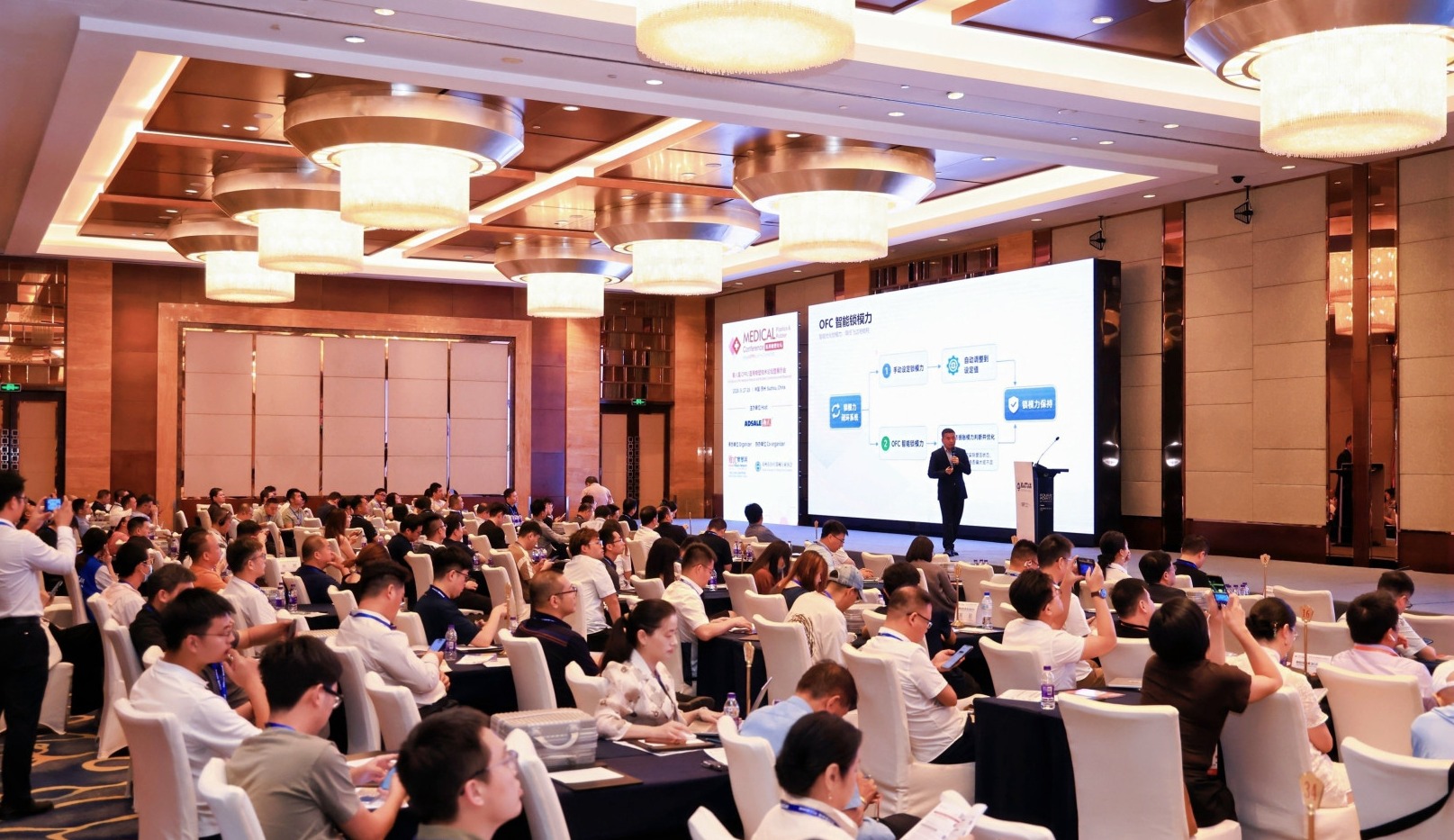
Playback On April 14, the "6th Edition CHINAPLAS x CPRJ Plastics Recycling and Circular Economy Conference and Showcase" at the Crowne Plaza Shenzhen Nanshan is currently being livestreamed!

Playback 5th Edition CHINAPLAS x CPRJ Plastics Recycling and Circular Economy Conference and Showcase

Home > News > Packaging

Interview: SACMI’s top tips for smooth transition to tethered cap production

Source:Adsale Plastics Network Date :2021-09-14 Editor :JK, VC

In an effort to reduce leakage of plastic waste to the ocean, the EU issued the EU Directive 2019/904, requiring all single-use plastic beverage container closures must be attached to the containers from July 2024 at the latest, as a means to ensure that the entire packaging can be recycled.


Cap producers and bottlers have to get ready for the transition to tethered caps, and it is a long process that involves several kinds of investments. Therefore, they have to consider: What do the customers accept? What design should be adopted? Can the existing equipment be used? How much does the switch-over cost?
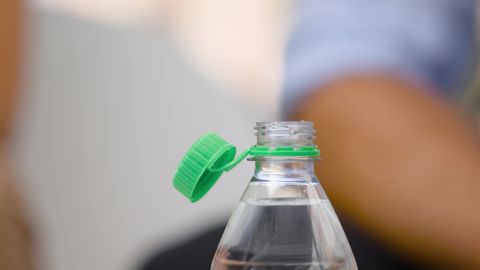

Tethered_2_Sacmi_web.jpg

New cap designs and system solutions have been developed for tethered caps.


SACMI has been active on developing solutions for tethered cap since the publication of the EU Directive 2019/904. The Italian packaging machine manufacturer’s systems can produce eight types of tethered caps with hinges or single or dual tether strips.


Adsale Plastics Network talked to Iacopo Bianconcini, Marketing & Business Development Manager, Rigid Packaging Technologies BU of SACMI, and got his expert opinion on tethered caps production.


Iacopo Bianconcini_1_web.jpg

Iacopo Bianconcini, Marketing & Business Development Manager, Rigid Packaging Technologies BU of SACMI.


Slitting pattern and snap cap design


There are two fundamental designs for tethered caps, the slitting (threaded) pattern and the snap cap design. The slitting pattern is compatible with all beverage types, while snap caps can be an option for packaging non-pressurized still water.


Regarding the technical requirements of these two designs, Iacopo Bianconcini pinpointed the advantages of slitting pattern.


“There is no additional complication on molds (for slitting pattern), and it is possible to fit the same number of cavities as before on the same molding machine,” he said.


“Besides, the band can retain its axial symmetry and this can be an advantage during high speed capping,” he continued. “Stable hinges, simpler designs or historic slitting patterns are possible on the same suitable caps, simply changing slitting tools.”


From Iacopo Bianconcini’s point of view, although “they (snap caps) have found their niche into the market and the application is expanding”, snap caps are not optimized for sustainability. 


“For example, the most common 26 mm snap cap weighs 1.3 g against less than 1 g for 26 mm screw caps. Besides, the bottles should be heavier and more rigid than bottles used for screw caps, so as to avoid water splashing while opening the packages,” he explained.
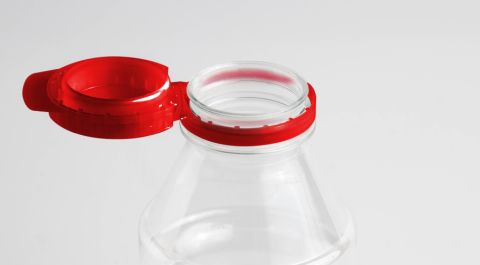

Snap Cap_1_Sacmi_web.jpg

Snap caps can be an option for packaging non-pressurized still water.


CCM tethered solutions with downstream rotary slitters


Plastic caps can be molded by compression molding or injection molding. Iacopo Bianconcini recommended CCM (Continuous Compression Molding) technology with SACMI lines. The advantages are shorter cycle time, greater dimensional consistency of the product, and simplicity and reliability of the process.


For tethered caps, SACMI proposes solutions where a rotary slitter at downstream of the press scores the tamper evidence band.


This configuration of the line with separate cutting ensures constant cutting quality over time, easy maintenance of the components involved in the cutting process, and the possibility of producing with different cutting configurations on the same production line.


Separate cutting also benefits the molding process as the mold is less complicated and is easier to maintain. The molding process is also less complex and is easier to control.


Generally speaking, the choice of resin type is not critical for tethered caps, in particular for slitting pattern. Iacopo Bianconcini thus recommended customers to keep using the resins they used.


A versatile post processing line for production


SACMI has recently introduced a new high-speed post processing line consisting of four modules for feeding, scoring, folding and inspection for both tethered and traditional cap production.


According to Iacopo Bianconcini, the unique benefits of the line is that the collected information lets producers intervene upstream from the process, either via automatic machine adjustments or by providing the operator with information on how to act on the appropriate process parameters.


“The latest-generation inspection system operates at a level of detail unattainable with traditional cameras and improves self-adjustment of process machines on the basis of actual scoring quality,” he added.


This post processing line includes the SFMO8L tamper evidence band scoring and folding machine equipped with the newly designed ORGRS waterfall feeder, the CVS154 and CVS 36-3D multi-camera vision systems which performs multiple inspections by capturing multiple images; and the PFMC unit which inspects the tamper evidence band cut and measures its breaking force.


The new line is very compact and is designed for output rates of up to 1,000 caps/min (60,000 caps/hr).
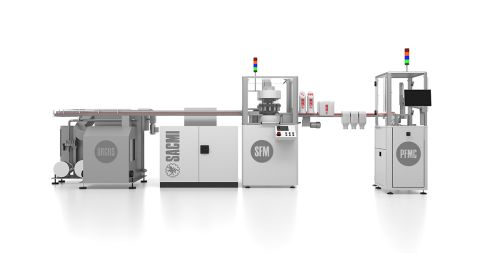

LineaTethered-Caps_Sacmi_web.jpg

SACMI’s new post processing line for producing tethered caps consists of four modules.


More efforts needed in reducing weight


At this time of transition, SACMI works with its customers to ensure their transition to tethered cap production to be smooth and painless with minimal economic impact, emphasized Iacopo Bianconcini.


Nevertheless, he believes the most viable way for plastic bottle to reach a better environmental balance in the short and medium term is lightweighting as many bottles are still far heavier than they might be, in particular in Asia.


“We are getting sporadic requirements from Asian countries, and it (tethered cap) does not seem to be a general trend in Asia,” he commented. “If the Asian beverage industry wants to improve its environmental footprint, it should focus more on packaging weight optimization, avoiding over packaging and unnecessary packaging components.”

 Like 丨  {{details_info.likes_count}}
Packaging
Circular economy
Sacmi
 SACMI (SHANGHAI) MACHINERY EQUIPMENT CO., LTD.      
 FCS-Group      
 HAITIAN INTERNATIONAL HOLDINGS LIMITED      
 MOTAN TAICANG CO., LTD.      

The content you're trying to view is for members only. If you are currently a member, Please login to access this content.   Login

Source:Adsale Plastics Network Date :2021-09-14 Editor :JK, VC

In an effort to reduce leakage of plastic waste to the ocean, the EU issued the EU Directive 2019/904, requiring all single-use plastic beverage container closures must be attached to the containers from July 2024 at the latest, as a means to ensure that the entire packaging can be recycled.


Cap producers and bottlers have to get ready for the transition to tethered caps, and it is a long process that involves several kinds of investments. Therefore, they have to consider: What do the customers accept? What design should be adopted? Can the existing equipment be used? How much does the switch-over cost?


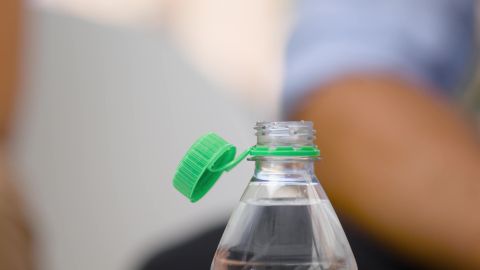
Tethered_2_Sacmi_web.jpg

New cap designs and system solutions have been developed for tethered caps.


SACMI has been active on developing solutions for tethered cap since the publication of the EU Directive 2019/904. The Italian packaging machine manufacturer’s systems can produce eight types of tethered caps with hinges or single or dual tether strips.


Adsale Plastics Network talked to Iacopo Bianconcini, Marketing & Business Development Manager, Rigid Packaging Technologies BU of SACMI, and got his expert opinion on tethered caps production.


Iacopo Bianconcini_1_web.jpg

Iacopo Bianconcini, Marketing & Business Development Manager, Rigid Packaging Technologies BU of SACMI.


Slitting pattern and snap cap design


There are two fundamental designs for tethered caps, the slitting (threaded) pattern and the snap cap design. The slitting pattern is compatible with all beverage types, while snap caps can be an option for packaging non-pressurized still water.


Regarding the technical requirements of these two designs, Iacopo Bianconcini pinpointed the advantages of slitting pattern.


“There is no additional complication on molds (for slitting pattern), and it is possible to fit the same number of cavities as before on the same molding machine,” he said.


“Besides, the band can retain its axial symmetry and this can be an advantage during high speed capping,” he continued. “Stable hinges, simpler designs or historic slitting patterns are possible on the same suitable caps, simply changing slitting tools.”


From Iacopo Bianconcini’s point of view, although “they (snap caps) have found their niche into the market and the application is expanding”, snap caps are not optimized for sustainability. 


“For example, the most common 26 mm snap cap weighs 1.3 g against less than 1 g for 26 mm screw caps. Besides, the bottles should be heavier and more rigid than bottles used for screw caps, so as to avoid water splashing while opening the packages,” he explained.


Snap Cap_1_Sacmi_web.jpg

Snap caps can be an option for packaging non-pressurized still water.


CCM tethered solutions with downstream rotary slitters


Plastic caps can be molded by compression molding or injection molding. Iacopo Bianconcini recommended CCM (Continuous Compression Molding) technology with SACMI lines. The advantages are shorter cycle time, greater dimensional consistency of the product, and simplicity and reliability of the process.


For tethered caps, SACMI proposes solutions where a rotary slitter at downstream of the press scores the tamper evidence band.


This configuration of the line with separate cutting ensures constant cutting quality over time, easy maintenance of the components involved in the cutting process, and the possibility of producing with different cutting configurations on the same production line.


Separate cutting also benefits the molding process as the mold is less complicated and is easier to maintain. The molding process is also less complex and is easier to control.


Generally speaking, the choice of resin type is not critical for tethered caps, in particular for slitting pattern. Iacopo Bianconcini thus recommended customers to keep using the resins they used.


A versatile post processing line for production


SACMI has recently introduced a new high-speed post processing line consisting of four modules for feeding, scoring, folding and inspection for both tethered and traditional cap production.


According to Iacopo Bianconcini, the unique benefits of the line is that the collected information lets producers intervene upstream from the process, either via automatic machine adjustments or by providing the operator with information on how to act on the appropriate process parameters.


“The latest-generation inspection system operates at a level of detail unattainable with traditional cameras and improves self-adjustment of process machines on the basis of actual scoring quality,” he added.


This post processing line includes the SFMO8L tamper evidence band scoring and folding machine equipped with the newly designed ORGRS waterfall feeder, the CVS154 and CVS 36-3D multi-camera vision systems which performs multiple inspections by capturing multiple images; and the PFMC unit which inspects the tamper evidence band cut and measures its breaking force.


The new line is very compact and is designed for output rates of up to 1,000 caps/min (60,000 caps/hr).


LineaTethered-Caps_Sacmi_web.jpg

SACMI’s new post processing line for producing tethered caps consists of four modules.


More efforts needed in reducing weight


At this time of transition, SACMI works with its customers to ensure their transition to tethered cap production to be smooth and painless with minimal economic impact, emphasized Iacopo Bianconcini.


Nevertheless, he believes the most viable way for plastic bottle to reach a better environmental balance in the short and medium term is lightweighting as many bottles are still far heavier than they might be, in particular in Asia.


“We are getting sporadic requirements from Asian countries, and it (tethered cap) does not seem to be a general trend in Asia,” he commented. “If the Asian beverage industry wants to improve its environmental footprint, it should focus more on packaging weight optimization, avoiding over packaging and unnecessary packaging components.”

全文内容需要订阅后才能阅读哦~
立即订阅

Recommended Articles

Packaging
The bio-based reusable cups can be chemically recycled
 2025-11-27
Packaging
Chanel's sustainable cosmetic closures manufactured on KraussMaffei machines
 2025-11-24
Packaging
Corvaglia and Wisecap partner to produce beverage closures in Europe
 2025-11-21
Packaging
SACMI’s digital production lines for caps and preforms at Drink Japan
 2025-11-19
Packaging
Amcor introduces roll-ons with new lightweight design and PCR content
 2025-11-17
Packaging
Henkel Packaging RecycLab launches in China to drive recycling
 2025-11-05

You May Be Interested In

Change

  • People
  • Company
loading... No Content
{{[item.truename,item.truename_english][lang]}} {{[item.company_name,item.company_name_english][lang]}} {{[item.job_name,item.name_english][lang]}}
{{[item.company_name,item.company_name_english][lang]}} Company Name    {{[item.display_name,item.display_name_english][lang]}}  

Polyurethane Investment Medical Carbon neutral Reduce cost and increase efficiency CHINAPLAS Financial reports rPET INEOS Styrolution Evonik Borouge Polystyrene (PS) mono-material Sustainability Circular economy BASF SABIC Multi-component injection molding machine All-electric injection molding machine Thermoforming machine

Interview: SACMI’s top tips for smooth transition to tethered cap production

识别右侧二维码,进入阅读全文
下载
x 关闭
订阅
亲爱的用户,请填写一下信息
I have read and agree to the 《Terms of Use》 and 《Privacy Policy》
立即订阅
Top
Feedback
Chat
News
Market News
Applications
Products
Video
In Pictures
Specials
Activities
eBook
Front Line
Plastics Applications
Chemicals and Raw Material
Processing Technologies
Products
Injection
Extrusion
Auxiliary
Blow Molding
Mold
Hot Runner
Screw
Applications
Packaging
Automotive
Medical
Recycling
E&E
LED
Construction
Others
Events
Conference
Webinar
CHINAPLAS
CPS+ eMarketplace
Official Publications
CPS eNews
Media Kit
Social Media
Facebook
Linkedin