











SABIC’s STAMAX resin earns UL verification for thermal runaway protection

SABIC’s STAMAX 30YH570 resin has earned the UL Verified Mark from Underwriters Laboratories (UL). It is the first polymer used in electric vehicle (EV)battery systems to receive UL Verification for marketing claims of thermal and mechanical performance.
STAMAX 30YH570 resin is a 30% glass fiber-reinforced copolymer resin, featured under the company’s BLUEHERO electrification initiative. The SABIC material features an intumescent capability that helps with fire suppression. It also features high stiffness, high strength and easy processing.
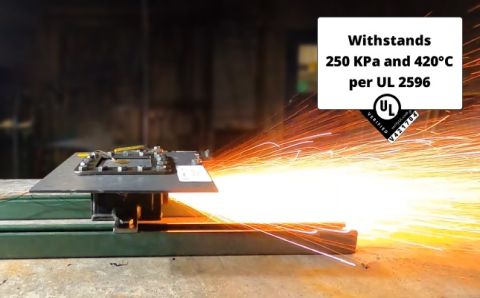
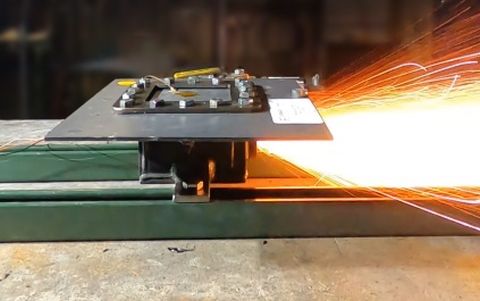
STAMAX 30YH570 resin can withstand an internal box pressure of 250 kPa and an internal box temperature of 420°C under UL 2596 test.
Although thermal runaway incidents are extremely infrequent, the safety-conscious automotive industry ensures that the design and performance of EV battery systems prolong the time available to exit a vehicle by delaying the propagation of a fire beyond the battery pack for as long as possible.
A major consideration is the proper selection and deployment of fire protection materials used for battery pack components, including enclosures and covers, trays, thermal barriers that separate cells into groups.
With the thermal runaway box testing according to UL 2596, Test Method for Thermal and Mechanical Performance of Battery Enclosure Materials, STAMAX 30YH570 resin has proved to be able to withstand an internal box pressure of 250 kPa and an internal box temperature of 420°C. Results were based on three replicate tests, with a panel thickness of 4mm.
The UL Verification serves as further validation of SABIC’s BLUEHERO initiative in demonstrating the performance advantages of thermoplastics over steel and other metals for battery packs. The advantages include weight and cost reduction, increased functional integration, and enhanced electrical and thermal insulation.