















Search History
Clear History
{{item.search_key}}
Hot Searches
Change
{{item.name}}
{{item.english_name}}
Subscribe eNews
Once A Week Once Every Two Weeks
{{sum}}
Log in Register

Applications

Inodrama Ventures and partners to develop one of Africa’s largest rPET production facilities

Groundbreaking smart pyrolysis recycling pilot plant for PU waste recycling

Syensqo secures new long-term agreement with Boeing

Products

LANXESS raises prices for rubber additives

New impact-modified PA6 for tank liners rotational molding

ARLANXEO’s Orange, Texas site achieves ISCC PLUS certification for Therban HNBR and Buns BR

Activities

  • Chinaplas2026 Preview Webinars | Smart Blow Moulding & AI Inspection (FREE)

  • CHINAPLAS 2026: Government blueprint for emerging industries driving new plastics innovation

  • Fakuma to celebrate 30th anniversary edition in October 2026

Pictorial

News Videos

Kingfa: Creation . Reproduce . Innovation

BASF: Next-generation solid-state battery pack unlocks electrical driven new dimension

Automatic 5L 120mm neck PET jar blowing machine

Conference Videos

【Mandarin session: Webinar playback】SACMI: Your Digitalized Manufacturing, Your Future Today

[Live Replay] LK Group: Smart Manufacturing, New Chapters in Southeast Asia: High-Efficiency Solutions in PET Preform & Thin-Wall Packaging

[Live Replay] Fu Chun Shin (FCS): Data-Driven Digital Rebirth and Intelligent Future of Injection Molding

Corporate/Product Videos

Guangdong Yilong Advanced Materials Technology Co Ltd

Mingsanfeng professional cap mould, Working together to pave the way for the growth of bottle cap molds.

QINGDAO BOUNI introduction video

Home > News > Automotive

Safer EV: Thermal barriers expanded to 3D variants for slowing down thermal runaway

Source:Adsale Plastics Network Date :2023-09-05 Editor :RC
Copyright: Original work. Please do not reprint.

Freudenberg Sealing Technologies has developed thermal barriers for electric vehicles (EVs) that slow down thermal runaway by increasing thermal propagation resistance, which are also available in 3D variants now.


Thermal runaway, the ignition or explosion of battery cell caused by a self-reinforcing heating process, is a major safety problem for EVs. It can be caused by both internal and external factors, including overcharging, excessive discharge, damage or heating of battery.


Thermal runaway releases not only flames and hot gases, but also electrically conductive particles. These in turn can cause thermal propagation in adjacent cells and lead to short circuits in electrical system.


Thermal barriers act as protective layers that can slow down or even prevent the heat and flames from spreading in the battery, which significantly increases safety.


Entirely new possibilities


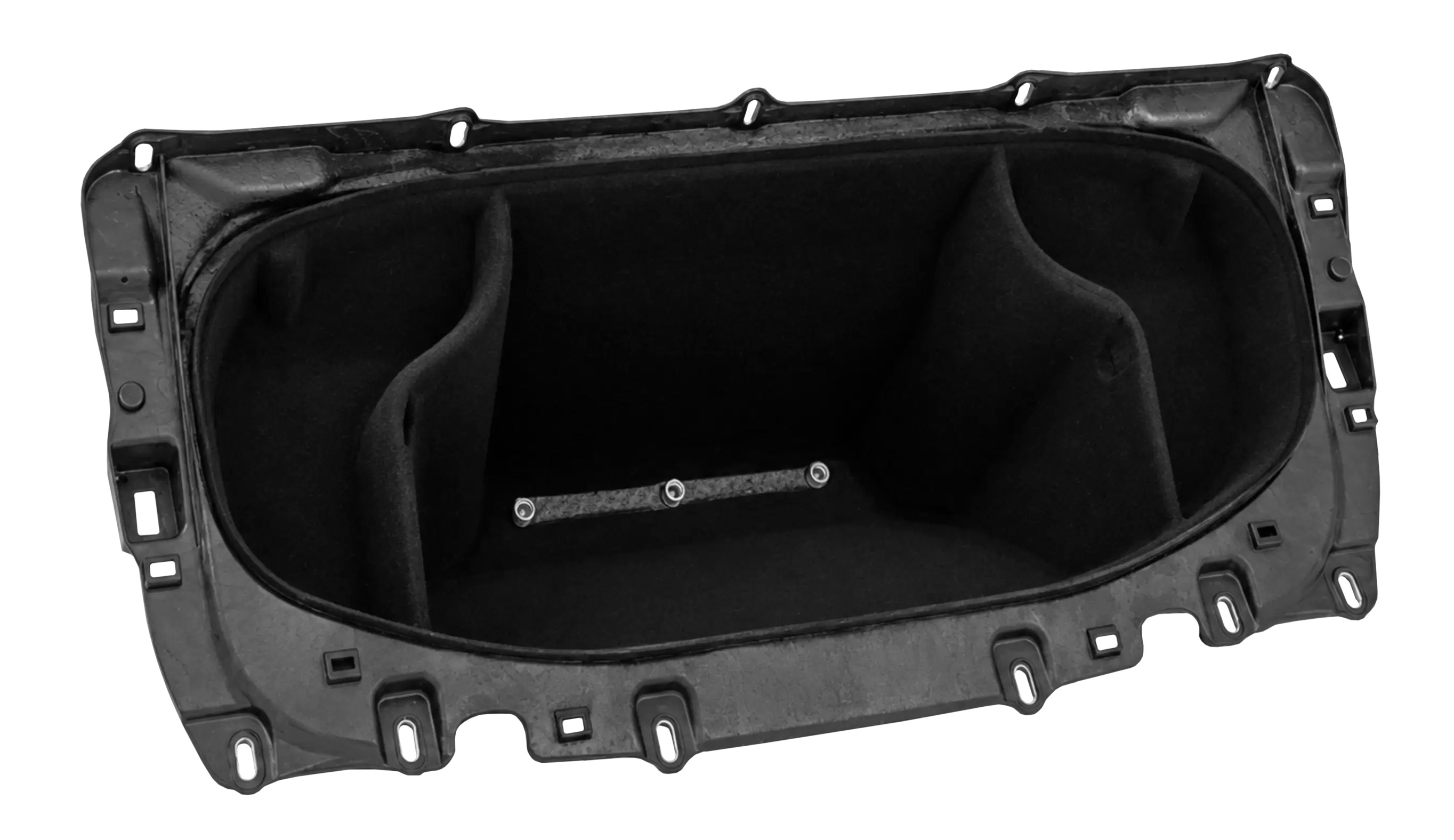
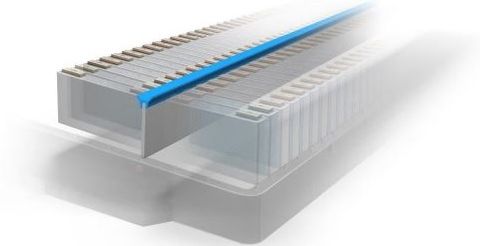
Beyond the existing two-dimensional barriers, such as flat mats and thermal blankets, customer-specific and 3D variants with lightweight feature can be manufactured by high and low volume manufacturing processes, such as injection molding and continuous extrusion.


3D thermal barrier_480.jpg 


3D thermal barriers serve as protective layers in batteries.


“What is completely new is that the thermal barriers are now also available in customized, flexible 3D geometries, which makes it possible to use them in various positions within the battery and allows for integration of additional components,” said Andrew Espinoza, Global VP Technology of the Oil Seals Powertrain & Driveline Division.


The company currently produces a few products, including profile seals, module separators and covers, including those for bus bars, cooling lines or electrical components.


Specific insulating materials developed


Freudenberg’s material experts have developed heat-resistant, electrical and thermal insulating materials specifically for these applications. The 3D thermal barriers use elastomer solutions, either in solid form or as a foam, and plastic components such as Quantix Ultra, which enables complex geometries.


These compounded polymers have been proved to safely withstand temperatures of up to 1,200°C. The special composition also makes the materials resistant against particle impacts, such as those that occur when cells are vented.


“The products meet the highest quality standards, are certified pursuant to UL 94 V-0 and are already being used successfully in initial series production for the automotive industry,” added Andrew Espinoza.


 Like 丨  {{details_info.likes_count}}
Lithium-ion battery
Electric vehicles
Elastomer
 GUANGDONG HTASO NEW MATERIALS TECHNOLOGY CO.,LTD      

The content you're trying to view is for members only. If you are currently a member, Please login to access this content.   Log in

Source:Adsale Plastics Network Date :2023-09-05 Editor :RC
Copyright: Original work. Please do not reprint.

Freudenberg Sealing Technologies has developed thermal barriers for electric vehicles (EVs) that slow down thermal runaway by increasing thermal propagation resistance, which are also available in 3D variants now.


Thermal runaway, the ignition or explosion of battery cell caused by a self-reinforcing heating process, is a major safety problem for EVs. It can be caused by both internal and external factors, including overcharging, excessive discharge, damage or heating of battery.


Thermal runaway releases not only flames and hot gases, but also electrically conductive particles. These in turn can cause thermal propagation in adjacent cells and lead to short circuits in electrical system.


Thermal barriers act as protective layers that can slow down or even prevent the heat and flames from spreading in the battery, which significantly increases safety.


Entirely new possibilities


Beyond the existing two-dimensional barriers, such as flat mats and thermal blankets, customer-specific and 3D variants with lightweight feature can be manufactured by high and low volume manufacturing processes, such as injection molding and continuous extrusion.


3D thermal barrier_480.jpg 


3D thermal barriers serve as protective layers in batteries.


“What is completely new is that the thermal barriers are now also available in customized, flexible 3D geometries, which makes it possible to use them in various positions within the battery and allows for integration of additional components,” said Andrew Espinoza, Global VP Technology of the Oil Seals Powertrain & Driveline Division.


The company currently produces a few products, including profile seals, module separators and covers, including those for bus bars, cooling lines or electrical components.


Specific insulating materials developed


Freudenberg’s material experts have developed heat-resistant, electrical and thermal insulating materials specifically for these applications. The 3D thermal barriers use elastomer solutions, either in solid form or as a foam, and plastic components such as Quantix Ultra, which enables complex geometries.


These compounded polymers have been proved to safely withstand temperatures of up to 1,200°C. The special composition also makes the materials resistant against particle impacts, such as those that occur when cells are vented.


“The products meet the highest quality standards, are certified pursuant to UL 94 V-0 and are already being used successfully in initial series production for the automotive industry,” added Andrew Espinoza.


全文内容需要订阅后才能阅读哦~
立即订阅

Recommended Articles

Automotive
People Mover: Fully autonomous, electric minibus with Covestro sustainable materials
 2026-02-26
Automotive
Toray technology bonds CFRP components 3x faster
 2026-02-11
Automotive
Volkswagen to invest EUR 90M in Zwickau vehicle plant for circular economy
 2026-02-02
Automotive
(Interview) Hidden champion: One in three cars in China uses Vigor’s plastic gears
 2026-01-27
Automotive
Market report: Flying High in the Trillion-Dollar Low-Altitude Economy Racetrack
 2026-01-23
Automotive
HRC and SACC sign partnership agreement on composite parts for Airbus A220 wing body
 2026-01-19

You May Be Interested In

Change

  • People
  • Company
loading... No Content
{{[item.truename,item.truename_english][lang]}} {{[item.company_name,item.company_name_english][lang]}} {{[item.job_name,item.name_english][lang]}}
{{[item.company_name,item.company_name_english][lang]}} Company Name    {{[item.display_name,item.display_name_english][lang]}}  

Polyurethane Investment Medical Carbon neutral Reduce cost and increase efficiency CHINAPLAS Financial reports rPET INEOS Styrolution Evonik Borouge Polystyrene (PS) mono-material Sustainability Circular economy BASF SABIC Multi-component injection molding machine All-electric injection molding machine Thermoforming machine

Safer EV: Thermal barriers expanded to 3D variants for slowing down thermal runaway

识别右侧二维码,进入阅读全文
下载
x 关闭
订阅
亲爱的用户,请填写一下信息
I have read and agree to the 《Terms of Use》 and 《Privacy Policy》
立即订阅
Top
Feedback
Chat
News
Market News
Applications
Products
Video
In Pictures
Specials
Activities
eBook
Front Line
Plastics Applications
Chemicals and Raw Material
Processing Technologies
Products
Injection
Extrusion
Auxiliary
Blow Molding
Mold
Hot Runner
Screw
Applications
Packaging
Automotive
Medical
Recycling
E&E
LED
Construction
Others
Events
Conference
Webinar
CHINAPLAS
CPS+ eMarketplace
Official Publications
CPS eNews
Media Kit
Social Media
Facebook
Linkedin