









Search History
Clear History
{{item.search_key}}
Hot Searches
Change
{{item.name}}
{{item.english_name}}
Subscribe eNews
Once A Week Once Every Two Weeks
{{sum}}
Login Register

Applications

Avient launches low loss dielectric thermoplastics for mmWave radome applications

Hoogesteger signs capacity reservation agreement for releaf with Avantium

UNITED CAPS publishes its first Group Sustainability Report

Products

KEBO merges into Plastisud Group

Dow invests $100M for specialty silicones manufacturing and innovation

SI Group and Shengxiao Group establish JV to expand Biphenol capacity in China

Activities

  • PLAST 2026 concluded beyond expectations

  • CRRE inks agreement with 5 key players in wind and solar equipment circularity

  • Fakuma 2026: Multi-faceted program for plastics industry

Pictorial

News Videos

A talk with Italian injection molding expert BMB

Inside Moretto: A tour of their Italian production facilities

Top 10 Technology Trends awards presented at CHINAPLAS 2026

Conference Videos

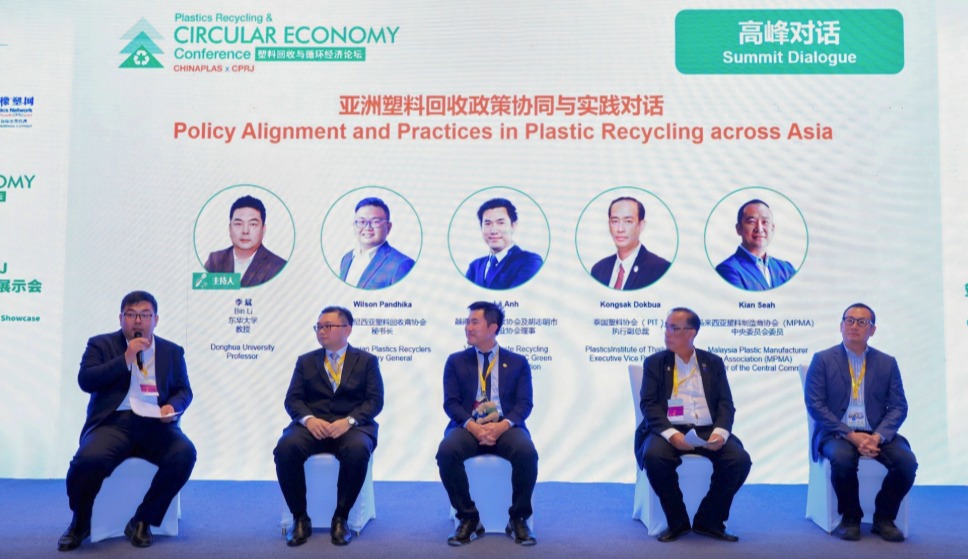
Summit Dialogue: Policy alignment and practices in plastic recycling across Asia

Interview: Pathways for development of plastics recycling in Malaysia

Driving systemic change: Unilever’s evolution in the circular economy

Corporate/Product Videos

Labels peeling, tape yellowing, slitting snapping? One raw material change fixes all three.

For Rubber & Plastic Extrusion Equipment, trust Hebei Zhongsen! Custom Extruders, Traction Machines & Vulcanizing Lines

Is Your Mold Supplier Really Giving You Peace of Mind?

Home > News > Others

The novel NOR light stabilizer for agrofilm in critical agrochemical conditions

BASF
Source:BASF Date :2021-03-15 Editor :BASF

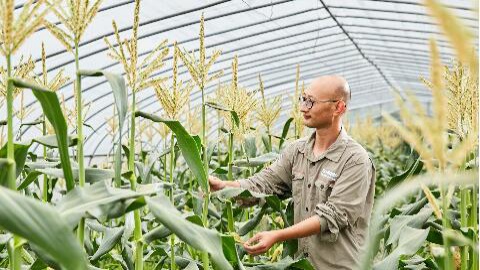
According to the United Nations estimates, over 9 billion people will be living on Earth by the year 2050. The amount of arable land needed to feed them, however, will not increase at the same rate. Inexpensive greenhouses made from agricultural plastic film represent one way to solve this problem: With the aid of such greenhouses, the output per hectare can be increased considerably. 


China's agricultural film production ranks first in the world, accounting for more than half of the world's agricultural film production. China has nearly 1000 large-scale agricultural film production enterprises, with a total production capacity of more than 4 million tons. In 2020, China's annual apparent consumption of agricultural film reached more than 2.8 million tons.
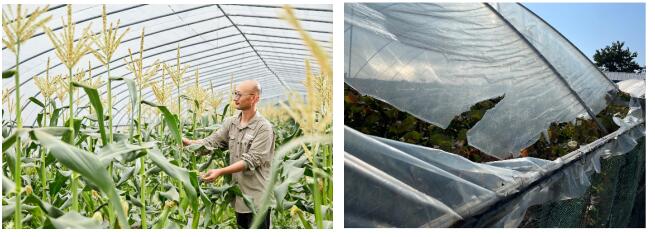


Most agricultural films need to be used outdoors, and its service life is one of the important indexes for the quality of agricultural films. However, in addition to the basic resin molecular weight distribution, catalyst residue, degree of branching of molecules and other indicators of the resin itself, external conditions such as UV intensity, the addition of other additives and films utilized environment, can have great impact on the service life of agricultural film too. Among these factors, the daily ultraviolet light can destroy polyolefin molecules and break down the long chain molecules into short pieces. Therefore, all kinds of aging resistant agricultural films need light stabilizers to meet the corresponding service life requirements. Light stabilizers are the most important and necessary additive for the "long life" of agricultural films. 


As a result of urban growth, and also because of increased erosion and climate change, the amount of arable land is decreasing. The challenge is how to increase the intensity of agricultural activity while keeping the products affordable. 

Optimized agriculture includes carefully considered use of agricultural chemicals to prevent harvests from attack by pests or mold. However, most pesticides will react with the "longevity guard" light stabilizers in the agricultural plastic film. These deactivated light stabilizers cannot protect the agricultural film anymore, resulting in the premature failure phenomenon of those agricultural films. This can result in decreased crop yield, and loss of income to the farmer.


BASF, as a global leader in plastic additives, developed its Tinuvin® NOR® 356 which is based on the advanced NOR® technology. This changes the molecular structure of the light stabilizer so that the reactivity between the light stabilizer and the active groups of pesticides is reduced immensely. It leads to a much longer service life in an environment of high pesticide residues and rebuts all the disadvantages.   

Its advantages are as below: 

1) New generation NOR® HALS with outstanding light stability

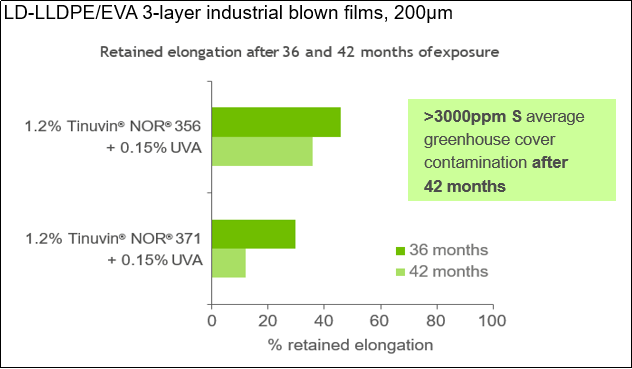
2) High resistance to critical levels of chemicals: >3,000ppm S, 200ppm Cl

(Greenhouse Cover of the Spanish Agricultural Research Institute.)

The above data shows that under the condition of continuous high sulfur fumigation, the service life of agricultural film is more than 3 years.

3) Higher transmission of visible light with positive impact on crop yield and quality, and no interaction with natural pollinators

4) Low interaction with pigments


Tinuvin®  NOR® 356 brings excellent light stability, long service life under critical pesticide environment, and good light transmittance as well as other properties, that provide a strong boost for the increase of crop yield and the farmer’s income. In addition, it can be used in all kinds of agricultural plastic products based on Polyolefin plastics, such as agricultural greenhouse film, mulch film, irrigation pipe system, silage bags, etc.


 Like 丨  {{details_info.likes_count}}
BASF

The content you're trying to view is for members only. If you are currently a member, Please login to access this content.   Login

BASF
Source:BASF Date :2021-03-15 Editor :BASF

According to the United Nations estimates, over 9 billion people will be living on Earth by the year 2050. The amount of arable land needed to feed them, however, will not increase at the same rate. Inexpensive greenhouses made from agricultural plastic film represent one way to solve this problem: With the aid of such greenhouses, the output per hectare can be increased considerably. 


China's agricultural film production ranks first in the world, accounting for more than half of the world's agricultural film production. China has nearly 1000 large-scale agricultural film production enterprises, with a total production capacity of more than 4 million tons. In 2020, China's annual apparent consumption of agricultural film reached more than 2.8 million tons.


Most agricultural films need to be used outdoors, and its service life is one of the important indexes for the quality of agricultural films. However, in addition to the basic resin molecular weight distribution, catalyst residue, degree of branching of molecules and other indicators of the resin itself, external conditions such as UV intensity, the addition of other additives and films utilized environment, can have great impact on the service life of agricultural film too. Among these factors, the daily ultraviolet light can destroy polyolefin molecules and break down the long chain molecules into short pieces. Therefore, all kinds of aging resistant agricultural films need light stabilizers to meet the corresponding service life requirements. Light stabilizers are the most important and necessary additive for the "long life" of agricultural films. 


As a result of urban growth, and also because of increased erosion and climate change, the amount of arable land is decreasing. The challenge is how to increase the intensity of agricultural activity while keeping the products affordable. 

Optimized agriculture includes carefully considered use of agricultural chemicals to prevent harvests from attack by pests or mold. However, most pesticides will react with the "longevity guard" light stabilizers in the agricultural plastic film. These deactivated light stabilizers cannot protect the agricultural film anymore, resulting in the premature failure phenomenon of those agricultural films. This can result in decreased crop yield, and loss of income to the farmer.


BASF, as a global leader in plastic additives, developed its Tinuvin® NOR® 356 which is based on the advanced NOR® technology. This changes the molecular structure of the light stabilizer so that the reactivity between the light stabilizer and the active groups of pesticides is reduced immensely. It leads to a much longer service life in an environment of high pesticide residues and rebuts all the disadvantages.   

Its advantages are as below: 

1) New generation NOR® HALS with outstanding light stability

2) High resistance to critical levels of chemicals: >3,000ppm S, 200ppm Cl

(Greenhouse Cover of the Spanish Agricultural Research Institute.)

The above data shows that under the condition of continuous high sulfur fumigation, the service life of agricultural film is more than 3 years.

3) Higher transmission of visible light with positive impact on crop yield and quality, and no interaction with natural pollinators

4) Low interaction with pigments


Tinuvin®  NOR® 356 brings excellent light stability, long service life under critical pesticide environment, and good light transmittance as well as other properties, that provide a strong boost for the increase of crop yield and the farmer’s income. In addition, it can be used in all kinds of agricultural plastic products based on Polyolefin plastics, such as agricultural greenhouse film, mulch film, irrigation pipe system, silage bags, etc.


全文内容需要订阅后才能阅读哦~
立即订阅

Recommended Articles

Others
Avantium and Heynen Systems develop pillows made with plant-based PEF
 2026-05-27
Others
AkzoNobel coatings supplies protective power for flagship green energy project in China
 2026-05-27
Others
Material breakthroughs in low-altitude economy only seen in CHINAPLAS
 2026-05-19
Others
KRAIBURG TPE’s sustainable series for sustainable robotic applications
 2026-05-13
Others
Washable, biobased kitchen towel commercialized
 2026-05-13
Others
Covestro recycled PC for suitcase
 2026-04-28

You May Be Interested In

Change

  • People
  • Company
loading... No Content

{{[item.truename,item.truename_english][lang]}} {{[item.company_name,item.company_name_english][lang]}} {{[item.job_name,item.name_english][lang]}}
{{[item.company_name,item.company_name_english][lang]}} Company Name    {{[item.display_name,item.display_name_english][lang]}}  

Polyurethane Investment Medical Carbon neutral Reduce cost and increase efficiency CHINAPLAS Financial reports rPET INEOS Styrolution Evonik Borouge Polystyrene (PS) mono-material Sustainability Circular economy BASF SABIC Multi-component injection molding machine All-electric injection molding machine Thermoforming machine

The novel NOR light stabilizer for agrofilm in critical agrochemical conditions

识别右侧二维码,进入阅读全文
下载
x 关闭
订阅
亲爱的用户,请填写一下信息
I have read and agree to the 《Terms of Use》 and 《Privacy Policy》
立即订阅
Top
Feedback
Chat
News
Market News
Applications
Products
Video
In Pictures
Specials
Activities
eBook
Front Line
Plastics Applications
Chemicals and Raw Material
Processing Technologies
Products
Injection
Extrusion
Auxiliary
Blow Molding
Mold
Hot Runner
Screw
Applications
Packaging
Automotive
Medical
Recycling
E&E
LED
Construction
Others
Events
Conference
Webinar
CHINAPLAS
CPS+ eMarketplace
Official Publications
CPS eNews
Media Kit
Social Media
Facebook
Linkedin