

















Coca-Cola, Nestlé, and Danone face legal complaint for greenwashing in Europe

“100%” recycling claims, nature images and green visuals on packaging are commonly presented to the public to imply the suppliers’ contribution to sustainability and circular economy.
On November 7, 2023, environmental and consumer rights organizations filed a legal complaint against food and drink giants Coca-Cola, Nestlé, and Danone for the use of misleading “100% recycled” and “100% recyclable” claims on PET plastic water bottles sold across Europe.
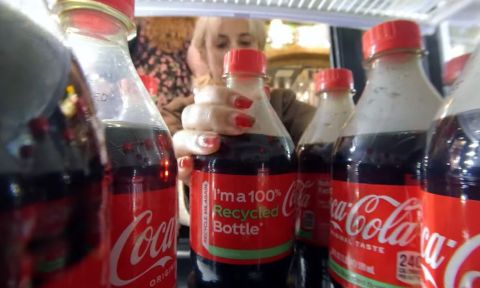
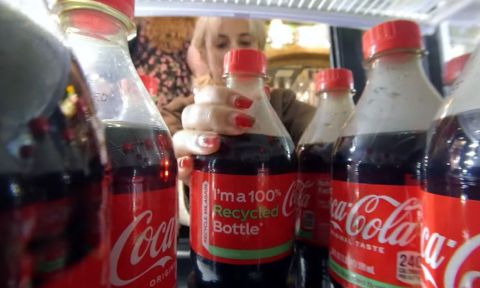
Coca-Cola bottle with “I’m a 100% Recycled Bottle” claim. (Source: Coca-Cola)
Supported by ClientEarth and Environmental Coalition on Standards (ECOS), EU consumer protection organization Bureau Européen des Unions de Consommateurs (BEUC) raised an external alert to the European Commission and the Consumer Protection Cooperation Network against the companies for suspected widespread infringement of consumer protection law.
Claims commonly found on plastic water bottles often give an impression that they can be recycled in an infinite, circular loop. However, the complaint claims that evidence shows that there is no such truly circular plastic, as recycling process degrades properties and makes “infinite” recycling impossible.
“It is important companies don't portray recycling as a silver bullet to the plastic crisis — instead they need to focus efforts on reducing plastic at source,” stated Rosa Pritchard, plastics lawyer, ClientEarth.
Step in by policymakers
In its support of BEUC’s complaint, ClientEarth calls for companies to cease using misleading claims that may distract consumers from making better environmental choices, such as using a refillable water bottle. It also encourages food and drink giants to shift away from the harmful single-use plastic business model.
Justin Wilkes, Executive Director at ECOS, added that it is crucial to have reliable information on the level of recycled plastics on bottles. Policymakers must set clear rules on recycled content that are implemented by standardized reliable methodologies to end the overwhelming greenwashing problem.
In September, Parliament and Council of EU have reached a provisional agreement on new rules to ban misleading greenwashing advertisement. (Click here to read more)
Mirroring lawsuit in US
On a similar greenwashing problem, the New York attorney general sued PepsiCo on 15 November 2023, for polluting environment in the Buffalo region and endangering public health through its single-use plastic bottles, caps and wrappers.
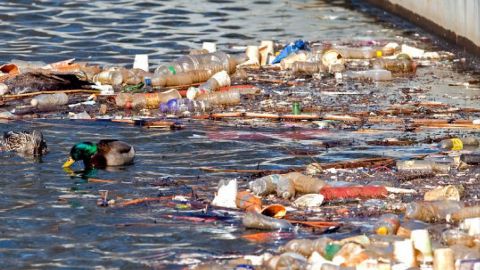
Used packaging clogged in river in Baffalo. (Source: New York Attorney General's office)
Attorney general, Letitia James, demanded the company to provide remedy for the contamination in Buffalo region and to stop selling or distributing single-use plastic products in the Buffalo area that do not contain “adequate” warning labels.
According to The New York Times, PepsiCo spokeswoman said in a statement that the company “is serious about plastic reduction and effective recycling, and has been transparent in our journey to reduce use of plastic and accelerate new packaging innovation.”
In the US, the Federal Trade Commission (FTC) and state Attorneys General (AGs) initiate investigations and enforcement litigation on deceptive trade practices and advertising tied to ESG-related claims.
The Green Guides by FTC is issued and is also continuously updated. With the most recent update about guidance on product certifications, seals of approval and claims about materials and energy sources that are “renewable” and “carbon offset”.