















ILLIG expands pulp laminated application to dairy cups

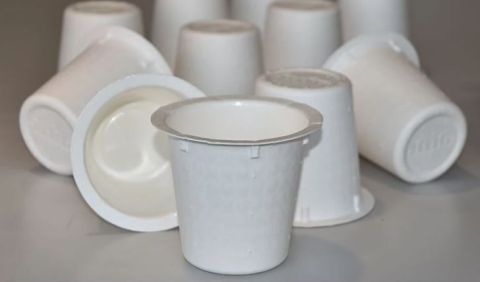
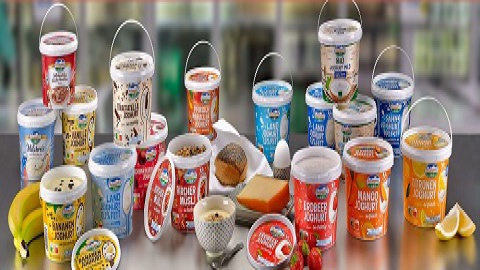
ILLIG, thermoforming and packaging specialist, expands the range of applications of XLU series with newly developed lamination process for pulp packaging of dairy and food products.
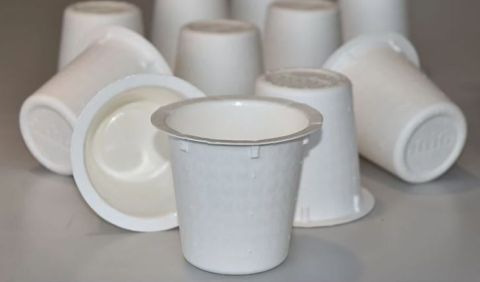
ILLIG expands the application of lamination process for pulp packaging of dairy and food products.
Looking into the mechanism
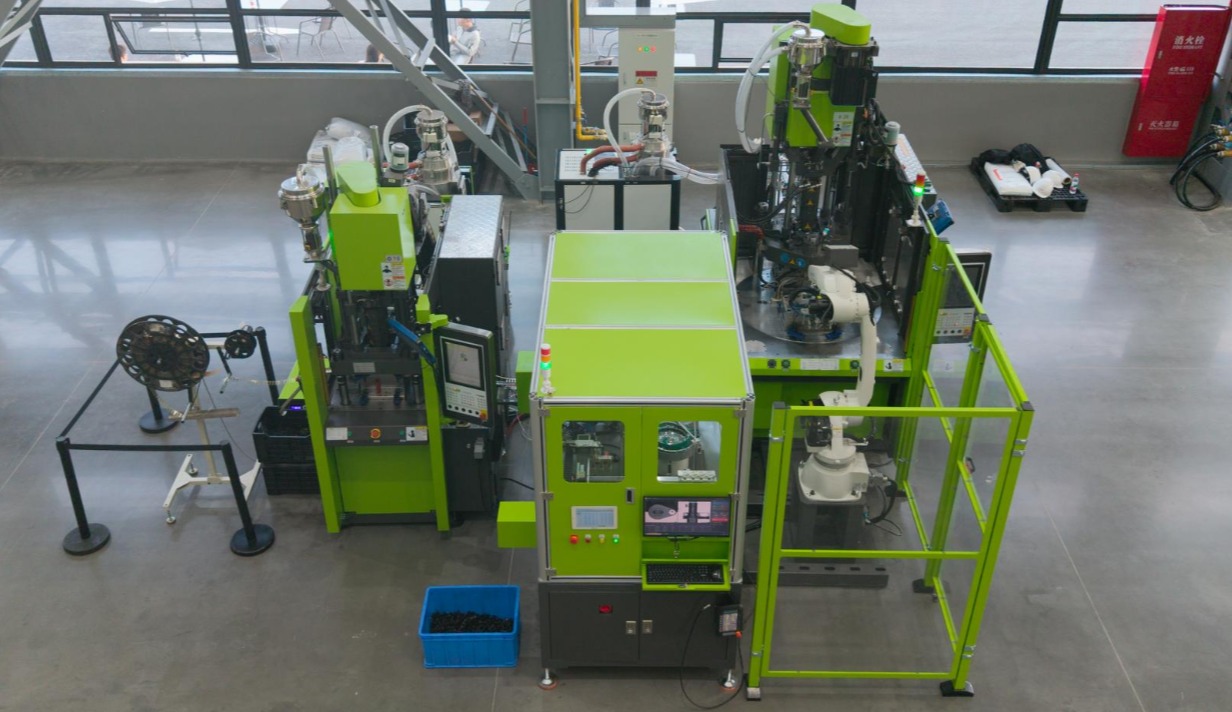
XLU series is a modularly designed machine concept, including the machine variants PLU (Pulp Lamination Unit), CLU (Cardboard Lamination Unit) and TLU (Tray Labeling Unit). The solutions for lamination and labelling are designed primarily for food and cosmetics industries.
The PLU 40 works in five steps. First, the non-laminated pulp trays or cups are inserted into the format-independent magazine and automatically separated. The magazine is 1,000mm long, enabling up to 30 minutes of runtime without refilling. It can be refilled without interrupting the machine.
Then, the non-laminated parts are then removed from the magazine and fed into the laminating station by a newly developed handling system.
With rotating table for two lower tools, handling and laminating processes can be performed simultaneously by the rotating table, with number of cycles increased to up to 10 cycles/minute.
Next, rotating table turns 180°, bringing the tray and lower tool into position to be laminated. The film is heated by the contact heater in the upper tool, stretched using a vacuum, and then applied to the tray. The edges of the film are cut off, and the rotating table rotates another 180°.
Lastly, the laminated tray is removed from the lower tool and stacked directly on the discharge conveyor and transported out of the machine.
Outstanding barrier properties and sealability
For the first time, the PLU 40 with an integrated digital matrix heating system allows film from a thickness of 50 µm with drawing depths of up to 90 mm. The parts are stretched without contact, leaving no chill marks caused by pre-stretchers. The steel rule die integrated in the tool enables a clean and reliable cut without fraying.
The focus of this packaging is on protecting food against the ingress and egress of gas, as well as contamination.
Moreover, the pulp or cardboard packaging is protected against water and oils without the need for chemical additives, such as per- and polyfluoroalkyl substances (PFASs). Thus, less plastic is used and the packaging remains recyclable, depending on film type and thickness.
In addition to barrier properties, the lamination process also ensures the sealability of packaging, which is important in many food applications.