










(Interview) Tackle the mattress challenge for a circular economy

According to the latest report by Fortune Business Insights, the global mattress market size was US$30.38 billion in 2019 and is projected to reach US$40.37 billion by 2027, exhibiting a CAGR of 4.2% during the forecast period.
Along with the growth, massive amounts of end-of-life mattresses are sent to landfills and incinerators every year, which represents environmental risks.
To address this issue, Covestro, a leading polymer materials producer, is putting great efforts into tackling the challenge with different approaches of circular economy.
The company has a variety of projects related to mattress recycling, and successfully uses CO2 as raw material for polyurethane foam, helping to close the loop in terms of sustainable production.
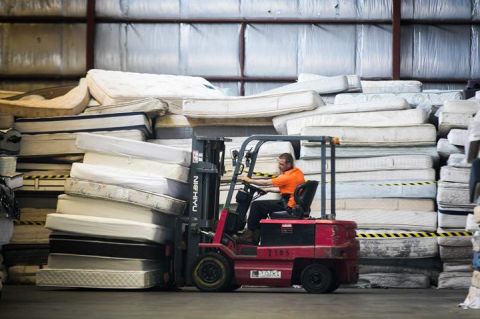
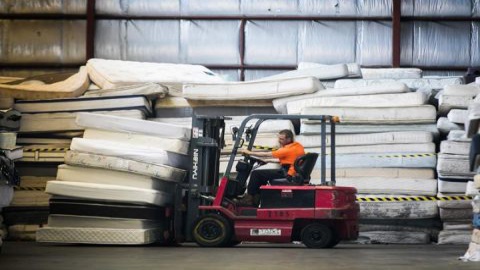
As the global mattress market is expected to grow, mattress recycling is becoming of increasing importance. (Photo credit: Anna Kucera)
Eliminate plastic waste and reduce CO2 emission
Covestro is implementing a new strategic program to achieve its latest vision “We will be fully circular” for accelerating the change to a circular economy.
In an interview with Adsale Plastics Network, Dr. Christian Haessler, Global Program Lead Circular Economy at Covestro, elaborated on the specific targets of this program.
In circular economy, end-of-life products are viewed as a resource, recycling along the value chain makes them last for as long as possible. It also means exploring alternative sources of sustainable raw materials, such as biomass or even CO₂ itself. On top of that, renewable energy is used to power a truly resource-efficient economy.
By embedding these principles, Covestro’s program focuses on four topics: alternative raw materials, innovative recycling, renewable energy, and joint solutions.
Dr. Haessler pinpointed that the program has two major targets: resolving the issue of plastic waste in the environment, and achieving climate neutrality with CO2 emission reduction.
“Currently we have a linear model…We want to bend this. We want to make it circular that starts with recycling materials at the end of their lifetime. They contain the carbon we need. We reuse them in parallel with bio-based raw materials. Within this transformation, we are going away from oil derivatives,” he explained.
In this way, Covestro’s vision of becoming fully circular will also entail the company’s pathway to climate neutrality.
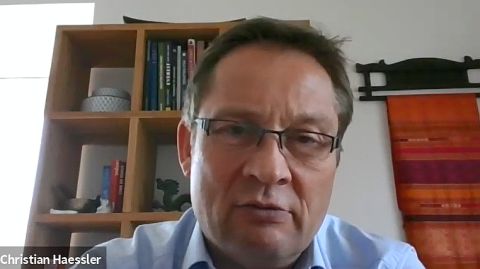
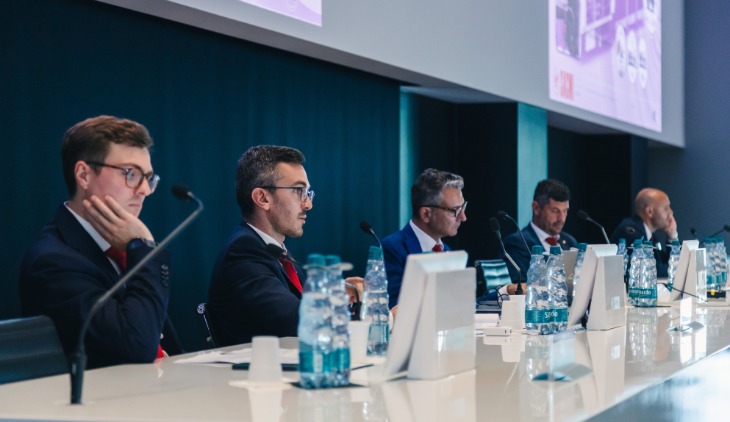
Dr. Christian Haessler, Global Program Lead Circular Economy, Covestro
Different approaches with circular economy in mind
Covestro has been developing innovative recycling technologies, and is now expanding its effort to polyurethane recycling. Notably, mattress is a big single application of polyurethane foam, expanding mattress recycling is in line with the company’s plan to promote circular economy.
Covestro has been collaborating with social and nonprofit organizations on reducing the number of end-of-life mattresses going to landfills. Used mattresses are taken back for mechanical recycling. The foam is recycled into carpet backing and sports-related surfaces.
However, mechanical recycling is not the most effective mean, because applications of the recycled products are limited due to hygiene issue and unchanged properties of polyurethane foam. In this case, full circularity is not yet achieved.
Instead, the key option would be chemical recycling, said Dr. Haessler. With chemical recycling, materials are reduced to their original molecular forms and can eventually be processed into new materials.
Covestro is therefore developing technology for chemical recycling of polyurethanes to turn the materials into building blocks for polymers, such as polyols and amines. It is also part of the Europe-wide research project PUReSmart, which shares the same goal with the company.
Dr. Haessler unveiled that the company is currently considering building a pilot plant for chemical recycling polyurethanes, based on the company’s own technology and engineering.
Meanwhile, Covestro has developed a raw material called “cardyon”, up to 20% of which is made with emitted CO2. It can be used to produce high quality polyurethanes. This approach brings CO2 back into the value chain and reduces reliance on fossil fuels.
The evolving development in these different approaches, from mechanical to chemical recycling and even use CO2 as raw material, shows how Covestro strives to achieve full circularity of polyurethanes.
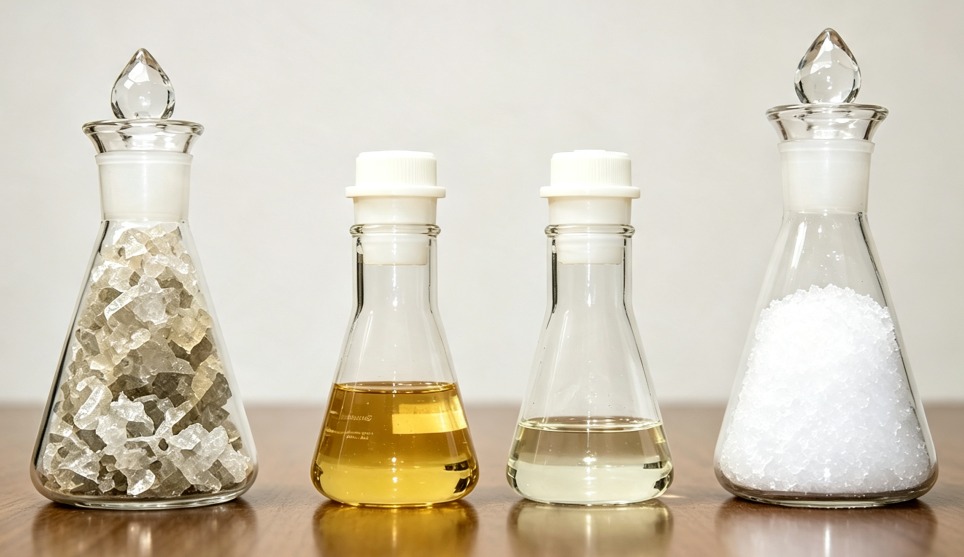
cardyon is an innovative raw material for the production of high quality polyurethanes.
Face challenges and collaborate to reach ultimate goal
In order to achieve the company’s vision for circular economy, Covestro has to overcome many challenges. In particular, Dr. Haessler remarked that technology development, market differentiation and production transformation are the three main challenging areas.
As he said, chemical recycling polyurethane and using CO2 as raw materials in production demonstrate the challenges in innovative technology development. At the same time, Covestro may need to transform its production sites in the future, and the effects to existing production have to be studied.
From a macro perspective, Dr. Haessler believes that different players in the value chain have to collaborate to transform the conventional linear business model into a new circular one.
“It naturally includes the whole value chain. We need our customers, we need our suppliers to be part of that,” he concluded. “So we need cross-industry cooperation, cross value chain cooperation and, of course, a strong alignment also with the society and politics. And last but not least, also the end users.”