














NatureWorks: Bioplastics on the march, scaling up production

In 2024, we will see an increasing trend to adopt bioplastics as the best option for reducing the impact on climate change and addressing the growing plastics waste problem, according to Erik Ripple, President & CEO of NatureWorks LLC.
These benefits are reinforced by requirements such as plastics strategy and circular economy principles, global regulations on extended producer responsibility, green marketing claims, and ESG or carbon emissions disclosures.
Consumer demand for materials that lower the impact on climate change and reduce plastic waste, combined with governments implementing extended producer responsibility legislation, give bioplastics an increasingly important role to play in the materials market, comments Ripple.
“Bioplastics are no longer a niche material,” he describes. In response to anticipated rising demand, bioplastics manufacturers including NatureWorks are increasing production capacity, which is globally set to reach 7.4 million metric tons by 2028.

Erik Ripple, President & CEO of NatureWorks.
Bioplastics technology developing in full swing
On bioplastics technology, Ripple expects technological acceleration to continue in 2024 with a focus on achieving new levels of scale. “New formulations and converting techniques will enable bioplastics to run at commercial speeds matching incumbent petrochemical plastics,” he says.
He also sees new innovations with blends of bioplastics like PLA/PHA or PLA/PBS that will extend performance attributes such as heat resistance, strength, flexibility, or softness. Bioplastics will thus be able to replace petrochemical plastics in an increasing number of applications.
Specifically, from food packaging applications to nonwovens and 3D printing, bioplastics like NatureWorks’ IngeoTM PLA biopolymer are seeing interest from the market for new performance attributes alongside sustainability credentials such as low carbon footprint, measurable bio-based content and compostability.
New innovations in packaging, nonwovens and 3D printing
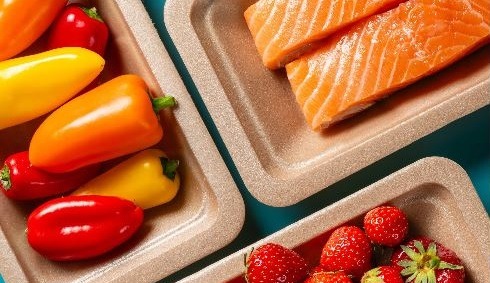
At CHINAPLAS, NatureWorks showcases the latest innovations in rigid and flexible food packaging, including new applications resulting from joint development between NatureWorks and CJ Biomaterials.
Using NatureWorks’ IngeoTM PLA and CJ Biomaterials’ PHACT® PHA, the two companies are developing bio-based solutions to increase the impact strength of clear, thermoformed food packaging containers and soften films for multilayer flexible film structures while maintaining bio-based content levels and options for compostability that can meet certification requirements in the US and EU.
On sustainable luxury packaging solutions, laminating paper boxes with a biaxially-oriented Ingeo PLA film create impactful design through excellent printability and high-end finishes that meet the needs of top beauty companies while using materials only made from bio-based, renewable resources.
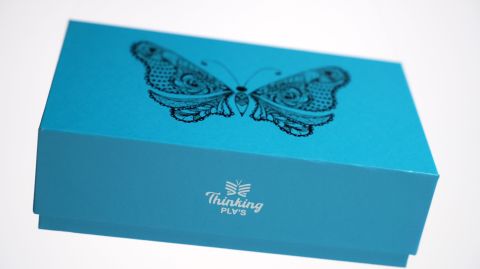
Thinking PLA Luxury Packaging - Laminating paper boxes with biaxially-oriented Ingeo PLA films provide excellent printability and high-end finishes.
Nonwovens on display include applications that make use of Ingeo PLA as a nonwoven in compostable filtration and infusion applications for coffee pods and tea bags.
Also featured is the recently launched Ingeo 6500D biopolymer grade which incorporates PHACT® to create softer, bio-based nonwovens for hygiene applications like diapers and wipes. When used in combination with its hydrophilic fibers technology, Ingeo 6500D can be used to produce softer nonwovens that outperform PP in fluid management properties such as re-wet and surface run-off.
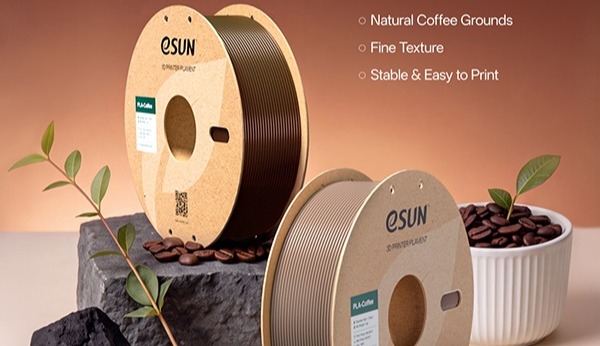
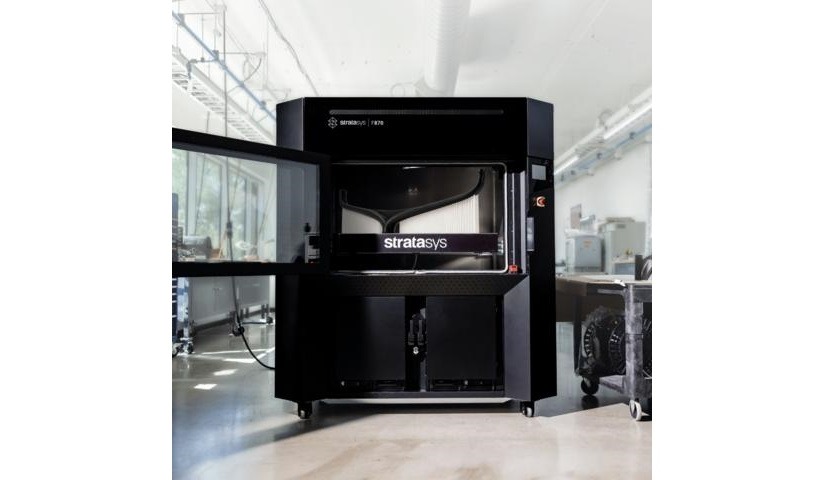
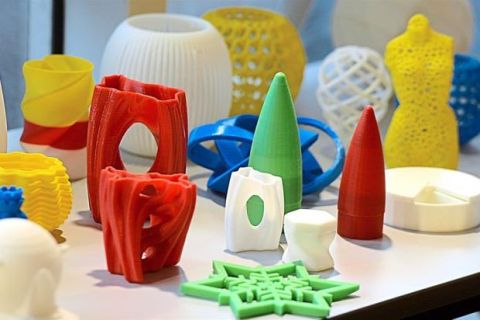
For 3D printing, applications include how Ingeo PLA can be used in 3D printing filaments, resins, and SLS powders for industrial applications such as manufacturing prototypes, models for investment casting, or custom-fit medical equipment.
The company also showcases Ingeo 3D700 that is specifically developed for large format applications in industrial settings to prevent warpage and reduce lost time when creating very large 3D-printed models.
Tightening laws on sustainability metrics in US and EU
Having built incredible momentum in recent decades, the bioplastics industry is ready to accelerate even more, remarks Ripple. Key drivers that lead the way are the expansion of extended producer responsibility legislation, and requirements for companies to disclose sustainability metrics including carbon emissions.
“These new requirements will drive innovation towards the use of bioplastics like our Ingeo PLA that have a carbon footprint 73% smaller than fossil-based plastics and can fit into new growing circular waste management systems like composting, recycling, and anaerobic digestion,” he says.
Furthermore, regulations are increasing towards green marketing claims. From the revision of the FTC Green Guides in the US to the Green Claims Directive in the EU, governments are aiming to ban generic environmental claims not backed up with proof and regulate the use of sustainability labels.
“We see claims like bio-based being narrowed down to products, like PLA, with measurable, certified, biogenic carbon,” he explains. “Likewise, claims for compostability, degradability, and recyclability will also be more narrowly defined in favor of certified products with available infrastructure.”
These structural changes to the market will drive bioplastics manufacturers like NatureWorks to scale up its production, which the company is currently undergoing.
“We have a fully integrated, 75kta Ingeo PLA manufacturing facility under construction in Thailand that is set to open in 2025,” he reveals. This additional capacity will be important for serving the growing demand in China and the greater Asia Pacific region for bioplastics that meet ESG disclosure requirements and local packaging or plastics mandates.
Booth: 1.2D48