




















Innovative “floating factory” model to meet overwhelming demand for facial masks

The COVID pandemic has generated an overwhelming demand for facial masks and other personal protective equipment (PPE) products, with suppliers resorting to novel modes of production, including creating what are called “floating factories” – entire production facilities set up on ships which also sail across oceans to deliver the coveted merchandize to buyers.
Turkey’s A&S Holding is one such company that has taken production to new heights and seized on the opportunity to produce facial masks which are in high demand.
A&S Holding Chairman Uğur Akkuş has been saying in media interviews that many manufacturers around the world had shifted from their regular textile production to manufacturing facial masks and other health-related products.
As COVID-19 spread worldwide in early 2020 and the demand for facial masks surged, many manufacturers worked overtime to meet the overwhelming demand and devised novel production models to not only meet the rising demand but also ensure speedy delivery.
Turkish exporters went on what local suppliers call “fast-track production”. The World Trade Organization data suggests that Turkey, a major textile supplying nation, had built up adequate stocks of raw materials for manufacturing the high volumes of masks coveted by much of the world.
500 million masks could be produced per ship before docking
A&S Holding lost no time in creating a new company Global Mask in Hadımköy, Istanbul, within a month. The move was well received in the market and U.S. buyers placed bulk orders, the size of each order ranging from 100 to 150 million masks, according to Akkus.
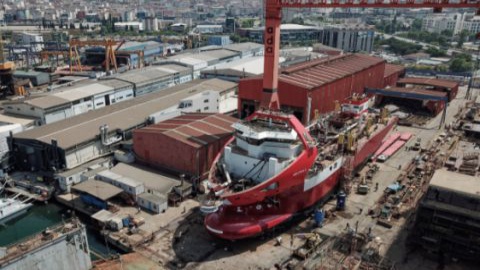
The company decided to refurbish three ships and use them as what came to be euphemized as “floating factories” for facial mask production. According to A&S Holding, each ship could produce about 500 million masks while sailing through the high seas and eventually docking in the countries with the largest demand – mainly in North and South America.
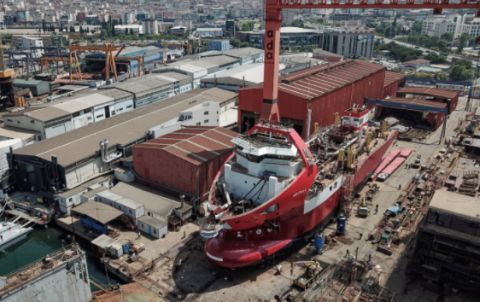

“Floating factories” to produce facial masks on the way to USA. (Source: A&S Holding)
Productivity higher than factories
Akkus explained that this novel production mode had its advantages, including the low prices at which ships were being sold during the pandemic. According to market sources, Akkus’ company bought the three ships, which were previously used for transporting cars, for a total of nearly US$89 million.
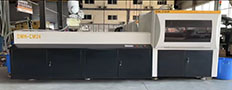
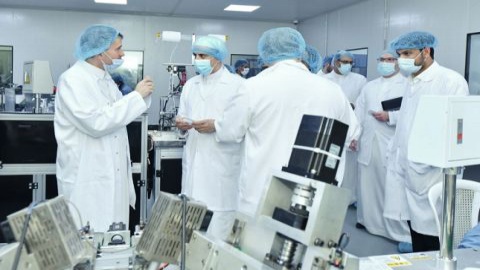
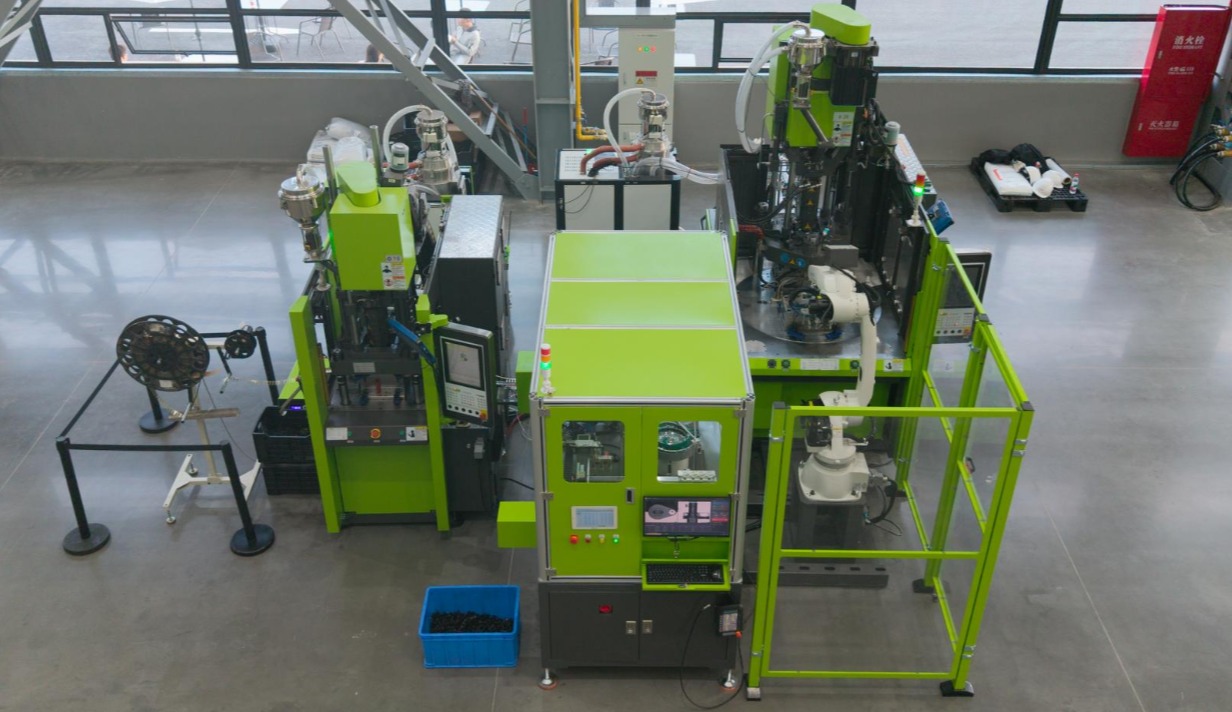
The chairman of A&S Holding further maintained that by placing 100 hi-tech mask production machines, for example, in each ship, productivity reached a level much higher than in a factory as it helped save time and costs. Akkus said about 100 high-tech mask production machines operated by 150 professional employees involved in producing 10,000 masks per hour on each ship
“We will not only produce pre-ordered FDA-approved masks and clinical coats in these factories. In addition to production for sales, we will make products that we will donate to the cities we visit. We will donate up to 20% of sales to economically underprivileged groups such as Native Americans, Latinos and African Americans in the US and international nonprofit organizations,” Akkuş said.
“With this floating factory model, the production will be completed while the ships are traveling toward their destination, and therefore the time spent in production and logistics will be considerably shortened,” he added.
“In an emergency situation, countries will no longer have to wait for PPE products for weeks or months,” Akkuş explained. The “floating factory” model, enabled production to be completed even as ships sailed towards their destination, saves in terms of production and transportation time.
The ships will be docked at a number of ports – in New York, Florida and California – for offloading the mask consignments. These states are considered to be strategic points for distribution of the masks and PPE products for which there is strong demand resulting from high infection rates. One of the ships, according to Akkus, will also call in Latin America and another one in London.