


















World-first economical and energy-efficient polystyrene recycling process

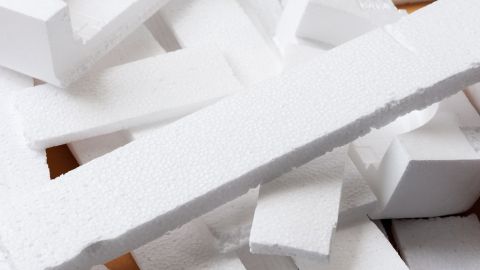
A team of chemical engineers, based at the University of Bath in the UK and Worcester Polytechnic Institute in Massachusetts, US, modelled a new way that could be world’s first to recycle polystyrene both economically and energy efficient.
The technique is to utilize chemical process called pyrolysis to break down polystyrene into parts which can be reformed into new pieces of the material.
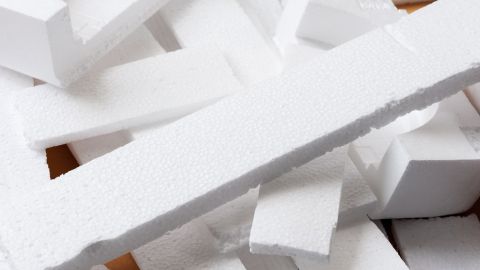
A new chemical method is identified to tackle polystyrene, a hard-to-recycle packaging material.
Dr Bernardo Castro-Dominguez, a Senior Lecturer in Chemical Engineering at the University of Bath and a Co-Director of the Centre for Digital, Manufacturing & Design, explained that the team’s work shows as much as 60% of all polystyrene used nowadays could be replaced by chemically recycled styrene.
Pyrolysis involves exposing a material to very high temperatures (of more than 450°C) in an oxygen-free chamber, in which it cannot ignite. The polystyrene breaks down into monomers, which can then be purified and subsequently reconstituted into virgin polystyrene.
The identified process involves a pyrolysis reactor, heat exchanger and a pair of distillation columns, which separate out polystyrene into monomer-grade styrene, the part that can be reformed into polystyrene.
The process is energy efficient – creating 1kg of the new material requires less than 10 megajoules (MJ) of energy, which is roughly enough to power a typical microwave for around 30 minutes.
It has a yield of 60% – in 1kg of used polystyrene, 600g of 99% pure monomer-grade styrene will be left available to generate new polystyrene.
This work also highlights the environmental benefits. The cost to reduce carbon emissions through this process is approximately US$1.5 per ton of CO2, considerably lower than many other recycling processes.
The research paper, titled “Thermodynamic and Economic Analysis of a Deployable and Scalable Process to Recover Monomer-Grade Styrene from Waste Polystyrene”, is published in the Chemical Engineering Journal, and was funded by the US National Science Foundation (NSF).