













World-first electrohydraulic separation facility for galvanized plastic parts

Galvanised parts are one of the biggest challenges for recycling due to technical complex and low purity results.
With ImpulsTec’s expertise in shockwave or electrohydraulic shredding technology for separation of complex material compounds in industrial processes, a custom-designed facility for separating chrome-plated production waste was commissioned at sanitary engineering manufacturer Hansgrohe.
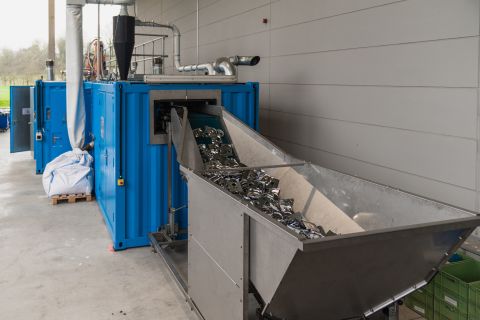
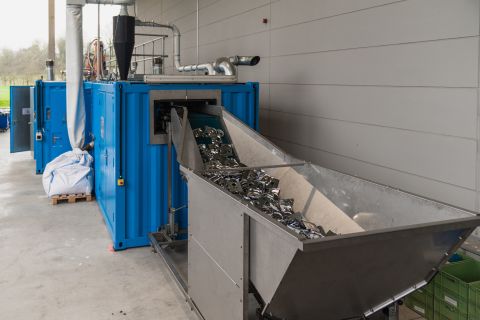
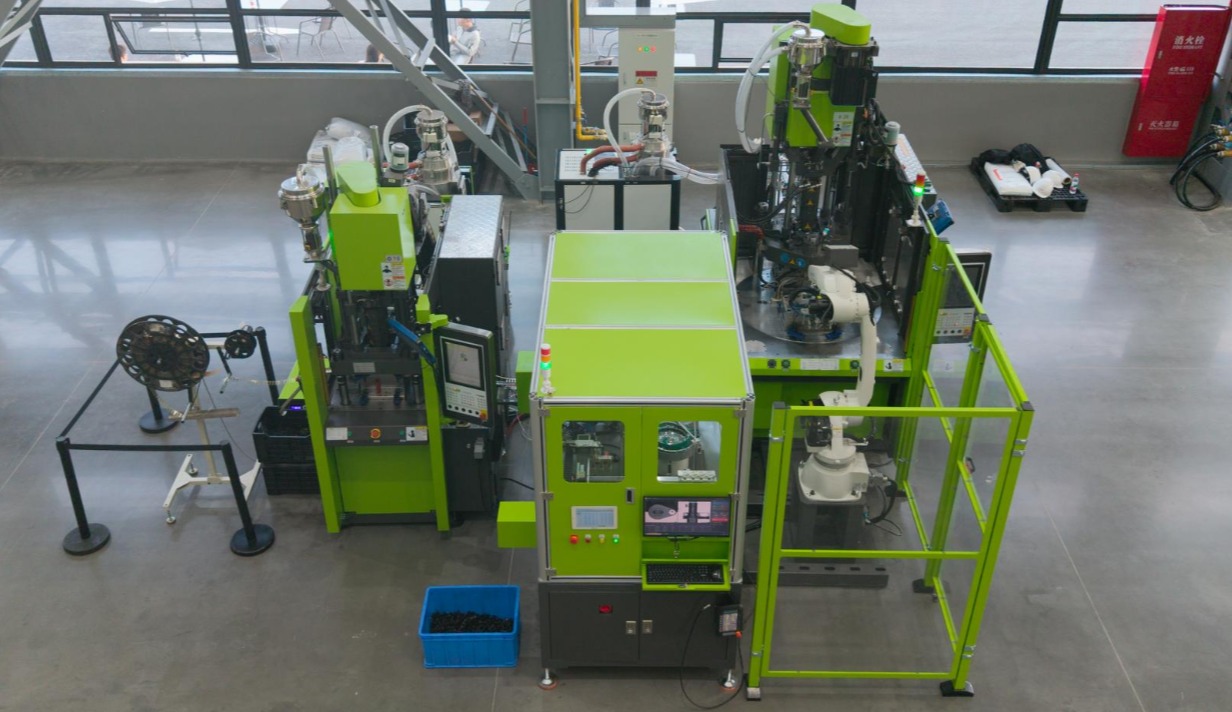
The in-house-designed facility for stripping chrome-plated plastic parts through shockwave treatment, pre-shredding and magnetic separation.
Background of the pilot facility
From 2021 to the beginning of 2023, ImpulsTec and Hansgrohe worked together to develop a procedure for stripping the galvanized plastic components, by combining the shockwave treatment with pre-shredding as well as subsequent magnetic separation.
Due to the local circumstances at Hansgrohe, the facility had to be suitable for installation outdoors, and not exceed 22 m in length and 10 m in width. Therefore, ImpulsTec designed the pilot facility to operate within three weather-proof container units.
Since the start of 2024, the facility has been in operation at the Hansgrohe production site in Elgersweier, Offenburg, Germany, to separate the production waste in bath and kitchen fittings. It operates on around 250 working days per year, for eight hours each day, resulting an annual throughput of 100,000 kg of chrome-plated plastic.
Recycling processes
As the galvanized parts to be recycled are of different sizes and complexity levels, the first container deals with pre-shredding and includes a screening column.
The homogenous granulate obtained in this process is then subject to proprietary shockwave treatment in the second stage. This involves the pre-treated raw material being placed into a water bath. Brief ignition of an electric arc between two electrodes within the medium creates mechanical shockwaves that gradually separate the individual material fractions from one another.
The used water is then filtered and subsequently returned to the shockwave process in a closed loop.
The post-process material is conveyed to the third container and dried there. The individual material fractions are then separated by means of magnetic separation. The majority of this (70-80%) is plastic.
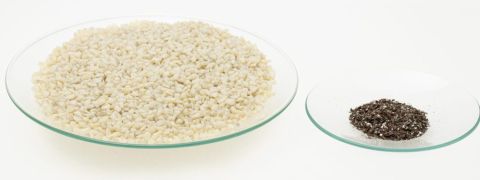
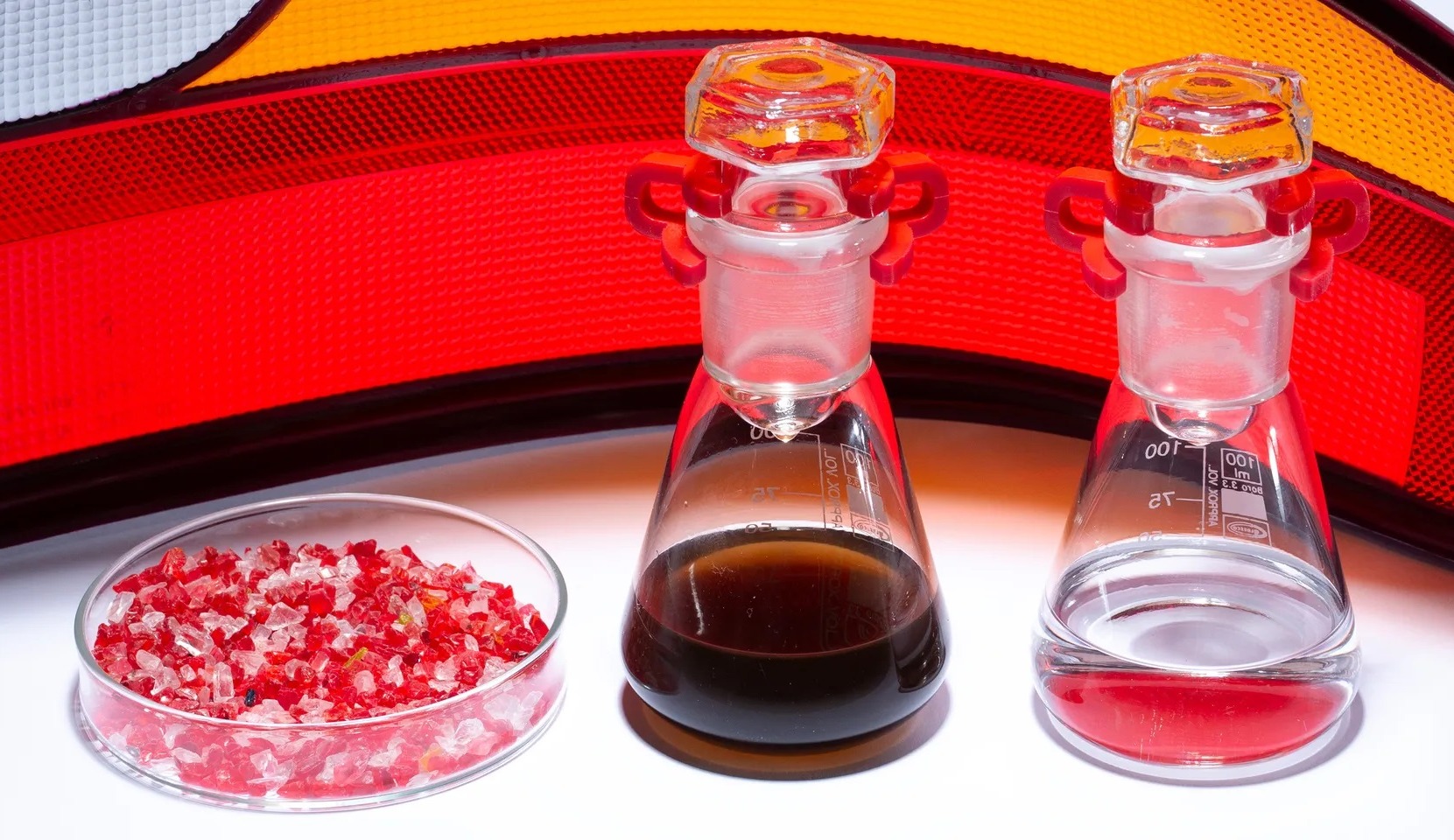
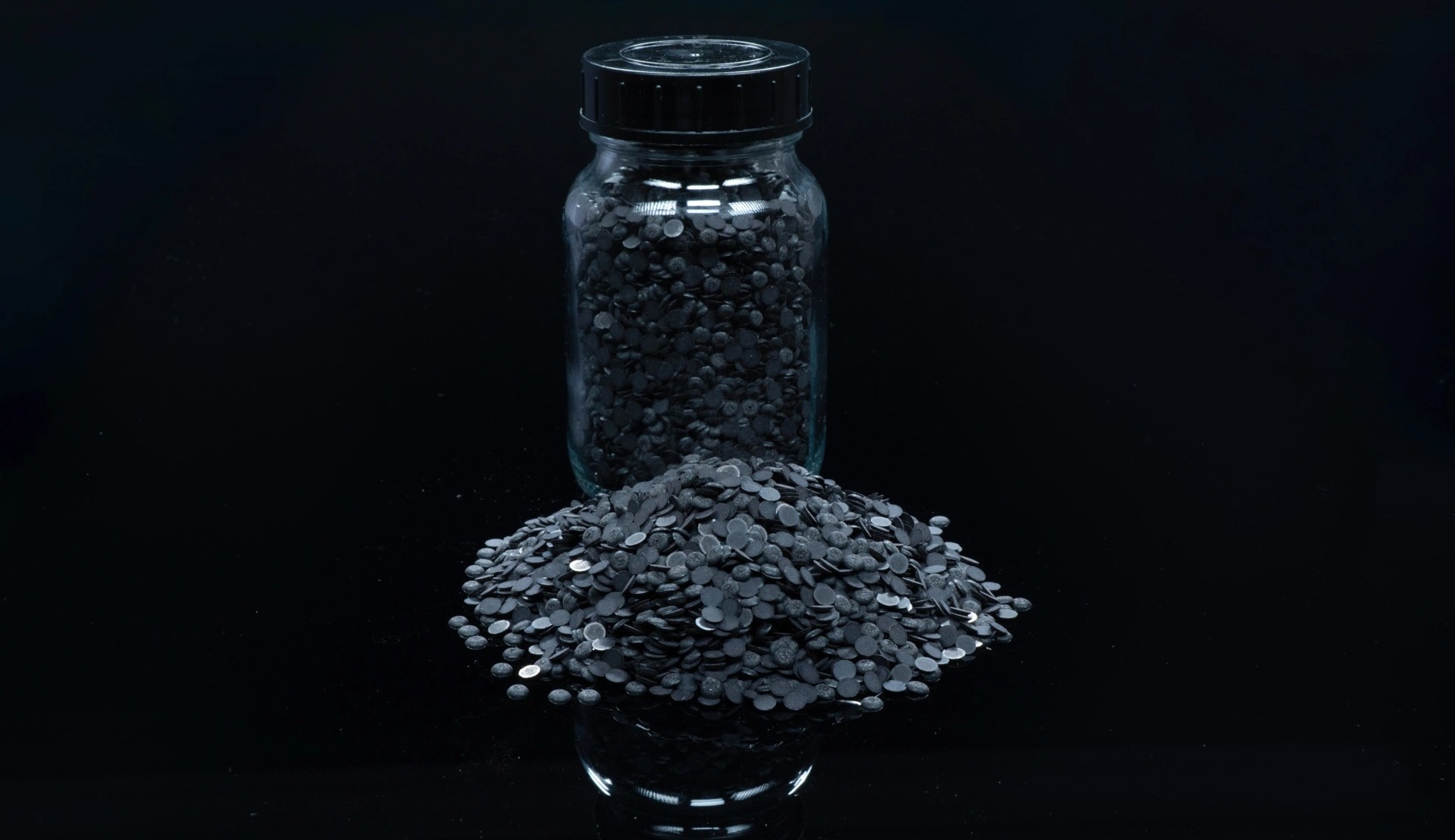
The directly reusable plastic (left) from the obtained material fraction and the remaining material fraction from the galvanic coating.
In order for the recycled material to be used in premium new products, it must have a stable purity of > 99.8 m%. The remaining material fraction is composed of copper, nickel and chrome from the galvanic coating, which is delivered to metal processing companies.
Present application and future moves
Hansgrohe has already utilized the recycled material in the components of hansgrohe Pulsify Planet Edition product line, which was launched in 2023.
The company is also examining the extent to which shockwave technology could even be used for future recycling of complete products, such as fittings that have already been used by customers.
The technology can also open up new possibilities in the automotive industry and electronics sector, for reuse of production waste and product components at the end of their lifecycle.