














PURE LOOP supports Europe’s first polyester textile recycling system

Project Re:Claim, Europe’s first commercial scale polyester textile recycling system, uses an ISEC evo system from PURE LOOP. The project is a joint venture between the Salvation Army Trading Company and Project Plan B. It aims to recycle post-industrial and post-consumer clothing and textiles.
The focus is on the recycling of post-industrial polyester that come from controlled material streams (closed-loop systems), ensuring minimal impurities. The sources include contract textiles for hospitals or hotels (e.g. bed and table linen), workwear and school uniforms, as well as promotional banners (e.g. printed sports banners).
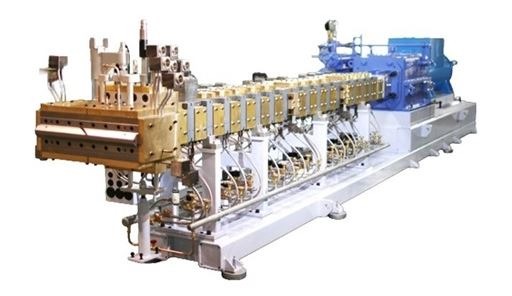
The recycling technology used is an ISEC evo 302 E from PURE LOOP. This innovative technology, developed by the EREMA Group’s member, enables efficient production of high-quality rPET from textile waste.
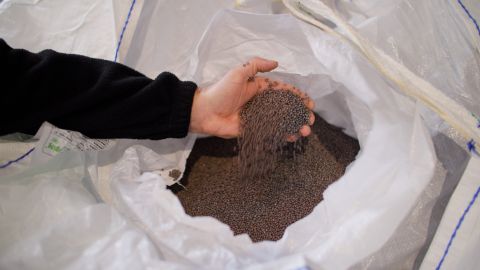
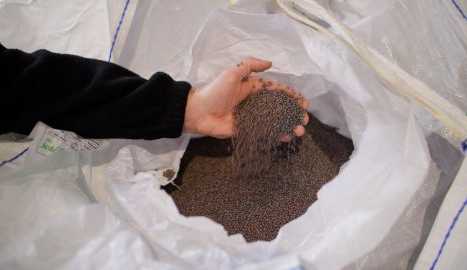
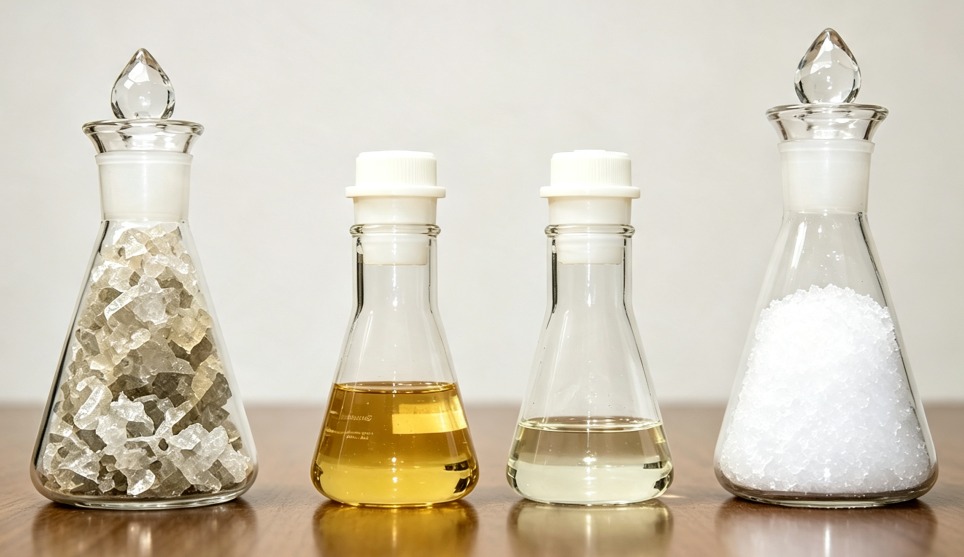
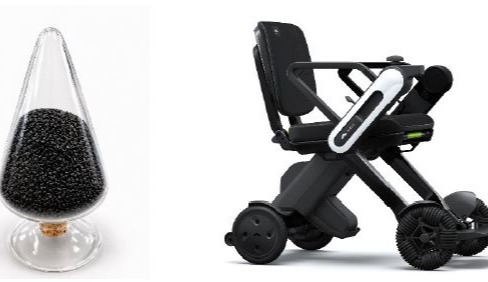
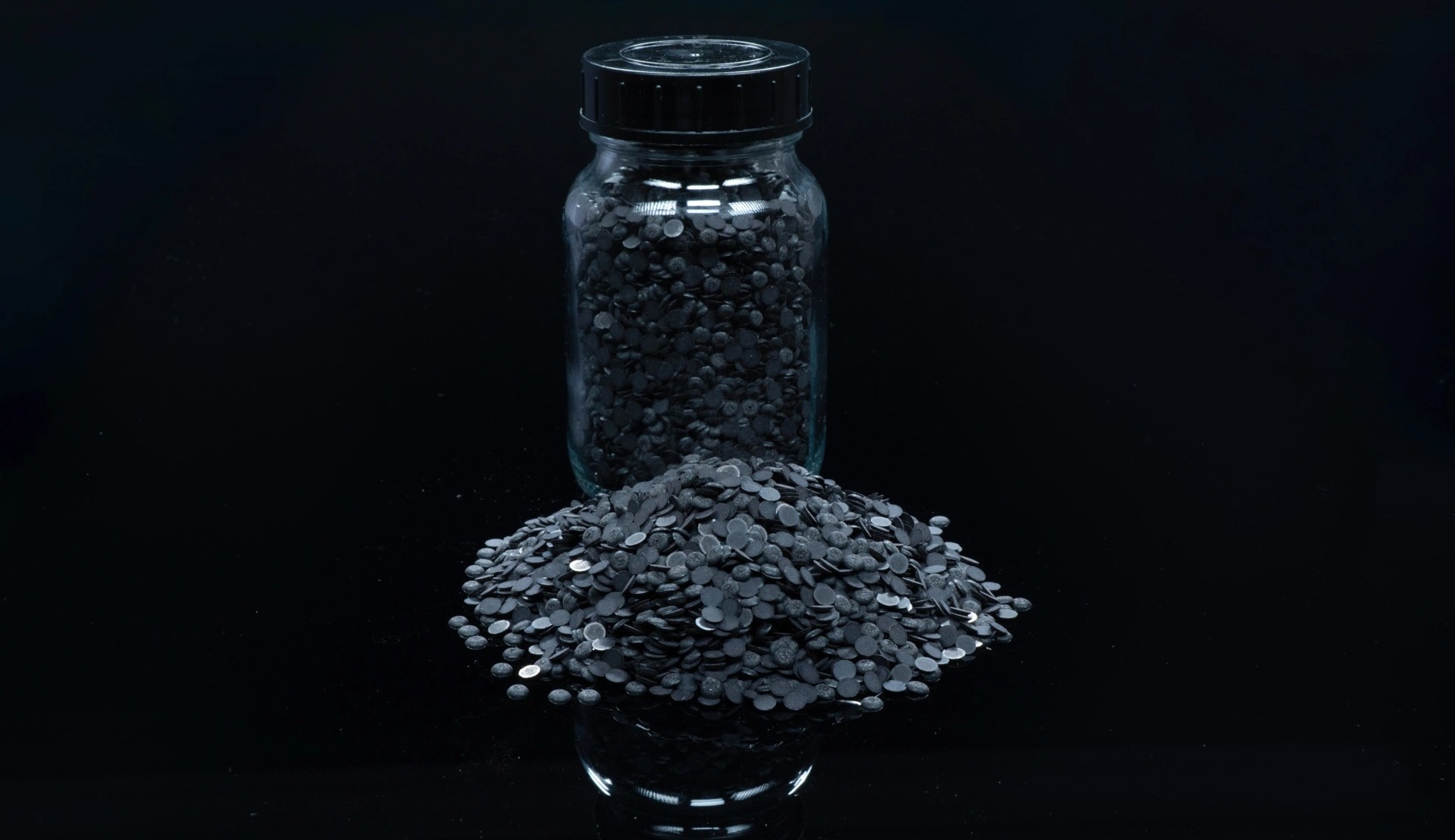
High-quality rPET from used polyester textiles.
Project Re:Claim has been nominated for the Plastics Industry Awards 2024 in the "Recycler of the Year" category.
Europe’s first polyester textile recycling system
The recycling system is installed at a Salvation Army Trading Company (SATCoL) processing centre in Kettering, UK, in early 2024.
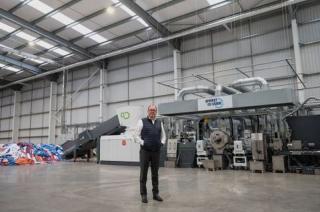
Manfred Dobersberger, Managing Director of PURE LOOP, in front of the recycling plant at SATCoL's processing centre in Kettering, UK.
Together with Project Plan B, a specialist in garment design with a focus on design for recycling, PURE LOOP optimized its integrated shredder-extruder combination ISEC evo for the specific requirements.
With the configuration of shredder and extruder on one drive shaft and the patented double feed ram system, the ISEC evo 302 E gently processes discarded polyester into rPET, which can be spun into yarn for use in textiles along with other industrial applications.
The recycling system features versatility as it effectively handles fibers and textiles made from PE, PP, PA, and PET in forms such as fiber bales, ropes, filaments, textiles, and non-wovens.
In addition to the environmental benefit of diverting textile waste away from landfill, production of pellets from Project Re:Claim uses only one-tenth of the energy compared with pellets produced from virgin polyester.
The plant aims to recycle 2,500 tons of polyester in its first year, doubling this amount in the second year.