






Search History
Clear History
{{item.search_key}}
Hot Searches
Change
{{item.name}}
{{item.english_name}}
Subscribe eNews
Once A Week Once Every Two Weeks
{{sum}}
Login Register

Applications

Trinseo and RWDC jointly develop PHA dispersions for barrier coatings

US-ASEAN Business Council: Regional alignment is core to accelerate Southeast Asia’s circular economy

Franplast introduces biocompatible TPEs for medical sector

Products

WACKER opens technology center for specialty silanes in China

ENGEL opens clearmelt-Competence-Center for PUR projects

EuCIA launches Carbon Fiber Europe alliance

Activities

  • Fakuma to celebrate 30th anniversary edition in October 2026

  • Italy pavilion at Plast Eurasia proves its rising presence in Turkish market

  • CHINAPLAS 2026: Grand stage for new material, smart manufacturing and green solutions

Pictorial

Industry Topic

ASEAN: The Next Manufacturing Hub

Innovative and Sustainable Packaging

Green Plastics: News & Insights

CHINAPLAS

CHINAPLAS 2025 Focus

CHINAPLAS 2024 Focus

CHINAPLAS 2023 Focus

Exhibition Topic

K 2025 FOCUS

CHINA INSIGHT

Fakuma 2024 Highlights

News Videos

Magnetic mold changing system developed in-house by Shanghai Qiaotian

Xiamen LFT Composite's plastic solutions as alternative to steel

Ausell highlights car-to-car closed-loop recycling technology

Conference Videos

【Mandarin session:Webinar playback】HUSKY: Molding the Future of Drug Delivery: Solutions for the Evolving Autoinjector

[Live Replay] Star Plastics: A Global Solution Provider of Sustainable Material for Your Circular Economy.

[Live Replay] Wanhua Chemical: Green Horizons, Health Guardians - Advancing ESG and Low-Carbon Transition, Innovating Medical Material Solutions

Corporate/Product Videos

ARBURG new electric machine – ALLROUNDER TREND will start mass production in Pinghu, Zhejiang in 2026.

Jiangsu Liside New Material Co., Ltd.

Dow 45 years in China

Exhibition

Playback TECHHUB 2025@CPRJ Live Streaming for CHINAPLAS

Playback TECHHUB@CPRJ Live Streaming for CHINAPLAS

Events

Playback On April 14, the "6th Edition CHINAPLAS x CPRJ Plastics Recycling and Circular Economy Conference and Showcase" at the Crowne Plaza Shenzhen Nanshan is currently being livestreamed!

Playback 5th Edition CHINAPLAS x CPRJ Plastics Recycling and Circular Economy Conference and Showcase

Home > News > Recycling

(INC-5 Direct) 3 takeaways from side conferences amid slow negotiations

Source:Adsale Plastics Network Date :2024-11-28 Editor :VC
Copyright: This article was originally written/edited by Adsale Plastics Network (AdsaleCPRJ.com), republishing and excerpting are not allowed without permission. For any copyright infringement, we will pursue legal liability in accordance with the law.

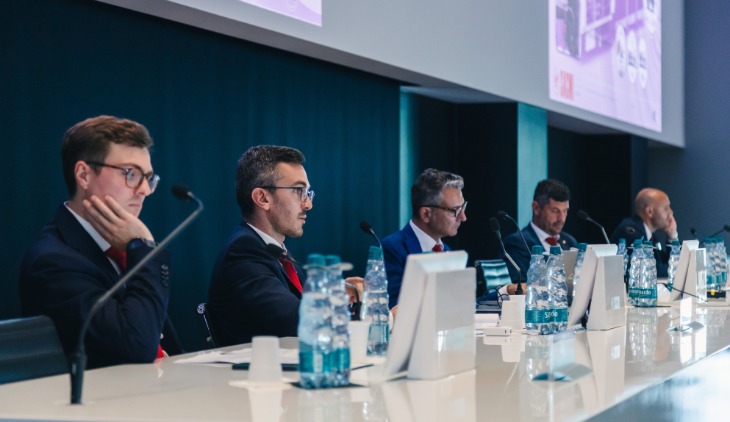
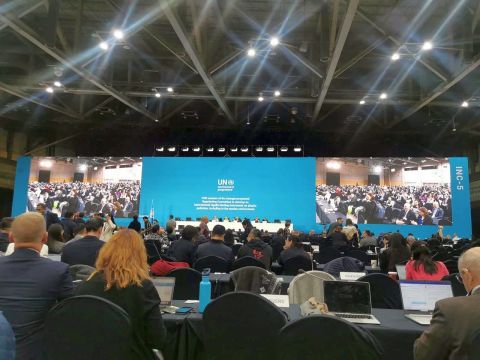
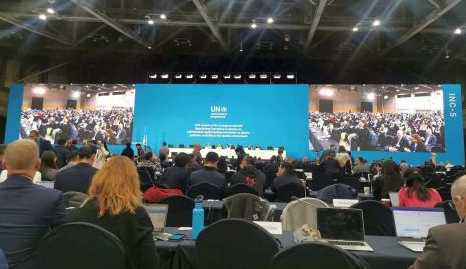
With four days remaining, the fifth session of the Intergovernmental Negotiating Committee (INC-5) held a plenary meeting to report on the progress of each Contact Group.


So far, negotiations have made only limited progress. Only Contact Group 2 has submitted documents on waste plastic management for committee consideration, the other groups have yet to present any documents after their discussions.


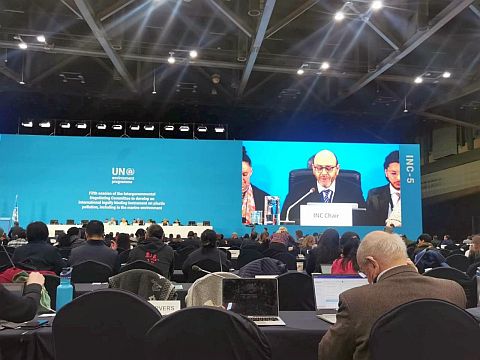
INC Chair Luis Vayas Valdivieso urged the Contact Groups to accelerate negotiations in order to secure a binding resolution before the deadline.


Meanwhile, editors of Adsale Plastics Network participated in several side conferences hosted by NGOs from various countries, enhancing their understanding of issues related to reducing plastic production, extended producer responsibility (EPR), and more.

INC5_Thur 1_480.jpg

INC-5 held a plenary meeting to report on the progress of each Contact Group.

INC5_Thur 2_480.jpg

INC Chair Luis Vayas Valdivieso led the plenary meeting.


1. Reduce or not reduce plastic production


The controversial issue of whether plastic production should be reduced is a key focus of the ongoing negotiations. The European Union and the High Ambition Coalition, which consists of 67 countries, advocate for a reduction in plastic production at the polymer stage and call for a phase-out of problematic single-use plastic products.


However, a representative from the World Resources Institute Indonesia (WRI Indonesia) cautions that reducing production may lead to job losses. Additionally, phasing out single-use plastic products could increase expenses for low-income people who must turn to costly alternatives.


From this perspective, the question of reducing plastic production extends beyond mere production concerns; it encompasses economic and social dimensions that require careful consideration of the fairness for all stakeholders involved.


2. Ensure fair implementation of EPR


EPR is another key topic of significant concern. The business alliance, which includes major companies such as Amcor, ALPLA, Walmart, PepsiCo, Unilever, and Nestlé, supports the establishment of an EPR system within the treaty. This policy would require companies that introduce packaging and other short-lived products to finance the collection and processing of these products after use, thereby helping to improve recycling rates.


A representative from Nestlé emphasized that EPR cannot operate independently; it must align with governmental waste management policies. Additionally, an effective EPR mechanism is essential to prevent opportunism, ensuring fairness for companies that have heavily invested in EPR initiatives.


During a side conference hosted by Green Recycling Plastic Supply Chain Group (GRPG) and other organizations, representatives from China highlighted that the EPR system in the treaty should consider the actual circumstances of production, consumption, and disposal to achieve comprehensive chain management.


While the EPR system has the potential to promote a circular economy, enhance recycling rates, and improve the transparency of material and financial flows, it requires global compliance and coordination to ensure fair implementation across all stakeholders.


3. Establish reuse and refill system


During the INC-5 side conferences, the editors noted that "Reuse and refill" have emerged as crucial strategies for reducing single-use plastic products, gaining support from numerous industry organizations.


For instance, Greenpeace has introduced self-service filling systems in over 2,000 retail stores across nine cities in the Philippines, primarily targeting fast-moving consumer goods. This initiative aims to encourage local residents to minimize reliance on disposable small packaging.


A representative from a zero-waste organization in Indonesia highlighted that reusing packaging would offset economic losses associated with reducing single-use plastic. She projected that by 2030, reusing packaging in Indonesia would yield net benefits of $94.2 million, translating to about $253 in benefits for each ton of plastic packaging waste reduced.


Despite the advantages of reuse, challenges remain in its practical implementation. For example, the self-service filling systems in the Philippines necessitate substantial capital investment, along with a logistics system that requires localized design. Additionally, the overall costs are currently higher than those of small packaging.


On the topic of reuse, industry organizations hope that the global plastics treaty being negotiated in Busan will facilitate a smooth transition to a reuse and refill system and establish global objectives for such a system.
 Like 丨  {{details_info.likes_count}}
Recycling
Circular economy
 SACMI (SHANGHAI) MACHINERY EQUIPMENT CO., LTD.      
 HANGZHOU JUHESHUN NEW MATERIAL CO., LTD.      
 GUANGXI WUZHOU GUOLONG RECYCLABE RESOURCES DEVELOPMENT CO., LTD.      
 ANHUI ZHONGXIN HONGWEI TECHNOLOGY CO.,LTD      

The content you're trying to view is for members only. If you are currently a member, Please login to access this content.   Login

Source:Adsale Plastics Network Date :2024-11-28 Editor :VC
Copyright: This article was originally written/edited by Adsale Plastics Network (AdsaleCPRJ.com), republishing and excerpting are not allowed without permission. For any copyright infringement, we will pursue legal liability in accordance with the law.

With four days remaining, the fifth session of the Intergovernmental Negotiating Committee (INC-5) held a plenary meeting to report on the progress of each Contact Group.


So far, negotiations have made only limited progress. Only Contact Group 2 has submitted documents on waste plastic management for committee consideration, the other groups have yet to present any documents after their discussions.


INC Chair Luis Vayas Valdivieso urged the Contact Groups to accelerate negotiations in order to secure a binding resolution before the deadline.


Meanwhile, editors of Adsale Plastics Network participated in several side conferences hosted by NGOs from various countries, enhancing their understanding of issues related to reducing plastic production, extended producer responsibility (EPR), and more.


INC5_Thur 1_480.jpg

INC-5 held a plenary meeting to report on the progress of each Contact Group.


INC5_Thur 2_480.jpg

INC Chair Luis Vayas Valdivieso led the plenary meeting.


1. Reduce or not reduce plastic production


The controversial issue of whether plastic production should be reduced is a key focus of the ongoing negotiations. The European Union and the High Ambition Coalition, which consists of 67 countries, advocate for a reduction in plastic production at the polymer stage and call for a phase-out of problematic single-use plastic products.


However, a representative from the World Resources Institute Indonesia (WRI Indonesia) cautions that reducing production may lead to job losses. Additionally, phasing out single-use plastic products could increase expenses for low-income people who must turn to costly alternatives.


From this perspective, the question of reducing plastic production extends beyond mere production concerns; it encompasses economic and social dimensions that require careful consideration of the fairness for all stakeholders involved.


2. Ensure fair implementation of EPR


EPR is another key topic of significant concern. The business alliance, which includes major companies such as Amcor, ALPLA, Walmart, PepsiCo, Unilever, and Nestlé, supports the establishment of an EPR system within the treaty. This policy would require companies that introduce packaging and other short-lived products to finance the collection and processing of these products after use, thereby helping to improve recycling rates.


A representative from Nestlé emphasized that EPR cannot operate independently; it must align with governmental waste management policies. Additionally, an effective EPR mechanism is essential to prevent opportunism, ensuring fairness for companies that have heavily invested in EPR initiatives.


During a side conference hosted by Green Recycling Plastic Supply Chain Group (GRPG) and other organizations, representatives from China highlighted that the EPR system in the treaty should consider the actual circumstances of production, consumption, and disposal to achieve comprehensive chain management.


While the EPR system has the potential to promote a circular economy, enhance recycling rates, and improve the transparency of material and financial flows, it requires global compliance and coordination to ensure fair implementation across all stakeholders.


3. Establish reuse and refill system


During the INC-5 side conferences, the editors noted that "Reuse and refill" have emerged as crucial strategies for reducing single-use plastic products, gaining support from numerous industry organizations.


For instance, Greenpeace has introduced self-service filling systems in over 2,000 retail stores across nine cities in the Philippines, primarily targeting fast-moving consumer goods. This initiative aims to encourage local residents to minimize reliance on disposable small packaging.


A representative from a zero-waste organization in Indonesia highlighted that reusing packaging would offset economic losses associated with reducing single-use plastic. She projected that by 2030, reusing packaging in Indonesia would yield net benefits of $94.2 million, translating to about $253 in benefits for each ton of plastic packaging waste reduced.


Despite the advantages of reuse, challenges remain in its practical implementation. For example, the self-service filling systems in the Philippines necessitate substantial capital investment, along with a logistics system that requires localized design. Additionally, the overall costs are currently higher than those of small packaging.


On the topic of reuse, industry organizations hope that the global plastics treaty being negotiated in Busan will facilitate a smooth transition to a reuse and refill system and establish global objectives for such a system.

全文内容需要订阅后才能阅读哦~
立即订阅

Recommended Articles

Recycling
US-ASEAN Business Council: Regional alignment is core to accelerate Southeast Asia’s circular economy
 2025-12-02
Recycling
MAS launches flagship platform for food-grade PET recycling
 2025-12-01
Recycling
Swedish textile recycler to build gigascale factory in Vietnam
 2025-11-26
Recycling
Teijin uses solvent-based recycling to develop high-quality rPC
 2025-11-26
Recycling
Clariant catalysts support Europe-first waste-to-methanol plant
 2025-11-24
Recycling
Norway opens new national facility for plastic packaging sorting
 2025-11-21

You May Be Interested In

Change

  • People
  • Company
loading... No Content
{{[item.truename,item.truename_english][lang]}} {{[item.company_name,item.company_name_english][lang]}} {{[item.job_name,item.name_english][lang]}}
{{[item.company_name,item.company_name_english][lang]}} Company Name    {{[item.display_name,item.display_name_english][lang]}}  

Polyurethane Investment Medical Carbon neutral Reduce cost and increase efficiency CHINAPLAS Financial reports rPET INEOS Styrolution Evonik Borouge Polystyrene (PS) mono-material Sustainability Circular economy BASF SABIC Multi-component injection molding machine All-electric injection molding machine Thermoforming machine

(INC-5 Direct) 3 takeaways from side conferences amid slow negotiations

识别右侧二维码,进入阅读全文
下载
x 关闭
订阅
亲爱的用户,请填写一下信息
I have read and agree to the 《Terms of Use》 and 《Privacy Policy》
立即订阅
Top
Feedback
Chat
News
Market News
Applications
Products
Video
In Pictures
Specials
Activities
eBook
Front Line
Plastics Applications
Chemicals and Raw Material
Processing Technologies
Products
Injection
Extrusion
Auxiliary
Blow Molding
Mold
Hot Runner
Screw
Applications
Packaging
Automotive
Medical
Recycling
E&E
LED
Construction
Others
Events
Conference
Webinar
CHINAPLAS
CPS+ eMarketplace
Official Publications
CPS eNews
Media Kit
Social Media
Facebook
Linkedin