











Nissan and Honda consider business integration

Nissan Motor Co., Ltd. and Honda Motor Co., Ltd. have signed a memorandum of understanding (MOU) to start discussions and considerations toward a business integration between the two companies through the establishment of a joint holding company.
Nissan and Honda are considering business integration.
If the business integration can be realized, both companies can integrate their respective management resources such as knowledge, human resources, and technologies; create deeper synergies; enhance the ability to respond to market changes; and expect to improve mid- to long-term corporate value.
Additionally, Nissan and Honda can further contribute to the development of Japan's industrial base as a “leading global mobility company” by integrating Nissan and Honda's four-wheel-vehicle and Honda's motorcycle and power products businesses.
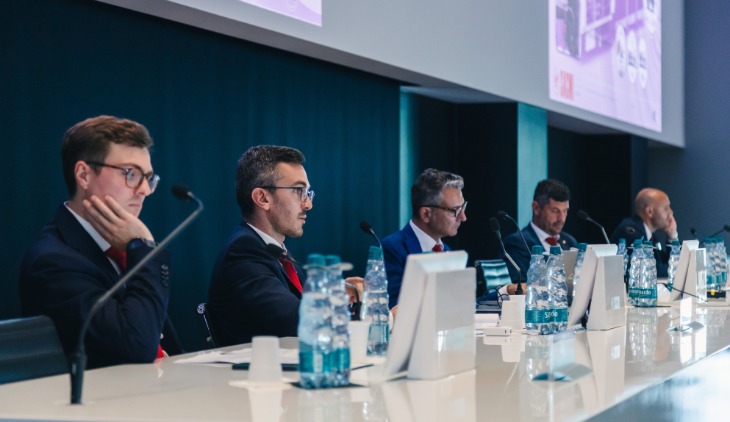
Watch the official joint press conference.
Timeline on previous signed MOUs
To further accelerate their efforts toward achieving a carbon-neutral society and a zero-traffic-fatality society, Nissan and Honda signed an MOU on March 15 regarding a strategic partnership for the era of vehicle intelligence and electrification. Since then, the two companies have held discussions aimed at collaboration in various fields.
On August 1, both companies signed a further MOU to deepen the framework of the strategic partnership.
The companies also announced that they had agreed to carry out joint research in fundamental technologies in the area of platforms for next-generation software-defined vehicles (SDVs), particularly in the areas crucial for intelligence and electrification, to advance focused discussions toward more concrete collaboration.
On December 23, Nissan and Honda announced that an MOU was signed to serve as an option to maintain global competitiveness and for the two companies to continue to deliver more attractive products and services to customers worldwide.
Potential synergies from the business integration
The expected synergies from the business integration are:
Scale advantages by standardizing vehicle platforms
Enhancement of development capabilities and cost synergies through the integration of R&D functions
Optimizing manufacturing systems and facilities
Strengthening competitive advantages across the supply chain through the integration of purchasing functions
Realizing cost synergies through operational efficiency improvements
Acquisition of scale advantages through integration in sales finance functions
Establishment of a talent foundation for intelligence and electrification
Schedule for the business integration
Board of directors’ resolution | December 23, 2024 |
Execution of the MOU | December 23, 2024 |
Execution of a definitive agreement concerning the business integration (including the share transfer plan) | June 2025 (planned) |
Extraordinary shareholders' meeting of the companies (resolutions to approve the share transfer) | April 2026 (planned) |
Delisting from the TSE | End of July-August 2026 (planned) |
Effective date of the share transfer | August 2026 (planned) |
Note: The above schedule is tentative and may change as a result of consultation by the companies. In addition, an announcement will be promptly made if reasons arise, such as procedures under applicable competition laws, to change the schedule of the business integration process or to cancel the business integration itself.