







From Nature to Nature | USEON’s EPLA obtains German DIN CERTCO certification

In addition, the samples we produced for several top home appliance companies have also successfully passed their internal performance tests, further proving that EPLA foam packaging products are ready for widespread industrial application.
What is EPLA?
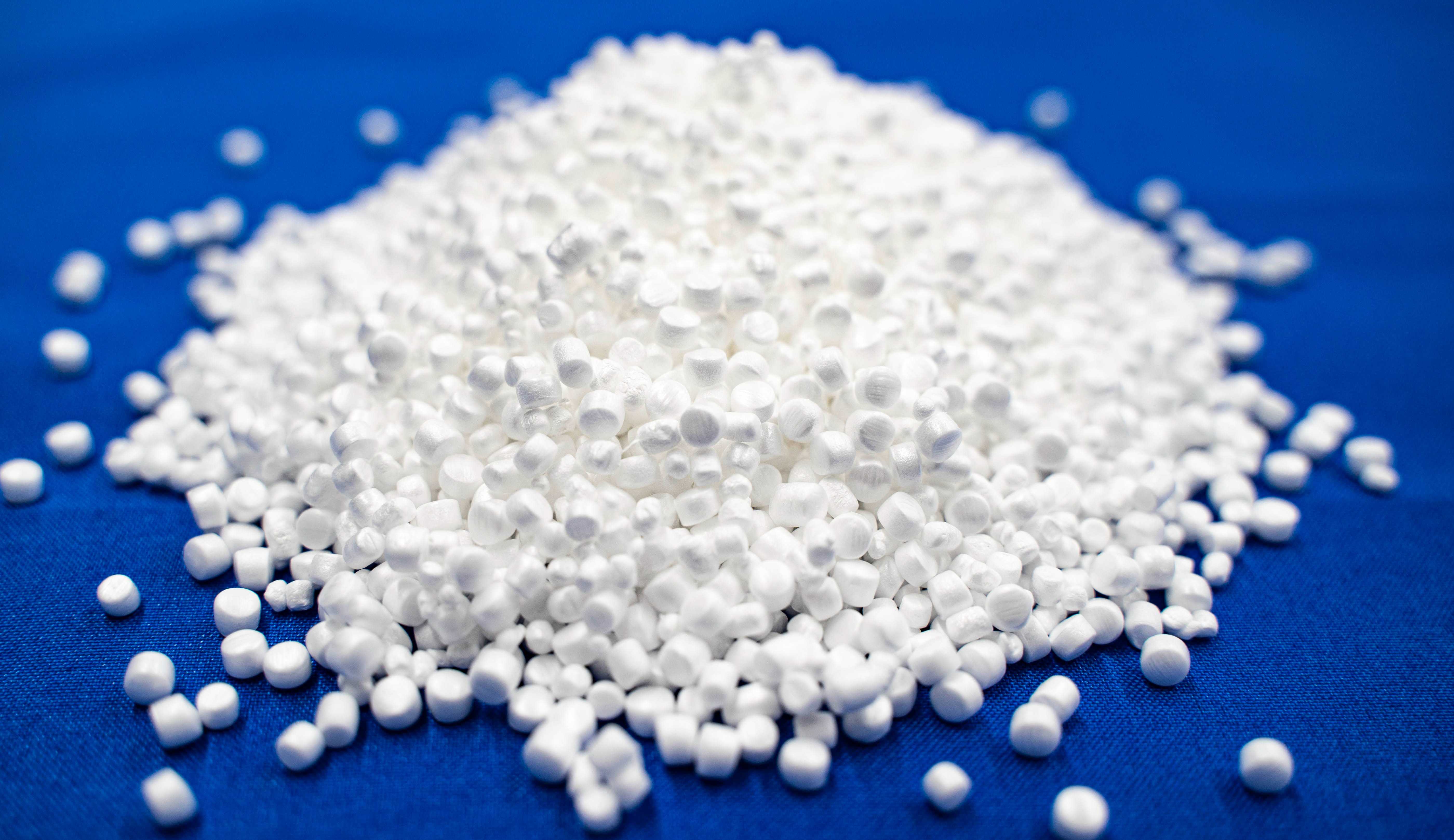
Expanded Polylactide (EPLA) is a foamable material made from polylactic acid. It is derived from starch materials extracted from biological resources such as sugarcane, and straw. The starch is converted into glucose through saccharification, which is then fermented with specific microorganisms to produce high-purity lactic acid. This lactic acid is chemically synthesized into polylactic acid of a certain molecular weight, which is then foamed to produce EPLA.
The EPLA product that has obtained the DIN CERTCO industrial compostable certification is based on polylactic acid foam beads. The foaming process involves feeding dried PLA material and additives into an extruder. Once the material is fully plasticized and sufficient back pressure is established, CO2 is injected into the cylinder to mix with the molten material. At this stage, CO2 turns into a supercritical state and thoroughly mixes and dissolves with the molten material.
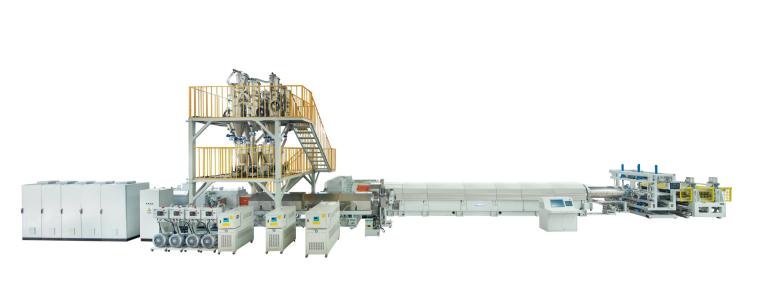
The mixed material enters the next-stage extruder, where precise temperature control reduces the material temperature to a level suitable for foaming. The material then flows out through a die. Due to the significant pressure gradient inside and outside the die, the material containing supercritical CO2 quickly foams. The foamed material is then cut into foam beads using a pelletizer.
Currently, USEON holds multiple patents for this technology, including for bead production lines, raw material formulations, and steam molding processes. This allows for the successful production of EPLA with densities ranging from 20-200 g/L, providing customers with a comprehensive solution for truly biodegradable plastic foam packaging materials. These can replace products like EPS and EPP in applications such as packaging for home appliances, food, electronics, and luxury goods. For this eco-friendly new material, Useon is now inviting the public to submit name suggestions, and we encourage everyone to actively participate.
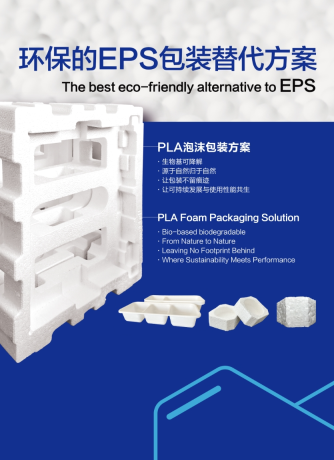
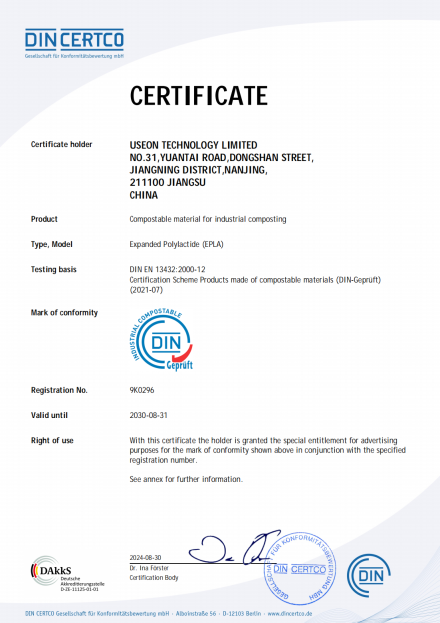
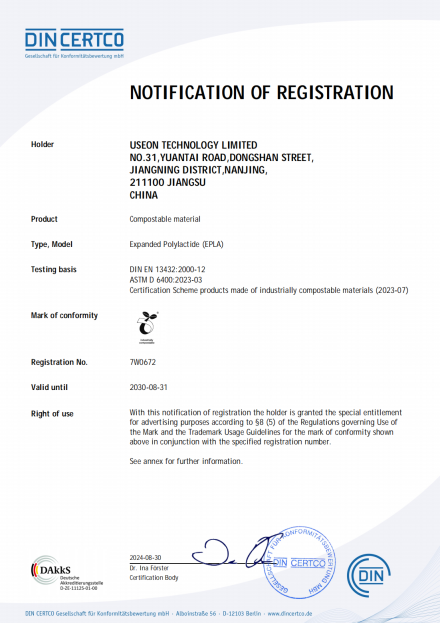
The DIN CERTCO industrial compostable certification obtained this time indicates that the EPLA foam materials developed and produced by USEON have passed the stringent compostable plastic standards set by the EU in terms of chemical substance restrictions, biodegradability, disintegration performance, and ecotoxicity. The certification serves as an official “ID card,” allowing the materials to be circulated and used across all EU countries, fulfilling the green mission of ensuring foam packaging materials originate from nature and return to nature.
What is DIN CERTCO?
DIN CERTCO is the certification center of the German Institute for Standardization (DIN), established in 1972 by DIN. It is a wholly-owned subsidiary of the TÜV Rheinland Group.
As one of the earliest institutions to engage in compostable certification, DIN CERTCO enjoys high market recognition and credibility in the field of degradable materials. Reports issued by its accredited laboratories are accepted by institutions such as the European Bioplastics Association (European Bioplastics), the Biodegradable Products Institute (BPI), the Australian Bioplastics Association (ABA), and the Japan Bioplastics Association (JBPA), and are recognized in major global markets.