






Search History
Clear History
{{item.search_key}}
Hot Searches
Change
{{item.name}}
{{item.english_name}}
Subscribe eNews
Once A Week Once Every Two Weeks
{{sum}}
Log in Register

Applications

Toray Toraypearl spherical PA12 powder for 3D printing

Polyplastics, Colgate-Palmolive and PTI unveil new technology for lightweight HDPE bottles

KHS SUPREME PET bottle for oxygen-sensitive beverages

Products

Breakthrough in Lubrizol’s LED Chlorination Technology to elevate CPVC resin performance

3000BPH 2cavity jar blowing machine will show in 2026 Chinaplas Shanghai

NOVA Chemicals commercializes two new SYNDIGO rPE grades

Activities

  • CHINAPLAS 2026: Government blueprint for emerging industries driving new plastics innovation

  • Fakuma to celebrate 30th anniversary edition in October 2026

  • Italy pavilion at Plast Eurasia proves its rising presence in Turkish market

Pictorial

Industry Topic

ASEAN: The Next Manufacturing Hub

Innovative and Sustainable Packaging

Green Plastics: News & Insights

CHINAPLAS

CHINAPLAS 2026 Focus

CHINAPLAS 2025 Focus

CHINAPLAS 2024 Focus

Exhibition Topic

K 2025 FOCUS

CHINA INSIGHT

Fakuma 2024 Highlights

News Videos

Automatic 5L 120mm neck PET jar blowing machine

YZ-ECO2000-4 6000BPH full automatic 4cavity bottle blowing machine

Opening Ceremony of Bechton's New Factory

Conference Videos

【Mandarin session: Webinar playback】SACMI: Your Digitalized Manufacturing, Your Future Today

[Live Replay] LK Group: Smart Manufacturing, New Chapters in Southeast Asia: High-Efficiency Solutions in PET Preform & Thin-Wall Packaging

[Live Replay] Fu Chun Shin (FCS): Data-Driven Digital Rebirth and Intelligent Future of Injection Molding

Corporate/Product Videos

QINGDAO BOUNI introduction video

PVC-O160-400 Production Line Trial Run Video

PVC-O630 production line testing

Exhibition

Playback TECHHUB 2025@CPRJ Live Streaming for CHINAPLAS

Playback TECHHUB@CPRJ Live Streaming for CHINAPLAS

Events

Playback On April 14, the "6th Edition CHINAPLAS x CPRJ Plastics Recycling and Circular Economy Conference and Showcase" at the Crowne Plaza Shenzhen Nanshan is currently being livestreamed!

Playback 5th Edition CHINAPLAS x CPRJ Plastics Recycling and Circular Economy Conference and Showcase

Home > News > Recycling

FIMIC likes challenges

Source:FIMIC Date :2020-08-18 Editor :FIMIC

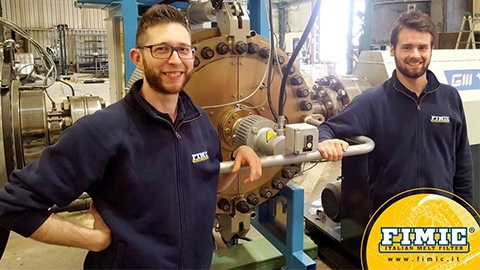
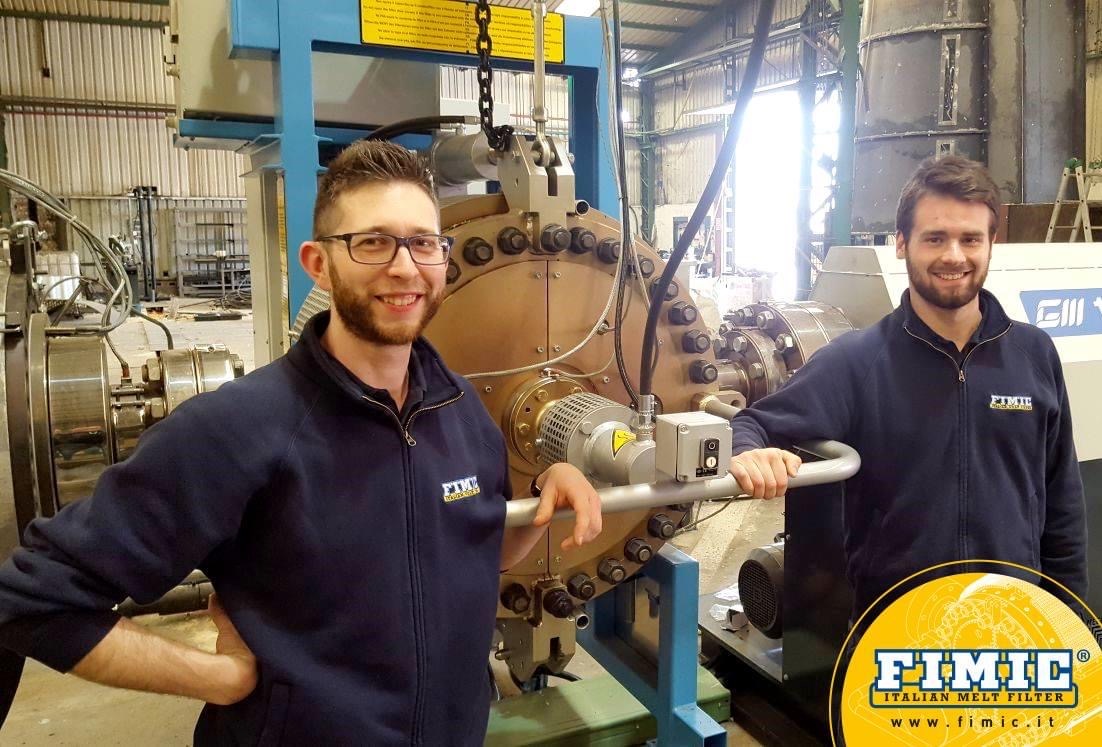
IMG_5816.JPG


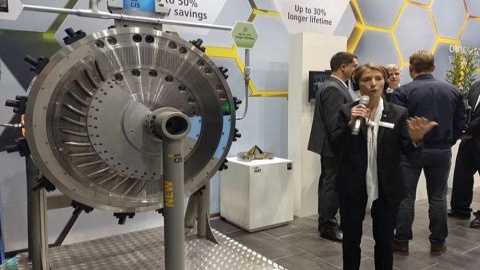
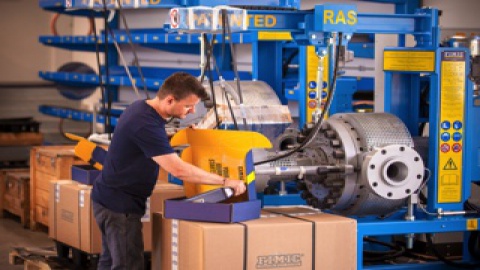
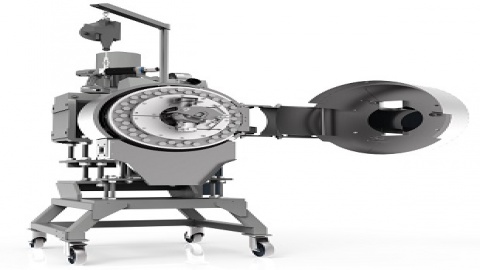
FIMIC, a leading player in the plastic recycling market for more than 50 years, is now widely known and appreciated for its self-cleaning filters for plastic waste recycling. Its flagship machine, the RAS scraping melt filter, has demonstrated to the industry how it is possible to manage complicated and heavily contaminated plastics to obtain excellent quality pellets.


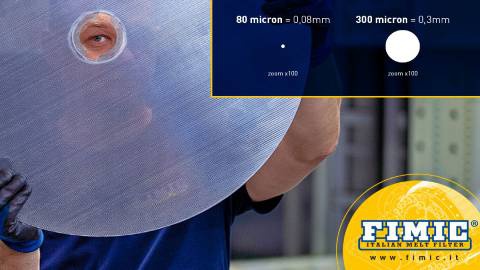
The Company has been able to meet the market needs, which have become increasingly demanding over the years. The need to be able to produce materials that could be reused in more sophisticated applications has grown exponentially over the past 10 years. For this reason, FIMIC has focused on continuous research and development, reaching filtrations up to 80 microns, through the use of the latest laser-drilling technologies that made it possible to perform a very large number of holes on metal sheets of different thicknesses, accurately choosing several parameters (type of material, distance between holes, treatments, etc.).


The company’s experience has been based for years on the typical polymers intended for recycling, like LDPE and LLDPE from packaging, PP from crates, bins, or big bags, HDPE from pipes or bottles etc. FIMIC has over time managed these materials better and better and with proportionally lower operational costs. To date, with the RAS filter you can manage LDPE and LLDPE from post-commercial packaging (for example wrap films, including paper labels) to obtain a pellet quality that can be used to film up to 17-20 microns. or you can process HDPE from bottles regrinds, which is filtered up to 100 microns even at high outputs (1500-1800 kg/h) to produce excellent-quality, heavy-duty HDPE pipes.


But times changed and plastic recycling can no longer be limited to the regeneration of just a few materials, no matter how predominant they are. It is our own society that requires ever greater efforts to prevent plastic from becoming a problem instead of a great resource.


Confident of its previous experience, FIMIC has therefore decided to turn its attention even to applications that were always considered more complicated and that were therefore neglected. In particular, two fields were heavily explored: the first is PVC (soft and hard), considered a material that has to be carefully treated given the possibility of the release of the dangerous vinyl chloride and in general for its corrosiveness over time and its tendency to degrade; the second is the plastic that comes from the recovery of WEEE, which can contain contaminants sometimes difficult to manage.


In both applications, the Company entered only after extensive internal research and tests were completed, before installing the machine for end users.


In PVC, after about three years of testing, the machine was first installed at a large player in Germany. This company processes soft PVC from garden hoses, with contamination mainly composed of fibres (PES or PA, from 0.5% up to 4%) in addition to other minor contaminations such as dust, wood, and aluminium. Previously, the company used slide plate filters, but was unable to process the material at less than 400 microns (40 mesh) and was forced to change the screens frequently. With the RAS Filter it can now work continuously for 4-6 days, before having to change the screen (an operation that takes less than 30 minutes from a single operator), as well as reducing the filtration (and therefore increase the quality of the finished product) to 150 microns (100 mesh). As for the risk of corrosion, the filtering chamber has been completely treated against it, and it has been verified that the material always flows continuously inside the machine and therefore there is no risk of material degradation.


Plastics waste coming from WEEE, the first FIMIC machines were installed in Scandinavia, at a company reprocessing ABS and PS regrinds, coming indeed from the recovery of electronic waste. The change for the customer was truly remarkable. From the need to constantly employ four operators for two lines, now only one is needed. The savings are therefore significant, both in terms of personnel but also in terms of operational costs, as it switched from typically one screen change every 15 minutes (on a slide plate filter) to now using a FIMIC laser screen for up to three months in a row, with no need to intervene. Plus, the production of the extruder has increased by 20%, despite reducing filtration fineness down to 150 microns.


FIMIC Official Websitehttps://www.fimic.it/en/


 Like 丨  {{details_info.likes_count}}
Filter
FIMIC

The content you're trying to view is for members only. If you are currently a member, Please login to access this content.   Log in

Source:FIMIC Date :2020-08-18 Editor :FIMIC

IMG_5816.JPG


FIMIC, a leading player in the plastic recycling market for more than 50 years, is now widely known and appreciated for its self-cleaning filters for plastic waste recycling. Its flagship machine, the RAS scraping melt filter, has demonstrated to the industry how it is possible to manage complicated and heavily contaminated plastics to obtain excellent quality pellets.


The Company has been able to meet the market needs, which have become increasingly demanding over the years. The need to be able to produce materials that could be reused in more sophisticated applications has grown exponentially over the past 10 years. For this reason, FIMIC has focused on continuous research and development, reaching filtrations up to 80 microns, through the use of the latest laser-drilling technologies that made it possible to perform a very large number of holes on metal sheets of different thicknesses, accurately choosing several parameters (type of material, distance between holes, treatments, etc.).


The company’s experience has been based for years on the typical polymers intended for recycling, like LDPE and LLDPE from packaging, PP from crates, bins, or big bags, HDPE from pipes or bottles etc. FIMIC has over time managed these materials better and better and with proportionally lower operational costs. To date, with the RAS filter you can manage LDPE and LLDPE from post-commercial packaging (for example wrap films, including paper labels) to obtain a pellet quality that can be used to film up to 17-20 microns. or you can process HDPE from bottles regrinds, which is filtered up to 100 microns even at high outputs (1500-1800 kg/h) to produce excellent-quality, heavy-duty HDPE pipes.


But times changed and plastic recycling can no longer be limited to the regeneration of just a few materials, no matter how predominant they are. It is our own society that requires ever greater efforts to prevent plastic from becoming a problem instead of a great resource.


Confident of its previous experience, FIMIC has therefore decided to turn its attention even to applications that were always considered more complicated and that were therefore neglected. In particular, two fields were heavily explored: the first is PVC (soft and hard), considered a material that has to be carefully treated given the possibility of the release of the dangerous vinyl chloride and in general for its corrosiveness over time and its tendency to degrade; the second is the plastic that comes from the recovery of WEEE, which can contain contaminants sometimes difficult to manage.


In both applications, the Company entered only after extensive internal research and tests were completed, before installing the machine for end users.


In PVC, after about three years of testing, the machine was first installed at a large player in Germany. This company processes soft PVC from garden hoses, with contamination mainly composed of fibres (PES or PA, from 0.5% up to 4%) in addition to other minor contaminations such as dust, wood, and aluminium. Previously, the company used slide plate filters, but was unable to process the material at less than 400 microns (40 mesh) and was forced to change the screens frequently. With the RAS Filter it can now work continuously for 4-6 days, before having to change the screen (an operation that takes less than 30 minutes from a single operator), as well as reducing the filtration (and therefore increase the quality of the finished product) to 150 microns (100 mesh). As for the risk of corrosion, the filtering chamber has been completely treated against it, and it has been verified that the material always flows continuously inside the machine and therefore there is no risk of material degradation.


Plastics waste coming from WEEE, the first FIMIC machines were installed in Scandinavia, at a company reprocessing ABS and PS regrinds, coming indeed from the recovery of electronic waste. The change for the customer was truly remarkable. From the need to constantly employ four operators for two lines, now only one is needed. The savings are therefore significant, both in terms of personnel but also in terms of operational costs, as it switched from typically one screen change every 15 minutes (on a slide plate filter) to now using a FIMIC laser screen for up to three months in a row, with no need to intervene. Plus, the production of the extruder has increased by 20%, despite reducing filtration fineness down to 150 microns.


FIMIC Official Websitehttps://www.fimic.it/en/


全文内容需要订阅后才能阅读哦~
立即订阅

Recommended Articles

Recycling
WEIMA shredding technology turns 3D printing waste into new printing material
 2026-02-26
Recycling
POSSIBLE project for mechanically recycling rigid PU and GFRP composites
 2026-02-16
Recycling
Borealis and partners to build first fully integrated waste management ecosystem in Indonesia
 2026-02-13
Recycling
EREMA and Lindner Washtech establish subsidiary in India
 2026-02-10
Recycling
True circularity of PET packaging: Sorting food-grade PET or not with Sesotec smart sorting systems
 2026-02-05
Recycling
BoReTech opens subsidiary to tap into Indian recycling market
 2026-02-04

You May Be Interested In

Change

  • People
  • Company
loading... No Content
{{[item.truename,item.truename_english][lang]}} {{[item.company_name,item.company_name_english][lang]}} {{[item.job_name,item.name_english][lang]}}
{{[item.company_name,item.company_name_english][lang]}} Company Name    {{[item.display_name,item.display_name_english][lang]}}  

Polyurethane Investment Medical Carbon neutral Reduce cost and increase efficiency CHINAPLAS Financial reports rPET INEOS Styrolution Evonik Borouge Polystyrene (PS) mono-material Sustainability Circular economy BASF SABIC Multi-component injection molding machine All-electric injection molding machine Thermoforming machine

FIMIC likes challenges
识别右侧二维码,进入阅读全文
下载
x 关闭
订阅
亲爱的用户,请填写一下信息
I have read and agree to the 《Terms of Use》 and 《Privacy Policy》
立即订阅
Top
Feedback
Chat
News
Market News
Applications
Products
Video
In Pictures
Specials
Activities
eBook
Front Line
Plastics Applications
Chemicals and Raw Material
Processing Technologies
Products
Injection
Extrusion
Auxiliary
Blow Molding
Mold
Hot Runner
Screw
Applications
Packaging
Automotive
Medical
Recycling
E&E
LED
Construction
Others
Events
Conference
Webinar
CHINAPLAS
CPS+ eMarketplace
Official Publications
CPS eNews
Media Kit
Social Media
Facebook
Linkedin