















Coperion twin screw extruder supports chemical plastics recycling research project at the Netherlands

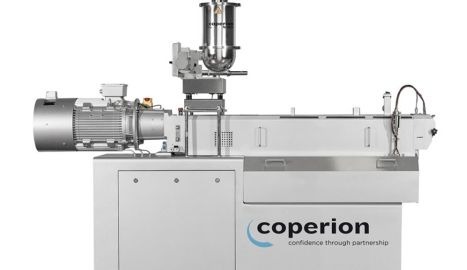
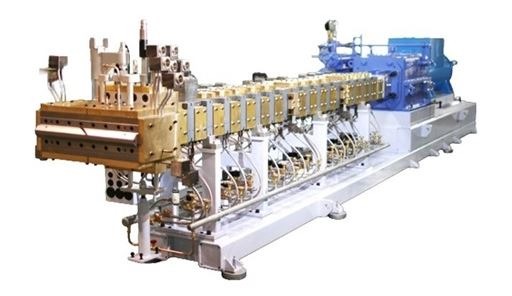
Coperion STS 25 Mc¹¹ twin screw extruder was chosen for a chemical plastics recycling research project from the University of Utrecht in the Netherlands. The project focuses on mechanical-chemical conversion of mixed plastic waste using catalysts.
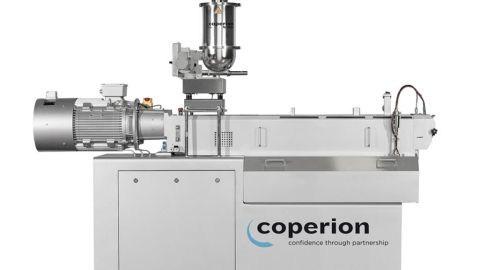
Coperion twin screw extruder acts as a key part of chemical recycling research at the University of Utrecht.
So far, chemical recycling process is energy intensive and does not always result in high-quality products. Using catalysts could play an important role in the continued improvement of end product quality and process efficiency.
The University of Utrecht’s research project, headed by Assistant Professor Dr. Ina Vollmer, is dedicated to precisely this challenge.
The STS 25 Mc¹¹ twin screw extruder processes waste plastic, shredded or compacted, with two co-rotating screws in a closed process section. Together, intensive dispersion and high shear introduce a great deal of mechanical energy into the material. The plastic is energy-efficiently melted – an advantage that is particularly important in chemical recycling.
Moreover, the extruder achieves a very high mixing effect with its twin screws. The catalysts being implemented in this research project are distributed absolutely homogeneously throughout the plastic melt and can fully develop their intended effect.
In conventional pyrolytic processes, the hot plastic melt is prepared within the twin screw extruder for the next step in chemical processing: pyrolysis. There, in an oxygen-free environment, the plastic is broken down to its chemical building blocks. The temperature of the pyrolysis can be lowered thanks to the efficient use of catalysts, as Vollmer’s team has shown in preliminary work.
“Using the extruder, we can achieve an efficient use of the catalyst. Still, our vision is to allow pyrolysis to take place even in the extruder. We can achieve this by exploiting the mechanical-chemical reaction that occurs within the twin screw extruder, and specifically convert the polymer at lower temperatures than have previously been necessary for pyrolysis. Mixing with high shear in the extruder has a very positive effect on the use of catalysts. We are convinced that we can direct the chemical recycling process more precisely using lower temperatures, and this will lead to purer products while at the same time having the potential to revolutionize the chemical plastics recycling process sequence and save energy,” explained Dr. Ina Vollmer.
Should the use of catalysts in the chemical recycling process prove its worth, the results of this research will easily be transferable to larger throughput ranges.