











K 2025: IKV to highlight three topics of sustainability with live demos

At K 2025, The Institute for Plastics Processing (IKV) in Industry and Craft at RWTH Aachen University will put its focus on sustainability, presenting three forward-looking topics – a fully recyclable 2K soft-touch application, a roller inspection system for improving quality when processing recycled material in flat film extrusion, and a new initiative that supports companies in recognizing, systematically evaluating and specifically utilizing the potential of digitalization and artificial intelligence.
Foam2Cycle: Recyclable soft-touch lightweight components
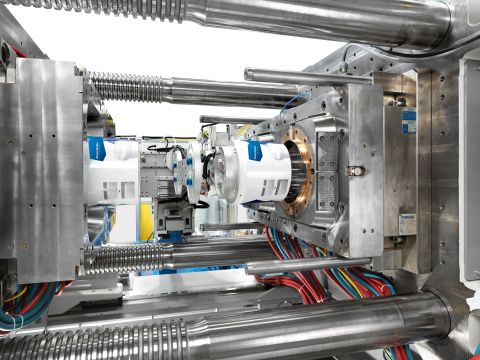
The Institute will produce soft-touch wrist supports for computer keyboards during K fair, demonstrating performance, series production potential and economic viability of the new production concept.
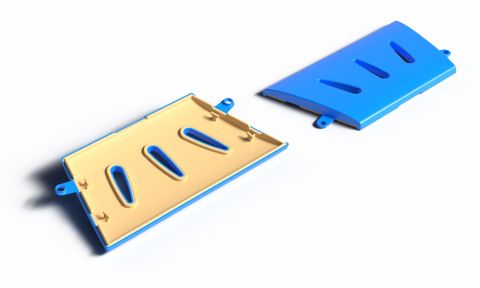
The fully recyclable soft-touch wrist support.
The wrist support consists of an injection molded polypropylene carrier which is over-molded with a thermoplastic elastomer as a soft component. This offers the great advantage of both components being thermoplastic and therefore recyclable together without prior separation. Besides, a PP recyclate can be compounded from shredded wrist supports and used to produce new PP carriers.
IKV will also demonstrate the implementation at the stand showing multiply recycled molded parts with recyclate contents of up to 30%.
Production is based on a two-component thermoplastic foam injection molding process with a chemical blowing agent. A “breathing” mold, whose cavity volume changes over the cycle, enables high degrees of foaming with high-quality surfaces. An insulating mold coating as well as imprinting the component within the mold, further improve the surface quality. Foaming can reduce the density of the carrier by around 8% and that of the TPE by up to 80%.
Low density of the components and recyclability of the composite result in a significantly improved CO2-footprint over the entire service life of the part. The use of established technologies and materials ensures profitability of the process and a direct transferability to industrial use. At the stand a 100% inline testing of the haptic and mechanical properties in the production cell demonstrates that the process is ready for series production.
The process is also intelligently set up, optimized and monitored live using a software from the digitalization solutions developed by the IKV spin-off OSPHIM. The software is founded on AI solutions that were originally developed at IKV.
Detect before defect: Inspection system for tracking roll deposit formation during flat film extrusion
To improve quality and productivity in flat film extrusion, IKV has developed an optical inspection system that can be used to track and evaluate the formation of deposits on the calender rolls during the running process.
The inspection system developed at IKV can be easily integrated into existing systems. It can also be coupled with an automatic roller cleaning system, which is triggered when a critical amount of deposit is detected.
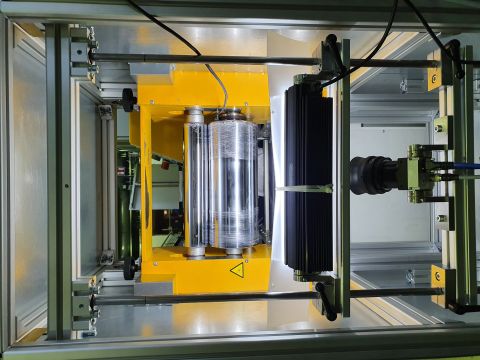
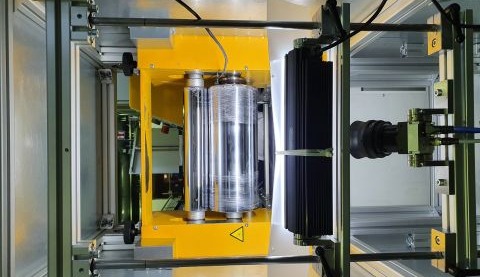
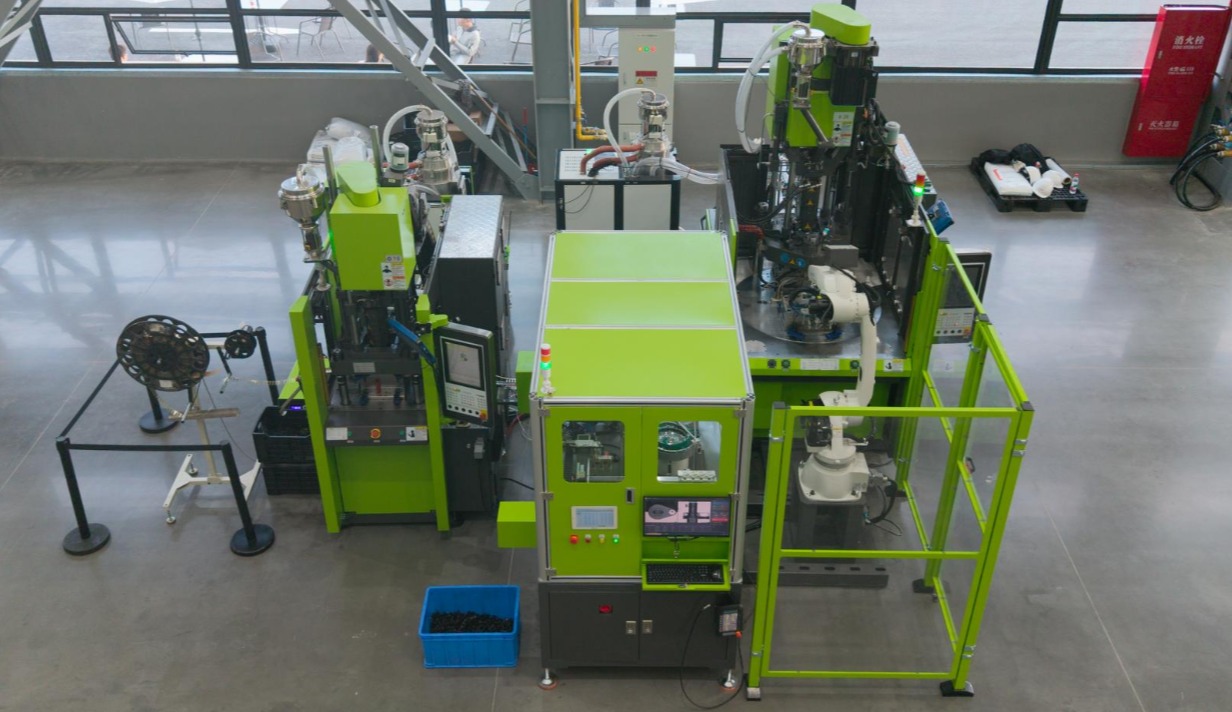
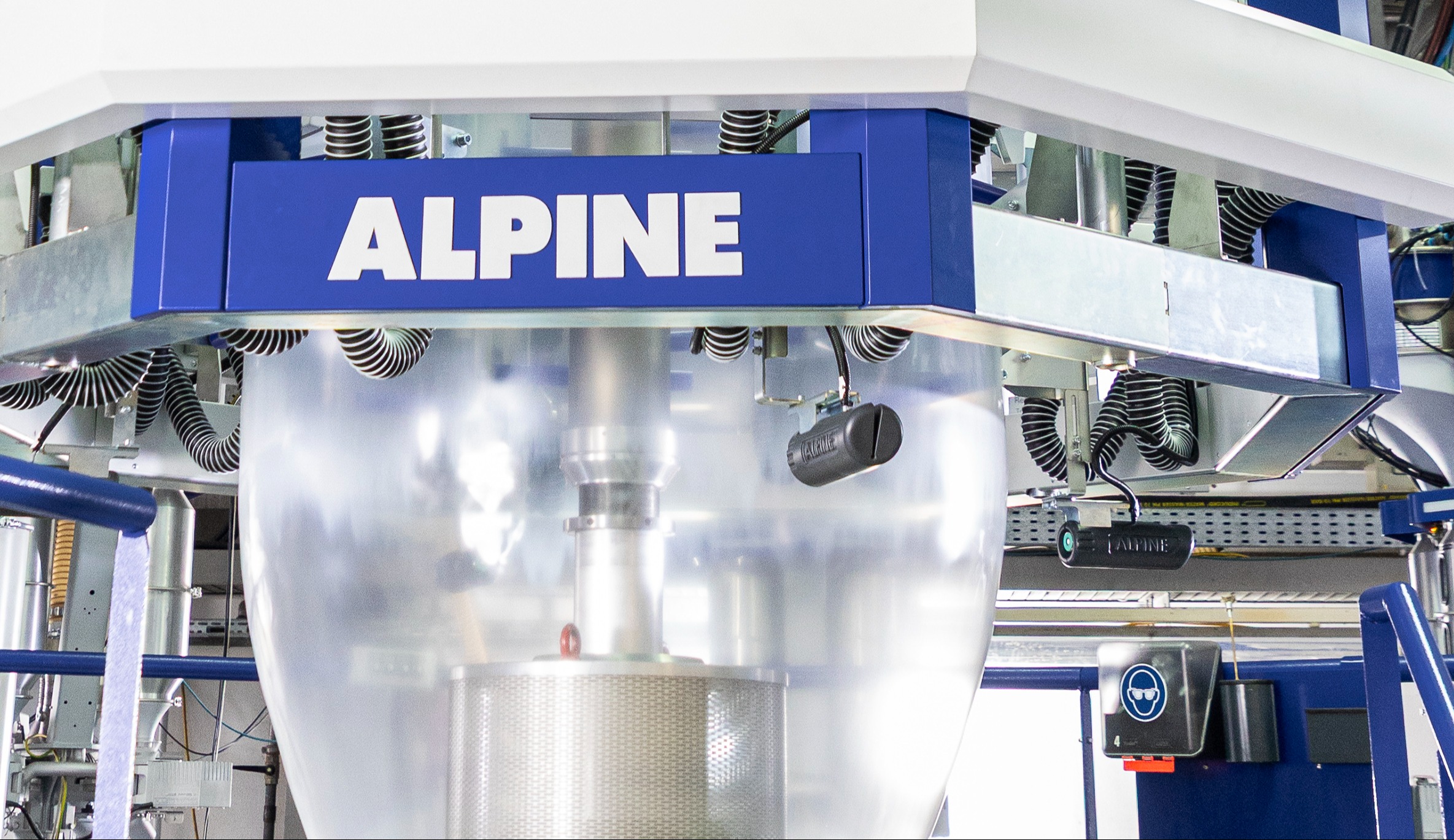
The inspection system (front right) is fully integrated into the flat film extrusion line and makes it possible to track and record roll deposit build-up during the running process.
The inspection system is based on the optical detection of gloss changes on the roller surface caused by the deposits. A camera system integrated into the system generates an image of the roller surface for each roller revolution. An image processing algorithm then quantifies the deposit formation based on the grey values of the image so that the deposit formation can be tracked over the extrusion length.
With this system, IKV now has a test bench that enables the systematic investigation of interactions between plastics and roller surfaces using minimal material quantities. The insights gained serve as a basis for practical recommendations for industrial production.
At K 2025, IKV will feature a simulation of the film extrusion process using a rotating chill roll fitted with the inspection system. The roller is prepared in sections with various deposits to simulate typical build-up effects.
As in the real process, the integrated camera constantly creates new images of the roller surface for live evaluation of the deposits based on the grey scale and for tracking deposit formation.
The development of the inspection system was part of the research project “Increasing productivity and film quality in flat film extrusion by preventing the formation of deposits on chill rolls”, which was nominated as a finalist for the IGF Project of the Year 2025.
KI4KI: Artificial Intelligence for the Plastics Industry
With its expertise in digitalization and AI field, IKV has launched the initiative KI4KI - Artificial Intelligence for the Plastics Industry. It aims to promote the systematic use of AI methods along the entire plastics product life cycle by creating a network of companies from the plastics and digital industries for the practical implementation of digital and AI-supported solutions.
IKV will be demonstrating a practical implementation of this in the production of wrist support at K 2025. In addition, KI4KI deals with cross-cutting issues such as data management, regulatory requirements, data sovereignty and ethical aspects, thereby also supporting the strategic positioning of the companies involved in the digital transformation process.