













Dow launches new formulated PCR resin in Asia Pacific

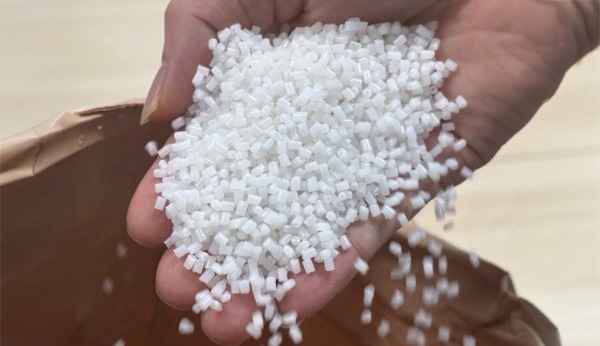
Dow recently developed and commercialized a new formulated post-consumer recycled (PCR) resin, XUS 60921.01, designed for collation shrink film applications in Asia Pacific.
This new product was designed with 40% PCR content which creates a film with performance comparable to those made with virgin resins while also reducing the amount of plastic waste ending up in the environment.
It is recommended to be used as the core layer of three-layer or five-layer collation shrink film, and will enable the development of film with 13 – 24% recycled content. It cannot be used for food contact, personal protective equipment and pharmaceutical packaging.
XUS 60921.01 is made with recycled plastics collected domestically in China through Dow’s strategic recycling partners, and is made at the company’s external manufacturing site in Nanjing, China.
“Compared with shrink films made with virgin resins, shrink films with 20% PCR content have better shrinkage, equivalent film modulus, equivalent mechanical, impact and puncture resistance, good balance of stiffness and shrinkage,” said Dr. Wayne Ma, Asia Pacific Sustainability TS&D Manager for Dow Packaging & Specialty Plastics, in an online media conference.
The growing demand for e-commerce will require durable, efficient packaging that produces minimal waste. The new formulated PCR resin can satisfy this demand while reducing carbon and energy footprints, helping converters, brand owners and retailers meet their sustainability goals.
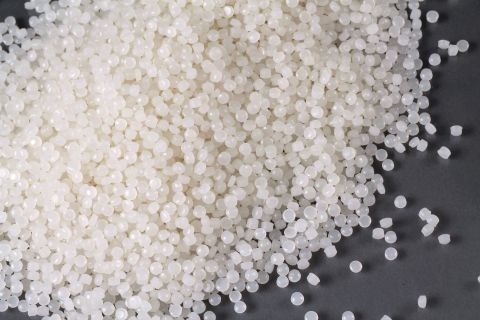
Dow developed the XUS 60921.01 PCR resin, for Asia Pacific markets.
Create added value for the entire value chain
The introduction of XUS 60921.01 is part of Dow’s comprehensive strategy to develop and design more solutions for a circular economy by focusing on integrating recycled content into the company’s offerings.
“Developing new end markets for plastic waste will help incentivize collection and recycling, enabling more recycled products to be developed while reducing the amount of plastics entering our environment,” said Suny Markose, Asia Pacific Recycling Commercial Director for Dow Packaging & Specialty Plastics.
Dow believes that the involvement across the entire industry value chain is crucial in creating a stable business model for achieving a circular economy. Through increasing market demand for recycled products, a greater value can be created for the entire value chain, benefiting brand owners, material suppliers and recycling plant.
“Currently, most recycling plants are focused on low-end applications, and understandably business is relatively dependent on the market price. A high-value industry value chain will generate more recycling of plastics,” explained Suny Markose.
Producing such high-quality recycled materials involves additional costs, Suny Markose emphasized that the company takes a lot of additional and strict operation steps to ensure that the products meet stringent and quality requirements.
“While cost is one of the factors, it should not be only one. Value and quality of the products are also very important. As many brand owners are asking for good quality products to meet their sustainability objectives, it’s crucial to balance cost and quality,” he emphasized.

XUS 60921.01 was designed for collation shrink film applications.
Solve domestic plastic waste problem
Although such post-consumer recycling products are still relatively new to Asia Pacific, Dow has observed that the market is progressing well and has received positive feedback from customers.
Eunice Ch’ng, Asia Pacific Senior Marketing Manager, Industrial & Consumer Packaging for Dow Packaging & Specialty Plastics added, “The product is produced for the first time in Asia Pacific, which demonstrates our pursuit of sustainable development goals.”
In addition to collecting recycled plastics domestically in China, Dow also found many potential partners and is carrying out similar activities in other parts of Asia Pacific. These partners have advanced technology and a stable source of plastic waste.
“Our partners need to have very good waste plastic collection capabilities, not just processing capabilities. Dow is currently conducting similar projects across the world where we develop solutions with waste collected within that region to empower and develop their local recycling industries,” remarked Suny Markose.