








Search History
Clear History
{{item.search_key}}
Hot Searches
Change
{{item.name}}
{{item.english_name}}
Subscribe eNews
Once A Week Once Every Two Weeks
{{sum}}
Login Register

Applications

R-Cycle unveils AI-based PPWR Compliance Compass at Interpack 2026

BASF expands compostable ecovio portfolio for flexible barrier packaging

Analysis for EU policy on bio-based plastic packaging under PPWR

Products

BASF expands HALS and NOR HALS capacities

Clariant launches new propane dehydrogenation catalyst

ENGEL to show integrated solutions for efficiency and precision at Interplas 2026

Activities

  • 350,000+ visitors! CHINAPLAS 2026 shatters every record in the book

  • CHINAPLAS 2026: 86,504 visitors explore innovations on Day 3

  • Must-attend events: Application in Focus and Additives Seminar

Pictorial

News Videos

Top 10 Technology Trends awards presented at CHINAPLAS 2026

MAAG x SIKORA: Smart pelletizing + precise inspection - More stable, carbon-reduced

CAI Machine: New visual inspection technology debut! More efficient, greener, colorful printing

Conference Videos

Interview: Thailand’s perspective on cross-border circular cooperation

Interview: On Indonesian recycling industry and rising geopolitical tensions

Interview: Vietnam’s progress in circular economy

Corporate/Product Videos

For Rubber & Plastic Extrusion Equipment, trust Hebei Zhongsen! Custom Extruders, Traction Machines & Vulcanizing Lines

Is Your Mold Supplier Really Giving You Peace of Mind?

Kurtz GmbH & Co.

Home > News > Chemicals

BASF and ExxonMobil to advance methane pyrolysis technology

Source:Adsale Plastics Network Date :2025-11-21 Editor :RC
Copyright: This article was originally written/edited by Adsale Plastics Network (AdsaleCPRJ.com), republishing and excerpting are not allowed without permission. For any copyright infringement, we will pursue legal liability in accordance with the law.

BASF and ExxonMobil have formed a strategic collaboration to advance methane pyrolysis technology to deliver efficient, low-emission hydrogen solutions for industrial use. The companies have signed a joint development agreement to co-develop methane pyrolysis technology, including plans to construct a demonstration plant aimed at commercial readiness.


Strength in collaboration


BASF has been developing methane pyrolysis technology over the past several years in a project funded by the German Federal Ministry of Research, Technology and Space (BMFTR).
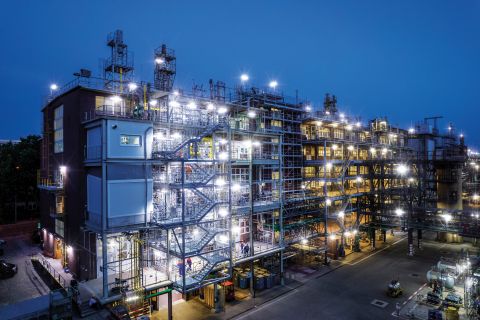

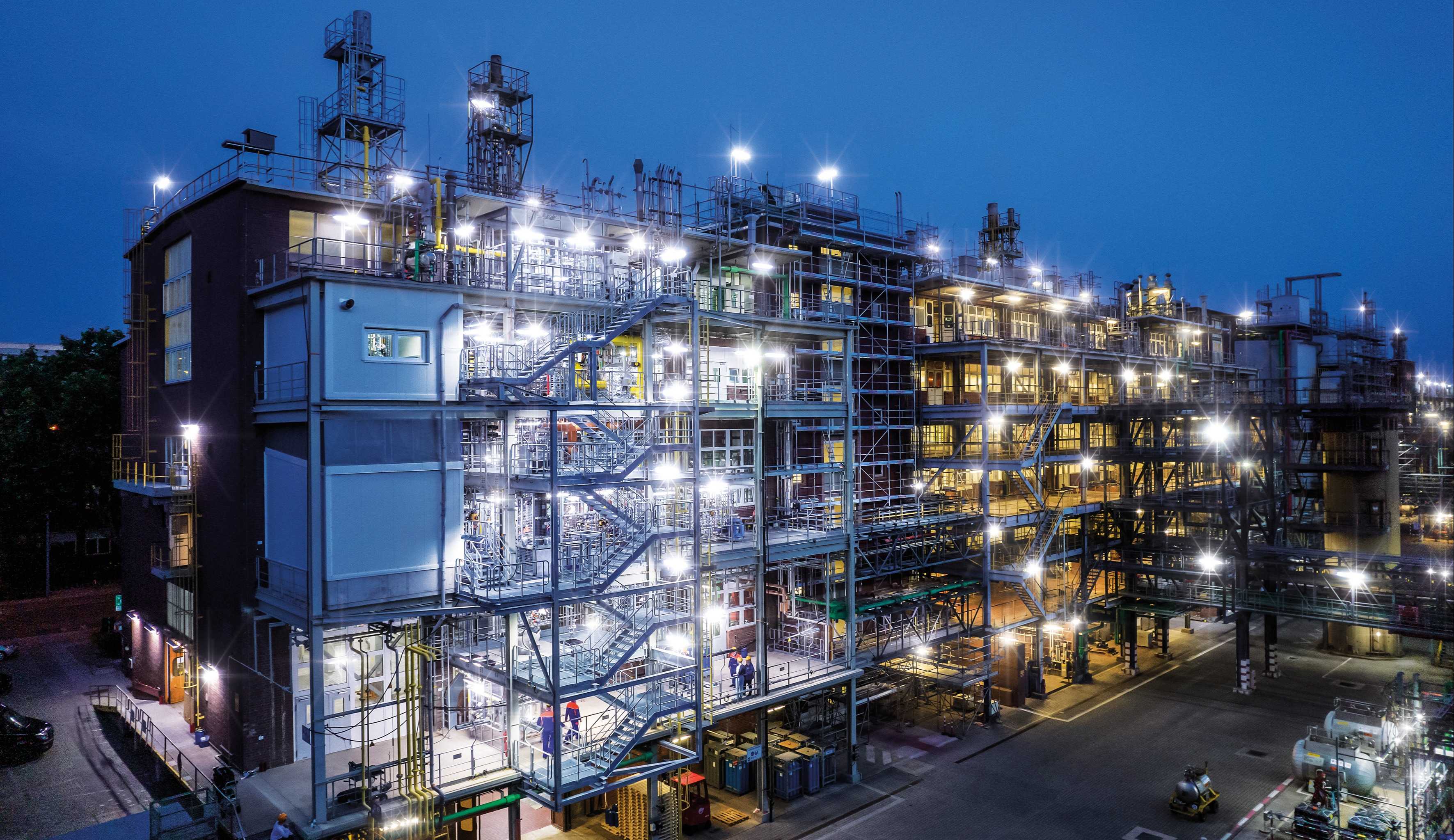
BASF_methane pyrolysis test facility Ludwigshafen.jpg


BASF’s methane pyrolysis test facility in Ludwigshafen, Germany.


“We have been working on this technology for more than a decade and developed a superior reactor concept that we successfully validated at our test plant in Ludwigshafen. By combining BASF’s process innovation with ExxonMobil’s scale-up expertise we are bringing this cost-efficient low-emission hydrogen solution closer to economically viable industrial deployment,” said Dr. Stephan Kothrade, member of the Board of Executive Directors and Chief Technology Officer at BASF.


The companies plan to construct and operate a demonstration plant capable of producing up to 2,000 tons of low-carbon emission hydrogen and 6,000 tons of solid carbon product annually. This facility, which will be located at ExxonMobil’s Baytown Complex in Texas, US, will serve as a critical step toward commercial readiness and help validate the technology at scale.


Methane pyrolysis: A competitive approach to low-emission hydrogen


Methane pyrolysis uses electricity to convert natural gas or other gases, like bio-methane, into hydrogen and solid carbon.


The technology offers several significant advantages. First, it does not generate process-related CO2 emissions, unlike traditional methods for hydrogen production such as steam-methane reforming, requires approximately five times less electrical energy than water electrolysis and does not require the use of water.


Second, it leverages existing natural gas infrastructure, and therefore is easily deployable in different locations. Moreover, the lack of process CO2 emissions makes it particularly attractive for regions where carbon capture and storage face geologic, technical or policy-related challenges.


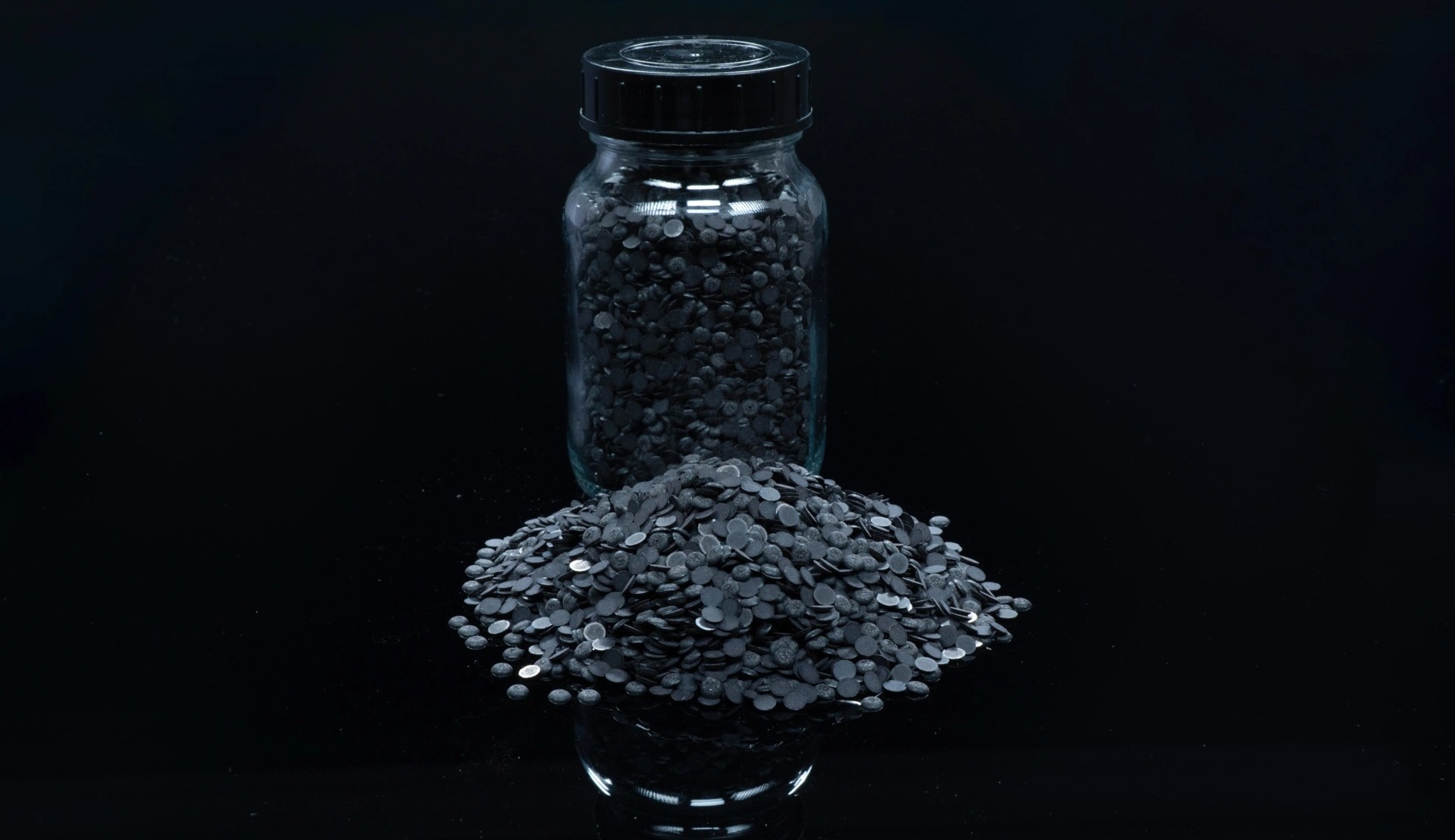
This process creates two valuable products: low-emission hydrogen and high-purity solid carbon. Hydrogen is both an important energy carrier and an essential feedstock in the chemical industry. The solid carbon has applications across industries including steel, aluminum manufacturing, construction and advanced carbon products, like battery materials.

 Like 丨  {{details_info.likes_count}}
Sustainability
ExxonMobil
Carbon neutral
BASF
 GREENWICH (CHINA) TECHNOLOGY DEVELOPMENT LIMITED      
 GREENCORE RESOURCES LIMITED      

The content you're trying to view is for members only. If you are currently a member, Please login to access this content.   Login

Source:Adsale Plastics Network Date :2025-11-21 Editor :RC
Copyright: This article was originally written/edited by Adsale Plastics Network (AdsaleCPRJ.com), republishing and excerpting are not allowed without permission. For any copyright infringement, we will pursue legal liability in accordance with the law.

BASF and ExxonMobil have formed a strategic collaboration to advance methane pyrolysis technology to deliver efficient, low-emission hydrogen solutions for industrial use. The companies have signed a joint development agreement to co-develop methane pyrolysis technology, including plans to construct a demonstration plant aimed at commercial readiness.


Strength in collaboration


BASF has been developing methane pyrolysis technology over the past several years in a project funded by the German Federal Ministry of Research, Technology and Space (BMFTR).


BASF_methane pyrolysis test facility Ludwigshafen.jpg


BASF’s methane pyrolysis test facility in Ludwigshafen, Germany.


“We have been working on this technology for more than a decade and developed a superior reactor concept that we successfully validated at our test plant in Ludwigshafen. By combining BASF’s process innovation with ExxonMobil’s scale-up expertise we are bringing this cost-efficient low-emission hydrogen solution closer to economically viable industrial deployment,” said Dr. Stephan Kothrade, member of the Board of Executive Directors and Chief Technology Officer at BASF.


The companies plan to construct and operate a demonstration plant capable of producing up to 2,000 tons of low-carbon emission hydrogen and 6,000 tons of solid carbon product annually. This facility, which will be located at ExxonMobil’s Baytown Complex in Texas, US, will serve as a critical step toward commercial readiness and help validate the technology at scale.


Methane pyrolysis: A competitive approach to low-emission hydrogen


Methane pyrolysis uses electricity to convert natural gas or other gases, like bio-methane, into hydrogen and solid carbon.


The technology offers several significant advantages. First, it does not generate process-related CO2 emissions, unlike traditional methods for hydrogen production such as steam-methane reforming, requires approximately five times less electrical energy than water electrolysis and does not require the use of water.


Second, it leverages existing natural gas infrastructure, and therefore is easily deployable in different locations. Moreover, the lack of process CO2 emissions makes it particularly attractive for regions where carbon capture and storage face geologic, technical or policy-related challenges.


This process creates two valuable products: low-emission hydrogen and high-purity solid carbon. Hydrogen is both an important energy carrier and an essential feedstock in the chemical industry. The solid carbon has applications across industries including steel, aluminum manufacturing, construction and advanced carbon products, like battery materials.


全文内容需要订阅后才能阅读哦~
立即订阅

Recommended Articles

Chemicals
BASF expands HALS and NOR HALS capacities
 2026-05-06
Chemicals
Clariant launches new propane dehydrogenation catalyst
 2026-05-06
Chemicals
CHINAPLAS 2026: Arkema’s high-performance innovations in five key sectors
 2026-05-05
Chemicals
KRAIBURG TPE to make debut at Interplas 2026
 2026-05-05
Chemicals
NatureWorks opens biopolymer manufacturing facility in Thailand
 2026-05-04
Chemicals
LyondellBasell highlights innovative solutions and value chain collaboration at CHINAPLAS 2026
 2026-05-04

You May Be Interested In

Change

  • People
  • Company
loading... No Content
{{[item.truename,item.truename_english][lang]}} {{[item.company_name,item.company_name_english][lang]}} {{[item.job_name,item.name_english][lang]}}
{{[item.company_name,item.company_name_english][lang]}} Company Name    {{[item.display_name,item.display_name_english][lang]}}  

Polyurethane Investment Medical Carbon neutral Reduce cost and increase efficiency CHINAPLAS Financial reports rPET INEOS Styrolution Evonik Borouge Polystyrene (PS) mono-material Sustainability Circular economy BASF SABIC Multi-component injection molding machine All-electric injection molding machine Thermoforming machine

BASF and ExxonMobil to advance methane pyrolysis technology

识别右侧二维码,进入阅读全文
下载
x 关闭
订阅
亲爱的用户,请填写一下信息
I have read and agree to the 《Terms of Use》 and 《Privacy Policy》
立即订阅
Top
Feedback
Chat
News
Market News
Applications
Products
Video
In Pictures
Specials
Activities
eBook
Front Line
Plastics Applications
Chemicals and Raw Material
Processing Technologies
Products
Injection
Extrusion
Auxiliary
Blow Molding
Mold
Hot Runner
Screw
Applications
Packaging
Automotive
Medical
Recycling
E&E
LED
Construction
Others
Events
Conference
Webinar
CHINAPLAS
CPS+ eMarketplace
Official Publications
CPS eNews
Media Kit
Social Media
Facebook
Linkedin