
















Viewpoint: The 3 insights gained from Chinese chemical companies

The global market is the uncertainties of a slow recovery in demand and significant tariff pressure. European companies are burdened by high energy costs, North American firms are coping with declining product prices, and Chinese businesses are grappling with the challenges of going overseas. Everyone is seeking breakthroughs despite these headwinds.
As Q3 financial reports from companies have wrapped up, as an editor with a long-standing focus on the global chemical industry, I have observed that the performance of Chinese enterprises contains key insights for navigating these uncertainties. They demonstrate solid growth with flexibility and precision in tapping potential. These experiences may offer new inspiration to peers facing severe hurdles.
1. Cost control not simply slashing budgets
In a market downturn, shutting down facilities and reducing capital expenditures are reasonable measures. However, while such “cost-cutting strategies” may address immediate concerns, they seldom build long-term competitiveness.
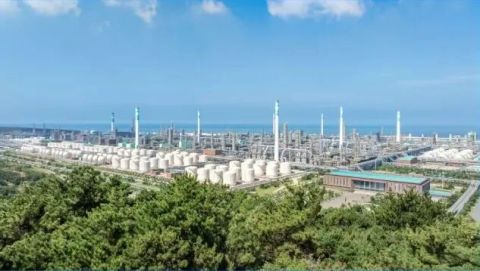
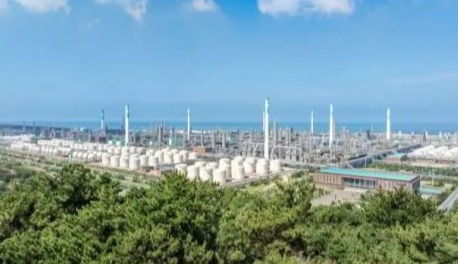
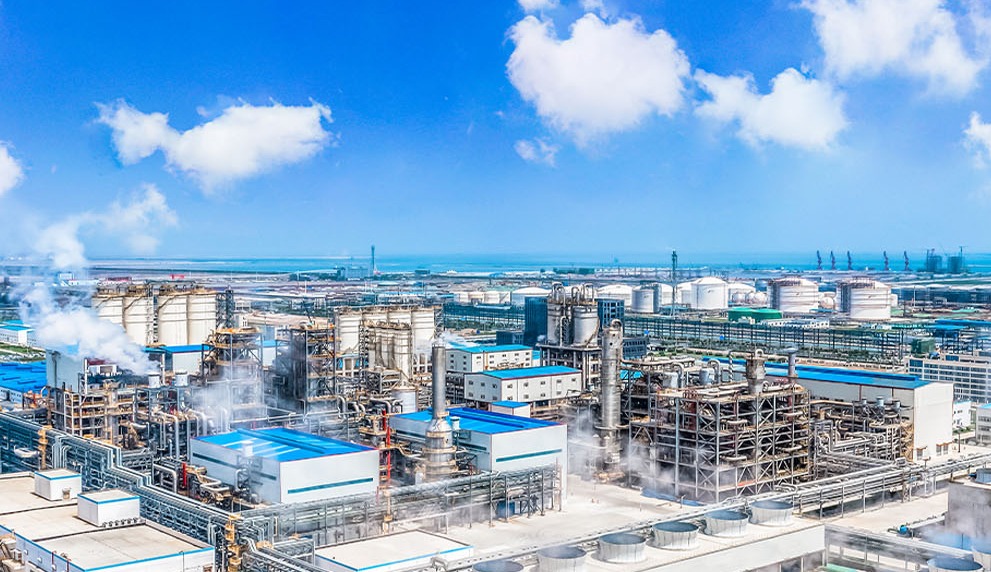
Hengli Petrochemical adopts a strategy that adjusts its product structure based on market supply and demand.
Some strategies of Chinese companies highlight their agility; they focus on “refined operations” and amplify advantages through resource integration and industry chain synergy. For instance, Hengli Petrochemical employs a flexible strategy—producing oil when needed, ethylene when necessary, and chemicals when applicable—to adjust its product structure according to market demand. This approach has harnessed the synergies of refining, petrochemicals, chemicals, and new materials, leading to a remarkable year-on-year increase of over 80% in net profit for Q3.
For peers in the industry, this offers a new perspective on problem-solving: cost control should not simply involve slashing budgets. Instead, it should focus on industry chain synergy and flexible production scheduling, concentrating resources on high value-added businesses. This approach ensures that every investment is transformed into a competitive advantage in efficiency.
2. Explore new racetracks in emerging sectors
My conversations with executives from both Chinese and European chemical companies revealed a common pain point: the profitability of basic products is becoming lower. The era of “volume-driven sales” is over; rather than competing on price in “red ocean”, companies should leverage their existing technological capabilities to move into high-growth areas. Chinese firms have already shifted their competitive logic—finding new opportunities within their traditional fields and building moats in new markets.
For instance, Kingfa Sci.&Tech. continues to invest heavily in R&D in the field of modified plastics, focusing on product upgrades in the automotive and new energy sectors, which maximizes growth potential. Meanwhile, Zhongfu Shenying Carbon Fiber has entered the high-performance carbon fiber market, successfully tapping into the demands of aerospace and new energy applications.
Similarly, international giants like SABIC are adopting comparable strategies, optimizing costs while emphasizing on innovation; in Q3, they launched over 90 new products, utilizing their technological advantages to create growth opportunities.
While the current demand for mid to high-end products may not be large, the profit margins are remarkable. As downstream end-users continue to raise their performance requirements for materials, the growth potential will only increase.
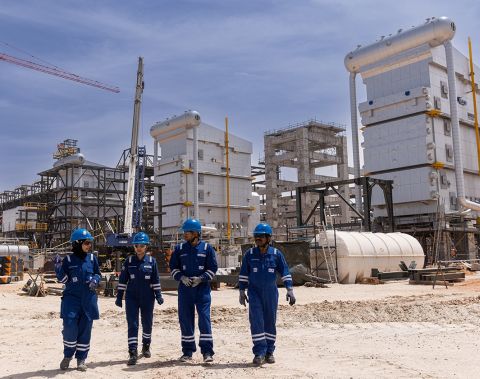
Upon the completion of the Borouge 4 project, Borouge's production facility in Al Ruwais, UAE, will become the world’s largest integrated polyolefins production plant at a single location.
For instance, Borouge has managed to maintain profitable growth even in a market downturn by focusing on high value-added materials for pipes and wires needed for new energy infrastructure as well as high-end packaging. In Q3, they achieved a margin of 39%, underscoring the value of “blue ocean”.
It's worth noting that emerging sectors in China, such as the low-altitude economy and humanoid robotics, are experiencing rapid development. Chinese companies are benefiting from favorable conditions. It is essential for international firms to seriously consider how they can enter these markets.
3. Core competitiveness lies in resilient thinking
The breakthroughs of Chinese enterprises fundamentally rely on a resilient mindset that emphasizes “finding opportunities by following market trends". When demand is weak, they focus on strengthening their internal capabilities; when costs are high, they enhance efficiency; and when the market shifts, they adjust their direction. There are no complex secrets, yet they manage to navigate through challenges steadily.
Last year, during an exclusive interview with the former CEO of Borouge, he said “a good company possesses resilience to navigate through cycles”. This “resilience” is a distinctive hallmark of many Chinese enterprises, aligning closely with the Chinese way of rapidly adapting in the face of adversity.
The Q3 financial reports are not just a series of numbers; they signal that the global chemical industry has entered a phase of “regional and company differentiation”. In an environment marked by ongoing market uncertainty, being adaptable, deeply committed to value, and maintaining resilience may be the universal keys to growth for all enterprises.