















(Interview) Hidden champion: One in three cars in China uses Vigor’s plastic gears

In the wave of growth within Chinese manufacturing, one "hidden champion" has quietly established a significant presence behind the scenes.
With more than 40 years of expertise in plastic gears, Vigor Precision began by producing simple toy components and has since transformed into a vital player in the global supply chain. Today, it is estimated that one in every three vehicles manufactured in China incorporates Vigor’s precision plastic gears.
Recently, Adsale Plastics Network (APN) interviewed Michael Chan, CEO of Vigor Precision Ltd., to explore how this “gear specialist” sustains its momentum amid rapid industry changes and expands into high-value-added markets through a commitment to focus and long-term vision.

Michael Chan, CEO of Vigor Precision Ltd.
Focus: Driving 40 years of sustained growth
APN: Vigor has a history spanning over four decades. How have you managed to scale the gear business over such a long period?
Michael Chan: It all comes down to a philosophy my father established from the very beginning: focus. When the company was founded in 1982, we started with gears for toys, such as pull-back cars and wind-up toys that could walk or jump. Gears were central to those products. By 1997, we had become one of the world’s largest manufacturers of plastic wind up gearboxes, with a daily output of 3.6 million units.
At that time, we had the opportunity to expand from upstream to downstream by manufacturing complete toy products, which might have offered quicker profits. However, my father believed that a business should remain focused instead of chasing short-term trends. This discipline allowed us to accumulate technical expertise and gradually expand our applications beyond toys to more demanding sectors, including home appliances, automotive, and medical devices.
Our revenue has seen steady, long-term growth. We reached a peak in 2022 with approximately RMB 1.6 billion in revenue, representing a 30% year-on-year increase. Despite recent market volatility, our core business remains strong, with projected revenue for this year around RMB 1.2 billion. The results demonstrate that mastering a specific niche leads to market rewards.
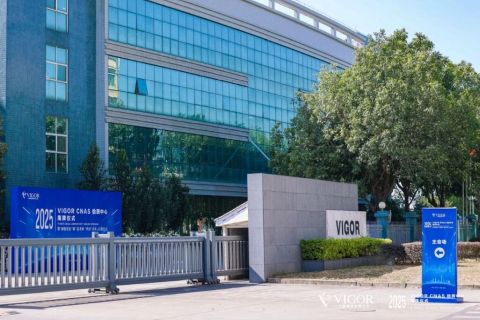
Vigor Precision Ltd. has a history of over 40 years.
Upgrade: Evolving from toys to automotive and robotics
APN: Where are plastic gears primarily used today, and what distinguishes the different applications?
Michael Chan: Gears are fundamental to power transmission; wherever there is rotation, you’ll find a gear. Our applications have transformed from simple toy gearboxes to include home appliances, medical devices, automotive systems, and now robotics.
Vigor produces over 40 million automotive seat-adjustment gears annually, supplying more than 10 million vehicles. This means that approximately one in every three vehicles produced in China is equipped with Vigor Precision gears.
Currently, business in home appliances and robotics accounts for 30-40% of our revenue, automotive makes up about 20%, and traditional toy gearboxes contribute roughly 10%. The remainder consists of other high-precision plastic components.
The key distinction between these applications lies in their performance requirements. Toy gears can tolerate higher thresholds for noise and efficiency. In contrast, automotive gears—especially those used in the quiet cabins of New Energy Vehicles (NEVs)—must adhere to extremely stringent noise control standards. Meeting these demands necessitates comprehensive upgrades in materials, design, and manufacturing processes.
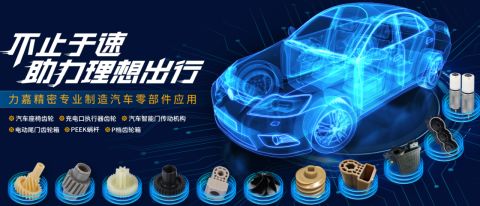
The applications of Vigor's precision gears in the automotive industry.
Processing: Creating comprehensive precision solutions
APN: What are the critical steps in manufacturing a high-quality gear?
Michael Chan: It's a systematic engineering effort:
System-Level Design: A gear never operates in isolation; it must be engineered to integrate seamlessly with the entire transmission system. This makes design the first critical step.
Precision Tooling: The accuracy of the mold directly determines the precision of the gear. High-precision mold making is essential and non-negotiable.
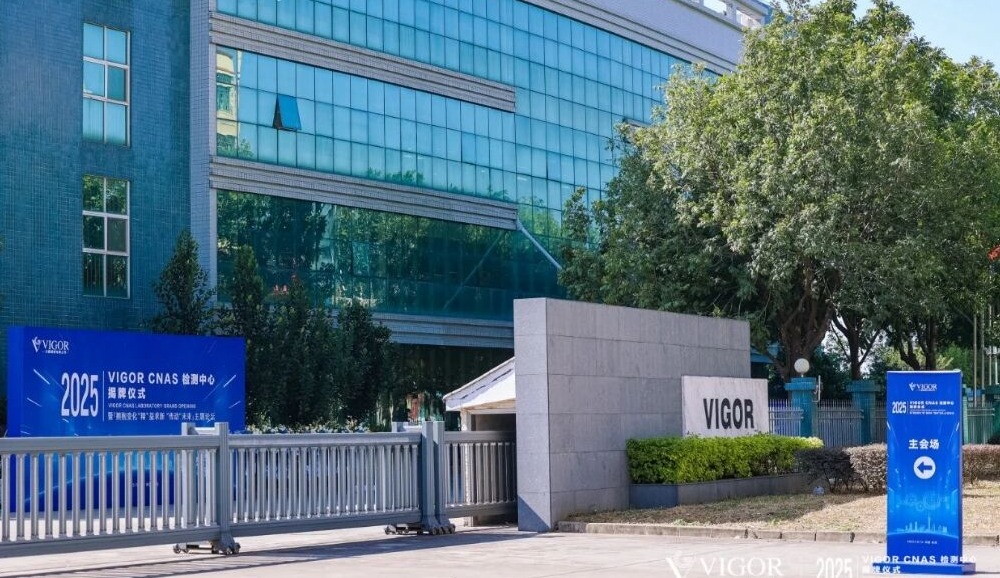
Testing and Validation: With an investment of over RMB 50 million, the Vigor Testing Center, established by 2025, enables systematic testing of precision dimensions, material properties, gearbox performance, NVH (Noise, Vibration, and Harshness), and environmental durability. It serves as both a resource for customer service and an authoritative platform for validating our in-house innovations. The center is currently applying for recognition as a Guangdong Provincial Key Laboratory.
Stable Injection Molding: High-precision production requires temperature-controlled workshops, meticulous material handling, and rigorous equipment maintenance to minimize any variable that could affect stability.
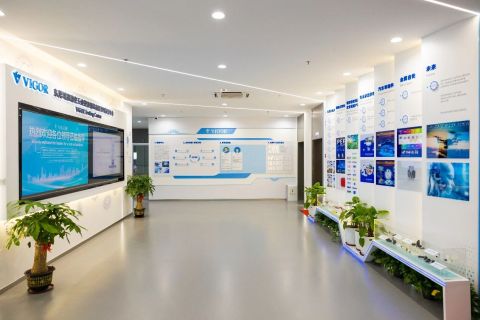
The Vigor Testing Center.
APN: What materials are common in high-end gears, and what equipment does that require?
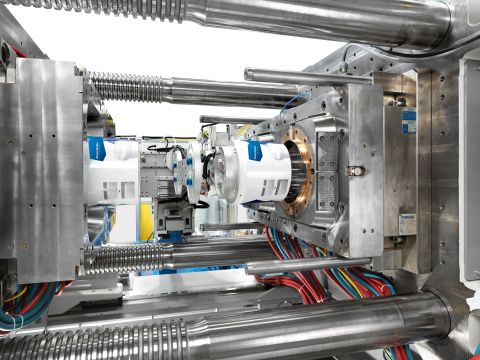
Michael Chan: We primarily use PEEK, POM, and glass-fiber-reinforced nylon. PEEK is particularly favored in automotive applications due to its exceptional mechanical strength and heat resistance. However, it is a high-cost material that demands extremely stringent requirements for processing stability, precision, and repeatability. To guarantee consistency across each batch, we primarily use ARBURG injection molding machinesfor PEEK gears production.
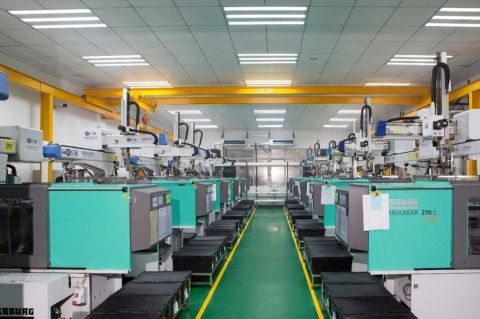
Vigor uses ARBURG injection molding machines for PEEK gears production.
Smart manufacturing: Fueled by Data and AI
APN: What is Vigor’s progress in smart manufacturing, and how do you view the role of data and artifical intelligence (AI)?
Michael Chan: Our factory is approximately 70% digitalized, and we are implementing a five-year "paperless" initiative. The goal is to use SAP as our core backbone, integrating OA, PLM, and MES systems to enhance data collection and analysis. The true value of data lies in traceability and optimization—it enables us to identify production anomalies, close the management loop, and address issues before they escalate.
Regarding AI, we currently utilize it in two main scenarios. The first is smart security, which includes unauthorized access detection and early warning systems for fire and smoke. The second involves AI vision inspection, where our recognition performance significantly surpasses traditional deep learning models.
Looking ahead, we plan to apply AI for real-time analysis of full-process injection molding data, including mold temperature, pressure, and injection speed. This will facilitate early quality alerts and automatic isolation of suspect outputs, which is crucial for maintaining precision requirements.
APN: What is the biggest challenge in advancing smart manufacturing?
Michael Chan: The biggest challenge is talent. Smart manufacturing demands leadership that understands both technology and management—individuals who can connect data signals with the underlying production logic. This necessitates the development of a new type of talent structure within the traditional plastics processing industry.
Future trends: Smaller, faster, quieter, and greener
APN: What trends do you foresee for precision plastic gears over the next 3-5 years?
Michael Chan: Manufacturing standards will continue to rise. Customers are demanding lower noise levels, higher transmission efficiency, and miniaturization. For instance, in humanoid robots, gears must replicate the movements of eyes or fingers. Gears for dexterous robotic hands need to be incredibly small, which presents entirely new challenges for materials and craftsmanship. We anticipate significant advancements in precision plastic gears regarding new materials, manufacturing processes, and decarbonization.
APN: How is Vigor Precision approaching decarbonization?
Michael Chan: We are addressing this challenge from multiple angles. First, we are phasing out energy-intensive hardware, including older injection molding machines and auxiliary equipment. Second, we are adopting lower-carbon raw materials without compromising functionality. Third, we are optimizing packaging and transport to reduce emissions wherever customer requirements allow. Additionally, we conduct annual carbon footprint certifications for both our operations and products to meet the strict management standards of our European and American clients.
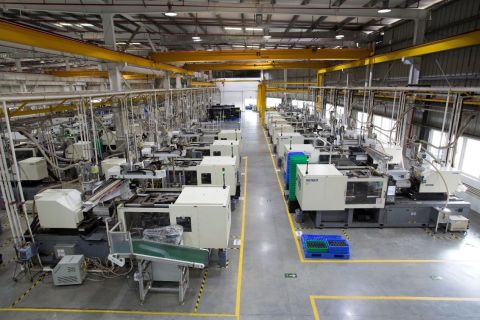
The injection molding workshop at Vigor's factory.
Landscape: Shifting from price wars to technology races
APN: How does the domestic gear industry compare to international competitors?
Michael Chan: China is a major manufacturing hub for plastic gears, although Japan and Germany still have a strong advantage in the ultra-high-precision sector. This is primarily because high-end machining, metrology equipment, and tooling capabilities remain heavily reliant on imports.
However, the gap is narrowing rapidly. As China emerges as the largest manufacturing cluster for industries like humanoid robots and the low-altitude economy, the diversity of application scenarios will drive rapid technological iteration. I believe it’s only a matter of time before Chinese precision manufacturing reaches or even surpasses global standards.
In terms of competition, the low-end market competes primarily on price, while the mid-to-high-end market focuses on technology. High-end gears present significant barriers to entry, necessitating sustained R&D and capital investment. This challenge is precisely what creates our competitive advantage.
APN: What are Vigor’s future development plans?
Michael Chan: We are currently constructing a new facility in Malaysia, with production set to begin in 2027. This plant will span approximately 10,000 square meters and is designed to address global trade uncertainties while enhancing supply chain resilience. Technically, we are exploring materials with superior physical properties to PEEK, such as polyimide (PI). Additionally, we are advancing lightweight solutions for robotic joints, utilizing plastic gears as high-performance alternatives.

Vigor's new facility in Malaysia.
About Vigor Precision
Founded in 1982 and headquartered in Hong Kong, China, Vigor Precision operates four factories in Dongguan and a manufacturing base in Malaysia. The company specializes in the R&D and production of plastic gears and precision components. Vigor offers comprehensive one-stop solutions for OEM/ODM projects, encompassing design, mold making, injection molding, assembly, and final delivery. The customers include renowned international smart home and toy brands, as well as major domestic manufacturers of new energy vehicles.