










Search History
Clear History
{{item.search_key}}
Hot Searches
Change
{{item.name}}
{{item.english_name}}
Subscribe eNews
Once A Week Once Every Two Weeks
{{sum}}
Login Register

Applications

Borealis and Messe Düsseldorf conclude successful reusable cup pilot at K 2025

Kistler and ATS Life Sciences Systems join forces for medical device assembly line

Viewpoint: Safeguarding the circle—Proposed measures for temporary pause on rPET imports to the EU

Products

Where to find affordable used extrusion equipment!

MAAG Group and SIKORA to present in joint booth at Plastindia 2026

Covestro launches new TPU production site in South China

Activities

  • Fakuma to celebrate 30th anniversary edition in October 2026

  • Italy pavilion at Plast Eurasia proves its rising presence in Turkish market

  • CHINAPLAS 2026: Grand stage for new material, smart manufacturing and green solutions

Pictorial

Industry Topic

ASEAN: The Next Manufacturing Hub

Innovative and Sustainable Packaging

Green Plastics: News & Insights

CHINAPLAS

CHINAPLAS 2025 Focus

CHINAPLAS 2024 Focus

CHINAPLAS 2023 Focus

Exhibition Topic

CHINA INSIGHT

K 2025 FOCUS

Fakuma 2024 Highlights

News Videos

Haitian South China Headquarters opening

BEILIJIA Double Walled Corrugated Pipe Plant

Magnetic mold changing system developed in-house by Shanghai Qiaotian

Conference Videos

【Mandarin session: Webinar playback】SACMI: Your Digitalized Manufacturing, Your Future Today

[Live Replay] LK Group: Smart Manufacturing, New Chapters in Southeast Asia: High-Efficiency Solutions in PET Preform & Thin-Wall Packaging

[Live Replay] Fu Chun Shin (FCS): Data-Driven Digital Rebirth and Intelligent Future of Injection Molding

Corporate/Product Videos

High-temperature gear pump

High-precision gear pump

Gienkee Patented Infrared Heater Band

Exhibition

Playback TECHHUB 2025@CPRJ Live Streaming for CHINAPLAS

Playback TECHHUB@CPRJ Live Streaming for CHINAPLAS

Events

Playback On April 14, the "6th Edition CHINAPLAS x CPRJ Plastics Recycling and Circular Economy Conference and Showcase" at the Crowne Plaza Shenzhen Nanshan is currently being livestreamed!

Playback 5th Edition CHINAPLAS x CPRJ Plastics Recycling and Circular Economy Conference and Showcase

Home > News > Recycling

Viewpoint: Safeguarding the circle—Proposed measures for temporary pause on rPET imports to the EU

Source:Adsale Plastics Network Date :2026-01-28 Editor :VC
Copyright: This article was originally written/edited by Adsale Plastics Network (AdsaleCPRJ.com), republishing and excerpting are not allowed without permission. For any copyright infringement, we will pursue legal liability in accordance with the law.

Shortly before last Christmas, the European Commission (EC) presented the long-awaited implementing act on mass balance accounting for chemically recycled content would be submitted to the member states for adoption. Meanwhile, the Commission also unveiled a new package of measures to boost circular economy and strengthen Europe's plastic recycling.


The core aim of the move is apparently to protect European domestic recycling industry, following a difficult year for Europe’s recycling sector. Indeed, if domestic recycling capacity continues to decline, meeting these targets becomes more difficult and reliance on imports grows, raising questions about transparency and environmental standards.


Notably, while the proposed drafts and measures are impacting the European circular economy development, their implications for the players in the recycling sector from outside the European Union (EU)  are both profound and protective.
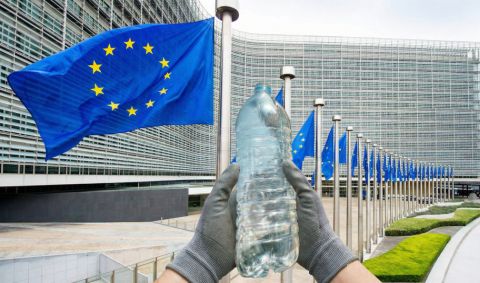

EU Official Photo with Hand Holding Bottle_AI_480.jpg

Once implemented, the proposed EU regulations on recycling content for single-use PET beverage bottles will reshape rPET trade flows. (Image generated using AI)


Let Adsale Plastics Network walk you through the key drafts and measures with analysis. 


1. The EC has proposed the first-ever mass balance allocation rules for calculation, verification, and reporting of chemically recycled plastic content in single-use PET beverage bottles for under the Single Use Plastics Directive (SUPD).


The rules determine the share of chemical recycling outputs that can count towards the mandatory recycled content targets, 25% recycled content target for 2025 (and 30% for 2030), set out by the SUPD.


The Commission adopts a fuel-exempt approach, meaning that recycled materials diverted to fuel or energy recovery do not count toward recycled-content targets.


Analysis: The implementing act serves to supplement a decision adopted before, which only covers material from mechanical recycling. The rules will standardize chemical recycling across the EU and help the value chain meet the SUPD’s ambitious targets.


With applications where mechanical recycling isn’t feasible, the EC believes that chemical recycling provides a valuable alternative. According to the Commission, the European plastic industry foresees planning investments of up to €8 billion in chemical recycling over the next few years. A clearer regulatory framework hopefully can incentivize investment and the development of new technology.


The methodology for calculating the rules is based on the “fuel-use excluded” mass balance allocation rule – meaning that waste that is used to produce fuels or energy recovery can’t be counted as recycled content.


2. While the mass balance method allows accounting for chemically recycled content, insider sources unveiled that this proposal would establish a two-year transition period before imported recycled PET (rPET) from outside the EU could be used to fulfill the content targets for single-use beverage bottles until November 21, 2027.


This proposal is currently navigating the closed-door comitology process, and the temporary exclusion of imported recycled plastics was unveiled by sources that have access to the unpublished document.


Analysis: According to Plastics Recyclers Europe, more recycling capacity was lost in 2025 than in any previous year on record. By temporarily excluding recycled plastics produced outside the EU for the next two years, the EC is effectively “shoring up the walls” to trying to establish a level playing field for the struggling European recycling sector.


Indeed, European recycling industry associations have argued in recent months that only post-consumer plastic waste from products placed on the EU market should be eligible for the production of recycled material that can be credited towards EU targets.


The proposal arrives at a critical juncture for European plastic recyclers, who have faced high energy and operational costs and acute pressure from an influx of low-priced imports from North Africa and Southeast Asia.


Meanwhile, the proposed two-year transition period also acts as a “waiting room”, providing the EC with the time required to develop robust auditing mechanisms to ensure third-country facilities meet the standards equivalent to those of the EU.
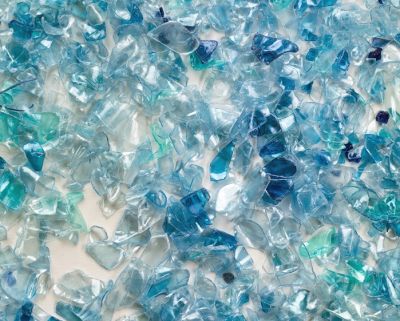

PET bottle flakes_400.jpg

The EC is trying to establish a level playing field for the European recycling sector.


3. Enhance customs tracking for imported recycled plastics by the introduction of separate customs codes for recycled plastics. Monitor imports of plastic by providing greater support to the newly created Import Surveillance Task Force and the dedicated monitoring system introduced in March 2025 to oversee certain industrial chemicals.


Analysis: Under current customs codes, imported virgin plastics and recycled products are not differentiated in sufficient detail in the EU, and some of the low-priced imported virgin plastics is entering the market mislabeled as recycled.


The result has been falling demand for EU-produced recycled plastics, even as EU regulations increasingly mandate their use in packaging and consumer goods. Additionally, tracking the precise volumes of recycled material entering the EU is difficult.


The EC has acknowledged the issue by introducing distinct customs codes for virgin plastics and recycled plastics. That would allow regulators to build a clearer picture of import patterns and spot misclassification.


4. Conduct audits for recycled materials, particularly for foot contact applications like PET, on the enforcement of recycling installations operating outside the EU and support control laboratories in the distribution of new analytical methods to verify whether material is indeed recycled from plastic waste.


Analysis: The upcoming amendment of is expected to introduce stricter requirements for compliance documentation when companies work with recycled plastics imported into the EU. Recycled plastics produced within the EU or imported from abroad will be held to the same levels of compliance.


These measures would extend enforcement beyond paperwork, addressing long-standing concerns from European recyclers that current checks rely too heavily on declarations rather than physical verification.


Implications for non-EU players


The EU already applies anti-dumping duties on PET from China after determining that imports were being sold at prices that forced European producers to operate at a loss. The EC also launched an anti-dumping investigation in May 2025 into PET imports from Vietnam.


The planned measures in the recycling sector from the EU signal a tightening of access to one of the world’s largest plastics markets, which would definitely reshape the trade flows of recycled plastics.


For Chinese and non-EU producers and brands, the message is clear: in Europe, the path to compliance would possibly paved with European-sourced recycled plastics, at least in the short-term. They have to eye on other markets outside the EU to keep business growing while continuing monitoring the development of the EU regulations.


Critically, while imported rPET may not count toward mandatory targets during the two-year window, its importation remains unhampered for general manufacturing purposes. This strategic pause is not a total retreat from global trade.

 Like 丨  {{details_info.likes_count}}
Recycled plastics
Circular economy
rPET
 GUANGXI WUZHOU GUOLONG RECYCLABE RESOURCES DEVELOPMENT CO., LTD.      
 XIAMEN XINWANCAI POLYMER TECHNOLOGY CO.,LTD      
 ANHUI ZHONGXIN HONGWEI TECHNOLOGY CO.,LTD      

The content you're trying to view is for members only. If you are currently a member, Please login to access this content.   Login

Source:Adsale Plastics Network Date :2026-01-28 Editor :VC
Copyright: This article was originally written/edited by Adsale Plastics Network (AdsaleCPRJ.com), republishing and excerpting are not allowed without permission. For any copyright infringement, we will pursue legal liability in accordance with the law.

Shortly before last Christmas, the European Commission (EC) presented the long-awaited implementing act on mass balance accounting for chemically recycled content would be submitted to the member states for adoption. Meanwhile, the Commission also unveiled a new package of measures to boost circular economy and strengthen Europe's plastic recycling.


The core aim of the move is apparently to protect European domestic recycling industry, following a difficult year for Europe’s recycling sector. Indeed, if domestic recycling capacity continues to decline, meeting these targets becomes more difficult and reliance on imports grows, raising questions about transparency and environmental standards.


Notably, while the proposed drafts and measures are impacting the European circular economy development, their implications for the players in the recycling sector from outside the European Union (EU)  are both profound and protective.


EU Official Photo with Hand Holding Bottle_AI_480.jpg

Once implemented, the proposed EU regulations on recycling content for single-use PET beverage bottles will reshape rPET trade flows. (Image generated using AI)


Let Adsale Plastics Network walk you through the key drafts and measures with analysis. 


1. The EC has proposed the first-ever mass balance allocation rules for calculation, verification, and reporting of chemically recycled plastic content in single-use PET beverage bottles for under the Single Use Plastics Directive (SUPD).


The rules determine the share of chemical recycling outputs that can count towards the mandatory recycled content targets, 25% recycled content target for 2025 (and 30% for 2030), set out by the SUPD.


The Commission adopts a fuel-exempt approach, meaning that recycled materials diverted to fuel or energy recovery do not count toward recycled-content targets.


Analysis: The implementing act serves to supplement a decision adopted before, which only covers material from mechanical recycling. The rules will standardize chemical recycling across the EU and help the value chain meet the SUPD’s ambitious targets.


With applications where mechanical recycling isn’t feasible, the EC believes that chemical recycling provides a valuable alternative. According to the Commission, the European plastic industry foresees planning investments of up to €8 billion in chemical recycling over the next few years. A clearer regulatory framework hopefully can incentivize investment and the development of new technology.


The methodology for calculating the rules is based on the “fuel-use excluded” mass balance allocation rule – meaning that waste that is used to produce fuels or energy recovery can’t be counted as recycled content.


2. While the mass balance method allows accounting for chemically recycled content, insider sources unveiled that this proposal would establish a two-year transition period before imported recycled PET (rPET) from outside the EU could be used to fulfill the content targets for single-use beverage bottles until November 21, 2027.


This proposal is currently navigating the closed-door comitology process, and the temporary exclusion of imported recycled plastics was unveiled by sources that have access to the unpublished document.


Analysis: According to Plastics Recyclers Europe, more recycling capacity was lost in 2025 than in any previous year on record. By temporarily excluding recycled plastics produced outside the EU for the next two years, the EC is effectively “shoring up the walls” to trying to establish a level playing field for the struggling European recycling sector.


Indeed, European recycling industry associations have argued in recent months that only post-consumer plastic waste from products placed on the EU market should be eligible for the production of recycled material that can be credited towards EU targets.


The proposal arrives at a critical juncture for European plastic recyclers, who have faced high energy and operational costs and acute pressure from an influx of low-priced imports from North Africa and Southeast Asia.


Meanwhile, the proposed two-year transition period also acts as a “waiting room”, providing the EC with the time required to develop robust auditing mechanisms to ensure third-country facilities meet the standards equivalent to those of the EU.


PET bottle flakes_400.jpg

The EC is trying to establish a level playing field for the European recycling sector.


3. Enhance customs tracking for imported recycled plastics by the introduction of separate customs codes for recycled plastics. Monitor imports of plastic by providing greater support to the newly created Import Surveillance Task Force and the dedicated monitoring system introduced in March 2025 to oversee certain industrial chemicals.


Analysis: Under current customs codes, imported virgin plastics and recycled products are not differentiated in sufficient detail in the EU, and some of the low-priced imported virgin plastics is entering the market mislabeled as recycled.


The result has been falling demand for EU-produced recycled plastics, even as EU regulations increasingly mandate their use in packaging and consumer goods. Additionally, tracking the precise volumes of recycled material entering the EU is difficult.


The EC has acknowledged the issue by introducing distinct customs codes for virgin plastics and recycled plastics. That would allow regulators to build a clearer picture of import patterns and spot misclassification.


4. Conduct audits for recycled materials, particularly for foot contact applications like PET, on the enforcement of recycling installations operating outside the EU and support control laboratories in the distribution of new analytical methods to verify whether material is indeed recycled from plastic waste.


Analysis: The upcoming amendment of is expected to introduce stricter requirements for compliance documentation when companies work with recycled plastics imported into the EU. Recycled plastics produced within the EU or imported from abroad will be held to the same levels of compliance.


These measures would extend enforcement beyond paperwork, addressing long-standing concerns from European recyclers that current checks rely too heavily on declarations rather than physical verification.


Implications for non-EU players


The EU already applies anti-dumping duties on PET from China after determining that imports were being sold at prices that forced European producers to operate at a loss. The EC also launched an anti-dumping investigation in May 2025 into PET imports from Vietnam.


The planned measures in the recycling sector from the EU signal a tightening of access to one of the world’s largest plastics markets, which would definitely reshape the trade flows of recycled plastics.


For Chinese and non-EU producers and brands, the message is clear: in Europe, the path to compliance would possibly paved with European-sourced recycled plastics, at least in the short-term. They have to eye on other markets outside the EU to keep business growing while continuing monitoring the development of the EU regulations.


Critically, while imported rPET may not count toward mandatory targets during the two-year window, its importation remains unhampered for general manufacturing purposes. This strategic pause is not a total retreat from global trade.
全文内容需要订阅后才能阅读哦~
立即订阅

Recommended Articles

Recycling
Borealis and Messe Düsseldorf conclude successful reusable cup pilot at K 2025
 2026-01-28
Recycling
Viewpoint: Safeguarding the circle—Proposed measures for temporary pause on rPET imports to the EU
 2026-01-28
Recycling
BoReTech PET recycling technology receives positive EFSA opinion
 2026-01-19
Recycling
Mars Materials CO2-derived product can be turned into raw material for carbon fiber
 2026-01-16
Recycling
Borealis and BlueAlp partner to advance chemical recycling
 2025-12-29
Recycling
SKZ launches research project “CloseT” for sustainable textile recycling
 2025-12-18

You May Be Interested In

Change

  • People
  • Company
loading... No Content

{{[item.truename,item.truename_english][lang]}} {{[item.company_name,item.company_name_english][lang]}} {{[item.job_name,item.name_english][lang]}}
{{[item.company_name,item.company_name_english][lang]}} Company Name    {{[item.display_name,item.display_name_english][lang]}}  

Polyurethane Investment Medical Carbon neutral Reduce cost and increase efficiency CHINAPLAS Financial reports rPET INEOS Styrolution Evonik Borouge Polystyrene (PS) mono-material Sustainability Circular economy BASF SABIC Multi-component injection molding machine All-electric injection molding machine Thermoforming machine

Viewpoint: Safeguarding the circle—Proposed measures for temporary pause on rPET imports to the EU

识别右侧二维码,进入阅读全文
下载
x 关闭
订阅
亲爱的用户,请填写一下信息
I have read and agree to the 《Terms of Use》 and 《Privacy Policy》
立即订阅
Top
Feedback
Chat
News
Market News
Applications
Products
Video
In Pictures
Specials
Activities
eBook
Front Line
Plastics Applications
Chemicals and Raw Material
Processing Technologies
Products
Injection
Extrusion
Auxiliary
Blow Molding
Mold
Hot Runner
Screw
Applications
Packaging
Automotive
Medical
Recycling
E&E
LED
Construction
Others
Events
Conference
Webinar
CHINAPLAS
CPS+ eMarketplace
Official Publications
CPS eNews
Media Kit
Social Media
Facebook
Linkedin