













Search History
Clear History
{{item.search_key}}
Hot Searches
Change
{{item.name}}
{{item.english_name}}
Subscribe eNews
Once A Week Once Every Two Weeks
{{sum}}
Log in Register

Applications

Report: Innovative Plastics Technologies Propel Medical Device Advancement

Vianode and Ateios Systems to jointly develop next generation graphite electrodes

Indorama Ventures supports Brazilian project on ocean plastic recycling

Products

Toray sets to commercialize award-winning advanced photosensitive PI patterning technology

Haitian Plastics Machinery delivers injection molding turnkey project to XPENG’s Zhaoqing base

Orinko to unveil three high-performance specialty materials at CHINAPLAS 2026

Activities

  • Must-attend: CHINAPLAS x CPRJ Plastics Recycling and Circular Economy Conference in Shanghai

  • Beyond procurement: Exploring the concurrent events at CHINAPLAS 2026

  • Chinaplas2026 Preview Webinars | Smart Blow Moulding & AI Inspection (FREE)

Pictorial

News Videos

ALPLA: Global packaging, empowering China

Evonik: Going beyond chemical boundary, innovations for limit-less future

Jwell Machinery: Plastic machinery hard power in six major areas

Conference Videos

【Mandarin session: Webinar playback】HUSKY:From Injection Molding Machines to Temperature Controllers – Diversified Product Portfolio Breaks Through Molding Challenges and Empowers Advanced Applications in End-Use Segmented Markets – Pre-Show Analysis for Chinaplas

[Live Replay] ST BlowMoulding Group: How Smart, Energy-Efficient Blow Moulding Technology Drives Sustainability

【Mandarin session: Webinar playback】SACMI: Your Digitalized Manufacturing, Your Future Today

Corporate/Product Videos

Tool Sheds Extrusion Die for PP Furniture Extrusion Line Tooling TianRui Mould

Mingsanfeng professional cap mould, Working together to pave the way for the growth of bottle cap molds.

QINGDAO BOUNI introduction video

Home > News > Chemicals

Analysis: US-Israel strike on Iran creates uncertainty for China's chemical imports

Source:Adsale Plastics Network Date :2026-03-06 Editor :Vicky
Copyright: This article was originally written/edited by Adsale Plastics Network (AdsaleCPRJ.com), republishing and excerpting are not allowed without permission. For any copyright infringement, we will pursue legal liability in accordance with the law.

Over the weekend, news of the US and Israeli military strikes on Iran has been dominating the headlines of major news outlets.


As a major global energy producer, Iran holds a pivotal position in the global supply of basic chemical raw materials such as oil, LPG and methanol. Meanwhile, Iran is also a key export and transportation hub for these raw materials – its ports and the Strait of Hormuz serve as the vital passage for such materials to enter the international market.


So, what impacts will this military operation have on Iran's exports of crude oil and chemicals? Especially for the Chinese market, which chemical imports will bear the brunt of the impact?


How important is the Strait of Hormuz?


According to energy trade assessments by statistical institutions such as the U.S. Energy Information Administration (EIA), the Strait of Hormuz connects the Persian Gulf with the Indian Ocean, with approximately 20 million barrels of crude oil passing through it daily, accounting for one-fifth of the world's total oil consumption, most of which is shipped to Asian countries and regions including China, South Korea, and Japan.


Furthermore, it is the "main gate" for chemical exports from the Middle East. The existing alternate pipelines can only handle about 15% to 20% of the transportation capacity at present.

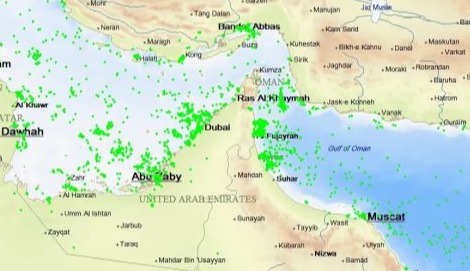
640.jpg

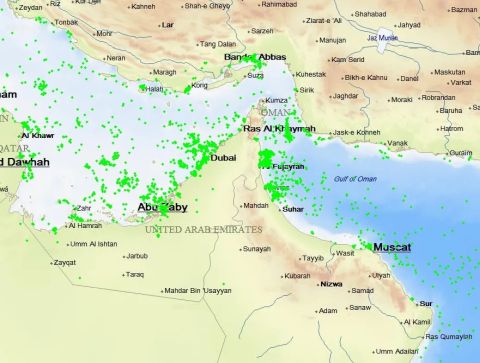
Vessel tracking data shows that the number of ships transiting the Strait of Hormuz dropped sharply on March 1 (local time). (Source: Shipfinder)


This means that if the situation in the strait becomes tense or even blocked, it will not only impact oil prices, but more directly, imported chemical raw materials which rely heavily from the Middle East may face delivery delays or volume reductions.


Methanol: Over 50% import dependence, the most sensitive market


Among all chemical products, methanol is likely to be the first to feel the impact.


Iran is the world's second-largest methanol producer with an annual capacity of about 17 million tons, more than 80% of which is for export. As the world's largest methanol consumer, China has a huge domestic production capacity (about 118 million tons in 2025), yet still relies on imports for 12% to 15% of its consumption.


Notably, about 56% to 60% of China's imported methanol comes from Iran, accounting for around 7% of the country's apparent consumption.


This means that if the operation of Iranian ports is hindered or transportation through the Strait of Hormuz is disrupted, the supply and demand pattern of China's domestic methanol market may be directly affected.


For downstream enterprises that rely on methanol for production – such as MMA, formaldehyde and methanol fuel sectors – short-term inventory pressure and price fluctuations will pose practical challenges.


LPG: A quarter of imports from Iran


The liquefied petroleum gas (LPG) market is also highly sensitive.


About a quarter of China's LPG imports come from Iran, and together with Qatar, Saudi Arabia and other Middle Eastern countries, China's overall dependence on the Middle East for LPG is relatively high.


Rising crude oil prices will directly drive up LPG costs, while disruptions to the Strait of Hormuz will mean a possible reduction in cargo arrivals, tightening market supply and demand.


For enterprises using LPG as raw material or fuel, if the inventory turnover days are low, the pressure of rising short-term procurement costs will be quite direct.


Ethylene Glycol: Dual impacts of cost and logistics


The situation for ethylene glycol is slightly different.


China's domestic ethylene glycol production capacity has been rising steadily, with self-sufficiency rate climbing to around 78% and import dependence falling to 22%. However, the Middle East accounts for about 60% of the import share, and Iran remains an important supplier.


Ethylene glycol is facing a dual impact:

  • On the one hand, rising crude oil prices drive up production costs via the naphtha → ethylene pathway;

  • On the other hand, fluctuations in Iranian exports and shipping risks will exacerbate supply uncertainty. This combined impact of "cost + logistics" puts ethylene glycol's price elasticity at a medium to high level.


Polyethylene: Cost transmission is the focus


Polyethylene (PE) has a relatively manageable direct dependence on Middle Eastern supplies. China's direct imports of PE from Iran amount to approximately 1.125 million tons, accounting for 8.4% of total PE imports (if entrepot trade is included, the actual share would be higher).


However, it should be noted that:If the Strait of Hormuz is blocked for a long time and the overall Middle Eastern export channel is restricted, the PE market may experience a short-term supply shortage.


Even though the shortage can be alleviated in the long run through domestic new production capacity or other supply sources, the pressure of rising crude oil costs will still be transmitted to the downstream plastic products sector through the industrial chain.


Lessons from past logistics cost


Looking back at the end of 2023, the Houthi armed forces in Yemen attacked merchant ships in the Red Sea, forcing shipping companies to detour around the Cape of Good Hope in Africa. This added 3,000 to 3,500 nautical miles to the Asia-Europe shipping route and extended the voyage by 10 to 14 days. At that time, freight rates nearly doubled, and ship insurance premiums soared from US$10,000-20,000 to US$150,000-500,000.


If a similar situation occurs in the Strait of Hormuz, for products such as methanol and LPG that are highly dependent on Middle Eastern imports, logistics costs may soar faster than the raw material prices themselves.


In Conclusion


This latest military action by the US and Israel against Iran serves as another reminder to the industry: In a globalized supply chain, geopolitical risk is a variable that cannot be avoided.


For domestic chemical enterprises, whether it is raw material procurement, inventory management or downstream pricing strategies, it is necessary to incorporate "supply chain resilience" into daily considerations. Over-reliance on a single channel or a single supply source may lead to passivity when the market fluctuates.


Of course, there is no need to overreact. The scale and diversification of China's domestic chemical industry are increasing, and the self-sufficiency rate for some product categories has significantly improved. The key is to clearly understand how the specific segment you are in will be affected, and to make preparations in advance.

 Like 丨  {{details_info.likes_count}}
Chemical raw material
Polyethylene (PE)
 Tangshan Zhonghao Chemical Co., Ltd      
 Guangdong Yilong Advanced Materials Technology Co Ltd      
 JIANGSU XINFLON PLASTIC PRODUCTS CO.,LTD.      
 USTAB CHEM INTERNATIONAL COMPANY LIMITED      
 Ningxia Baofeng Energy Group Co., Ltd.      
 JUHESHUN ADVANCED MATERIALS CO., LTD.      
 JIANGSU YICAN SPECIAL PLASTICS CO., LTD.      
 Guangzhou City Mingshen New Material Co., Ltd.      
 NINGBO YOUDAO COLOR MASTERBATCH TECHNOLOGY CO., LTD      
 CHISAGE ENERGY AND CHEMICAL CO., LTD.      
 ANSHAN HIFICHEM CO., LTD.      
 OQ Marketing (Shanghai) Co., Ltd.      
 HANGZHOU BOSOM NEW MATERIALS TECHNOLOGY CO.,LTD.      
 BEIJING ENERGY ENGINEERING TECHNOLOGIES CO.,LTD.      
 JIANGSU SHENLONG ZINC INDUSTRY CO., LTD.      
 SHANGHAI CHIC NEW MATERIAL CO., LTD.      
 NANTONG FUYUAN CARBON FIBER RECYCLING CO., LTD      
 Rongsheng Petrochemical Co., Ltd.      
 FUJIAN HUASU INNOVATIVE PLASTICS MATERIALS CO., LTD.      
 SHANGHAI RISE CHEMICAL TECHNOLOGY CO., LTD.      
 QINGDAO BOUNI NEW MATERIALS CO.,LTD      
 LINKER NEW MATERIALS CO., LTD      
 SHANGHAI HAWKWAY PROCESS SOLUTIONS CO., LTD      
 DONGGUAN GENVAN SILICONE TECHNOLOGY CO., LTD.      
 JINAN FEIHENG NEW MATERIALS CO., LTD.      
 FUJIAN HONGKONG PETROCHEMICAL LIMITED      
 ZHEJIANG JIAXING SQUARE NEW MATERIAL TECHNOLOGY CO., LTD      
 VICTREX PLC      
 LIYANG XINJIAN CHEMICAL CO.,LTD.      
 ZHEJIANG EUCHEM CHEMICAL CO., LTD      
 Inner Mongolia Dadi Yuntian Chemical Co..Ltd      
 KADIDE      
 JIANGSU LISIDE NEW MATERIAL CO., LTD      
 DONGYING JINBANGTAIXIN NEW MATERIAL TECHNOLOGY CO., LTD.      
 SHANGHAI JANTON PLASTIC AND CHEMICAL CO.,LTD      
 HUAJIN ARAMCO PETROCHEMICAL COMPANY LIMITED      
 HENAN KEWEI FLAME RETARDANT NEW MATERIALS CO., LTD      
 HUIZHOU LITUO ADVANCED MATERIALS CO.,LTD.      
 GUANGXI TIANYANG JIAMUHE PLASTIC INDUSTRY CO., LTD      
 Taizhou Jianlong Technology Co.,Ltd      
 SHANDONG 123 PLASTIC MASTERBATCH CO., LTD      
 Jiangsu Hanguang Industrial Co., Ltd.      
 Lanzhou Auxiliary Agent Plant Co., Ltd      
 ZHEJIANG HONGYI CHEMICAL CO.,LTD.      
 ATK Flame Retardant Materials Company      
 NAN YANG POLYSUPER NEWMATERIALS CO.,LTD      
 ANHUI SHAFENG ADVANCED MATERIAL CO., LTD.      
 SHANGHAI FU XIN NEW MATERIALS TECHNOLOGY CO., LTD.      
 LIAONING RAUHEY NEW MATERIALS CO., LTD      
 GBR SVEN INDUSTRIAL CO . ,LTD      
 BELIKE CHEMICAL CO., LTD.      
 ZHENGZHOU HUILIN CHEMICAL  CO.LTD      
 Zhejiang Future Petrochemical Co.,ltd      
 Beijing Chemical Industry Group CO.,LTD      
 KOKSAN (NANTONG) NEW MATERIAL CO,LTD      
 XINXIANG RICHFUL LUBE ADDITIVE CO., LTD.      
 Guangdong Benqi Eco-New Material co.,ltd      
 XINJIANG XINGBOYU NEW MATERIAL CO., LTD.      
 ANHUI HAO YUAN CHEMICAL GROUP CO., LTD.      
 HUNAN PROVINCE SUN YOUNG NEW MATERIAL CO.,LTD.      
 SHENZHEN  DAXING CHEMICAL CO.,LTD.      
 GUANGDONG SHUNDE BLUE ASIA CHEMICAL CO.,LTD      
 ENPING CITY RUIJI NEW MATERIAL TECHNOLOGY CO., LTD.      
 GUANGDONG SHUNDE TONGCHENG NEW MATERIALS TECHNOLOGY CO.,LTD.      
 CHANGHE CHEMICAL NEW MATERIAL(JIANGSU) CO.,LTD.      
 DAOMING CHEMICAL CORPORATION LIMITED      
 SHANXI YONGDONG CHEMICAL INDUSTRY CO.,LTD      
 CHUZHOU SEP MATERIAL CO,LTD.      
 ZHONGYUAN SHENGBANG (XIAMEN) TECHNOLOGY CO., LTD.      
 Guangdong MEIJOY Products Co., Ltd      
 SHENZHEN XINTAO NEW MATERIALS CO., LTD      
 HENAN SHUOPENG NEW MATERIALS TECHNOLOGY CO., LTD      
 SHANGHAI XINXIN PIGMENTS CO., LTD.      
 JIANGSU CHEMK CO., LTD.      

The content you're trying to view is for members only. If you are currently a member, Please login to access this content.   Log in

Source:Adsale Plastics Network Date :2026-03-06 Editor :Vicky
Copyright: This article was originally written/edited by Adsale Plastics Network (AdsaleCPRJ.com), republishing and excerpting are not allowed without permission. For any copyright infringement, we will pursue legal liability in accordance with the law.

Over the weekend, news of the US and Israeli military strikes on Iran has been dominating the headlines of major news outlets.


As a major global energy producer, Iran holds a pivotal position in the global supply of basic chemical raw materials such as oil, LPG and methanol. Meanwhile, Iran is also a key export and transportation hub for these raw materials – its ports and the Strait of Hormuz serve as the vital passage for such materials to enter the international market.


So, what impacts will this military operation have on Iran's exports of crude oil and chemicals? Especially for the Chinese market, which chemical imports will bear the brunt of the impact?


How important is the Strait of Hormuz?


According to energy trade assessments by statistical institutions such as the U.S. Energy Information Administration (EIA), the Strait of Hormuz connects the Persian Gulf with the Indian Ocean, with approximately 20 million barrels of crude oil passing through it daily, accounting for one-fifth of the world's total oil consumption, most of which is shipped to Asian countries and regions including China, South Korea, and Japan.


Furthermore, it is the "main gate" for chemical exports from the Middle East. The existing alternate pipelines can only handle about 15% to 20% of the transportation capacity at present.


640.jpg

Vessel tracking data shows that the number of ships transiting the Strait of Hormuz dropped sharply on March 1 (local time). (Source: Shipfinder)


This means that if the situation in the strait becomes tense or even blocked, it will not only impact oil prices, but more directly, imported chemical raw materials which rely heavily from the Middle East may face delivery delays or volume reductions.


Methanol: Over 50% import dependence, the most sensitive market


Among all chemical products, methanol is likely to be the first to feel the impact.


Iran is the world's second-largest methanol producer with an annual capacity of about 17 million tons, more than 80% of which is for export. As the world's largest methanol consumer, China has a huge domestic production capacity (about 118 million tons in 2025), yet still relies on imports for 12% to 15% of its consumption.


Notably, about 56% to 60% of China's imported methanol comes from Iran, accounting for around 7% of the country's apparent consumption.


This means that if the operation of Iranian ports is hindered or transportation through the Strait of Hormuz is disrupted, the supply and demand pattern of China's domestic methanol market may be directly affected.


For downstream enterprises that rely on methanol for production – such as MMA, formaldehyde and methanol fuel sectors – short-term inventory pressure and price fluctuations will pose practical challenges.


LPG: A quarter of imports from Iran


The liquefied petroleum gas (LPG) market is also highly sensitive.


About a quarter of China's LPG imports come from Iran, and together with Qatar, Saudi Arabia and other Middle Eastern countries, China's overall dependence on the Middle East for LPG is relatively high.


Rising crude oil prices will directly drive up LPG costs, while disruptions to the Strait of Hormuz will mean a possible reduction in cargo arrivals, tightening market supply and demand.


For enterprises using LPG as raw material or fuel, if the inventory turnover days are low, the pressure of rising short-term procurement costs will be quite direct.


Ethylene Glycol: Dual impacts of cost and logistics


The situation for ethylene glycol is slightly different.


China's domestic ethylene glycol production capacity has been rising steadily, with self-sufficiency rate climbing to around 78% and import dependence falling to 22%. However, the Middle East accounts for about 60% of the import share, and Iran remains an important supplier.


Ethylene glycol is facing a dual impact:

  • On the one hand, rising crude oil prices drive up production costs via the naphtha → ethylene pathway;

  • On the other hand, fluctuations in Iranian exports and shipping risks will exacerbate supply uncertainty. This combined impact of "cost + logistics" puts ethylene glycol's price elasticity at a medium to high level.


Polyethylene: Cost transmission is the focus


Polyethylene (PE) has a relatively manageable direct dependence on Middle Eastern supplies. China's direct imports of PE from Iran amount to approximately 1.125 million tons, accounting for 8.4% of total PE imports (if entrepot trade is included, the actual share would be higher).


However, it should be noted that:If the Strait of Hormuz is blocked for a long time and the overall Middle Eastern export channel is restricted, the PE market may experience a short-term supply shortage.


Even though the shortage can be alleviated in the long run through domestic new production capacity or other supply sources, the pressure of rising crude oil costs will still be transmitted to the downstream plastic products sector through the industrial chain.


Lessons from past logistics cost


Looking back at the end of 2023, the Houthi armed forces in Yemen attacked merchant ships in the Red Sea, forcing shipping companies to detour around the Cape of Good Hope in Africa. This added 3,000 to 3,500 nautical miles to the Asia-Europe shipping route and extended the voyage by 10 to 14 days. At that time, freight rates nearly doubled, and ship insurance premiums soared from US$10,000-20,000 to US$150,000-500,000.


If a similar situation occurs in the Strait of Hormuz, for products such as methanol and LPG that are highly dependent on Middle Eastern imports, logistics costs may soar faster than the raw material prices themselves.


In Conclusion


This latest military action by the US and Israel against Iran serves as another reminder to the industry: In a globalized supply chain, geopolitical risk is a variable that cannot be avoided.


For domestic chemical enterprises, whether it is raw material procurement, inventory management or downstream pricing strategies, it is necessary to incorporate "supply chain resilience" into daily considerations. Over-reliance on a single channel or a single supply source may lead to passivity when the market fluctuates.


Of course, there is no need to overreact. The scale and diversification of China's domestic chemical industry are increasing, and the self-sufficiency rate for some product categories has significantly improved. The key is to clearly understand how the specific segment you are in will be affected, and to make preparations in advance.


全文内容需要订阅后才能阅读哦~
立即订阅

Recommended Articles

Chemicals
Toray sets to commercialize award-winning advanced photosensitive PI patterning technology
 2026-03-25
Chemicals
Orinko to unveil three high-performance specialty materials at CHINAPLAS 2026
 2026-03-25
Chemicals
WACKER expands silicone emulsions production in India
 2026-03-24
Chemicals
Changzhou Rongdian Chemical to showcase new processing additives at CHINAPLAS 2026
 2026-03-24
Chemicals
HRC to debut at CHINAPLAS 2026, highlighting recyclable composite material systems
 2026-03-23
Chemicals
Röhm increases price for PLEXIGLAS and PLEXIMID molding compounds
 2026-03-23

You May Be Interested In

Change

  • People
  • Company
loading... No Content
{{[item.truename,item.truename_english][lang]}} {{[item.company_name,item.company_name_english][lang]}} {{[item.job_name,item.name_english][lang]}}
{{[item.company_name,item.company_name_english][lang]}} Company Name    {{[item.display_name,item.display_name_english][lang]}}  

Polyurethane Investment Medical Carbon neutral Reduce cost and increase efficiency CHINAPLAS Financial reports rPET INEOS Styrolution Evonik Borouge Polystyrene (PS) mono-material Sustainability Circular economy BASF SABIC Multi-component injection molding machine All-electric injection molding machine Thermoforming machine

Analysis: US-Israel strike on Iran creates uncertainty for China's chemical imports

识别右侧二维码,进入阅读全文
下载
x 关闭
订阅
亲爱的用户,请填写一下信息
I have read and agree to the 《Terms of Use》 and 《Privacy Policy》
立即订阅
Top
Feedback
Chat
News
Market News
Applications
Products
Video
In Pictures
Specials
Activities
eBook
Front Line
Plastics Applications
Chemicals and Raw Material
Processing Technologies
Products
Injection
Extrusion
Auxiliary
Blow Molding
Mold
Hot Runner
Screw
Applications
Packaging
Automotive
Medical
Recycling
E&E
LED
Construction
Others
Events
Conference
Webinar
CHINAPLAS
CPS+ eMarketplace
Official Publications
CPS eNews
Media Kit
Social Media
Facebook
Linkedin