















Search History
Clear History
{{item.search_key}}
Hot Searches
Change
{{item.name}}
{{item.english_name}}
Subscribe eNews
Once A Week Once Every Two Weeks
{{sum}}
Log in Register

Applications

Report: Innovative Plastics Technologies Propel Medical Device Advancement

Vianode and Ateios Systems to jointly develop next generation graphite electrodes

Indorama Ventures supports Brazilian project on ocean plastic recycling

Products

SKZ offers easier calculation for PCF

WACKER expands silicone emulsions production in India

Changzhou Rongdian Chemical to showcase new processing additives at CHINAPLAS 2026

Activities

  • Must-attend: CHINAPLAS x CPRJ Plastics Recycling and Circular Economy Conference in Shanghai

  • Beyond procurement: Exploring the concurrent events at CHINAPLAS 2026

  • Chinaplas2026 Preview Webinars | Smart Blow Moulding & AI Inspection (FREE)

Pictorial

News Videos

Evonik: Going beyond chemical boundary, innovations for limit-less future

Jwell Machinery: Plastic machinery hard power in six major areas

Kingfa: Creation . Reproduce . Innovation

Conference Videos

[Live Replay] ST BlowMoulding Group: How Smart, Energy-Efficient Blow Moulding Technology Drives Sustainability

【Mandarin session: Webinar playback】SACMI: Your Digitalized Manufacturing, Your Future Today

[Live Replay] LK Group: Smart Manufacturing, New Chapters in Southeast Asia: High-Efficiency Solutions in PET Preform & Thin-Wall Packaging

Corporate/Product Videos

Tool Sheds Extrusion Die for PP Furniture Extrusion Line Tooling TianRui Mould

Mingsanfeng professional cap mould, Working together to pave the way for the growth of bottle cap molds.

QINGDAO BOUNI introduction video

Home > News > Medical

Report: Innovative Plastics Technologies Propel Medical Device Advancement

Source:Adsale Plastics Network Date :2026-03-24 Editor :VC
Copyright: This article was originally written/edited by Adsale Plastics Network (AdsaleCPRJ.com), republishing and excerpting are not allowed without permission. For any copyright infringement, we will pursue legal liability in accordance with the law.

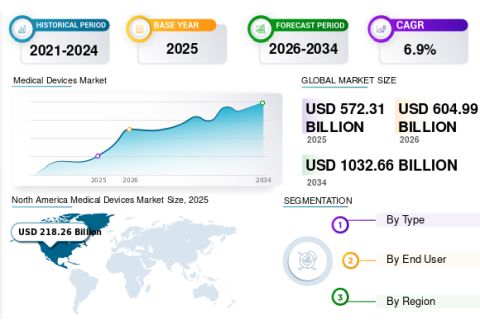
The global medical device market is poised for substantial growth, driven by technological innovations and rising healthcare demands. According to Fortune Business Insights, the global market size of medical device was valued at US$572.31 billion in 2025 and is projected to increase from US$604.99 billion in 2026 to US$1,032.66 billion by 2034, demonstrating a CAGR of 6.9% during the forecast period.


Funtune_480.jpg

Global medical device industry landscape overview. (Photo: Fortune Business Insights)


In China, a booming population, rising chronic disease rates, and significant government investment in healthcare have established the country as a major consumer of medical devices. The policies promoting centralized procurement and Diagnosis Related Groups (DRG) are urging for cost-effectiveness, driving innovation, and creating new market opportunities.


According to Frost & Sullivan, China’s medical device market size grew from RMB 729.8 billion in 2020 to RMB 941.7 billion in 2024, with a CAGR of 6.6%. It is projected that the market will reach RMB 1,813.4 billion by 2035.


Notably, the technological development of medical device is fueled by recent trends which include the integration of smart and artificial intelligence (AI) technologies, the rise of wearables, innovations in materials and processing for customization and precision, and an increased focus on sustainability.


Convergence of Drug Delivery Devices and Patients’ Behavior


The pursuit of improved self-administration and treatment outcomes is driving the development of advanced drug delivery devices, such as connected pens and smart caps that monitor dosage. Additionally, patients' desire for greater convenience and reduced discomfort is fueling demand for more home treatment options and less frequent injections.


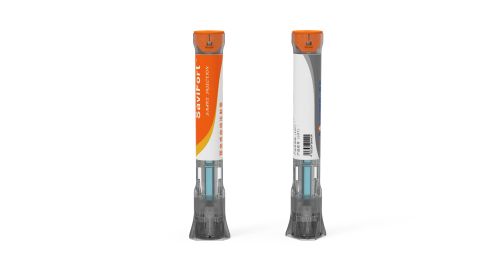
Savicred Biotechnology, a leading Chinese drug delivery device manufacturer, has launched a next-generation 2.25ml auto-injector for high-volume biologics delivery, utilizing Covestro's medical-grade Makrolon® polycarbonates (PC). These materials offer high mechanical strength for reliable delivery of larger volumes, exceptional dimensional stability for precise component fitting, and superior processability for high-precision molding.

Covestro_480.jpg

Next-generation 2.25ml auto-injector by Savicred, featuring Covestro's medical-grade Makrolon® polycarbonates. (Photo: Covestro)


Victrex’s VICTREX PC101 grade, a polyetheretherketone (PEEK)-based material, is specifically designed for drug delivery and pharmaceutical contact applications. PEEK materials excel in environments requiring sterilization, dimensional stability, and resistance to chemicals and temperature. They are versatile for thermoplastic processing, suitable for molding, milling, or additive manufacturing.


Towards More Sustainable Medical Packaging


Sustainability is a key focus across most industries now, and the medical industry is no exception. Industry players are particularly committed to reducing the environmental impact of medical packaging.


The medical packaging market is segmented into blister packs, bottles, vials, ampoules, and other formats. Blister packs is among the most widely used forms of medical packaging and is expected to continue dominating this segment. In terms of material types, plastics are the most commonly used materials in the market.


Syensqo’s ECHO portfolio enhances pharmaceutical blister packaging by providing superior barrier, mechanical, and seal performance, which are essential for medical and food safety. Certified with ISCC PLUS using a mass balance approach, this portfolio enables closed-loop recovery, reducing environmental impact.


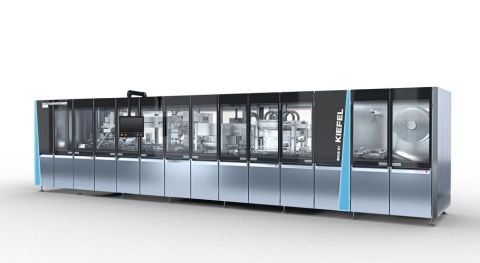
Kiefel’s SOLUTIONPERFORMER KFS modular form-fill-seal machine efficiently manufactures, fills, and seals polyolefin parenteral nutrition or dialysis bags in a single unit. One significant advantage of this machine is its high energy efficiency. It uses servo motors instead of pneumatic drives at all relevant stations, optimizing process control and reducing compressed air consumption, ultimately lowering energy consumption per produced article.
 

Kiefel_480.jpg

Up to 6,000 parenteral nutrition or dialysis bags can be formed, filled and sealed fully automatically per hour on Kiefel’s SOLUTIONPERFORMER KFS machine. (Photo: Kiefel)


Material Technologies Drive Advanced Medical Applications


Advanced medical technologies, including interventional vascular and cardiovascular support devices, depend on specialized tools, such as catheters, imaging systems, and implants for effective diagnosis and treatment. The choice of materials is critical, as their mechanical properties and biocompatibility are essential for both device functionality and patient safety.


Innovations in materials lead to solutions that are strong, flexible, and durable, while also reducing the risk of adverse reactions in the body, which is vital for the success of minimally invasive procedures.


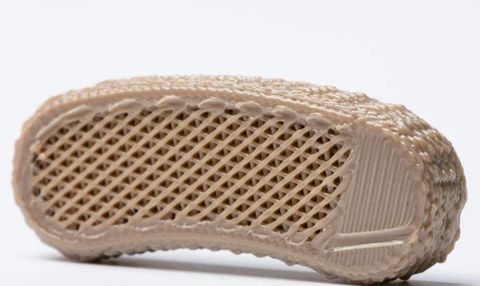
Evonik’s VESTAKEEP® i4 3DF is the world's first implant-grade filament based on PEEK, specifically designed for medical 3D printing of human surgical implants. It offers utmost biocompatibility, biostability, and X-ray transparency, meeting the stringent requirements of ASTM F2026—the standard for PEEK polymers approved for surgical implant applications.

Evonik_480.jpg

3D printed spinal cage implant based on Evonik’s VESTAKEEP® implant grade filament. (Photo: Evonik)


Similarly, JiangSu JunHua's AKSOPEEK series of medical-grade implant materials has also received ASTM F2026 approval. This series is the culmination of 18 years of dedicated expertise in PEEK medical applications.


Lubrizol offers a variety of materials, including Pellethane and Tecothane medical-grade thermoplastic polyurethanes (TPUs), for applications like cardiac catheters, guidewires, heart pumps, and imaging devices. Pellethane TPUs offer flexibility and are suited for tubing and catheters, while Tecothane TPUs feature solvent resistance and biostability, with customizable options such as radiopaque fillers and pre-colorization tailored for specific applications.


Thermoplastic elastomers (TPEs) are soft, elastic, and biocompatible, making them suitable for ostomy bag seals that must retain shape under pressure to prevent leaks. KRAIBURG TPE’s materials demonstrate excellent adhesion to PP and polyethylene (PE), simplifying assembly by eliminating the need for additional adhesives.


Medical-grade polyphenylsulfone (PPSU) is a high-performance amorphous thermoplastic polymer known for its reliability and safety in medical devices, capable of withstanding 1,000 cycles of steam sterilization without significant property loss.


Wanhua Chemical has developed Wanafone Sulfone Polymer, which includes both polysulfone (PSU) and polyphenylsulfone (PPSU). These materials offer exceptional heat resistance, mechanical strength, biocompatibility, and hydrolysis and chemical stability, and can withstand various sterilization methods.


Precision and Smart Processing Ensure Quality and Safety


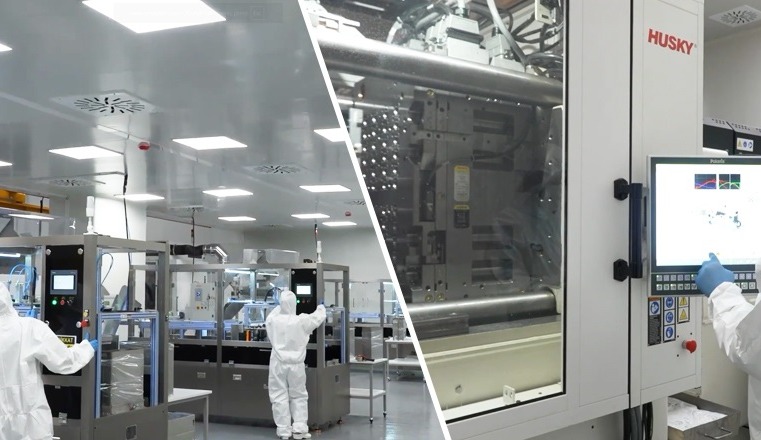
In the manufacturing cycle of medical technology products, maximum precision is essential for every process, as even the slightest malfunction—like a failure in an insulin pen—can be life-threatening. Advanced precision processing is critical to ensure that medical devices meet rigorous quality and safety standards. This manufacturing typically occurs in a clean room environment, where machines must maintain absolute cleanliness.


Fresenius Medical Care is the global leader in kidney disease treatment, producing millions of blood wash cartridges for dialysis each year. However, the high shrinkage ratio of PP makes achieving dimensional accuracy a challenge. The all-electric e-motion injection molding machine from ENGEL addresses these stringent requirements with a cleanroom package and dynamic servo-electric drives, ensuring precision and speed. Additionally, the intuitive CC300 control system enhances process stability, resulting in improved product quality.


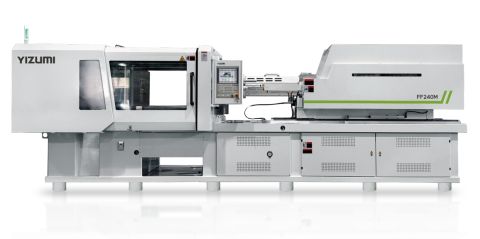
YIZUMI’s FF-M Series of electric injection molding machines is tailored for medical applications. The Tie-Bar Free (TBF) clamping unit keeps the platen away from the tie bars, eliminating lubricating oil and avoiding the risk of product contamination. Furthermore, the intelligent weight control function automatically monitors and adjusts molding parameters in real time, reducing weight variations and enhancing consistency in final products.

YIZUMI_FFM series_480.jpg

The FF-M Series is YIZUMI’s electric injection molding machine offering for medical applications. (Photo: YIZUMI)


Remarkably, the quantum leap in AI technologies is revolutionizing quality assurance in medical device production. In injection molding, for instance, AI models leverage collected data to calculate critical quality parameters.


One of the latest solutions from Kistler features a compact combined cavity pressure and temperature sensor that gathers data directly within the mold. This is complemented by the ComoNeo process monitoring system, which analyzes real-time information, compares it to reference curves, and effectively detects deviations.


Kistler_medical_480.jpg

Automated quality control during the production ensures traceability in medical technology. (Photo: Kistler)


JCTIMES has unveiled a nine-layer co-extrusion pancake blown film die to meet the stringent requirements of the medical and packaging industries. Its optimized flow channel design ensures uniform material distribution across all layers, effectively preventing bubbles, defects, and thickness variations. This approach enhances barrier properties, strength, and overall appearance.


Looking ahead, the medical device industry will continue to advance with precision, intelligence, and sustainability at its core. Material innovations will support high-end medical applications, while precision and smart manufacturing will boost quality safeguards. Patient-driven upgrades and eco-friendly concepts will together propel the global and Chinese markets towards a safer and more sustainable landscape.

 Like 丨  {{details_info.likes_count}}
Medical packaging
Medical consumables
Medical
Catheter
 WUHAN CHANGXIN PLASTIC MACHINERY CO.,LTD.      
 DSP CHEMICAL CO.,LTD      
 MOTAN TAICANG CO., LTD.      
 SHANGHAI HUIDE SCIENCE AND TECHNOLOGY CO., LTD.      
 Taizhou Huangyan Zhengwei Mould Co.,Ltd      
 SUZHOU UNIKING NEW MATERIAL CO., LTD      
 Beijing Chemical Industry Group CO.,LTD      
 CHUZHOU SEP MATERIAL CO,LTD.      

The content you're trying to view is for members only. If you are currently a member, Please login to access this content.   Log in

Source:Adsale Plastics Network Date :2026-03-24 Editor :VC
Copyright: This article was originally written/edited by Adsale Plastics Network (AdsaleCPRJ.com), republishing and excerpting are not allowed without permission. For any copyright infringement, we will pursue legal liability in accordance with the law.

The global medical device market is poised for substantial growth, driven by technological innovations and rising healthcare demands. According to Fortune Business Insights, the global market size of medical device was valued at US$572.31 billion in 2025 and is projected to increase from US$604.99 billion in 2026 to US$1,032.66 billion by 2034, demonstrating a CAGR of 6.9% during the forecast period.


Funtune_480.jpg

Global medical device industry landscape overview. (Photo: Fortune Business Insights)


In China, a booming population, rising chronic disease rates, and significant government investment in healthcare have established the country as a major consumer of medical devices. The policies promoting centralized procurement and Diagnosis Related Groups (DRG) are urging for cost-effectiveness, driving innovation, and creating new market opportunities.


According to Frost & Sullivan, China’s medical device market size grew from RMB 729.8 billion in 2020 to RMB 941.7 billion in 2024, with a CAGR of 6.6%. It is projected that the market will reach RMB 1,813.4 billion by 2035.


Notably, the technological development of medical device is fueled by recent trends which include the integration of smart and artificial intelligence (AI) technologies, the rise of wearables, innovations in materials and processing for customization and precision, and an increased focus on sustainability.


Convergence of Drug Delivery Devices and Patients’ Behavior


The pursuit of improved self-administration and treatment outcomes is driving the development of advanced drug delivery devices, such as connected pens and smart caps that monitor dosage. Additionally, patients' desire for greater convenience and reduced discomfort is fueling demand for more home treatment options and less frequent injections.


Savicred Biotechnology, a leading Chinese drug delivery device manufacturer, has launched a next-generation 2.25ml auto-injector for high-volume biologics delivery, utilizing Covestro's medical-grade Makrolon® polycarbonates (PC). These materials offer high mechanical strength for reliable delivery of larger volumes, exceptional dimensional stability for precise component fitting, and superior processability for high-precision molding.


Covestro_480.jpg

Next-generation 2.25ml auto-injector by Savicred, featuring Covestro's medical-grade Makrolon® polycarbonates. (Photo: Covestro)


Victrex’s VICTREX PC101 grade, a polyetheretherketone (PEEK)-based material, is specifically designed for drug delivery and pharmaceutical contact applications. PEEK materials excel in environments requiring sterilization, dimensional stability, and resistance to chemicals and temperature. They are versatile for thermoplastic processing, suitable for molding, milling, or additive manufacturing.


Towards More Sustainable Medical Packaging


Sustainability is a key focus across most industries now, and the medical industry is no exception. Industry players are particularly committed to reducing the environmental impact of medical packaging.


The medical packaging market is segmented into blister packs, bottles, vials, ampoules, and other formats. Blister packs is among the most widely used forms of medical packaging and is expected to continue dominating this segment. In terms of material types, plastics are the most commonly used materials in the market.


Syensqo’s ECHO portfolio enhances pharmaceutical blister packaging by providing superior barrier, mechanical, and seal performance, which are essential for medical and food safety. Certified with ISCC PLUS using a mass balance approach, this portfolio enables closed-loop recovery, reducing environmental impact.


Kiefel’s SOLUTIONPERFORMER KFS modular form-fill-seal machine efficiently manufactures, fills, and seals polyolefin parenteral nutrition or dialysis bags in a single unit. One significant advantage of this machine is its high energy efficiency. It uses servo motors instead of pneumatic drives at all relevant stations, optimizing process control and reducing compressed air consumption, ultimately lowering energy consumption per produced article.


Kiefel_480.jpg

Up to 6,000 parenteral nutrition or dialysis bags can be formed, filled and sealed fully automatically per hour on Kiefel’s SOLUTIONPERFORMER KFS machine. (Photo: Kiefel)


Material Technologies Drive Advanced Medical Applications


Advanced medical technologies, including interventional vascular and cardiovascular support devices, depend on specialized tools, such as catheters, imaging systems, and implants for effective diagnosis and treatment. The choice of materials is critical, as their mechanical properties and biocompatibility are essential for both device functionality and patient safety.


Innovations in materials lead to solutions that are strong, flexible, and durable, while also reducing the risk of adverse reactions in the body, which is vital for the success of minimally invasive procedures.


Evonik’s VESTAKEEP® i4 3DF is the world's first implant-grade filament based on PEEK, specifically designed for medical 3D printing of human surgical implants. It offers utmost biocompatibility, biostability, and X-ray transparency, meeting the stringent requirements of ASTM F2026—the standard for PEEK polymers approved for surgical implant applications.


Evonik_480.jpg

3D printed spinal cage implant based on Evonik’s VESTAKEEP® implant grade filament. (Photo: Evonik)


Similarly, JiangSu JunHua's AKSOPEEK series of medical-grade implant materials has also received ASTM F2026 approval. This series is the culmination of 18 years of dedicated expertise in PEEK medical applications.


Lubrizol offers a variety of materials, including Pellethane and Tecothane medical-grade thermoplastic polyurethanes (TPUs), for applications like cardiac catheters, guidewires, heart pumps, and imaging devices. Pellethane TPUs offer flexibility and are suited for tubing and catheters, while Tecothane TPUs feature solvent resistance and biostability, with customizable options such as radiopaque fillers and pre-colorization tailored for specific applications.


Thermoplastic elastomers (TPEs) are soft, elastic, and biocompatible, making them suitable for ostomy bag seals that must retain shape under pressure to prevent leaks. KRAIBURG TPE’s materials demonstrate excellent adhesion to PP and polyethylene (PE), simplifying assembly by eliminating the need for additional adhesives.


Medical-grade polyphenylsulfone (PPSU) is a high-performance amorphous thermoplastic polymer known for its reliability and safety in medical devices, capable of withstanding 1,000 cycles of steam sterilization without significant property loss.


Wanhua Chemical has developed Wanafone Sulfone Polymer, which includes both polysulfone (PSU) and polyphenylsulfone (PPSU). These materials offer exceptional heat resistance, mechanical strength, biocompatibility, and hydrolysis and chemical stability, and can withstand various sterilization methods.


Precision and Smart Processing Ensure Quality and Safety


In the manufacturing cycle of medical technology products, maximum precision is essential for every process, as even the slightest malfunction—like a failure in an insulin pen—can be life-threatening. Advanced precision processing is critical to ensure that medical devices meet rigorous quality and safety standards. This manufacturing typically occurs in a clean room environment, where machines must maintain absolute cleanliness.


Fresenius Medical Care is the global leader in kidney disease treatment, producing millions of blood wash cartridges for dialysis each year. However, the high shrinkage ratio of PP makes achieving dimensional accuracy a challenge. The all-electric e-motion injection molding machine from ENGEL addresses these stringent requirements with a cleanroom package and dynamic servo-electric drives, ensuring precision and speed. Additionally, the intuitive CC300 control system enhances process stability, resulting in improved product quality.


YIZUMI’s FF-M Series of electric injection molding machines is tailored for medical applications. The Tie-Bar Free (TBF) clamping unit keeps the platen away from the tie bars, eliminating lubricating oil and avoiding the risk of product contamination. Furthermore, the intelligent weight control function automatically monitors and adjusts molding parameters in real time, reducing weight variations and enhancing consistency in final products.


YIZUMI_FFM series_480.jpg

The FF-M Series is YIZUMI’s electric injection molding machine offering for medical applications. (Photo: YIZUMI)


Remarkably, the quantum leap in AI technologies is revolutionizing quality assurance in medical device production. In injection molding, for instance, AI models leverage collected data to calculate critical quality parameters.


One of the latest solutions from Kistler features a compact combined cavity pressure and temperature sensor that gathers data directly within the mold. This is complemented by the ComoNeo process monitoring system, which analyzes real-time information, compares it to reference curves, and effectively detects deviations.


Kistler_medical_480.jpg

Automated quality control during the production ensures traceability in medical technology. (Photo: Kistler)


JCTIMES has unveiled a nine-layer co-extrusion pancake blown film die to meet the stringent requirements of the medical and packaging industries. Its optimized flow channel design ensures uniform material distribution across all layers, effectively preventing bubbles, defects, and thickness variations. This approach enhances barrier properties, strength, and overall appearance.


Looking ahead, the medical device industry will continue to advance with precision, intelligence, and sustainability at its core. Material innovations will support high-end medical applications, while precision and smart manufacturing will boost quality safeguards. Patient-driven upgrades and eco-friendly concepts will together propel the global and Chinese markets towards a safer and more sustainable landscape.
全文内容需要订阅后才能阅读哦~
立即订阅

Recommended Articles

Medical
Report: Innovative Plastics Technologies Propel Medical Device Advancement
 2026-03-24
Medical
Dr. Boy machines to demonstrate high-precision medical components at CHINAPLAS 2026
 2026-03-09
Medical
Syensqo joins MedTech Innovator to support next generation medical device innovation
 2026-02-24
Medical
Syntegon launches AIM9 high-speed inspection platform for pharmaceutical sector
 2026-02-23
Medical
KRAIBURG TPE's medical-grade materials for otoscope device components
 2026-02-16
Medical
Lubrizol launches Tolerathane TPU for implantable medical devices
 2026-02-09

You May Be Interested In

Change

  • People
  • Company
loading... No Content
{{[item.truename,item.truename_english][lang]}} {{[item.company_name,item.company_name_english][lang]}} {{[item.job_name,item.name_english][lang]}}
{{[item.company_name,item.company_name_english][lang]}} Company Name    {{[item.display_name,item.display_name_english][lang]}}  

Polyurethane Investment Medical Carbon neutral Reduce cost and increase efficiency CHINAPLAS Financial reports rPET INEOS Styrolution Evonik Borouge Polystyrene (PS) mono-material Sustainability Circular economy BASF SABIC Multi-component injection molding machine All-electric injection molding machine Thermoforming machine

Report: Innovative Plastics Technologies Propel Medical Device Advancement

识别右侧二维码,进入阅读全文
下载
x 关闭
订阅
亲爱的用户,请填写一下信息
I have read and agree to the 《Terms of Use》 and 《Privacy Policy》
立即订阅
Top
Feedback
Chat
News
Market News
Applications
Products
Video
In Pictures
Specials
Activities
eBook
Front Line
Plastics Applications
Chemicals and Raw Material
Processing Technologies
Products
Injection
Extrusion
Auxiliary
Blow Molding
Mold
Hot Runner
Screw
Applications
Packaging
Automotive
Medical
Recycling
E&E
LED
Construction
Others
Events
Conference
Webinar
CHINAPLAS
CPS+ eMarketplace
Official Publications
CPS eNews
Media Kit
Social Media
Facebook
Linkedin