














Search History
Clear History
{{item.search_key}}
Hot Searches
Change
{{item.name}}
{{item.english_name}}
Subscribe eNews
Once A Week Once Every Two Weeks
{{sum}}
Log in Register

Applications

Global trust in Chinese material suppliers: Excellence in innovation and quality

Report: Unraveling the secrets to a thriving plastic recycling sector

Röhm invests in chemical recycling

Products

Chinese extrusion machinery manufacturers boosts customer competitiveness

Product Profile of Blue Asia Chemical

TianRui Mould- UPVC Extrusion Tooling

Activities

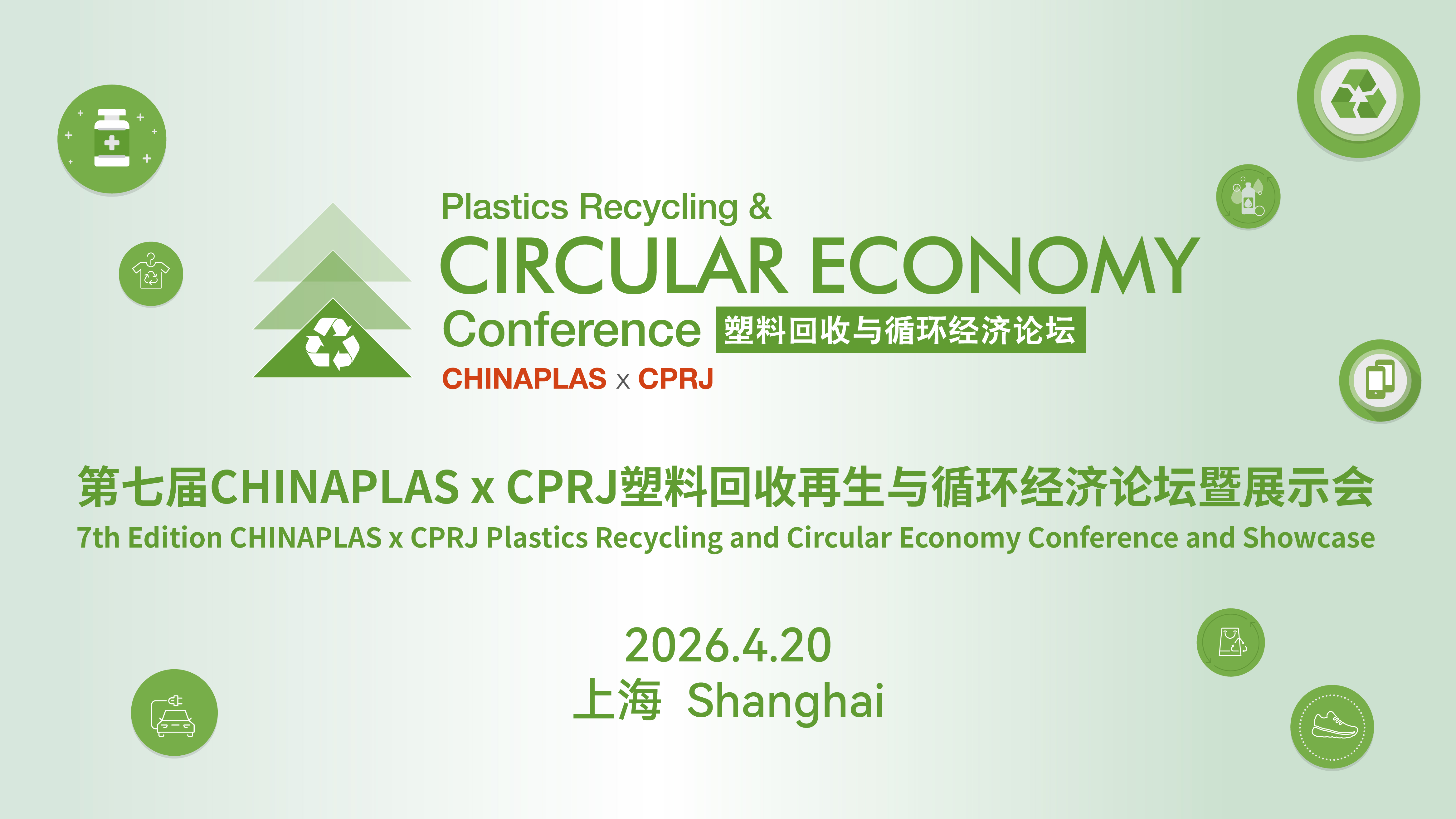
  • Must-attend: CHINAPLAS x CPRJ Plastics Recycling and Circular Economy Conference in Shanghai

  • Beyond procurement: Exploring the concurrent events at CHINAPLAS 2026

  • Chinaplas2026 Preview Webinars | Smart Blow Moulding & AI Inspection (FREE)

Pictorial

News Videos

Brückner presents new member and debut of NoSho technology at CHINAPLAS 2026

ENGEL: Injection molding, interconnection of all areas

ALPLA: Global packaging, empowering China

Conference Videos

【Replay】YUZEN: AI-Driven Vision Inspection Technology: Spearheading the Intelligent Transformation of Packaging Production Lines

【Mandarin session: Webinar playback】HUSKY:From Injection Molding Machines to Temperature Controllers – Diversified Product Portfolio Breaks Through Molding Challenges and Empowers Advanced Applications in End-Use Segmented Markets – Pre-Show Analysis for Chinaplas

[Live Replay] ST BlowMoulding Group: How Smart, Energy-Efficient Blow Moulding Technology Drives Sustainability

Corporate/Product Videos

Innovative PVC Compounds for Global Manufacturing | Visit Us Booth 6.2A 39 at CHINAPLAS

CovationBio®bioPTMEG brand video

Is Your Mold Supplier Really Giving You Peace of Mind?

Home > News > Recycling

Report: Unraveling the secrets to a thriving plastic recycling sector

Source:Adsale Plastics Network Date :2026-04-04 Editor :VC
Copyright: This article was originally written/edited by Adsale Plastics Network (AdsaleCPRJ.com), republishing and excerpting are not allowed without permission. For any copyright infringement, we will pursue legal liability in accordance with the law.

Plastic is now deeply embedded in various aspects of production and daily life. Meanwhile, the issue of plastic pollution has become increasingly critical, posing a collective challenge for global ecological governance.


Recycling and regeneration are vital strategies for addressing this crisis and promoting sustainable development in the plastics and rubber industries.


Through technological breakthroughs, interdisciplinary applications, and supportive policies coupled with rising market demand, plastic recycling and regeneration have evolved beyond simple resource recovery, paving the way for transformative change within the industries.


Market potential: A dual drive of policy and demand


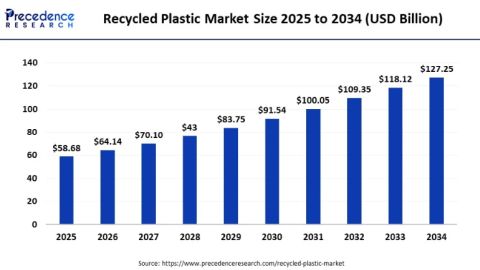
According to a study by Precedence Research, the global recycled plastics market is projected to increase from US$58.68 billion in 2025 to US$127.25 billion by 2034, reflecting a compound annual growth rate (CAGR) of 9.01%. The Asia-Pacific region currently holds the largest share of this market.

Precedence Research_480.jpg

The global recycled plastics market is projected to reach US$127.25 billion by 2034. (Photo: Precedence Research)


This growth trend is fueled by a rising, strong demand for recycled plastics across various industries. In the electric vehicle (EV) sector, lightweight and eco-friendly materials are central to technological upgrades. Modified recycled HDPE, for example, stands out as a preferred material for producing components. The packaging industry is encountering increasingly stringent environmental regulations, making post-consumer recycled (PCR) resin a key alternative to virgin plastics. Additionally, the exploration of recycled materials in sectors such as household goods and municipal projects is further expanding market demand.


Policy initiatives are bolstering the foundation for market development. Countries worldwide are adopting waste management policies for plastics. For example, the European Union has enacted the Single-Use Plastics Directive, which restricts the use of single-use plastic products and mandates that by 2030, all beverage bottles must contain at least 30% recycled plastic. In China, the 14th Five-Year Plan Action Plan for Plastic Pollution Control aims to reduce plastic production and consumption while enhancing recycling and waste utilization systems.


This dual drive of policy and market forces is creating a favorable environment for the development of the recycled plastics industry, with market potential progressively translating into real industrial value.


Current developments: Innovative technologies and applications


Technological innovations overcoming bottlenecks

Plastic recycling is witnessing significant breakthroughs in technological innovation. For example, researchers at Zhejiang Ocean University have developed a recycling machine for plastic bottles that employs a low-temperature heating process to convert shredded plastic into 3D printing materials. The resulting filament maintains a diameter variance of less than 0.05 millimeters, matching the performance of commercial-grade filaments.


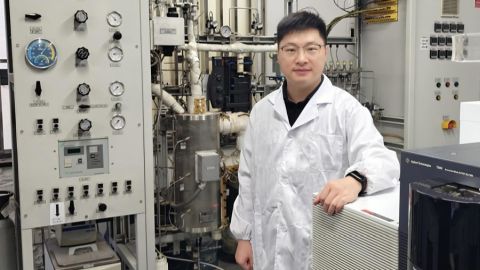
Additionally, the introduction of room-temperature catalytic conversion technology has addressed the challenge of recycling non-degradable plastics. A team from East China Normal University, in collaboration with international experts, has pioneered a method that can convert mixed waste plastics into high-quality, chlorine-free fuel in a single step. This technology allows for conversion at ambient temperatures, reducing energy consumption by over 70% compared to current chemical recycling methods.

East China Normal University_480.jpg

East China Normal University’s researchers collaborated with international experts to developed room-temperature catalytic conversion technology. (Photo: East China Normal University)


Moreover, Toray has successfully developed a recycling technology capable of breaking down various carbon fiber reinforced composites made from thermosetting resins while preserving the original strength and surface quality of the carbon fibers.


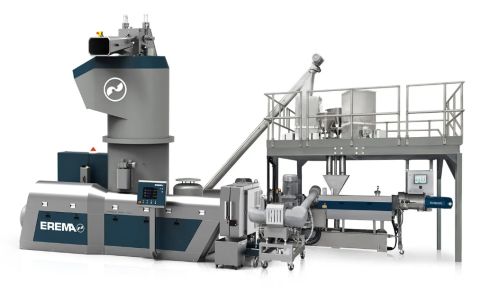
In the realm of recycling equipment innovation, EREMA's fourth-generation VACUREMA® system features the innovative EcoGentle® technology. By lowering material processing temperatures and optimizing extrusion ratios, along with precise application of shear and elongation flows, this system significantly reduces production energy consumption while enhancing the quality of recycled materials.

Erema_VACUREMA_480.jpg

EREMA's VACUREMA® system. (Photo: EREMA)


Cross-industry applications expanding development opportunities

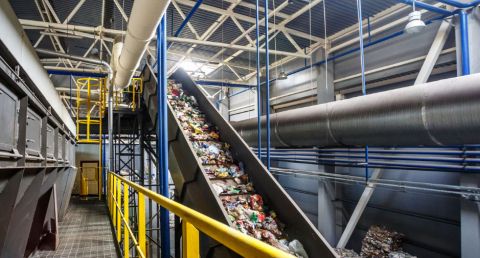
Innovative applications of recycling technology are becoming more common across various sectors, creating a diverse industrial ecosystem. The packaging industry sees the most widespread adoption of recycling, with companies like Dow investing in PCR research and production through its acquisition of Circulus. Their products are now used in a range of applications, including shrink packaging, stretch films, cushioning, and selected food packaging.

Circulus_480.jpg

Circulus leverages advanced technology to address contamination associated with recycling plastic. (Photo: Circulus)


Modified recycled plastics are also gaining traction in the EV market. For example, Wuhu Boretech Plastics’ recycled HDPE materials have achieved IATF16949 certification for automotive quality management, making them suitable for components such as bumpers and interior parts in EVs.


The fashion industry has emerged as a significant showcase for plastic recycling. VISIONBLUE, a Chinese marine waste management specialist, recycles ocean plastic waste, transforming it into products like scarves made from five plastic bottles and backpacks made from 22 bottles. These items blend eco-friendliness with practical value, bringing the concept of recycling into everyday life.


In the toy sector, Kingfa Sci.&Tech.’s PCR toy materials provide excellent properties comparable to petroleum-based plastics. The company has an in-house testing platform for controlling toy safety and compliance with regulations, ensuring that the green materials offered meet safety standards while demonstrating superior performance.


Industry challenges: Three major hurdles to development


Despite the promising prospects of the plastic recycling market, the industry still faces three core challenges that need urgent resolution: technological and economic factors, quality and performance issues, and consumer awareness.


From a technological and economic standpoint, significant investments are required for the development of recycling technologies, yet market acceptance is not fully realized, making it difficult to scale advanced technologies. There remains a cost disparity between recycled and virgin materials. The production of recycled plastics involves multiple steps, including collection, sorting, washing, and processing, leading to higher market prices compared to virgin plastics, which undermines competitiveness.


Quality and performance stability are critical bottlenecks limiting the promotion of recycled plastics. The complex sources of plastic waste and challenges in sorting result in inconsistent quality of recycled materials, potentially affecting the end products. For instance, the packaging industry requires high transparency in recycled materials, while the medical field places a strong emphasis on safety standards. These stringent requirements make it challenging for recycled plastics to gain traction.


Consumer awareness and acceptance are also significant issues. Some consumers harbor doubts about the quality of recycled products, which directly impacts their market promotion. Besides, products made from recycled plastics often come at a higher price. Even environmentally conscious consumers may hesitate to choose recycled options, which can hinder the release of market demand.


Solutions: Efforts in technology, market, and collaboration


To seize development opportunities while addressing real challenges, the plastics industry should focus on three key aspects: technological improvement, market promotion, and industry collaboration, to drive high-quality growth in the recycling sector.


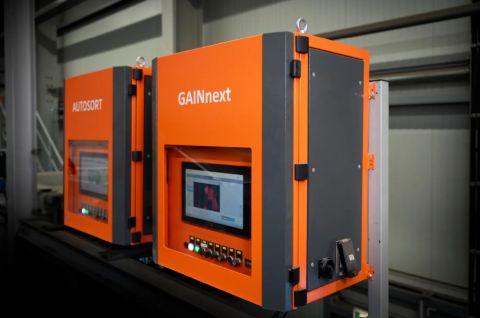
In terms of technological improvement, the industry must tackle critical challenges such as the stability of recycled material performance and advancements in smart recycling and sorting technologies. Intelligent technologies offer efficient solutions for handling plastic waste. For instance, food and non-food packaging often use similar materials that look alike, making sorting a significant challenge. Tomra has integrated its deep learning modules into its AUTOSORT sorting equipment, enabling large-scale, rapid, and efficient separation of food-grade and non-food-grade PET, PP, and HDPE materials.

Tomra_480.jpg

Tomra’s “AUTOSORT™ with GAINnext™” intelligent sorting system combines sensor-based material identification and AI-based object recognition. (Photo: Tomra)


At the same time, the industry should promote the integration of emerging technologies like 3D printing with recycled materials. By focusing on new functionality and exploring new applications, businesses can innovate products that tap into the adaptability of recycled materials in high-end sectors such as healthcare and aerospace, further expanding the boundaries of recycled plastic applications.


In terms of market promotion, it's essential to disseminate knowledge about recycling and regeneration through multiple channels to enhance public trust in recycled products. Companies should actively create benchmark demonstrations that visually showcase the performance advantages and environmental value of recycled plastics through practical applications.


Additionally, a strong emphasis on product innovation is necessary, integrating environmental concepts into product design and user experience. By precisely aligning with consumers’ demand for high-quality, personalized products, end-user brands can position eco-friendly consumption as the new trend in the market.


Industry collaboration is crucial for addressing the bottlenecks in the development of a circular economy. Upstream and downstream companies need to strengthen their collaborative efforts to create a stable and efficient recovery, processing, and application supply chain.


Research institutions and enterprises should deepen their partnerships in academia and industry to accelerate the conversion of innovative laboratory technologies into practical applications. Meanwhile, government agencies must implement more targeted support policies and enhance the standards and certification systems for recycled plastic products.


Previously, the PMMA materials recycled from end-of-life vehicles (ELVs) faced challenges in quality stability, which hindered their commercial viability. However, an innovative recycling technique jointly developed by Mitsubishi Chemical, Hokkaido Auto Dismantler, and Honda has successfully resolved issues related to impurities, allowing recycled PMMA to achieve quality levels comparable to virgin materials. This material is now being used in the door visors of Honda's new mini-EV, serving as an exemplary case of cross-industry collaboration.



Honda_480.jpg

Honda uses recycled PMMA in the door visors of its new mini-EV. (Photo: Mitsubishi Chemical)


Looking ahead: Fueling the growth and expansion


Plastic recycling has emerged as a leading trend in the plastics industry. As technology progresses, we can expect enhancements in the performance of recycled plastics alongside a gradual reduction in costs, paving the way for applications in high-end sectors. Supportive policies and increasing market demand will entice more companies to join the plastic recycling sector, further fueling its growth and expansion.


Technological innovation, market dynamics, and cross-industry collaboration will be the key driving forces behind the growth of plastic recycling. Innovations will unveil new possibilities for recycling, while market dynamics will boost consumer demand, creating a cycle where demand drives supply and supply generates further demand. Meanwhile, collaboration across industries will integrate resources, fostering a highly efficient and synergistic industrial ecosystem.

 Like 丨  {{details_info.likes_count}}
Recycled plastics
Recycling
Recycling platform
Recycled plastic product
Plastics recycling
 SACMI (SHANGHAI) MACHINERY EQUIPMENT CO., LTD.      
 DONGGUAN DEHUA PRECISION MOLD CO., LTD      
 ZHANGJIAGANG XINRONG MACHINERY CO.,LTD      
 JUHESHUN ADVANCED MATERIALS CO., LTD.      
 HEFEI TAIHE INTELLIGENT TECHNOLOGY GROUP CO.,LTD.      
 BEIJING ENERGY ENGINEERING TECHNOLOGIES CO.,LTD.      
 WINDORA MATERIALS LLC      
 GREENWICH (CHINA) TECHNOLOGY DEVELOPMENT LIMITED      
 GREENCORE RESOURCES LIMITED      
 LINKER NEW MATERIALS CO., LTD      
 Coperion GmbH      
 SHANGHAI HAWKWAY PROCESS SOLUTIONS CO., LTD      
 GUANGXI HENGYI NEW MATERIALS CO., LTD.      
 TAIZHOU MIXIN MACHINERY CO., LTD.      
 ZHEJIANG ROTOUN PLASTIC TECHNOLOGY CORP.      
 GUANGDONG GUOHENG YOUHE ADVANCED MATERIALS CO., LTD.      
 KADIDE      
 GUANGXI WUZHOU GUOLONG RECYCLABE RESOURCES DEVELOPMENT CO., LTD.      
 HUIZHOU LITUO ADVANCED MATERIALS CO.,LTD.      
 SUZHOU BECHTON PLASTIC MACHINERY CO., LTD      
 YUYAO KAWAGUCHI Manufacturing Co., Ltd.      
 LINYI HUASU ELECTRONIC TECHNOLOGY CO., LTD.      
 GUANGDONG ENMEI CHEMICAL TECHNOLOGY CO., LTD      
 XIAMEN XINWANCAI POLYMER TECHNOLOGY CO.,LTD      
 ANHUI ZHONGXIN HONGWEI TECHNOLOGY CO.,LTD      
 SOJITZ(SHANGHAI)CO.,LTD.      
 FUJIAN NAN'AN STAR RUBBER&PLASTIC MACHINERY CO., LTD.      
 ZHANGJIAGANG GREENLANDPLAST MACHINERY CO.,LTD      
 FUJIAN YANGZHU NEW MATERIAL SCIENCE & TECHNOLOGY CO., LTD      
 HUBEI XINJIANSHI MACHINERY TECHNOLOGY CO.,LTD      
 Wudi Haoye Plastic Co. , Ltd.      
 HEBEI GELIA PLASTIC MACHINERY SALES COMPANY      
 FOSHAN SHUNDE MINGSANFENG MOULD CO., LTD.      

The content you're trying to view is for members only. If you are currently a member, Please login to access this content.   Log in

Source:Adsale Plastics Network Date :2026-04-04 Editor :VC
Copyright: This article was originally written/edited by Adsale Plastics Network (AdsaleCPRJ.com), republishing and excerpting are not allowed without permission. For any copyright infringement, we will pursue legal liability in accordance with the law.

Plastic is now deeply embedded in various aspects of production and daily life. Meanwhile, the issue of plastic pollution has become increasingly critical, posing a collective challenge for global ecological governance.


Recycling and regeneration are vital strategies for addressing this crisis and promoting sustainable development in the plastics and rubber industries.


Through technological breakthroughs, interdisciplinary applications, and supportive policies coupled with rising market demand, plastic recycling and regeneration have evolved beyond simple resource recovery, paving the way for transformative change within the industries.


Market potential: A dual drive of policy and demand


According to a study by Precedence Research, the global recycled plastics market is projected to increase from US$58.68 billion in 2025 to US$127.25 billion by 2034, reflecting a compound annual growth rate (CAGR) of 9.01%. The Asia-Pacific region currently holds the largest share of this market.


Precedence Research_480.jpg

The global recycled plastics market is projected to reach US$127.25 billion by 2034. (Photo: Precedence Research)


This growth trend is fueled by a rising, strong demand for recycled plastics across various industries. In the electric vehicle (EV) sector, lightweight and eco-friendly materials are central to technological upgrades. Modified recycled HDPE, for example, stands out as a preferred material for producing components. The packaging industry is encountering increasingly stringent environmental regulations, making post-consumer recycled (PCR) resin a key alternative to virgin plastics. Additionally, the exploration of recycled materials in sectors such as household goods and municipal projects is further expanding market demand.


Policy initiatives are bolstering the foundation for market development. Countries worldwide are adopting waste management policies for plastics. For example, the European Union has enacted the Single-Use Plastics Directive, which restricts the use of single-use plastic products and mandates that by 2030, all beverage bottles must contain at least 30% recycled plastic. In China, the 14th Five-Year Plan Action Plan for Plastic Pollution Control aims to reduce plastic production and consumption while enhancing recycling and waste utilization systems.


This dual drive of policy and market forces is creating a favorable environment for the development of the recycled plastics industry, with market potential progressively translating into real industrial value.


Current developments: Innovative technologies and applications


Technological innovations overcoming bottlenecks

Plastic recycling is witnessing significant breakthroughs in technological innovation. For example, researchers at Zhejiang Ocean University have developed a recycling machine for plastic bottles that employs a low-temperature heating process to convert shredded plastic into 3D printing materials. The resulting filament maintains a diameter variance of less than 0.05 millimeters, matching the performance of commercial-grade filaments.


Additionally, the introduction of room-temperature catalytic conversion technology has addressed the challenge of recycling non-degradable plastics. A team from East China Normal University, in collaboration with international experts, has pioneered a method that can convert mixed waste plastics into high-quality, chlorine-free fuel in a single step. This technology allows for conversion at ambient temperatures, reducing energy consumption by over 70% compared to current chemical recycling methods.


East China Normal University_480.jpg

East China Normal University’s researchers collaborated with international experts to developed room-temperature catalytic conversion technology. (Photo: East China Normal University)


Moreover, Toray has successfully developed a recycling technology capable of breaking down various carbon fiber reinforced composites made from thermosetting resins while preserving the original strength and surface quality of the carbon fibers.


In the realm of recycling equipment innovation, EREMA's fourth-generation VACUREMA® system features the innovative EcoGentle® technology. By lowering material processing temperatures and optimizing extrusion ratios, along with precise application of shear and elongation flows, this system significantly reduces production energy consumption while enhancing the quality of recycled materials.


Erema_VACUREMA_480.jpg

EREMA's VACUREMA® system. (Photo: EREMA)


Cross-industry applications expanding development opportunities

Innovative applications of recycling technology are becoming more common across various sectors, creating a diverse industrial ecosystem. The packaging industry sees the most widespread adoption of recycling, with companies like Dow investing in PCR research and production through its acquisition of Circulus. Their products are now used in a range of applications, including shrink packaging, stretch films, cushioning, and selected food packaging.


Circulus_480.jpg

Circulus leverages advanced technology to address contamination associated with recycling plastic. (Photo: Circulus)


Modified recycled plastics are also gaining traction in the EV market. For example, Wuhu Boretech Plastics’ recycled HDPE materials have achieved IATF16949 certification for automotive quality management, making them suitable for components such as bumpers and interior parts in EVs.


The fashion industry has emerged as a significant showcase for plastic recycling. VISIONBLUE, a Chinese marine waste management specialist, recycles ocean plastic waste, transforming it into products like scarves made from five plastic bottles and backpacks made from 22 bottles. These items blend eco-friendliness with practical value, bringing the concept of recycling into everyday life.


In the toy sector, Kingfa Sci.&Tech.’s PCR toy materials provide excellent properties comparable to petroleum-based plastics. The company has an in-house testing platform for controlling toy safety and compliance with regulations, ensuring that the green materials offered meet safety standards while demonstrating superior performance.


Industry challenges: Three major hurdles to development


Despite the promising prospects of the plastic recycling market, the industry still faces three core challenges that need urgent resolution: technological and economic factors, quality and performance issues, and consumer awareness.


From a technological and economic standpoint, significant investments are required for the development of recycling technologies, yet market acceptance is not fully realized, making it difficult to scale advanced technologies. There remains a cost disparity between recycled and virgin materials. The production of recycled plastics involves multiple steps, including collection, sorting, washing, and processing, leading to higher market prices compared to virgin plastics, which undermines competitiveness.


Quality and performance stability are critical bottlenecks limiting the promotion of recycled plastics. The complex sources of plastic waste and challenges in sorting result in inconsistent quality of recycled materials, potentially affecting the end products. For instance, the packaging industry requires high transparency in recycled materials, while the medical field places a strong emphasis on safety standards. These stringent requirements make it challenging for recycled plastics to gain traction.


Consumer awareness and acceptance are also significant issues. Some consumers harbor doubts about the quality of recycled products, which directly impacts their market promotion. Besides, products made from recycled plastics often come at a higher price. Even environmentally conscious consumers may hesitate to choose recycled options, which can hinder the release of market demand.


Solutions: Efforts in technology, market, and collaboration


To seize development opportunities while addressing real challenges, the plastics industry should focus on three key aspects: technological improvement, market promotion, and industry collaboration, to drive high-quality growth in the recycling sector.


In terms of technological improvement, the industry must tackle critical challenges such as the stability of recycled material performance and advancements in smart recycling and sorting technologies. Intelligent technologies offer efficient solutions for handling plastic waste. For instance, food and non-food packaging often use similar materials that look alike, making sorting a significant challenge. Tomra has integrated its deep learning modules into its AUTOSORT sorting equipment, enabling large-scale, rapid, and efficient separation of food-grade and non-food-grade PET, PP, and HDPE materials.


Tomra_480.jpg

Tomra’s “AUTOSORT™ with GAINnext™” intelligent sorting system combines sensor-based material identification and AI-based object recognition. (Photo: Tomra)


At the same time, the industry should promote the integration of emerging technologies like 3D printing with recycled materials. By focusing on new functionality and exploring new applications, businesses can innovate products that tap into the adaptability of recycled materials in high-end sectors such as healthcare and aerospace, further expanding the boundaries of recycled plastic applications.


In terms of market promotion, it's essential to disseminate knowledge about recycling and regeneration through multiple channels to enhance public trust in recycled products. Companies should actively create benchmark demonstrations that visually showcase the performance advantages and environmental value of recycled plastics through practical applications.


Additionally, a strong emphasis on product innovation is necessary, integrating environmental concepts into product design and user experience. By precisely aligning with consumers’ demand for high-quality, personalized products, end-user brands can position eco-friendly consumption as the new trend in the market.


Industry collaboration is crucial for addressing the bottlenecks in the development of a circular economy. Upstream and downstream companies need to strengthen their collaborative efforts to create a stable and efficient recovery, processing, and application supply chain.


Research institutions and enterprises should deepen their partnerships in academia and industry to accelerate the conversion of innovative laboratory technologies into practical applications. Meanwhile, government agencies must implement more targeted support policies and enhance the standards and certification systems for recycled plastic products.


Previously, the PMMA materials recycled from end-of-life vehicles (ELVs) faced challenges in quality stability, which hindered their commercial viability. However, an innovative recycling technique jointly developed by Mitsubishi Chemical, Hokkaido Auto Dismantler, and Honda has successfully resolved issues related to impurities, allowing recycled PMMA to achieve quality levels comparable to virgin materials. This material is now being used in the door visors of Honda's new mini-EV, serving as an exemplary case of cross-industry collaboration.


Honda_480.jpg

Honda uses recycled PMMA in the door visors of its new mini-EV. (Photo: Mitsubishi Chemical)


Looking ahead: Fueling the growth and expansion


Plastic recycling has emerged as a leading trend in the plastics industry. As technology progresses, we can expect enhancements in the performance of recycled plastics alongside a gradual reduction in costs, paving the way for applications in high-end sectors. Supportive policies and increasing market demand will entice more companies to join the plastic recycling sector, further fueling its growth and expansion.


Technological innovation, market dynamics, and cross-industry collaboration will be the key driving forces behind the growth of plastic recycling. Innovations will unveil new possibilities for recycling, while market dynamics will boost consumer demand, creating a cycle where demand drives supply and supply generates further demand. Meanwhile, collaboration across industries will integrate resources, fostering a highly efficient and synergistic industrial ecosystem.
全文内容需要订阅后才能阅读哦~
立即订阅

Recommended Articles

Recycling
Report: Unraveling the secrets to a thriving plastic recycling sector
 2026-04-04
Recycling
Röhm invests in chemical recycling
 2026-04-02
Recycling
Japanese plastics market accelerates green material transformation
 2026-03-26
Recycling
Indorama Ventures supports Brazilian project on ocean plastic recycling
 2026-03-20
Recycling
Emirates Biotech joins European CIRCLE Consortium to produce PLA from food waste
 2026-03-20
Recycling
EREMA and AIPMA open new Recycling Skill Center in Mumbai, India
 2026-03-18

You May Be Interested In

Change

  • People
  • Company
loading... No Content
{{[item.truename,item.truename_english][lang]}} {{[item.company_name,item.company_name_english][lang]}} {{[item.job_name,item.name_english][lang]}}
{{[item.company_name,item.company_name_english][lang]}} Company Name    {{[item.display_name,item.display_name_english][lang]}}  

Polyurethane Investment Medical Carbon neutral Reduce cost and increase efficiency CHINAPLAS Financial reports rPET INEOS Styrolution Evonik Borouge Polystyrene (PS) mono-material Sustainability Circular economy BASF SABIC Multi-component injection molding machine All-electric injection molding machine Thermoforming machine

Report: Unraveling the secrets to a thriving plastic recycling sector

识别右侧二维码,进入阅读全文
下载
x 关闭
订阅
亲爱的用户,请填写一下信息
I have read and agree to the 《Terms of Use》 and 《Privacy Policy》
立即订阅
Top
Feedback
Chat
News
Market News
Applications
Products
Video
In Pictures
Specials
Activities
eBook
Front Line
Plastics Applications
Chemicals and Raw Material
Processing Technologies
Products
Injection
Extrusion
Auxiliary
Blow Molding
Mold
Hot Runner
Screw
Applications
Packaging
Automotive
Medical
Recycling
E&E
LED
Construction
Others
Events
Conference
Webinar
CHINAPLAS
CPS+ eMarketplace
Official Publications
CPS eNews
Media Kit
Social Media
Facebook
Linkedin