















Ingeo biopolymer used to produce reusable N95 masks with new fabric

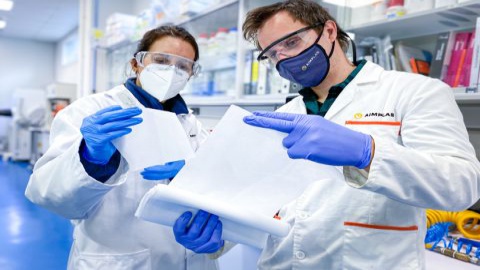
A partnership between NatureWorks and the Nonwovens Institute (NWI) at North Carolina State University (NC State) has resulted in a new spunbond nonwoven technology enabling the production of at least 10 million additional N95 surgical masks.
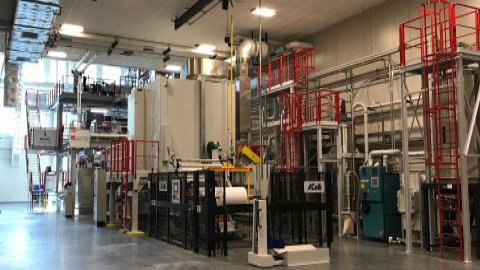
NWI has converted the use of its research and training pilot production line to produce the face mask materials, and NatureWorks has donated the Ingeo resin needed to produce the spunbond material.
New spunbond nonwoven structure
Typical N95 respirators and surgical masks are a multi-layer structure of one or two spunbond nonwoven layers that provide mask shape and protect the inner filtration layer.
Those layers are combined with an electrostatically charged layer of meltblown nonwoven material which serves as the filtration layer capturing microscopic unwanted particles such as viruses and bacteria.
The charge is what boosts the meltblown’s filtering capabilities, but it also means that the masks cannot be reused since the charge can be lost during the cleaning process.
Because of the COVID-19 crisis, NWI took the spunbond technology and created a new generation of unique filters that have excellent filtering capability without needing to be charged, meaning they can potentially be reused after cleaning with peroxide, or an alcohol solution. Because these materials are also strong they can be cut and sewn by traditional techniques.
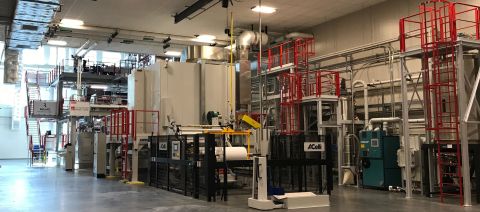
NatureWorks partners with Nonwovens Institute to support production of 10 million N95 masks for healthcare workers fighting COVID-19.
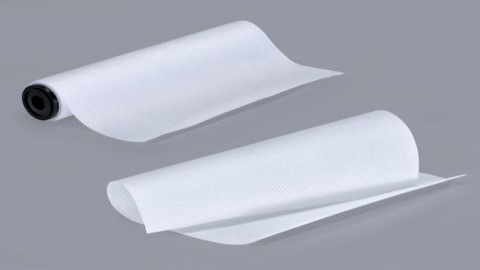
The new nonwoven fabric is a bicomponent fiber made of Ingeo biopolymer (PLA) and polypropylene (PP), providing significant strength and bulk with equal effectiveness in filtration.
Additionally, Ingeo improves the productivity of the spunbond process by at least 30%. Leveraging these benefits, NWI’s pilot line can produce enough material to make 2 million masks per week.
One meter of material enough for 20-25 masks
Typically, one meter of spunbond material provides enough for about 20 to 25 masks when using the current designs. One of the NWI’s production lines started producing 2,000 meters of spunbond material per hour, with the potential to create some 20,000 meters of spunbond material in a day.
NWI currently has an agreement to provide large amounts of spunbond nonwoven material to several key partners, which will make masks at their manufacturing facilities. They plan to provide the new masks to local communities in need.
NC State has also ordered machines that will allow NWI to make surgical masks in its Centennial Campus facilities. Those machines should arrive in the next month.
The Nonwovens Institute is the world’s first accredited academic program for the interdisciplinary field of engineered fabrics. NatureWorks has been supporting NWI for over ten years and is also currently part of the institute’s executive committee.