














Search History
Clear History
{{item.search_key}}
Hot Searches
Change
{{item.name}}
{{item.english_name}}
Subscribe eNews
Once A Week Once Every Two Weeks
{{sum}}
Login Register

Applications

CHINAPLAS 2026: An array of cutting-edge solutions for medical device production

Interview: Uniting the chemical industry to pioneer net-zero and circularity

CHINAPLAS x CPRJ Conference: Key insights for the global recycling industry

Products

Invitation: Meet BOUNI at CHINAPLAS 2026 Shanghai (Booth 1.2A58)

TK Group: One-stop molding solutions fuels precision manufacturing upgrades

CHINAPLAS 2026: LCY transforms into innovator to meet demanding applications

Activities

  • CHINAPLAS 2026: Discover the must-attend concurrent event lineup

  • CHINAPLAS 2026:VDMA “The Power of Plastics” forum highlights digitalization and circularity

  • Must-attend: CHINAPLAS x CPRJ Plastics Recycling and Circular Economy Conference in Shanghai

Pictorial

News Videos

MAAG x SIKORA: Smart pelletizing + precise inspection - More stable, carbon-reduced

CAI Machine: New visual inspection technology debut! More efficient, greener, colorful printing

Ready for CHINAPLAS 2026? Two tools for your visit

Conference Videos

[Mandarin session: Highlights] Covestro: Innovative thermal conductive material solution for new-generation network devices

[Mandarin session: Highlights] Covestro: The Material Effect: Empowering Innovations in Solar-Storage-Charging Smart Energy and Data Center Applications

[Mandarin session: Highlights] Covestro: In-mold Coating (DC/IMC) Technology - Facilitating Personalized Design for Automotive Interior and Exterior Components

Corporate/Product Videos

About Dow

B Series brush machine

Innovative PVC Compounds for Global Manufacturing | Visit Us Booth 6.2A 39 at CHINAPLAS

Home > News > Corporate News

Executive Dialogue: Kingfa: From materials to solutions with overseas and green investment

Source:Adsale Plastics Network Date :2026-04-21 Editor :Victor
Copyright: This article was originally written/edited by Adsale Plastics Network (AdsaleCPRJ.com), republishing and excerpting are not allowed without permission. For any copyright infringement, we will pursue legal liability in accordance with the law.

The global economy is turbulent and fast‑changing, yet China's emerging sectors are on the cusp of rapid expansion. As a leading Chinese advanced materials company, Kingfa's moves draw close market attention.


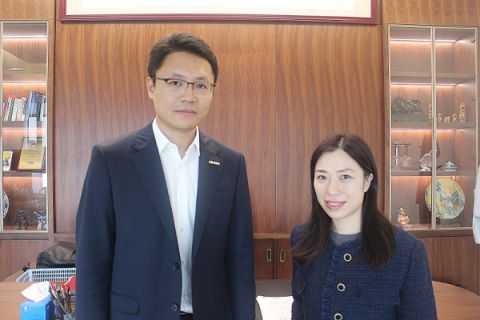
Recently, Rita Chu, Vice Chairman of Adsale Group, visited Kingfa's headquarters to meet with CEO James Wu. Their wide‑ranging discussion covered overseas expansion, supply chain disruption, emerging markets, green materials, and Kingfa's strategic direction and growth objectives.


Rita Chu, Vice Chairman, Adsale Group

Rita Chu pursued her studies at Northwestern University in the US, as well as London School of Economics in the UK. A certified accountant, she joined the Adsale Group in 2010 and became the Vice Chairman of the Group in 2019.


James Wu, CEO, Kingfa Sci. & Tech. Co., Ltd.

James Wu currently serves as CEO of Kingfa Science & Technology Co., Ltd. He holds a master's degree in Materials Science from South China University of Technology and an EMBA from the School of Economics and Management at Tsinghua University. Wu joined Kingfa in 2010 and has held a series of roles, including Regional Manager, and later Director and Deputy General Manager of the company.


During his tenure as Executive Director of Guangzhou Kingfa New Materials Co., Ltd., Wu drove the modified-plastics business to RMB 13.887 billion in revenue, a year‑on‑year increase of 19.18%. In 2024, overseas finished‑product sales reached 233,500 tonnes, up 29.51% year‑on‑year. He also spearheaded the formulation of the modified‑plastics "333" strategy and advanced strategic initiatives, including materials‑collaboration program for low‑altitude aircraft.

圖片_20260318093821_NEW_480.jpg

James Wu, CEO, Kingfa Sci. & Tech. Co., Ltd. and Rita Chu, Vice Chairman, Adsale Group

Overseas expansion and end-to-end solutions capability


Chu: Many of Kingfa's overseas plants have already begun operating. How would you assess the progress of Kingfa's overseas expansion?


Wu: Kingfa's overseas expansion is marked by heavy investment, fast execution, and strong momentum. Vietnam was the first site to complete construction and start operations, and Mexico and Poland will follow.


Tariffs and supply-chain disruption risks are pushing Fortune 500 companies to expand localized sourcing, driving our accelerated overseas footprint. We are also in active discussions with multiple Fortune 500 customers that are seeking to leverage our global supply chain capabilities.


Chu: While expanding in scale, how does Kingfa balance market share with profitability?


Wu: We rely on two key strategies. First, we optimize the product mix. Standard products face intense competition, so we cannot rely on price increases alone. We therefore invest more in R&D and grow higher value-added categories such as engineering plastics and specialty engineering plastics to increase their revenue share.


Second, we improve operational efficiency by reducing internal costs and implementing "eliminating waste and simplifying processes". This two-pronged approach helps improve profitability.


Chu: Given the current opportunities and challenges, what is Kingfa's development direction?


Wu: At this stage, Kingfa is focused on evolving from a materials supplier and solutions provider into an end-to-end solutions provider. In automotive, we move from supplying materials for individual components to providing complete lightweighting solutions for entire vehicles. In home appliances, we go further upstream into product design and collaborate with customers to identify consumer needs.


Chu: How does Kingfa build its end-to-end solutions capability?


Wu: It starts with resource integration. Kingfa's advantage is its broad range of material categories and a highly complete material system—from general-purpose plastics to engineering and specialty engineering plastics. With years of application experience, we have a strong foundation for integrating solutions.


To ensure integration works in practice, we have established a dedicated industry technology division and formed an expert team. Externally, they monitor industry trends and customer needs; internally, they coordinate materials and solution resources. This structure enables Kingfa to deliver end-to-end solutions.


Opportunities in new racetracks, NEVs, and home appliances


Chu: How do you view the growth potential of emerging sectors such as the low-altitude economy and humanoid robotics? What is Kingfa's business approach in these areas?


Wu: Kingfa has already begun supplying materials to leading companies and is positioned as a mature materials solutions provider in these sectors. However, the market has not yet reached large-scale adoption and remains at an early stage. Once adoption accelerates, we expect these sectors to provide remarkable momentum for our growth.


Chu: China is moving early in emerging sectors. Does that create unique opportunities for Chinese materials companies?


Wu: Yes, it's an exceptional opportunity. China matches the US in leadership in sectors such as the low-altitude economy and humanoid robotics, whereas Europe and Japan/Korea have invested relatively less. These sectors depend on a complete industrial ecosystem and AI capabilities. China's advantages are a strong supply chain and an engineering talent "dividend".


For Chinese companies, this is a chance not only to grow faster by taking the corner, but also to strengthen their strategic position in national competitiveness. The US and China complement each other, with the US leading in technology R&D and theoretical innovation and China excelling at translating applications into products and scaling manufacturing.


Chu: New energy vehicles (NEVs) are a core application area for modified plastics. Has this market already peaked? What are Kingfa's key strategies in this field?


Wu: The market has not peaked. In China, NEVs have already surpassed 50% penetration. Going forward, growth will depend mainly on two factors.


First is product competitiveness. If technologies such as fast charging and solid-state batteries can effectively increase the range, the market share can rise significantly.


Second is policy direction. China lacks petroleum resources and relies heavily on crude oil imports. From a national strategic perspective, NEV's development will continue to be promoted.


In overseas markets, NEVs are increasingly positioned as "smart vehicles". Consumers care more about intelligence and comfort than the energy type. This trend is irreversible, and the market opportunity remains significant.


KIngfa_NEV.jpg

Kingfa's halogen‑free, flame‑retardant enhanced PA66 is widely used in new NEVs.


Chu: What share of Kingfa's revenue comes from NEV-related business?


Wu: The automotive business accounts for about 40% of Kingfa's modified‑plastics revenue. Within that, NEV-related business makes up approximately 50% of the automotive business, meaning it has a clear and meaningful impact on Kingfa's overall business.


Chu: Beyond NEVs, what other application areas does Kingfa consider to have strong growth potential?


Wu: In end-use markets for modified plastics, home appliances are the second-largest sector after automotive. In emerging regions such as India, Africa, and Southeast Asia, rising living standards are supporting steady growth in home appliance demand. 


In China, growth is supported by the expanding middle class. Leading brands are placing greater emphasis on consumer experience and emotional value, integrating digital features and AI capabilities into product upgrades. This trend creates substantial opportunities for our materials.


Investing long-term in bio‑based and recycled Plastics


Chu: From what I understand, bio-based materials are one of Kingfa's key R&D priorities. Is this mainly driven by current market conditions, or is it part of Kingfa's long-term strategy?


Wu: It's a long-term strategic commitment. Both domestic and overseas markets are actively promoting bio-based materials, and Kingfa has been developing them for some time. Related products have already entered mass production. At the same time, recent military conflicts have underscored the risks of over-relying on fossil feedstock supply. Bio-based materials help address both environmental and energy-supply risks.


Chu: Will the price gap between bio-based materials and conventional materials persist?


Wu: No. Once bio-based materials achieve large-scale adoption, prices will inevitably drop. Their current premium mainly reflects higher production costs. When bio-based material costs approach those of petroleum-based plastics, market demand should grow quickly. Similar to the NEV sector—high early costs and losses before profitability—bio-based materials also need time, and producers will keep improving cost efficiency through ongoing R&D.


Chu: How does Kingfa view the development of recycled/recyclable plastics and bio-based materials? And how does Kingfa help customers feel confident in using them?


Wu: Bio-based materials, recycled/recyclable plastics, and petroleum-based plastics show a shift toward diversified feedstocks. Demand is strong globally, and these categories will coexist long term, so customers are not dependent on a single material type.


On quality, we have not seen strong customer concerns. Last year, Kingfa sold nearly 300,000 tons of eco-friendly, high-performance recycled plastics. We also believe that isolated quality issues are not the main bottleneck. Customers are generally more cautious with PCR materials only in industries with extremely high requirements for performance and consistency. In most sectors, such as automotive and home appliances, the main priority is cost, and bio-based and petroleum-based materials provide the same performance—only the feedstock differs.


At this stage, PCR materials are the most widely accepted "green" option, with a typical price premium of up to about 30% versus virgin materials. Bio-based materials are usually priced at roughly two to three times the cost of virgin materials.

圖片_20260325114150.jpg

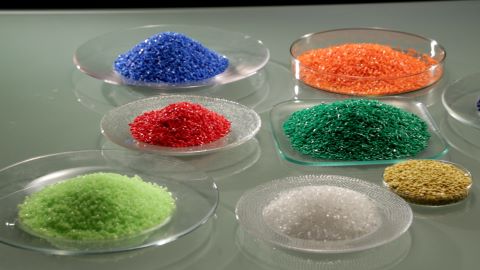
Kingfa offers a broad product portfolio, including modified plastics, high-performance resins, and recycled plastics.


Advancing the "333" and "1438" revenue targets


Chu: You mentioned the current military conflicts and supply chain challenges. With uncertainty in raw-material price trends, what measures is Kingfa taking?


Wu: We will continue to ensure stable supply for our customers. However, if raw-material prices remain high long term, we will pass part of the cost to downstream customers. Over time, this will reshape supply-demand dynamics across the industry—when upstream prices rise, some downstream demand will inevitably be constrained.


If suppliers stop quoting prices, it's not necessarily a sign of supply shortages. Rather, the conflict-driven price volatility makes it difficult to determine a "reasonable" price, so they choose to pause and observe. This situation won't last long. With underlying market demand still strong, supply and demand will ultimately return to pricing equilibrium.


Chu: In response to raw-material price volatility and supply instability, what would you recommend to the industry and to customers?


Wu: For both supply and demand sides, the rational approach is to purchase and produce based on actual needs, while objectively accepting cost increases. If conditions change and costs come down, then we should also accept cost reductions.

The key is to stay rational and return to fundamentals. As a manufacturer, focusing on core work—raw-material procurement, production processing, and product sales—is sufficient. Decisions should not be driven by market sentiment.


Chu: This year marks the start of the "15th Five-Year Plan". Over the next three to five years, what are Kingfa's key targets?


Wu: We are currently drafting our three-year development plan, with two core targets.


First, we will continue to drive the "333" revenue goals, including 30% overseas revenue, 30% revenue from engineering plastics, and 30% revenue from serving Fortune 500 companies.


Second, in the medium to long term, we will pursue the "1438" revenue targets: RMB 80 billion for modified plastics, RMB 40 billion for green petrochemicals, RMB 30 billion for new materials, and RMB 10 billion for healthcare.


For the "333" goals, we have already met the engineering plastics target of 30% of revenue. As this is a dynamic target, its share could be diluted if general plastics grow faster, so we must continuously balance and advance the initiative.


Chu: At CHINAPLAS 2026, what will be the highlights of Kingfa?


Wu: At the exhibition, Kingfa will highlight three themes: Creation, Reproduce, and Innovation. We will showcase how high-performance materials enable a better life, launch a full-lifecycle low-carbon circular solutions package, and unveil technological breakthroughs in areas such as new energy, AI, and communications.


We will also focus on demonstrating our capability to create value for customers. Our booth will be organized by industry—such as home appliances and automotive—with dedicated liaisons to engage buyers directly and identify key pain points and material needs more precisely.


Kingfa Sci. & Tech. Co., Ltd.

Founded in 1993, Kingfa is an advanced materials company specializing in R&D, production, sales, and services for high-performance chemical and material solutions. Driven primarily by in-house innovation, Kingfa's product portfolio includes modified plastics, eco-friendly high-performance recycled plastics, fully biodegradable plastics, specialty engineering plastics, carbon fiber and composites, light hydrocarbons and hydrogen energy solutions, high-performance resins, and medical & healthcare polymers.

Headquartered in Guangzhou Science City, Kingfa operates more than 60 subsidiaries and maintains R&D and production bases across South Asia, North America, and Europe.


Booth: 7.2C66


圖片_20260325114104.jpg


 Like 丨  {{details_info.likes_count}}
Sustainability
Recycling
Kingfa
 SACMI (SHANGHAI) MACHINERY EQUIPMENT CO., LTD.      
 DONGGUAN DEHUA PRECISION MOLD CO., LTD      
 ZHANGJIAGANG XINRONG MACHINERY CO.,LTD      
 JUHESHUN ADVANCED MATERIALS CO., LTD.      
 HEFEI TAIHE INTELLIGENT TECHNOLOGY GROUP CO.,LTD.      
 BEIJING ENERGY ENGINEERING TECHNOLOGIES CO.,LTD.      
 WINDORA MATERIALS LLC      
 GREENWICH (CHINA) TECHNOLOGY DEVELOPMENT LIMITED      
 GREENCORE RESOURCES LIMITED      
 LINKER NEW MATERIALS CO., LTD      
 Coperion GmbH      
 SHANGHAI HAWKWAY PROCESS SOLUTIONS CO., LTD      
 GUANGXI HENGYI NEW MATERIALS CO., LTD.      
 TAIZHOU MIXIN MACHINERY CO., LTD.      
 ZHEJIANG ROTOUN PLASTIC TECHNOLOGY CORP.      
 GUANGDONG GUOHENG YOUHE ADVANCED MATERIALS CO., LTD.      
 KADIDE      
 GUANGXI WUZHOU GUOLONG RECYCLABE RESOURCES DEVELOPMENT CO., LTD.      
 SUZHOU BECHTON PLASTIC MACHINERY CO., LTD      
 YUYAO KAWAGUCHI Manufacturing Co., Ltd.      
 LINYI HUASU ELECTRONIC TECHNOLOGY CO., LTD.      
 GUANGDONG ENMEI CHEMICAL TECHNOLOGY CO., LTD      
 ANHUI ZHONGXIN HONGWEI TECHNOLOGY CO.,LTD      
 FUJIAN NAN'AN STAR RUBBER&PLASTIC MACHINERY CO., LTD.      
 ZHANGJIAGANG GREENLANDPLAST MACHINERY CO.,LTD      
 FUJIAN YANGZHU NEW MATERIAL SCIENCE & TECHNOLOGY CO., LTD      
 HUBEI XINJIANSHI MACHINERY TECHNOLOGY CO.,LTD      
 HEBEI GELIA PLASTIC MACHINERY SALES COMPANY      
 FOSHAN SHUNDE MINGSANFENG MOULD CO., LTD.      

The content you're trying to view is for members only. If you are currently a member, Please login to access this content.   Login

Source:Adsale Plastics Network Date :2026-04-21 Editor :Victor
Copyright: This article was originally written/edited by Adsale Plastics Network (AdsaleCPRJ.com), republishing and excerpting are not allowed without permission. For any copyright infringement, we will pursue legal liability in accordance with the law.

The global economy is turbulent and fast‑changing, yet China's emerging sectors are on the cusp of rapid expansion. As a leading Chinese advanced materials company, Kingfa's moves draw close market attention.


Recently, Rita Chu, Vice Chairman of Adsale Group, visited Kingfa's headquarters to meet with CEO James Wu. Their wide‑ranging discussion covered overseas expansion, supply chain disruption, emerging markets, green materials, and Kingfa's strategic direction and growth objectives.


Rita Chu, Vice Chairman, Adsale Group

Rita Chu pursued her studies at Northwestern University in the US, as well as London School of Economics in the UK. A certified accountant, she joined the Adsale Group in 2010 and became the Vice Chairman of the Group in 2019.


James Wu, CEO, Kingfa Sci. & Tech. Co., Ltd.

James Wu currently serves as CEO of Kingfa Science & Technology Co., Ltd. He holds a master's degree in Materials Science from South China University of Technology and an EMBA from the School of Economics and Management at Tsinghua University. Wu joined Kingfa in 2010 and has held a series of roles, including Regional Manager, and later Director and Deputy General Manager of the company.


During his tenure as Executive Director of Guangzhou Kingfa New Materials Co., Ltd., Wu drove the modified-plastics business to RMB 13.887 billion in revenue, a year‑on‑year increase of 19.18%. In 2024, overseas finished‑product sales reached 233,500 tonnes, up 29.51% year‑on‑year. He also spearheaded the formulation of the modified‑plastics "333" strategy and advanced strategic initiatives, including materials‑collaboration program for low‑altitude aircraft.


圖片_20260318093821_NEW_480.jpg

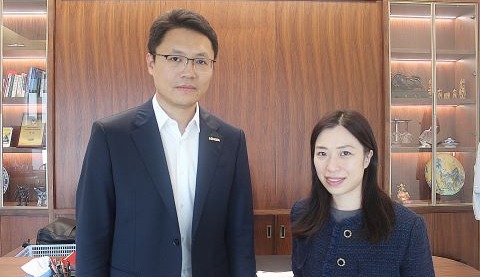
James Wu, CEO, Kingfa Sci. & Tech. Co., Ltd. and Rita Chu, Vice Chairman, Adsale Group

Overseas expansion and end-to-end solutions capability


Chu: Many of Kingfa's overseas plants have already begun operating. How would you assess the progress of Kingfa's overseas expansion?


Wu: Kingfa's overseas expansion is marked by heavy investment, fast execution, and strong momentum. Vietnam was the first site to complete construction and start operations, and Mexico and Poland will follow.


Tariffs and supply-chain disruption risks are pushing Fortune 500 companies to expand localized sourcing, driving our accelerated overseas footprint. We are also in active discussions with multiple Fortune 500 customers that are seeking to leverage our global supply chain capabilities.


Chu: While expanding in scale, how does Kingfa balance market share with profitability?


Wu: We rely on two key strategies. First, we optimize the product mix. Standard products face intense competition, so we cannot rely on price increases alone. We therefore invest more in R&D and grow higher value-added categories such as engineering plastics and specialty engineering plastics to increase their revenue share.


Second, we improve operational efficiency by reducing internal costs and implementing "eliminating waste and simplifying processes". This two-pronged approach helps improve profitability.


Chu: Given the current opportunities and challenges, what is Kingfa's development direction?


Wu: At this stage, Kingfa is focused on evolving from a materials supplier and solutions provider into an end-to-end solutions provider. In automotive, we move from supplying materials for individual components to providing complete lightweighting solutions for entire vehicles. In home appliances, we go further upstream into product design and collaborate with customers to identify consumer needs.


Chu: How does Kingfa build its end-to-end solutions capability?


Wu: It starts with resource integration. Kingfa's advantage is its broad range of material categories and a highly complete material system—from general-purpose plastics to engineering and specialty engineering plastics. With years of application experience, we have a strong foundation for integrating solutions.


To ensure integration works in practice, we have established a dedicated industry technology division and formed an expert team. Externally, they monitor industry trends and customer needs; internally, they coordinate materials and solution resources. This structure enables Kingfa to deliver end-to-end solutions.


Opportunities in new racetracks, NEVs, and home appliances


Chu: How do you view the growth potential of emerging sectors such as the low-altitude economy and humanoid robotics? What is Kingfa's business approach in these areas?


Wu: Kingfa has already begun supplying materials to leading companies and is positioned as a mature materials solutions provider in these sectors. However, the market has not yet reached large-scale adoption and remains at an early stage. Once adoption accelerates, we expect these sectors to provide remarkable momentum for our growth.


Chu: China is moving early in emerging sectors. Does that create unique opportunities for Chinese materials companies?


Wu: Yes, it's an exceptional opportunity. China matches the US in leadership in sectors such as the low-altitude economy and humanoid robotics, whereas Europe and Japan/Korea have invested relatively less. These sectors depend on a complete industrial ecosystem and AI capabilities. China's advantages are a strong supply chain and an engineering talent "dividend".


For Chinese companies, this is a chance not only to grow faster by taking the corner, but also to strengthen their strategic position in national competitiveness. The US and China complement each other, with the US leading in technology R&D and theoretical innovation and China excelling at translating applications into products and scaling manufacturing.


Chu: New energy vehicles (NEVs) are a core application area for modified plastics. Has this market already peaked? What are Kingfa's key strategies in this field?


Wu: The market has not peaked. In China, NEVs have already surpassed 50% penetration. Going forward, growth will depend mainly on two factors.


First is product competitiveness. If technologies such as fast charging and solid-state batteries can effectively increase the range, the market share can rise significantly.


Second is policy direction. China lacks petroleum resources and relies heavily on crude oil imports. From a national strategic perspective, NEV's development will continue to be promoted.


In overseas markets, NEVs are increasingly positioned as "smart vehicles". Consumers care more about intelligence and comfort than the energy type. This trend is irreversible, and the market opportunity remains significant.


KIngfa_NEV.jpg

Kingfa's halogen‑free, flame‑retardant enhanced PA66 is widely used in new NEVs.


Chu: What share of Kingfa's revenue comes from NEV-related business?


Wu: The automotive business accounts for about 40% of Kingfa's modified‑plastics revenue. Within that, NEV-related business makes up approximately 50% of the automotive business, meaning it has a clear and meaningful impact on Kingfa's overall business.


Chu: Beyond NEVs, what other application areas does Kingfa consider to have strong growth potential?


Wu: In end-use markets for modified plastics, home appliances are the second-largest sector after automotive. In emerging regions such as India, Africa, and Southeast Asia, rising living standards are supporting steady growth in home appliance demand. 


In China, growth is supported by the expanding middle class. Leading brands are placing greater emphasis on consumer experience and emotional value, integrating digital features and AI capabilities into product upgrades. This trend creates substantial opportunities for our materials.


Investing long-term in bio‑based and recycled Plastics


Chu: From what I understand, bio-based materials are one of Kingfa's key R&D priorities. Is this mainly driven by current market conditions, or is it part of Kingfa's long-term strategy?


Wu: It's a long-term strategic commitment. Both domestic and overseas markets are actively promoting bio-based materials, and Kingfa has been developing them for some time. Related products have already entered mass production. At the same time, recent military conflicts have underscored the risks of over-relying on fossil feedstock supply. Bio-based materials help address both environmental and energy-supply risks.


Chu: Will the price gap between bio-based materials and conventional materials persist?


Wu: No. Once bio-based materials achieve large-scale adoption, prices will inevitably drop. Their current premium mainly reflects higher production costs. When bio-based material costs approach those of petroleum-based plastics, market demand should grow quickly. Similar to the NEV sector—high early costs and losses before profitability—bio-based materials also need time, and producers will keep improving cost efficiency through ongoing R&D.


Chu: How does Kingfa view the development of recycled/recyclable plastics and bio-based materials? And how does Kingfa help customers feel confident in using them?


Wu: Bio-based materials, recycled/recyclable plastics, and petroleum-based plastics show a shift toward diversified feedstocks. Demand is strong globally, and these categories will coexist long term, so customers are not dependent on a single material type.


On quality, we have not seen strong customer concerns. Last year, Kingfa sold nearly 300,000 tons of eco-friendly, high-performance recycled plastics. We also believe that isolated quality issues are not the main bottleneck. Customers are generally more cautious with PCR materials only in industries with extremely high requirements for performance and consistency. In most sectors, such as automotive and home appliances, the main priority is cost, and bio-based and petroleum-based materials provide the same performance—only the feedstock differs.


At this stage, PCR materials are the most widely accepted "green" option, with a typical price premium of up to about 30% versus virgin materials. Bio-based materials are usually priced at roughly two to three times the cost of virgin materials.


圖片_20260325114150.jpg

Kingfa offers a broad product portfolio, including modified plastics, high-performance resins, and recycled plastics.


Advancing the "333" and "1438" revenue targets


Chu: You mentioned the current military conflicts and supply chain challenges. With uncertainty in raw-material price trends, what measures is Kingfa taking?


Wu: We will continue to ensure stable supply for our customers. However, if raw-material prices remain high long term, we will pass part of the cost to downstream customers. Over time, this will reshape supply-demand dynamics across the industry—when upstream prices rise, some downstream demand will inevitably be constrained.


If suppliers stop quoting prices, it's not necessarily a sign of supply shortages. Rather, the conflict-driven price volatility makes it difficult to determine a "reasonable" price, so they choose to pause and observe. This situation won't last long. With underlying market demand still strong, supply and demand will ultimately return to pricing equilibrium.


Chu: In response to raw-material price volatility and supply instability, what would you recommend to the industry and to customers?


Wu: For both supply and demand sides, the rational approach is to purchase and produce based on actual needs, while objectively accepting cost increases. If conditions change and costs come down, then we should also accept cost reductions.

The key is to stay rational and return to fundamentals. As a manufacturer, focusing on core work—raw-material procurement, production processing, and product sales—is sufficient. Decisions should not be driven by market sentiment.


Chu: This year marks the start of the "15th Five-Year Plan". Over the next three to five years, what are Kingfa's key targets?


Wu: We are currently drafting our three-year development plan, with two core targets.


First, we will continue to drive the "333" revenue goals, including 30% overseas revenue, 30% revenue from engineering plastics, and 30% revenue from serving Fortune 500 companies.


Second, in the medium to long term, we will pursue the "1438" revenue targets: RMB 80 billion for modified plastics, RMB 40 billion for green petrochemicals, RMB 30 billion for new materials, and RMB 10 billion for healthcare.


For the "333" goals, we have already met the engineering plastics target of 30% of revenue. As this is a dynamic target, its share could be diluted if general plastics grow faster, so we must continuously balance and advance the initiative.


Chu: At CHINAPLAS 2026, what will be the highlights of Kingfa?


Wu: At the exhibition, Kingfa will highlight three themes: Creation, Reproduce, and Innovation. We will showcase how high-performance materials enable a better life, launch a full-lifecycle low-carbon circular solutions package, and unveil technological breakthroughs in areas such as new energy, AI, and communications.


We will also focus on demonstrating our capability to create value for customers. Our booth will be organized by industry—such as home appliances and automotive—with dedicated liaisons to engage buyers directly and identify key pain points and material needs more precisely.


Kingfa Sci. & Tech. Co., Ltd.

Founded in 1993, Kingfa is an advanced materials company specializing in R&D, production, sales, and services for high-performance chemical and material solutions. Driven primarily by in-house innovation, Kingfa's product portfolio includes modified plastics, eco-friendly high-performance recycled plastics, fully biodegradable plastics, specialty engineering plastics, carbon fiber and composites, light hydrocarbons and hydrogen energy solutions, high-performance resins, and medical & healthcare polymers.

Headquartered in Guangzhou Science City, Kingfa operates more than 60 subsidiaries and maintains R&D and production bases across South Asia, North America, and Europe.


Booth: 7.2C66

圖片_20260325114104.jpg


全文内容需要订阅后才能阅读哦~
立即订阅

Recommended Articles

Corporate News
Executive Dialogue: Molding the future in uncertainty: Insights from Bekum's Managing Director
 2026-04-21
Corporate News
Executive Dialogue: Kingfa: From materials to solutions with overseas and green investment
 2026-04-21
Corporate News
Looking for REACH-Registered Zinc Solutions for Global Markets?
 2026-04-17
  JIANGSU SHENLONG ZINC INDUSTRY CO., LTD. 优享会员
Corporate News
How Can Footwear Manufacturers Achieve Both Soft Feel and Stable Foaming Performance?
 2026-04-17
  FUJIAN HONGKONG PETROCHEMICAL LIMITED 星尚会员
Corporate News
Can One SBS Solution Handle Both High-Temperature Rutting and Low-Temperature Cracking?
 2026-04-17
  FUJIAN HONGKONG PETROCHEMICAL LIMITED 星尚会员
Corporate News
Still Struggling with Long Lead Times for High-End PCTFE Materials?
 2026-04-16
  DSP CHEMICAL CO.,LTD 优享会员

You May Be Interested In

Change

  • People
  • Company
loading... No Content
{{[item.truename,item.truename_english][lang]}} {{[item.company_name,item.company_name_english][lang]}} {{[item.job_name,item.name_english][lang]}}
{{[item.company_name,item.company_name_english][lang]}} Company Name    {{[item.display_name,item.display_name_english][lang]}}  

Polyurethane Investment Medical Carbon neutral Reduce cost and increase efficiency CHINAPLAS Financial reports rPET INEOS Styrolution Evonik Borouge Polystyrene (PS) mono-material Sustainability Circular economy BASF SABIC Multi-component injection molding machine All-electric injection molding machine Thermoforming machine

Executive Dialogue: Kingfa: From materials to solutions with overseas and green investment

识别右侧二维码,进入阅读全文
下载
x 关闭
订阅
亲爱的用户,请填写一下信息
I have read and agree to the 《Terms of Use》 and 《Privacy Policy》
立即订阅
Top
Feedback
Chat
News
Market News
Applications
Products
Video
In Pictures
Specials
Activities
eBook
Front Line
Plastics Applications
Chemicals and Raw Material
Processing Technologies
Products
Injection
Extrusion
Auxiliary
Blow Molding
Mold
Hot Runner
Screw
Applications
Packaging
Automotive
Medical
Recycling
E&E
LED
Construction
Others
Events
Conference
Webinar
CHINAPLAS
CPS+ eMarketplace
Official Publications
CPS eNews
Media Kit
Social Media
Facebook
Linkedin