




















Market report: Human-AI collaboration on the road to Industry 5.0

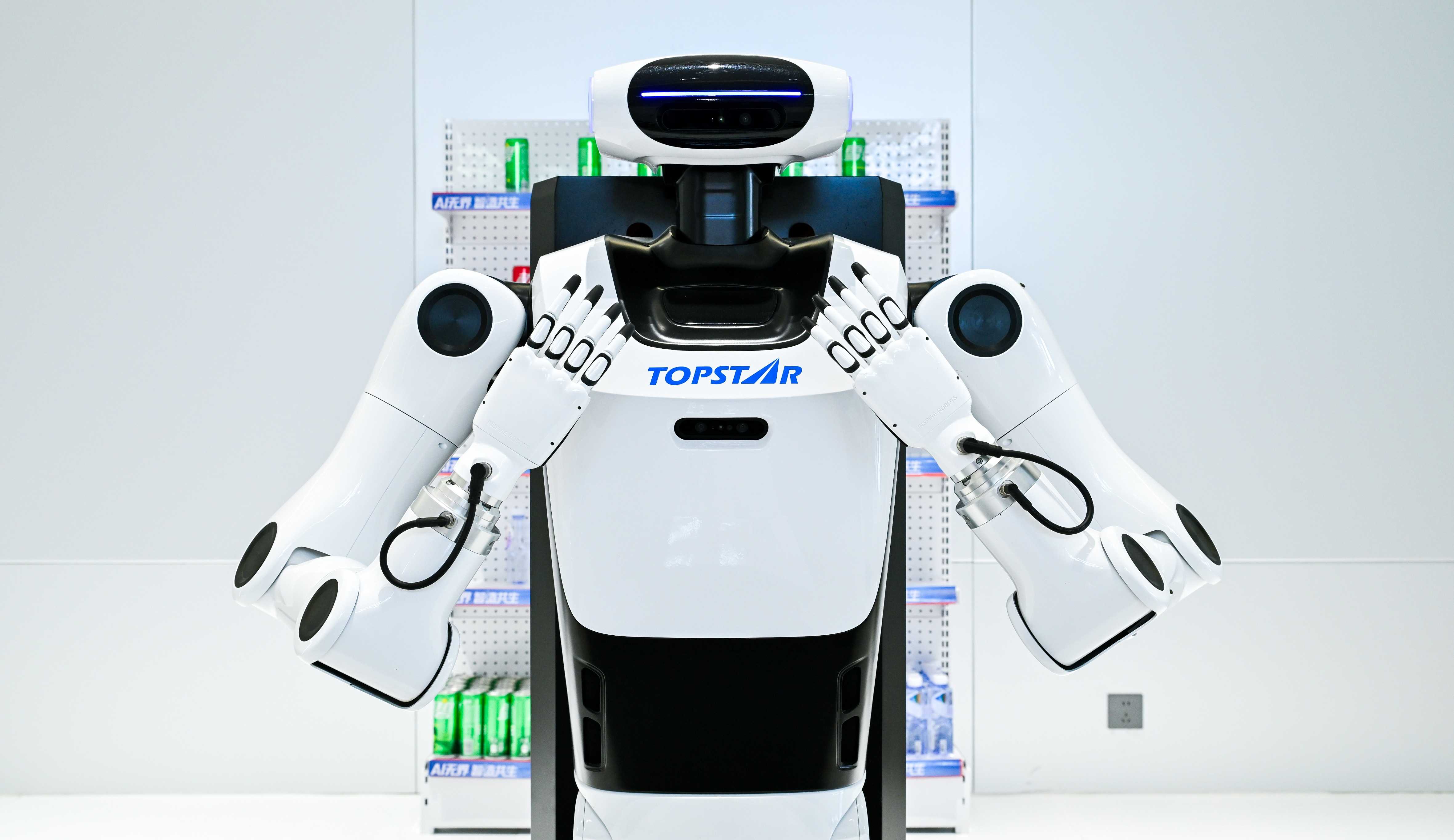
Artificial Intelligence (AI), not least generative AI (GenAI), has evolved from an experimental phase to a vital and mission-critical driver for the plastics and rubber industry.
While traditional AI focuses on classifying and analyzing data, GenAI goes a step further by generating new, original outputs that resemble human creativity. It achieves this by using deep learning models to learn patterns from vast amounts of existing data.
This cutting-edge technology fosters a seamless interaction between AI and humans, enhancing decision-making through intuitive interfaces that transform complex data into actionable insights.
From automation to autonomy: Doors for manufacturing advancement
As we transition from automation to a more autonomous approach, the advancement of GenAI paves the way for significant improvements in manufacturing.
ENGEL's new inject AI framework combines extensive injection molding expertise with AI to address industry challenges such as skilled labor shortages, material savings, and quality assurance.
Concrete AI solutions of inject AI include the iQ process observer, which automatically analyzes over 1,000 parameters in real time. It detects deviations and offers actionable recommendations, thereby reducing misadjustments and supporting optimization.
Another highlight is the ENGEL Virtual Assistant (EVA), an AI-based, 24/7 assistant quickly answers technical questions from ENGEL's documentation and generates tailored checklists and instructions for individual production cells in any language. Meanwhile, the part finder feature allows customers to identify spare parts easily by taking photos of machine components, enabling immediate identification and requests for the correct parts.
The latest predictive maintenance systems for injection molding machines utilize AI and digital twin technologies within the cloud analytics layer of data processing. These systems aggregate data from multiple machines and employs machine learning models to provide deeper insights and reporting. The digital twin serves as a virtual replica of the physical machine, enabling "what-if" simulations and parameter optimization with a prediction horizon of 2-6 weeks. Consequently, these advancements enable more proactive and effective predictive maintenance.
For instance, in the automotive industry, a Tier 1 supplier implemented advanced predictive monitoring on a Tederic DH-650 injection molding machine line producing radiator parts, resulting in a 42% reduction in downtime and an increase in overall equipment effectiveness (OEE) from 78% to 88% within nine months.
By integrating AI-powered electrical signature analysis (ESA) and machine learning technologies, Siemens' NXpower Monitor—its digital caretaker for electrical networks—conducts real-time analyses of high-quality current and voltage data. This capability enables the detection of electrical and mechanical faults up to five months before potential downtime occurs.
Furthermore, the system also provides comprehensive performance and efficiency insights, pinpointing areas with the highest electricity consumption, costs, and efficiency losses. By implementing data-driven recommendations, organizations can optimize their operational processes, significantly reducing energy waste and cutting CO2 emissions by up to 15%.
As AI technologies continue to evolve, their application in monitoring and analysis will become even more critical.

NXpower Monitor from Siemens is a cloud based application for smart energy management.
The paradigm shift: Next Wave of material discovery
AI's role in research and development of materials is equally transformative. BASF is one of the leading chemical companies that leveraging AI to drive material innovation, resulting in over 1,000 new patents globally in 2024, with around 23 percent emphasizing AI and digitalization. Central to this effort is BASF's QKnows platform, which consolidates scientific literature, patents, and internal reports, enabling global researchers to efficiently search through over 400 million documents. This AI capability accelerates the exploration of complex scientific topics, providing valuable insights for innovation.
Additionally, BASF has developed its first AI reactor, designed to enhance the yield of chemical reactions. Traditionally, chemists varied reaction parameters sequentially, a time-intensive process. The AI reactor revolutionizes this by planning, executing, and analyzing experiments. It learns and autonomously triggers the next reaction cycle and maximizes the yield of the reaction, significantly speeding up the process—demonstrating up to 20 times faster results compared to manual methods. BASF aims to expand this AI system across all relevant chemistry to further enhance innovation in materials.
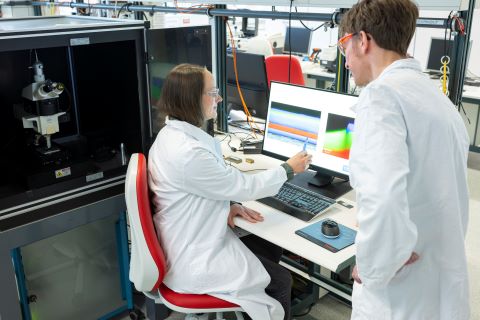
BASF and research partners collaborate to optimize mechanical recycling of plastics by combining advanced measuring techniques with AI.
The synergy between technology and sustainability is crucial in the food sector. Nestlé is continuously reducing the use of virgin plastic in packaging, moving to recyclable mono-material and other solutions. The food and beverage giant is collaborating with IBM to create a generative AI tool for discovering innovative and sustainable high-barrier packaging materials that protect food, while considering cost, recyclability, and functionality.
Nestlé and IBM scientists leveraged AI-based processing techniques to construct a knowledge base of known materials from public and proprietary documents. Subsequently, the team fine-tuned a fit-for-purpose chemical language model, enabling it to learn the representation of the molecular structures and the correlation between key structural molecular features and the resulting physical-chemical properties.
Pathway to future success
The critical question facing the plastics and rubber industry is not whether to adopt AI, but how to implement it effectively to propel the industry forward.
Industry 5.0 represents a transition from automation-focused manufacturing to a collaborative model that integrates human expertise with generative AI. This approach leverages AI's data processing capabilities while preserving the vital human skills of creative problem-solving.
To fully harness this shift, it is crucial to foster a culture of human-AI collaboration. This environment will enhance manufacturing efficiency and drive innovation in material development, leading to a more competitive and sustainable future for the industry.