












Search History
Clear History
{{item.search_key}}
Hot Searches
Change
{{item.name}}
{{item.english_name}}
Subscribe eNews
Once A Week Once Every Two Weeks
{{sum}}
Login Register

Applications

World’s first pilot project of solvent-based recycling of waste HDPE signed in Shanghai

Starlinger debuts PP*STAR® pinch bottom conversion technology

Husky’s future-ready technologies take center stage

Products

SUDARSHAN stays customer-centric to meet premiumization trend

Record-high visitors at CHINAPLAS: Plastics solutions for new racetracks

Chen Hsong’s new multi-material solution sets new benchmark for green manufacturing

Activities

  • Must-attend events: Application in Focus and Additives Seminar

  • InnoAccelerate conference explores university collaboration

  • CHINAPLAS 2026: Discover the must-attend concurrent event lineup

Pictorial

News Videos

MAAG x SIKORA: Smart pelletizing + precise inspection - More stable, carbon-reduced

CAI Machine: New visual inspection technology debut! More efficient, greener, colorful printing

Ready for CHINAPLAS 2026? Two tools for your visit

Conference Videos

[Mandarin session: Highlights] Covestro: Innovative thermal conductive material solution for new-generation network devices

[Mandarin session: Highlights] Covestro: The Material Effect: Empowering Innovations in Solar-Storage-Charging Smart Energy and Data Center Applications

[Mandarin session: Highlights] Covestro: In-mold Coating (DC/IMC) Technology - Facilitating Personalized Design for Automotive Interior and Exterior Components

Corporate/Product Videos

About Dow

B Series brush machine

Innovative PVC Compounds for Global Manufacturing | Visit Us Booth 6.2A 39 at CHINAPLAS

Home > News > Recycling

Call for innovative, flexible, and open circular procurement

Source:Adsale Plastics Network Date :2026-04-23 Editor :Victor
Copyright: This article was originally written/edited by Adsale Plastics Network (AdsaleCPRJ.com), republishing and excerpting are not allowed without permission. For any copyright infringement, we will pursue legal liability in accordance with the law.

Procurement plays a crucial role in an organization by controlling costs and quality, maintaining competitiveness, and driving success. By incorporating circularity and innovation, procurement can generate greater value not only for the organization but also for the circular economy and global sustainability.


Lina Svensberg, Innovation Manager at Compare/DigitalWell Arena and Lead Expert on Innovation Enhancing Procurement at the United Nations Economic Commission for Europe (UNECE), outlines a holistic and comprehensive approach to circular and innovation-enhancing procurement.


Many companies and governments view procurement primarily as a means to reduce order costs or select the supplier with the lowest price. This traditional, linear perspective on supply chains sees value flowing in one direction—from raw materials to products to waste.


In contrast, circular systems emphasize loops: repair, reuse, remanufacturing, and recycling. These loops rely on upstream decisions, such as material selection and product design, being aligned with downstream processes at the end of a product's lifecycle.


The concept of circularity also calls for a fundamental shift in how we perceive value. Much of today's procurement logic begins with a defined need and focuses on specifying and sourcing a solution. However, in circular systems, value often arises from existing resources, materials, and by-products, as well as from exploring their potential uses.


Therefore, innovation and experimentation must take place throughout entire value networks—not just around products and materials, but also concerning processes such as logistics, information flows, and the movement of components and resources back into circulation.

 

Lina.jpg

Lina Svensberg, Innovation Manager at Compare/DigitalWell Arena and Lead Expert on Innovation Enhancing Procurement at UNECE. 


Advancements underway in Europe


Svensberg highlights that an important shift is currently underway in Europe. Traditionally, design for circularity and sustainable purchasing have been viewed as related but largely separate issues. Today, these perspectives are increasingly interconnected. Products are expected to be designed with their entire lifecycle in mind, while procurement practices are expected to support those design choices by organizing demand accordingly.


Regulations like the Ecodesign for Sustainable Products reflect this change. The focus is no longer solely on what is purchased at a single point in time; instead, it emphasizes how products are designed to last longer, be repaired, reused, and ultimately recycled. This also places greater importance on transparency, requiring that information about materials and components be available throughout a product's lifecycle. This alignment bolsters the connection between design requirements and purchasing decisions.


This shift makes one thing clear: circularity cannot be achieved by any single organization acting independently. Value is generated when designers, manufacturers, users, service providers, and end-of-life stakeholders coordinate around shared material flows.


Moreover, these European advancements are not isolated; they align with broader global trends as supply chains in Asia and beyond adapt to similar expectations for transparency, durability, and the circular use of materials.
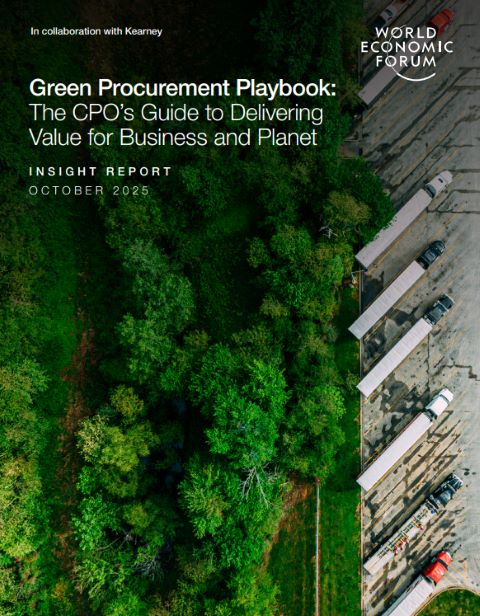
 

Playbook.jpg

The World Economic Forum, in collaboration with management consulting firm Kearney, has developed a playbook for Chief Procurement Officers to transform sustainability ambitions into tangible actions. (Photo: World Economic Forum) 


Circular procurement as an ongoing learning process


When buyers and purchasing managers prioritize recycling in their procurement decisions, one significant challenge they encounter is that recycling is often framed as a matter of selecting the "right" product—namely, one produced according to circular principles. Svensberg acknowledges that while this approach is valid, it is also limited.


She emphasizes that a circular economy cannot be created by merely choosing individual solutions; it relies on how value is created, used, and recovered across a broader value network. Thus, achieving effective recycling at scale necessitates greater interaction among those who design products, supply materials, utilize them, and manage them at the end of their lifecycle.


"Knowledge about materials, processing, regulations, and real world use needs to meet in order to figure out what can work in practice. This calls for experimentation and learning, not only compliance with predefined requirements," she states.


An innovative and flexible approach


Many organizations still assume that innovation occurs first, with procurement stepping in later to select and contract solutions. However, in circular systems, this sequence often proves ineffective. Svensberg recommends embracing circular solutions that include flexible contracts, allowing for learning, adaptation, and collaboration over time instead of trying to specify every detail upfront.


She notes that innovation procurement has frequently been narrowly defined as merely a set of procedures for acquiring innovative products, rather than as part of a broader strategy for organizing innovation, learning, and market development. In practice, this entails moving beyond rigid product specifications and utilizing procurement to foster collaboration among different stakeholders in real-world settings. It also involves understanding how products, services, and processes evolve over time and making adjustments as needed.


"More innovative approaches involve engaging procurement earlier in exploration and learning, creating space to test materials, designs or service models, and accepting a degree of uncertainty as part of the process," she explains.


An open mindset and business model


For organizations navigating circular transitions, the crucial question may not only be how to procure more sustainably, but also how to organize demand, collaboration, and value creation in ways that facilitate the emergence and maturation of circular solutions over time. Those who view procurement as a driver of experimentation will be better positioned to translate circular ambitions into everyday economic practices.


Svensberg observes that many discussions around circularity still concentrate on individual decisions—what to design, what to buy, or what to recycle. While these considerations are important, they risk overlooking the broader context.


She concludes that circularity is ultimately about how systems are structured and how different stakeholders are empowered to collaborate around shared material flows. Progress, therefore, will depend less on perfect specifications and more on creating environments for interaction, learning, and experimentation across organizational boundaries.


In this light, procurement should not be viewed solely as a compliance function or a transactional mechanism, but as part of the infrastructure that enables collaboration and innovation at scale.


 Like 丨  {{details_info.likes_count}}
Sustainability
Recycling
Plastics recycling
 SACMI (SHANGHAI) MACHINERY EQUIPMENT CO., LTD.      
 DONGGUAN DEHUA PRECISION MOLD CO., LTD      
 ZHANGJIAGANG XINRONG MACHINERY CO.,LTD      
 JUHESHUN ADVANCED MATERIALS CO., LTD.      
 HEFEI TAIHE INTELLIGENT TECHNOLOGY GROUP CO.,LTD.      
 BEIJING ENERGY ENGINEERING TECHNOLOGIES CO.,LTD.      
 WINDORA MATERIALS LLC      
 GREENWICH (CHINA) TECHNOLOGY DEVELOPMENT LIMITED      
 GREENCORE RESOURCES LIMITED      
 LINKER NEW MATERIALS CO., LTD      
 Coperion GmbH      
 SHANGHAI HAWKWAY PROCESS SOLUTIONS CO., LTD      
 GUANGXI HENGYI NEW MATERIALS CO., LTD.      
 TAIZHOU MIXIN MACHINERY CO., LTD.      
 ZHEJIANG ROTOUN PLASTIC TECHNOLOGY CORP.      
 GUANGDONG GUOHENG YOUHE ADVANCED MATERIALS CO., LTD.      
 KADIDE      
 GUANGXI WUZHOU GUOLONG RECYCLABE RESOURCES DEVELOPMENT CO., LTD.      
 SUZHOU BECHTON PLASTIC MACHINERY CO., LTD      
 YUYAO KAWAGUCHI Manufacturing Co., Ltd.      
 LINYI HUASU ELECTRONIC TECHNOLOGY CO., LTD.      
 GUANGDONG ENMEI CHEMICAL TECHNOLOGY CO., LTD      
 ANHUI ZHONGXIN HONGWEI TECHNOLOGY CO.,LTD      
 SOJITZ(SHANGHAI)CO.,LTD.      
 FUJIAN NAN'AN STAR RUBBER&PLASTIC MACHINERY CO., LTD.      
 ZHANGJIAGANG GREENLANDPLAST MACHINERY CO.,LTD      
 FUJIAN YANGZHU NEW MATERIAL SCIENCE & TECHNOLOGY CO., LTD      
 HUBEI XINJIANSHI MACHINERY TECHNOLOGY CO.,LTD      
 HEBEI GELIA PLASTIC MACHINERY SALES COMPANY      
 FOSHAN SHUNDE MINGSANFENG MOULD CO., LTD.      

The content you're trying to view is for members only. If you are currently a member, Please login to access this content.   Login

Source:Adsale Plastics Network Date :2026-04-23 Editor :Victor
Copyright: This article was originally written/edited by Adsale Plastics Network (AdsaleCPRJ.com), republishing and excerpting are not allowed without permission. For any copyright infringement, we will pursue legal liability in accordance with the law.

Procurement plays a crucial role in an organization by controlling costs and quality, maintaining competitiveness, and driving success. By incorporating circularity and innovation, procurement can generate greater value not only for the organization but also for the circular economy and global sustainability.


Lina Svensberg, Innovation Manager at Compare/DigitalWell Arena and Lead Expert on Innovation Enhancing Procurement at the United Nations Economic Commission for Europe (UNECE), outlines a holistic and comprehensive approach to circular and innovation-enhancing procurement.


Many companies and governments view procurement primarily as a means to reduce order costs or select the supplier with the lowest price. This traditional, linear perspective on supply chains sees value flowing in one direction—from raw materials to products to waste.


In contrast, circular systems emphasize loops: repair, reuse, remanufacturing, and recycling. These loops rely on upstream decisions, such as material selection and product design, being aligned with downstream processes at the end of a product's lifecycle.


The concept of circularity also calls for a fundamental shift in how we perceive value. Much of today's procurement logic begins with a defined need and focuses on specifying and sourcing a solution. However, in circular systems, value often arises from existing resources, materials, and by-products, as well as from exploring their potential uses.


Therefore, innovation and experimentation must take place throughout entire value networks—not just around products and materials, but also concerning processes such as logistics, information flows, and the movement of components and resources back into circulation.


Lina.jpg

Lina Svensberg, Innovation Manager at Compare/DigitalWell Arena and Lead Expert on Innovation Enhancing Procurement at UNECE. 


Advancements underway in Europe


Svensberg highlights that an important shift is currently underway in Europe. Traditionally, design for circularity and sustainable purchasing have been viewed as related but largely separate issues. Today, these perspectives are increasingly interconnected. Products are expected to be designed with their entire lifecycle in mind, while procurement practices are expected to support those design choices by organizing demand accordingly.


Regulations like the Ecodesign for Sustainable Products reflect this change. The focus is no longer solely on what is purchased at a single point in time; instead, it emphasizes how products are designed to last longer, be repaired, reused, and ultimately recycled. This also places greater importance on transparency, requiring that information about materials and components be available throughout a product's lifecycle. This alignment bolsters the connection between design requirements and purchasing decisions.


This shift makes one thing clear: circularity cannot be achieved by any single organization acting independently. Value is generated when designers, manufacturers, users, service providers, and end-of-life stakeholders coordinate around shared material flows.


Moreover, these European advancements are not isolated; they align with broader global trends as supply chains in Asia and beyond adapt to similar expectations for transparency, durability, and the circular use of materials.


Playbook.jpg

The World Economic Forum, in collaboration with management consulting firm Kearney, has developed a playbook for Chief Procurement Officers to transform sustainability ambitions into tangible actions. (Photo: World Economic Forum) 


Circular procurement as an ongoing learning process


When buyers and purchasing managers prioritize recycling in their procurement decisions, one significant challenge they encounter is that recycling is often framed as a matter of selecting the "right" product—namely, one produced according to circular principles. Svensberg acknowledges that while this approach is valid, it is also limited.


She emphasizes that a circular economy cannot be created by merely choosing individual solutions; it relies on how value is created, used, and recovered across a broader value network. Thus, achieving effective recycling at scale necessitates greater interaction among those who design products, supply materials, utilize them, and manage them at the end of their lifecycle.


"Knowledge about materials, processing, regulations, and real world use needs to meet in order to figure out what can work in practice. This calls for experimentation and learning, not only compliance with predefined requirements," she states.


An innovative and flexible approach


Many organizations still assume that innovation occurs first, with procurement stepping in later to select and contract solutions. However, in circular systems, this sequence often proves ineffective. Svensberg recommends embracing circular solutions that include flexible contracts, allowing for learning, adaptation, and collaboration over time instead of trying to specify every detail upfront.


She notes that innovation procurement has frequently been narrowly defined as merely a set of procedures for acquiring innovative products, rather than as part of a broader strategy for organizing innovation, learning, and market development. In practice, this entails moving beyond rigid product specifications and utilizing procurement to foster collaboration among different stakeholders in real-world settings. It also involves understanding how products, services, and processes evolve over time and making adjustments as needed.


"More innovative approaches involve engaging procurement earlier in exploration and learning, creating space to test materials, designs or service models, and accepting a degree of uncertainty as part of the process," she explains.


An open mindset and business model


For organizations navigating circular transitions, the crucial question may not only be how to procure more sustainably, but also how to organize demand, collaboration, and value creation in ways that facilitate the emergence and maturation of circular solutions over time. Those who view procurement as a driver of experimentation will be better positioned to translate circular ambitions into everyday economic practices.


Svensberg observes that many discussions around circularity still concentrate on individual decisions—what to design, what to buy, or what to recycle. While these considerations are important, they risk overlooking the broader context.


She concludes that circularity is ultimately about how systems are structured and how different stakeholders are empowered to collaborate around shared material flows. Progress, therefore, will depend less on perfect specifications and more on creating environments for interaction, learning, and experimentation across organizational boundaries.


In this light, procurement should not be viewed solely as a compliance function or a transactional mechanism, but as part of the infrastructure that enables collaboration and innovation at scale.
全文内容需要订阅后才能阅读哦~
立即订阅

Recommended Articles

Recycling
World’s first pilot project of solvent-based recycling of waste HDPE signed in Shanghai
 2026-04-23
Recycling
Starlinger debuts PP*STAR® pinch bottom conversion technology
 2026-04-23
Recycling
Call for innovative, flexible, and open circular procurement
 2026-04-23
Recycling
The Power of Plastics Forum kicks off to close the loop
 2026-04-22
Recycling
PAGEV as the gateway to Turkey’s US$40 billion plastics market
 2026-04-22
Recycling
800 professionals engage in CHINAPLAS x CPRJ Plastics Recycling and Circular Economy Conference
 2026-04-22

You May Be Interested In

Change

  • People
  • Company
loading... No Content
{{[item.truename,item.truename_english][lang]}} {{[item.company_name,item.company_name_english][lang]}} {{[item.job_name,item.name_english][lang]}}
{{[item.company_name,item.company_name_english][lang]}} Company Name    {{[item.display_name,item.display_name_english][lang]}}  

Polyurethane Investment Medical Carbon neutral Reduce cost and increase efficiency CHINAPLAS Financial reports rPET INEOS Styrolution Evonik Borouge Polystyrene (PS) mono-material Sustainability Circular economy BASF SABIC Multi-component injection molding machine All-electric injection molding machine Thermoforming machine

Call for innovative, flexible, and open circular procurement

识别右侧二维码,进入阅读全文
下载
x 关闭
订阅
亲爱的用户,请填写一下信息
I have read and agree to the 《Terms of Use》 and 《Privacy Policy》
立即订阅
Top
Feedback
Chat
News
Market News
Applications
Products
Video
In Pictures
Specials
Activities
eBook
Front Line
Plastics Applications
Chemicals and Raw Material
Processing Technologies
Products
Injection
Extrusion
Auxiliary
Blow Molding
Mold
Hot Runner
Screw
Applications
Packaging
Automotive
Medical
Recycling
E&E
LED
Construction
Others
Events
Conference
Webinar
CHINAPLAS
CPS+ eMarketplace
Official Publications
CPS eNews
Media Kit
Social Media
Facebook
Linkedin