














Search History
Clear History
{{item.search_key}}
Hot Searches
Change
{{item.name}}
{{item.english_name}}
Subscribe eNews
Once A Week Once Every Two Weeks
{{sum}}
Log in Register

Applications

Microcell technology enables 20% material savings in plastic packaging

Cortec supports double-sided anticorrosion solution for multiple industries

Recycling production waste from diaper manufacturing

Products

Clariant to show sustainable innovations across value chain at CHINAPLAS 2026

Middle East petrochemical shocks: A chain reaction reshaping global supply

Syensqo launches next-generation UV stabilizer for rotational molding

Activities

  • Must-attend: CHINAPLAS x CPRJ Plastics Recycling and Circular Economy Conference in Shanghai

  • Beyond procurement: Exploring the concurrent events at CHINAPLAS 2026

  • Chinaplas2026 Preview Webinars | Smart Blow Moulding & AI Inspection (FREE)

Pictorial

News Videos

Haitian: MA5/Ultra empowers smart industry chain with 3 upgrades

Huafon Group: Brand new material solutions highlighting cutting-edge applications

Brückner presents new member and debut of NoSho technology at CHINAPLAS 2026

Conference Videos

[Highlights] Covestro: Maestro - Materials advancing healthcare diagnostics

【Replay】YUZEN: AI-Driven Vision Inspection Technology: Spearheading the Intelligent Transformation of Packaging Production Lines

【Mandarin session: Webinar playback】HUSKY:From Injection Molding Machines to Temperature Controllers – Diversified Product Portfolio Breaks Through Molding Challenges and Empowers Advanced Applications in End-Use Segmented Markets – Pre-Show Analysis for Chinaplas

Corporate/Product Videos

B Series brush machine

Innovative PVC Compounds for Global Manufacturing | Visit Us Booth 6.2A 39 at CHINAPLAS

CovationBio®bioPTMEG brand video

Home > News > Chemicals

Middle East petrochemical shocks: A chain reaction reshaping global supply

Source:Adsale Plastics Network Date :2026-04-09 Editor :Vicky
Copyright: This article was originally written/edited by Adsale Plastics Network (AdsaleCPRJ.com), republishing and excerpting are not allowed without permission. For any copyright infringement, we will pursue legal liability in accordance with the law.

Overnight, the Middle East petrochemical sector has seen successive disruptions.


Xinhua News reported that Jubail Industrial City in northeastern Saudi Arabia was hit by a sudden explosion and large-scale attacks.


At nearly the same time, major petrochemical facilities in Iran were hit by airstrikes.


Prior to these events, Sadara Chemical in the same industrial zone had already suspended production due to disrupted logistics.


Meanwhile, ceasefire negotiations between the US and Iran emerged, leading to a short-term pullback in oil prices.


To understand how this wave of impacts spreads along the industrial chain, we must first recognize the strategic role played by Jubail.


1. Why Jubail?


To understand the current impact, we must first clarify Jubail's role.


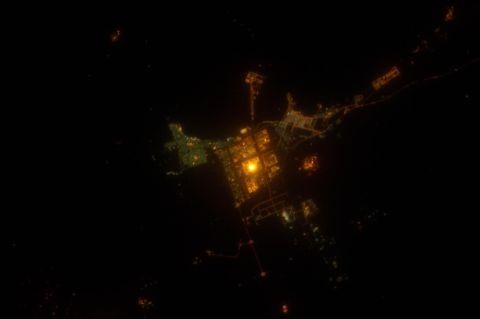
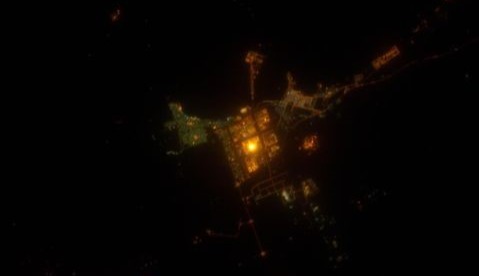
As one of the world's most important petrochemical production bases, Jubail has an annual output of approximately 60 million tons of petrochemical products, accounting for 6%–8% of global output. More critically, it is not a single facility but a highly integrated industrial cluster — forming a complete value chain from upstream cracking feedstocks to midstream polyolefins and polyurethanes, and finally to a global-oriented export system.

01.jpg

Night view of Jubail Industrial City, Saudi Arabia (Source: NASA)


In short, Jubail functions as a "hub node" in the global chemical supply chain.


When such a node is simultaneously exposed to facility disruptions, rising geopolitical risks, and deteriorating shipping conditions, the impact goes beyond localized production cuts and leads to:

  • Volatility in upstream feedstock supply

  • Declining stability in midstream chemical products

  • Passive cost increases in downstream manufacturing


More importantly, this is not a one-time shock but a "dynamic disruption" marked by persistent uncertainty. This lays the groundwork for a series of subsequent ripple effects.


2. Why is the impact amplified? The key lies in "cutting off the flow"


If the Jubail incident is the starting point, what truly amplifies the impact is the breakdown of the logistics system.


The shutdown of Sadara Chemical provides the clearest answer.


This petrochemical complex, with a total investment of approximately US$20 billion and an annual capacity of over 3 million tons, did not halt production due to equipment failure. Instead, it was forced to suspend operations because shipping through the Strait of Hormuz was disrupted. The fundamental issue is not whether it can produce — but rather: the finished products cannot access the global circulation system.


For a highly continuous operation like the chemical industry, this means:

  • Disrupted feedstock supply → unstable plant operations

  • Inability to ship out products → rising inventory and capital pressure

  • Unfulfilled orders → global customers forced to switch suppliers


Once the "production – transport – delivery" chain is broken, even existing capacity cannot translate into effective supply.


This explains why the global polyurethane and specialty chemicals markets quickly saw a temporary supply gap after Sadara's shutdown.


3. Oil prices pull back, but supply contraction continues


Against a backdrop of already shrinking supply, oil price movements can easily be misinterpreted.


In terms of timing, the current oil price movements can be divided into two phases:


Phase 1: Escalating conflicts drive oil prices up


Fluctuating Middle East tensions combined with shipping risks have continuously intensified market concerns over supply disruptions. Crude oil prices rose in multiple rounds, lifting the cost base of the entire chemical industry.


Phase 2: Ceasefire expectations trigger a short-term pullback


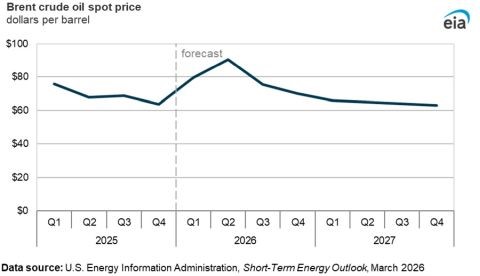
On April 5, news emerged that the United States, Iran, and other parties were discussing a 45-day ceasefire agreement. At the same time, OPEC+ announced a modest production increase. Against this backdrop, oil prices saw a short-term decline — with both Brent crude and WTI falling to varying degrees.

02.jpg

Oil price trends and market expectations (Source: U.S. Energy Information Administration, EIA)


However, it is important to clarify that the pullback in oil prices is a revision of future expectations rather than a recovery of actual supply.


The current reality is:

  • Sadara remains non-operational

  • Operational stability at Jubail is still uncertain

  • Shipping through the Strait of Hormuz has yet to resume


Therefore, in the chemical market, prices have not fallen in tandem with oil prices but have continued to rise:

  • Core raw materials such as MDI and TDI have continued to increase in price

  • International chemical companies are raising prices together

  • Downstream manufacturing costs have been continuously pushed up


Behind this phenomenon is an ongoing change: the pricing logic of plastic and petrochemical products is shifting from "oil price-driven" to "supply accessibility-driven."


Conclusion: A shift from "cost first" to "security first"


From the attacks on Jubail and the shutdown of Sadara to the periodic correction in oil prices, one question arises: is the underlying logic of the global plastics and petrochemical supply chain undergoing a fundamental shift?


In the past, the industry placed greater emphasis on cost and efficiency, with low-cost feedstock from the Middle East supporting global supply. Today, supply security and stability have become far more critical factors.


This implies:

  • A reassessment of risks associated with single supply hubs

  • Supply chain diversification and regionalization are gaining momentum

  • Accelerated local production of high-end materials


In the short term, the industry will see price volatility and order redistribution.

In the medium term, trade flows will be realigned.

In the long term, the entire industrial landscape will be reshaped.


For Chinese plastics and petrochemical enterprises, this is both an external shock and a window of opportunity.


What ultimately determines the outcome is not only how many orders they can secure, but whether they can establish a more solid global competitive position amid this round of industry restructuring.

 Like 丨  {{details_info.likes_count}}
Chemical raw material
Recycling
plastic
 Tangshan Zhonghao Chemical Co., Ltd      
 SACMI (SHANGHAI) MACHINERY EQUIPMENT CO., LTD.      
 Guangdong Yilong Advanced Materials Technology Co Ltd      
 DONGGUAN DEHUA PRECISION MOLD CO., LTD      
 HENAN TENGYUE MACHINERY TECHNOLOGY CO.,LTD.      
 ZHONGSHAN SAMPROMOLD MAKING CO.,LTD      
 ZHANGJIAGANG XINRONG MACHINERY CO.,LTD      
 JIANGSU XINFLON PLASTIC PRODUCTS CO.,LTD.      
 USTAB CHEM INTERNATIONAL COMPANY LIMITED      
 Ningxia Baofeng Energy Group Co., Ltd.      
 JUHESHUN ADVANCED MATERIALS CO., LTD.      
 JIANGSU YICAN SPECIAL PLASTICS CO., LTD.      
 Guangzhou City Mingshen New Material Co., Ltd.      
 NINGBO YOUDAO COLOR MASTERBATCH TECHNOLOGY CO., LTD      
 HEFEI TAIHE INTELLIGENT TECHNOLOGY GROUP CO.,LTD.      
 CHISAGE ENERGY AND CHEMICAL CO., LTD.      
 ANSHAN HIFICHEM CO., LTD.      
 HANGZHOU BOSOM NEW MATERIALS TECHNOLOGY CO.,LTD.      
 BEIJING ENERGY ENGINEERING TECHNOLOGIES CO.,LTD.      
 Puyang Comaler Plastic Co., Ltd      
 JIANGSU SHENLONG ZINC INDUSTRY CO., LTD.      
 SHANGHAI CHIC NEW MATERIAL CO., LTD.      
 NANTONG FUYUAN CARBON FIBER RECYCLING CO., LTD      
 WINDORA MATERIALS LLC      
 GREENWICH (CHINA) TECHNOLOGY DEVELOPMENT LIMITED      
 NINGBO YUFINE PRECISION INDUSTRY CO., LTD.      
 Rongsheng Petrochemical Co., Ltd.      
 GREENCORE RESOURCES LIMITED      
 FUJIAN HUASU INNOVATIVE PLASTICS MATERIALS CO., LTD.      
 SHANGHAI RISE CHEMICAL TECHNOLOGY CO., LTD.      
 HUBEI YUCHUAN NEW MATERIALS TECHNOLOGY CO., LTD.      
 QINGDAO BOUNI NEW MATERIALS CO.,LTD      
 SHANGHAI WEIPU TESTING INTERNATIONAL GROUP CO., LTD.      
 LINKER NEW MATERIALS CO., LTD      
 Coperion GmbH      
 ZHEJIANG BASTONE TECHNOLOGY CO.,LTD.      
 SHANGHAI HAWKWAY PROCESS SOLUTIONS CO., LTD      
 WENZHOU CHAOXU MACHINERY CO.,LTD.      
 GUANGXI HENGYI NEW MATERIALS CO., LTD.      
 TAIZHOU MIXIN MACHINERY CO., LTD.      
 DONGGUAN GENVAN SILICONE TECHNOLOGY CO., LTD.      
 JINAN FEIHENG NEW MATERIALS CO., LTD.      
 ENSINGER ENGINEERING PLASTICS CO., LTD.      
 FUJIAN HONGKONG PETROCHEMICAL LIMITED      
 ZHEJIANG JIAXING SQUARE NEW MATERIAL TECHNOLOGY CO., LTD      
 VICTREX PLC      
 LIYANG XINJIAN CHEMICAL CO.,LTD.      
 ZHEJIANG ROTOUN PLASTIC TECHNOLOGY CORP.      
 SHANGHAI HUAZHENG COMPOSITES CO.;LTD      
 ZHEJIANG EUCHEM CHEMICAL CO., LTD      
 GUANGDONG GUOHENG YOUHE ADVANCED MATERIALS CO., LTD.      
 ZHEJIANG HFLON NEW MATERIAL CO.,LTD      
 Inner Mongolia Dadi Yuntian Chemical Co..Ltd      
 KADIDE      
 JIANGSU LISIDE NEW MATERIAL CO., LTD      
 GUANGXI WUZHOU GUOLONG RECYCLABE RESOURCES DEVELOPMENT CO., LTD.      
 DONGYING JINBANGTAIXIN NEW MATERIAL TECHNOLOGY CO., LTD.      
 SHANGHAI JANTON PLASTIC AND CHEMICAL CO.,LTD      
 HUAJIN ARAMCO PETROCHEMICAL COMPANY LIMITED      
 HENAN KEWEI FLAME RETARDANT NEW MATERIALS CO., LTD      
 HUIZHOU LITUO ADVANCED MATERIALS CO.,LTD.      
 GUANGXI TIANYANG JIAMUHE PLASTIC INDUSTRY CO., LTD      
 Taizhou Jianlong Technology Co.,Ltd      
 SHANDONG 123 PLASTIC MASTERBATCH CO., LTD      
 HEFEI NEW LDEA INTELLIGENT TECHNOLOGY CO.,LTD      
 Jiangsu Hanguang Industrial Co., Ltd.      
 Lanzhou Auxiliary Agent Plant Co., Ltd      
 ZHEJIANG HONGYI CHEMICAL CO.,LTD.      
 ATK Flame Retardant Materials Company      
 ZHEJIANG HUAYUAN NEW MATERIAL CO.,LTD.      
 DA CHUANG NEW MATERIAL TECHNOLOGY (SHANDONG) CO., LTD      
 NAN YANG POLYSUPER NEWMATERIALS CO.,LTD      
 ANHUI SHAFENG ADVANCED MATERIAL CO., LTD.      
 SHANGHAI FU XIN NEW MATERIALS TECHNOLOGY CO., LTD.      
 SUZHOU BECHTON PLASTIC MACHINERY CO., LTD      
 LIAONING RAUHEY NEW MATERIALS CO., LTD      
 GBR SVEN INDUSTRIAL CO . ,LTD      
 BELIKE CHEMICAL CO., LTD.      
 ZHENGZHOU HUILIN CHEMICAL  CO.LTD      
 Zhejiang Future Petrochemical Co.,ltd      
 YUYAO KAWAGUCHI Manufacturing Co., Ltd.      
 Beijing Chemical Industry Group CO.,LTD      
 KOKSAN (NANTONG) NEW MATERIAL CO,LTD      
 XINXIANG RICHFUL LUBE ADDITIVE CO., LTD.      
 LINYI HUASU ELECTRONIC TECHNOLOGY CO., LTD.      
 Guangdong Benqi Eco-New Material co.,ltd      
 XINJIANG XINGBOYU NEW MATERIAL CO., LTD.      
 ANHUI HAO YUAN CHEMICAL GROUP CO., LTD.      
 HUNAN PROVINCE SUN YOUNG NEW MATERIAL CO.,LTD.      
 GUANGDONG ENMEI CHEMICAL TECHNOLOGY CO., LTD      
 XIAMEN XINWANCAI POLYMER TECHNOLOGY CO.,LTD      
 SHENZHEN  DAXING CHEMICAL CO.,LTD.      
 GUANGDONG SHUNDE BLUE ASIA CHEMICAL CO.,LTD      
 ANHUI ZHONGXIN HONGWEI TECHNOLOGY CO.,LTD      
 FUJIAN NAN'AN STAR RUBBER&PLASTIC MACHINERY CO., LTD.      
 ENPING CITY RUIJI NEW MATERIAL TECHNOLOGY CO., LTD.      
 GUANGDONG SHUNDE TONGCHENG NEW MATERIALS TECHNOLOGY CO.,LTD.      
 CHANGHE CHEMICAL NEW MATERIAL(JIANGSU) CO.,LTD.      
 DAOMING CHEMICAL CORPORATION LIMITED      
 SHANXI YONGDONG CHEMICAL INDUSTRY CO.,LTD      

The content you're trying to view is for members only. If you are currently a member, Please login to access this content.   Log in

Source:Adsale Plastics Network Date :2026-04-09 Editor :Vicky
Copyright: This article was originally written/edited by Adsale Plastics Network (AdsaleCPRJ.com), republishing and excerpting are not allowed without permission. For any copyright infringement, we will pursue legal liability in accordance with the law.

Overnight, the Middle East petrochemical sector has seen successive disruptions.


Xinhua News reported that Jubail Industrial City in northeastern Saudi Arabia was hit by a sudden explosion and large-scale attacks.


At nearly the same time, major petrochemical facilities in Iran were hit by airstrikes.


Prior to these events, Sadara Chemical in the same industrial zone had already suspended production due to disrupted logistics.


Meanwhile, ceasefire negotiations between the US and Iran emerged, leading to a short-term pullback in oil prices.


To understand how this wave of impacts spreads along the industrial chain, we must first recognize the strategic role played by Jubail.


1. Why Jubail?


To understand the current impact, we must first clarify Jubail's role.


As one of the world's most important petrochemical production bases, Jubail has an annual output of approximately 60 million tons of petrochemical products, accounting for 6%–8% of global output. More critically, it is not a single facility but a highly integrated industrial cluster — forming a complete value chain from upstream cracking feedstocks to midstream polyolefins and polyurethanes, and finally to a global-oriented export system.


01.jpg

Night view of Jubail Industrial City, Saudi Arabia (Source: NASA)


In short, Jubail functions as a "hub node" in the global chemical supply chain.


When such a node is simultaneously exposed to facility disruptions, rising geopolitical risks, and deteriorating shipping conditions, the impact goes beyond localized production cuts and leads to:

  • Volatility in upstream feedstock supply

  • Declining stability in midstream chemical products

  • Passive cost increases in downstream manufacturing


More importantly, this is not a one-time shock but a "dynamic disruption" marked by persistent uncertainty. This lays the groundwork for a series of subsequent ripple effects.


2. Why is the impact amplified? The key lies in "cutting off the flow"


If the Jubail incident is the starting point, what truly amplifies the impact is the breakdown of the logistics system.


The shutdown of Sadara Chemical provides the clearest answer.


This petrochemical complex, with a total investment of approximately US$20 billion and an annual capacity of over 3 million tons, did not halt production due to equipment failure. Instead, it was forced to suspend operations because shipping through the Strait of Hormuz was disrupted. The fundamental issue is not whether it can produce — but rather: the finished products cannot access the global circulation system.


For a highly continuous operation like the chemical industry, this means:

  • Disrupted feedstock supply → unstable plant operations

  • Inability to ship out products → rising inventory and capital pressure

  • Unfulfilled orders → global customers forced to switch suppliers


Once the "production – transport – delivery" chain is broken, even existing capacity cannot translate into effective supply.


This explains why the global polyurethane and specialty chemicals markets quickly saw a temporary supply gap after Sadara's shutdown.


3. Oil prices pull back, but supply contraction continues


Against a backdrop of already shrinking supply, oil price movements can easily be misinterpreted.


In terms of timing, the current oil price movements can be divided into two phases:


Phase 1: Escalating conflicts drive oil prices up


Fluctuating Middle East tensions combined with shipping risks have continuously intensified market concerns over supply disruptions. Crude oil prices rose in multiple rounds, lifting the cost base of the entire chemical industry.


Phase 2: Ceasefire expectations trigger a short-term pullback


On April 5, news emerged that the United States, Iran, and other parties were discussing a 45-day ceasefire agreement. At the same time, OPEC+ announced a modest production increase. Against this backdrop, oil prices saw a short-term decline — with both Brent crude and WTI falling to varying degrees.


02.jpg

Oil price trends and market expectations (Source: U.S. Energy Information Administration, EIA)


However, it is important to clarify that the pullback in oil prices is a revision of future expectations rather than a recovery of actual supply.


The current reality is:

  • Sadara remains non-operational

  • Operational stability at Jubail is still uncertain

  • Shipping through the Strait of Hormuz has yet to resume


Therefore, in the chemical market, prices have not fallen in tandem with oil prices but have continued to rise:

  • Core raw materials such as MDI and TDI have continued to increase in price

  • International chemical companies are raising prices together

  • Downstream manufacturing costs have been continuously pushed up


Behind this phenomenon is an ongoing change: the pricing logic of plastic and petrochemical products is shifting from "oil price-driven" to "supply accessibility-driven."


Conclusion: A shift from "cost first" to "security first"


From the attacks on Jubail and the shutdown of Sadara to the periodic correction in oil prices, one question arises: is the underlying logic of the global plastics and petrochemical supply chain undergoing a fundamental shift?


In the past, the industry placed greater emphasis on cost and efficiency, with low-cost feedstock from the Middle East supporting global supply. Today, supply security and stability have become far more critical factors.


This implies:

  • A reassessment of risks associated with single supply hubs

  • Supply chain diversification and regionalization are gaining momentum

  • Accelerated local production of high-end materials


In the short term, the industry will see price volatility and order redistribution.

In the medium term, trade flows will be realigned.

In the long term, the entire industrial landscape will be reshaped.


For Chinese plastics and petrochemical enterprises, this is both an external shock and a window of opportunity.


What ultimately determines the outcome is not only how many orders they can secure, but whether they can establish a more solid global competitive position amid this round of industry restructuring.

全文内容需要订阅后才能阅读哦~
立即订阅

Recommended Articles

Chemicals
Clariant to show sustainable innovations across value chain at CHINAPLAS 2026
 2026-04-09
Chemicals
Middle East petrochemical shocks: A chain reaction reshaping global supply
 2026-04-09
Chemicals
Syensqo launches next-generation UV stabilizer for rotational molding
 2026-04-08
Chemicals
Product Profile of Blue Asia Chemical
 2026-04-02
  GUANGDONG SHUNDE BLUE ASIA CHEMICAL CO.,LTD 标准会员
Chemicals
Polyplastics and Daicel Group to debut as new Daicel at CHINAPLAS 2026
 2026-04-02
Chemicals
ALBIS to show high-performance materials for demanding applications at CHINAPLAS 2026
 2026-04-01

You May Be Interested In

Change

  • People
  • Company
loading... No Content

{{[item.truename,item.truename_english][lang]}} {{[item.company_name,item.company_name_english][lang]}} {{[item.job_name,item.name_english][lang]}}
{{[item.company_name,item.company_name_english][lang]}} Company Name    {{[item.display_name,item.display_name_english][lang]}}  

Polyurethane Investment Medical Carbon neutral Reduce cost and increase efficiency CHINAPLAS Financial reports rPET INEOS Styrolution Evonik Borouge Polystyrene (PS) mono-material Sustainability Circular economy BASF SABIC Multi-component injection molding machine All-electric injection molding machine Thermoforming machine

Middle East petrochemical shocks: A chain reaction reshaping global supply

识别右侧二维码,进入阅读全文
下载
x 关闭
订阅
亲爱的用户,请填写一下信息
I have read and agree to the 《Terms of Use》 and 《Privacy Policy》
立即订阅
Top
Feedback
Chat
News
Market News
Applications
Products
Video
In Pictures
Specials
Activities
eBook
Front Line
Plastics Applications
Chemicals and Raw Material
Processing Technologies
Products
Injection
Extrusion
Auxiliary
Blow Molding
Mold
Hot Runner
Screw
Applications
Packaging
Automotive
Medical
Recycling
E&E
LED
Construction
Others
Events
Conference
Webinar
CHINAPLAS
CPS+ eMarketplace
Official Publications
CPS eNews
Media Kit
Social Media
Facebook
Linkedin