












Reifenhäuser now supplying meltblown nonwovens for German market only

As the demand for the meltblown nonwovens fabric currently produced in the R&D center exceeds the production volume of the pilot lines many times over, Reifenhäuser Reicofil announced on Monday (April 6) that the materials now only supplied to manufacturers of masks for medical facilities and care services in the German market.
In a press release two weeks ago, Reifenhäuser announced the availability of the material after no customers in Germany or Europe could be found at the beginning of the nonwoven production despite great efforts. Customers in Germany have been found since then. The material is also supplied to public or charitable initiatives that manually produce face masks for medical practices, hospitals and care services.
Dr. Bernd Kunze, Managing Director of Reifenhäuser Reicofil, explained the development: “Within the last two weeks, many initiatives have been founded that sew masks by hand. Thus, at least small production capacities have been established in Germany within a very short time, which now want to be supplied. From the many inquiries we have very consciously selected those initiatives that work efficiently and deliver masks quickly and reliably first to where they are most urgently needed”.
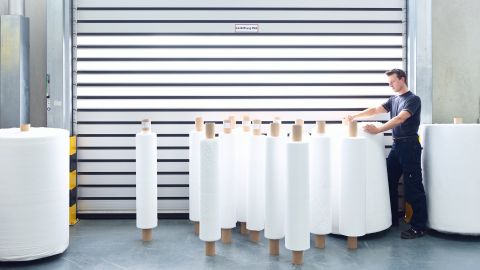
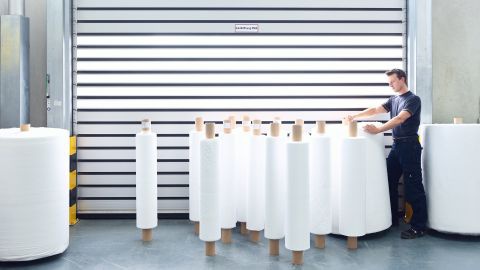
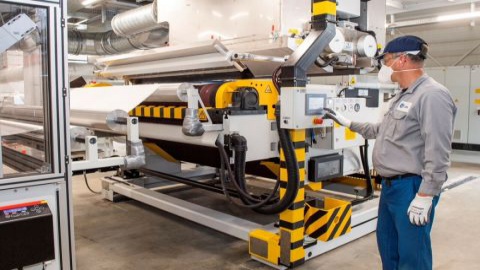
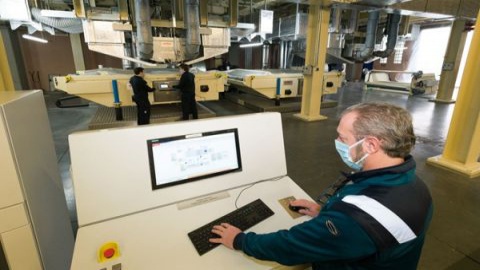
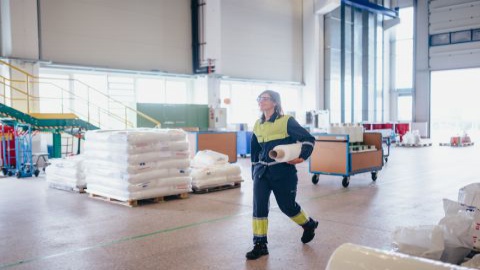
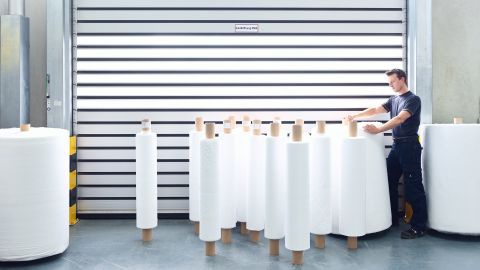
Reifenhäuser Reicofil has converted its own meltblown test lines to production, supplying material for urgent face masks production.
Independent supply chains needed in Europe
For Reifenhäuser, the delivery to manually operating converters remains only a partial success. If the population is to be supplied with masks nationwide, the demand would rise into the billions.
Bernd Reifenhäuser, CEO of the Reifenhäuser Group, said: “We need a strategic production reserve for medical protective clothing in Europe. We have to quickly build up the machine capacity for the industrial production of masks in high volumes, but at the same time, the corresponding capacities for the production of the necessary high-quality nonwovens in Europe must be created.”
In order to accelerate the process in Germany, politicians have set up a program to secure industrial investments through purchase and price commitments. This commitment will initially be valid until the end of 2021.
Reifenhäuser considers the measure to be important and correct, but also sees the need for further fine-tuning. Bernd Reifenhäuser said: “In our view, the duration of the program should be extended. By the end of 2021, high-quality machines that we need to ensure quality and long-term international competitiveness will not have amortized. It would also be helpful to make a supplementary statement on the total annual demand for protective clothing, similar to what Macron has already done for France. We should definitely make use of possible synergies in Europe.”