












Starlinger “circular packaging” concept shortlisted for product technology innovation of the year

For the third time in a row, Starlinger has been shortlisted for the prestigious Plastics Recycling Awards Europe. This year, the company enters the race with a holistic concept entitled “circular packaging”, which seeks to end unnecessary waste in the product life cycle of big bags made from polypropylene (PP) fabric.
Big bags, also called FIBCs, are omnipresent in logistics as a lightweight and economic type of packaging for free-flowing bulk goods. Made predominantly from PP, they show a CO2 balance per 1,000 liters of transported goods that is far below that of rigid containers such as drums or octabins.
Even though they are particularly well-suited to recycling because of their large size and weight, 75% of all big bags used worldwide are designed for single use, and their disposal via landfill or incineration causes serious environmental damage with high CO2 impact.
Of those FIBCs that are recycled, a large part is exported into non-EU countries and turned into products of lower value (i.e., downcycling).
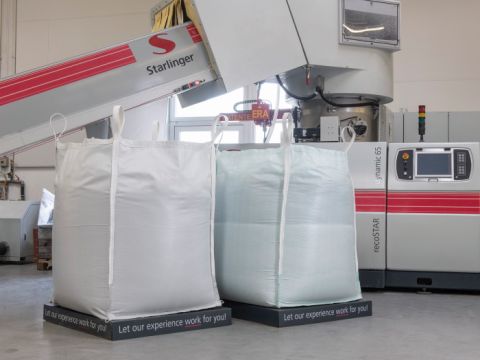
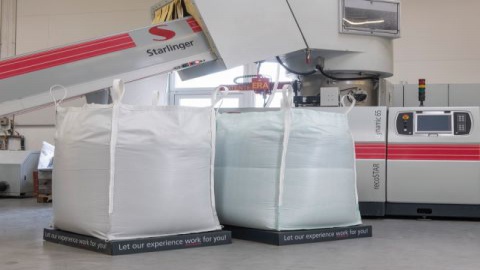
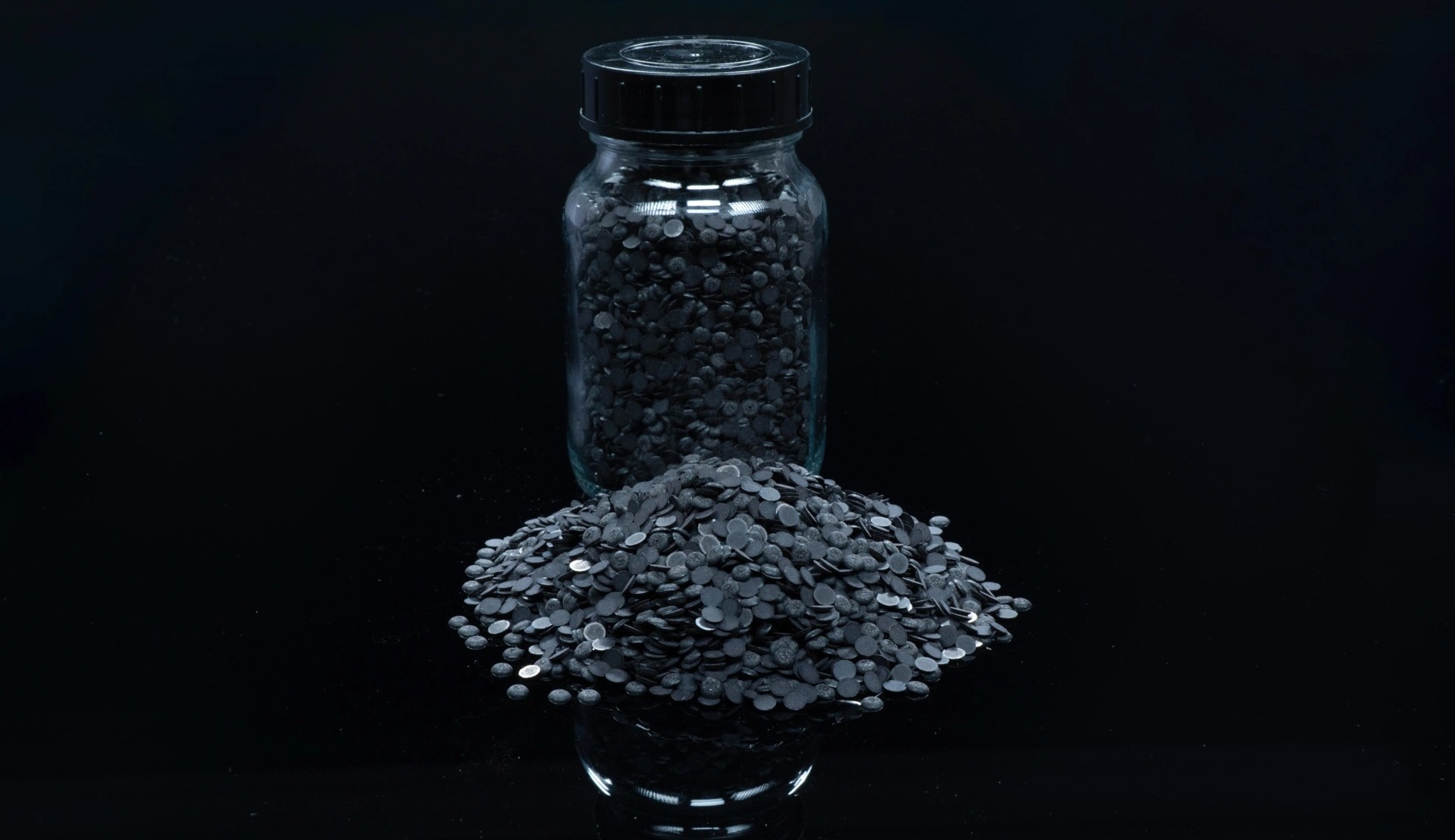
Starlinger rPP big bags in front of a recoSTAR dynamic.
Big bags become big bags
With the revolutionary concept “circular packaging”, Starlinger seeks to end this unnecessary waste of raw materials and create a circular economy in which big bags become big bags once more.
This concept is unique insofar as it represents a holistic approach that involves and documents various stages of the big bag life cycle such as manufacturing, usage, recovery, washing, and recycling.
The challenge in the recycling of big bags is that they come in different forms: with or without polyethylene (PE) liner, coated or uncoated, and with loops and seams consisting of different kinds of plastic.
Therefore, the first step in creating a circular economy for big bags is “design for recycling”. this means that the big bags are designed in such a way that they can easily be recycled and processed into regranulate of high quality.
The second important step is creating a material passport in which the entire life cycle of the big bags is documented, from the first filling and the filled product up to the materials used in big bag production. This traceability facilitates collection and reprocessing and thus increases the quality of the material to be recycled.
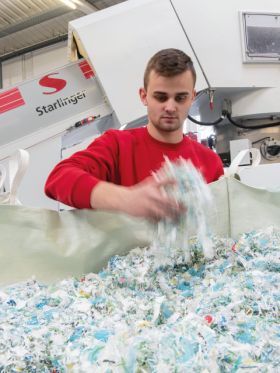
Starlinger rPP big bag filled with rPP flakes.
Same quality achieved with “rPP” big bags
In cooperation with the renowned big bag manufacturers Louis Blockx and LC Packaging, Starlinger has simulated this closed loop and produced new big bags with a high content of recycled PP.
Tests show that these “rPP” big bags show the same quality as big bags made from virgin material in terms of tensile strength, weight, and safety factor.
These promising results make Starlinger a candidate for this year’s Plastics Recycling Awards Europe. The award winners will be announced on March 26, during the second day of the Plastics Recycling Show Europe taking place at the RAI Amsterdam.