
















Search History
Clear History
{{item.search_key}}
Hot Searches
Change
{{item.name}}
{{item.english_name}}
Subscribe eNews
Once A Week Once Every Two Weeks
{{sum}}
Log in Register

Applications

Carbon capture technology for sustainable beauty packaging

Clariant and partners demonstrate pyrolysis oil upgrading for circular plastics

Bekum to show packaging solutions for technically demanding markets at CHINAPLAS 2026

Products

AutoROCK digitizes extrusion: AI for error detection

Arkema expands Kynar PVDF production capacity in China

SONGWON adjusts global price for polymer stabilizers and coatings

Activities

  • Chinaplas2026 Preview Webinars | Smart Blow Moulding & AI Inspection (FREE)

  • CHINAPLAS 2026: Government blueprint for emerging industries driving new plastics innovation

  • Fakuma to celebrate 30th anniversary edition in October 2026

Pictorial

News Videos

Kingfa: Creation . Reproduce . Innovation

BASF: Next-generation solid-state battery pack unlocks electrical driven new dimension

Automatic 5L 120mm neck PET jar blowing machine

Conference Videos

【Mandarin session: Webinar playback】SACMI: Your Digitalized Manufacturing, Your Future Today

[Live Replay] LK Group: Smart Manufacturing, New Chapters in Southeast Asia: High-Efficiency Solutions in PET Preform & Thin-Wall Packaging

[Live Replay] Fu Chun Shin (FCS): Data-Driven Digital Rebirth and Intelligent Future of Injection Molding

Corporate/Product Videos

Guangdong Yilong Advanced Materials Technology Co Ltd

Mingsanfeng professional cap mould, Working together to pave the way for the growth of bottle cap molds.

QINGDAO BOUNI introduction video

Home > News > Medical

Clariant launches medical polymer compounds resistant to hydrolytic degradation

Source:Adsale Plastics Network Date :2020-02-12 Editor :VC

Working with a leading medical device manufacturer, Clariant Plastics & Coatings Healthcare Polymer Solutions has completed development and testing of new polymer materials specially formulated to resist degradation caused by exposure to high humidity and temperature.


The new technology is especially important in resins that incorporate high loadings of radiopaque metals because these fillers are known to exacerbate the degradation effect.


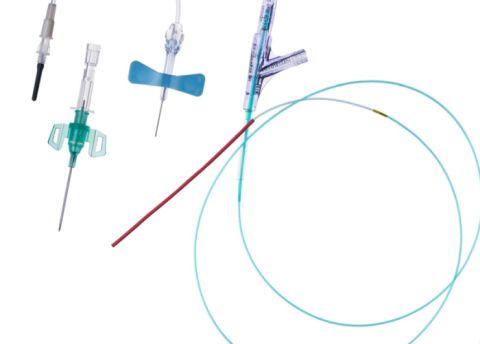
The new compounds, marketed under the MEVOPUR brand name covering Clariant’s “medical grade” materials, are expected to be especially useful in applications like medical catheters.


Catheters are typically made of relatively soft, flexible materials like polyether block amides (PEBA) or certain thermoplastic polyurethanes (TPU). These materials commonly contain metallic fillers like tungsten or tungsten carbide so that doctors and technicians can see the exact position of the catheter under X-ray fluoroscopy.


“The problem is,” explains Steve Duckworth, Global Head of Marketing & Business Development, “when these devices are exposed to heat and humidity over time, the polymer chains responsible for developing critical physical and mechanical properties become broken and the functionality of the device – and patient safety – may be seriously compromised.”


According to Duckworth, these hydrolysis effects can occur even with very small quantities of moisture trapped on the surface of the polymer, filler ingredients, or on the pellets of the compound.

Clariant_web.jpg


Clariant launches medical polymer compounds resistant to hydrolytic degradation.


The Clariant solution is a combination of proprietary processing techniques and additives that, together, help to make the polymer resistant to hydrolytic degradation. Accelerated aging tests conducted on both extruded tubing and injection-molded test samples show significant improvement in resistance compared to unmodified materials.


One of the early indications of chain breakage (scission) is an increased melt flow index (MFI), or reduction in viscosity, as the chains become shorter. The MFI of a standard 74% tungsten-filled PEBA Shore 35D compound was compared to an otherwise equivalent MEVOPUR modified compound over a 26-week period. In just the first few weeks, there was a significant increase in melt fluidity of the standard resin, and after the 4th week, the MFI was no longer measurable.


Over the same period, the modified MEVOPUR compound showed almost no change. The observed difference was even greater during testing when tungsten-carbide-filled materials were used.


When the same materials were molded into tensile-test bars and measured for tensile strength and elongation, the unmodified samples saw reduction of 20 to 25% in these critical properties over the 26-week test period, while the MEVOPUR samples remained near 100%. In further mechanical-properties testing, the difference in results for tungsten-carbide-filled materials was much more pronounced.


“The final quality and reliability of catheter components relies on the stability and predictability of polymer material properties over a wide range of conditions,” Duckworth says. “Our testing on the new MEVOPUR radiopaque compounds shows the risk of polymer degradation from hydrolysis can be significantly reduced so predictability can be restored.”


The MEVOPUR portfolio has included PEBA, TPU, PA12, along with various radiopaque fillers, for more than 10 years. Fluoropolymers were recently added to the portfolio.

 Like 丨  {{details_info.likes_count}}
Medical
 JIANGSU SHENLONG ZINC INDUSTRY CO., LTD.      

The content you're trying to view is for members only. If you are currently a member, Please login to access this content.   Log in

Source:Adsale Plastics Network Date :2020-02-12 Editor :VC

Working with a leading medical device manufacturer, Clariant Plastics & Coatings Healthcare Polymer Solutions has completed development and testing of new polymer materials specially formulated to resist degradation caused by exposure to high humidity and temperature.


The new technology is especially important in resins that incorporate high loadings of radiopaque metals because these fillers are known to exacerbate the degradation effect.


The new compounds, marketed under the MEVOPUR brand name covering Clariant’s “medical grade” materials, are expected to be especially useful in applications like medical catheters.


Catheters are typically made of relatively soft, flexible materials like polyether block amides (PEBA) or certain thermoplastic polyurethanes (TPU). These materials commonly contain metallic fillers like tungsten or tungsten carbide so that doctors and technicians can see the exact position of the catheter under X-ray fluoroscopy.


“The problem is,” explains Steve Duckworth, Global Head of Marketing & Business Development, “when these devices are exposed to heat and humidity over time, the polymer chains responsible for developing critical physical and mechanical properties become broken and the functionality of the device – and patient safety – may be seriously compromised.”


According to Duckworth, these hydrolysis effects can occur even with very small quantities of moisture trapped on the surface of the polymer, filler ingredients, or on the pellets of the compound.


Clariant_web.jpg


Clariant launches medical polymer compounds resistant to hydrolytic degradation.


The Clariant solution is a combination of proprietary processing techniques and additives that, together, help to make the polymer resistant to hydrolytic degradation. Accelerated aging tests conducted on both extruded tubing and injection-molded test samples show significant improvement in resistance compared to unmodified materials.


One of the early indications of chain breakage (scission) is an increased melt flow index (MFI), or reduction in viscosity, as the chains become shorter. The MFI of a standard 74% tungsten-filled PEBA Shore 35D compound was compared to an otherwise equivalent MEVOPUR modified compound over a 26-week period. In just the first few weeks, there was a significant increase in melt fluidity of the standard resin, and after the 4th week, the MFI was no longer measurable.


Over the same period, the modified MEVOPUR compound showed almost no change. The observed difference was even greater during testing when tungsten-carbide-filled materials were used.


When the same materials were molded into tensile-test bars and measured for tensile strength and elongation, the unmodified samples saw reduction of 20 to 25% in these critical properties over the 26-week test period, while the MEVOPUR samples remained near 100%. In further mechanical-properties testing, the difference in results for tungsten-carbide-filled materials was much more pronounced.


“The final quality and reliability of catheter components relies on the stability and predictability of polymer material properties over a wide range of conditions,” Duckworth says. “Our testing on the new MEVOPUR radiopaque compounds shows the risk of polymer degradation from hydrolysis can be significantly reduced so predictability can be restored.”


The MEVOPUR portfolio has included PEBA, TPU, PA12, along with various radiopaque fillers, for more than 10 years. Fluoropolymers were recently added to the portfolio.

全文内容需要订阅后才能阅读哦~
立即订阅

Recommended Articles

Medical
Dr. Boy machines to demonstrate high-precision medical components at CHINAPLAS 2026

 2026-03-09
Medical
Syensqo joins MedTech Innovator to support next generation medical device innovation
 2026-02-24
Medical
Syntegon launches AIM9 high-speed inspection platform for pharmaceutical sector
 2026-02-23
Medical
KRAIBURG TPE's medical-grade materials for otoscope device components
 2026-02-16
Medical
Lubrizol launches Tolerathane TPU for implantable medical devices
 2026-02-09
Medical
Covestro’s new TPU film on paper carrier unlocks medical device capabilities
 2026-02-03

You May Be Interested In

Change

  • People
  • Company
loading... No Content
{{[item.truename,item.truename_english][lang]}} {{[item.company_name,item.company_name_english][lang]}} {{[item.job_name,item.name_english][lang]}}
{{[item.company_name,item.company_name_english][lang]}} Company Name    {{[item.display_name,item.display_name_english][lang]}}  

Polyurethane Investment Medical Carbon neutral Reduce cost and increase efficiency CHINAPLAS Financial reports rPET INEOS Styrolution Evonik Borouge Polystyrene (PS) mono-material Sustainability Circular economy BASF SABIC Multi-component injection molding machine All-electric injection molding machine Thermoforming machine

Clariant launches medical polymer compounds resistant to hydrolytic degradation

识别右侧二维码,进入阅读全文
下载
x 关闭
订阅
亲爱的用户,请填写一下信息
I have read and agree to the 《Terms of Use》 and 《Privacy Policy》
立即订阅
Top
Feedback
Chat
News
Market News
Applications
Products
Video
In Pictures
Specials
Activities
eBook
Front Line
Plastics Applications
Chemicals and Raw Material
Processing Technologies
Products
Injection
Extrusion
Auxiliary
Blow Molding
Mold
Hot Runner
Screw
Applications
Packaging
Automotive
Medical
Recycling
E&E
LED
Construction
Others
Events
Conference
Webinar
CHINAPLAS
CPS+ eMarketplace
Official Publications
CPS eNews
Media Kit
Social Media
Facebook
Linkedin