


















Search History
Clear History
{{item.search_key}}
Hot Searches
Change
{{item.name}}
{{item.english_name}}
Subscribe eNews
Once A Week Once Every Two Weeks
{{sum}}
Login Register

Applications

INEOS launches new grade with 70% recycled content for cosmetics packaging

Swiss partnership in bio-based FMCG packaging

Borealis and Messe Düsseldorf conclude successful reusable cup pilot at K 2025

Products

TAIZHOU QIHONG MOULD CO.,LTD

Toray unveils world’s first 160°C-resistant BOPP film

Covestro's new digital configurator enables sustainable polyurethane foam design

Activities

  • Fakuma to celebrate 30th anniversary edition in October 2026

  • Italy pavilion at Plast Eurasia proves its rising presence in Turkish market

  • CHINAPLAS 2026: Grand stage for new material, smart manufacturing and green solutions

Pictorial

Industry Topic

ASEAN: The Next Manufacturing Hub

Innovative and Sustainable Packaging

Green Plastics: News & Insights

CHINAPLAS

CHINAPLAS 2025 Focus

CHINAPLAS 2024 Focus

CHINAPLAS 2023 Focus

Exhibition Topic

CHINA INSIGHT

K 2025 FOCUS

Fakuma 2024 Highlights

News Videos

Haitian South China Headquarters opening

BEILIJIA Double Walled Corrugated Pipe Plant

Magnetic mold changing system developed in-house by Shanghai Qiaotian

Conference Videos

【Mandarin session: Webinar playback】SACMI: Your Digitalized Manufacturing, Your Future Today

[Live Replay] LK Group: Smart Manufacturing, New Chapters in Southeast Asia: High-Efficiency Solutions in PET Preform & Thin-Wall Packaging

[Live Replay] Fu Chun Shin (FCS): Data-Driven Digital Rebirth and Intelligent Future of Injection Molding

Corporate/Product Videos

Second-hand plastic pipe extruder, 90% new, highly efficient and stable, suitable for processing various pipe specifications. Ideal choice for export.

Small Boss keep moving forward — see you at 2026 IPF Bangladesh exhibition! 💪✨

High-temperature gear pump

Exhibition

Playback TECHHUB 2025@CPRJ Live Streaming for CHINAPLAS

Playback TECHHUB@CPRJ Live Streaming for CHINAPLAS

Events

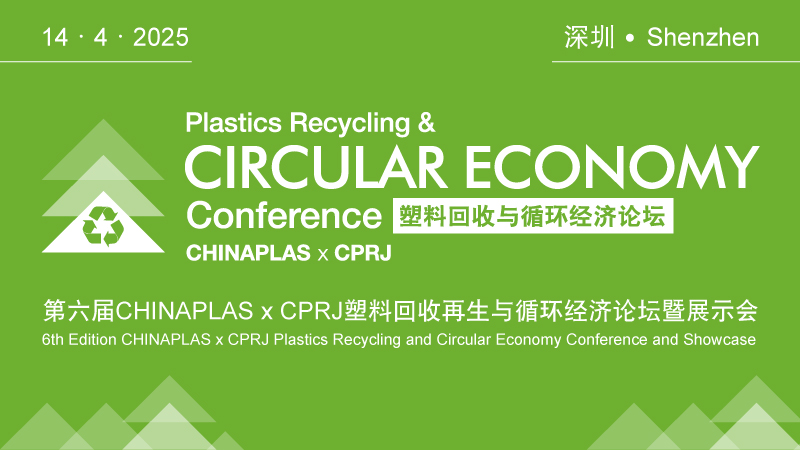
Playback On April 14, the "6th Edition CHINAPLAS x CPRJ Plastics Recycling and Circular Economy Conference and Showcase" at the Crowne Plaza Shenzhen Nanshan is currently being livestreamed!

Playback 5th Edition CHINAPLAS x CPRJ Plastics Recycling and Circular Economy Conference and Showcase

Home > News > Medical

Latest nanomaterial technology offers improved protection for medical masks

Source:Adsale Plastics Network Date :2020-02-04 Editor :VC

The continuous coronavirus outbreak has prompted people to wear medical masks for preventing respiratory infection.


In recent years, latest advances in material technologies have helped to improve the protection of medical masks, including employing nanomaterials for filtration efficiency and antimicrobial properties enhancements, as well as better comfort.


PP nonwoven materials favored for production


Polypropylene (PP) has a low melting point and is the most popular polymer for meltblown nonwovens.


In healthcare application, Spunbond Meltblown Spunbond (SMS) tri laminate nonwoven fabric is favored for production of medical masks. It is made up of a top layer of spunbond PP, a middle layer of meltblown PP and a bottom layer of spunbond PP.


Spunbond PP is combined with melt blown PP because they have different properties. The former has properties of high strength and durability. On the other hand, the latter has relatively weak tensile properties but due to the smaller fibers and larger surface area taken up by the fibers, it has goof wicking and barrier properties.


Therefore, they can create a strong product which can also offer a barrier to fluids and particles.


Surgical-mask-and-eyeglasses_Web.jpg

Latest advances in material technologies have helped to improve the protection of medical masks in recent years.


Nanomaterials increase filtration efficiency


Nevertheless, new respiratory diseases have been spurring researchers to develop even more sophisticated medical masks that offer better protection.


Gaining considerable applications in difference sectors, nanomaterial technology has also been employed in medical masks production. The results of some academic researches indicated that the use of nanomaterials has benefits of better filtration, permeability, antimicrobial properties and wearability.


The NASK Nanofiber Smart Masks, researched and designed in Hong Kong SAR, utilizes the patented nanofiber technology to create a thin mask that provide a high protection of N95 respirator with a comfort of a surgical mask.


Nanofibers are used because they are extremely thin, thus representing a higher surface area which increases filtration efficiency. The mask produced can be very porous offering lower air resistance and is very light.


According to the manufacturer, a unique formula is used during the creation process which incorporates anti-bacterial technology into the mask to achieve synergistic effect to protect the wearers.


NASK’s N95 nanofiber respirator is certified by NIOSH (National Institute for Occupational Safety and Health). NIOSH is part of the US Centers for Disease Control and Prevention (CDC) and is responsible for the approval of personal protective equipment (PPE) to be used in the workplace.


With its nanofiber incorporated face mask technology, Verdex, a nanofibers producer based in the US, says the filter material is comprised of a series of activated carbon filaments, each about 2,000 nanometers in diameter.


It means that bacteria and viruses are drawn to the filament surface much more efficiently, because there is much more available surface.


Surgical masks vs N95 respirators


Both surgical masks and N95 respirators are designed to have filtration efficiency to bacterial and aerosol particles. However, there are many differences between them. Surgical masks are loose-fitting that creates a physical barrier between mouth/nose of the wearer and potential contaminants.


A proper 3-ply surgical mask has three layers: an outer hydrophobic layer which repels water, blood and body fluids, a middle filter layer that is designed to filter bacterial particles, and an inner hydrophilic layer which absorbs water, sweat and spit.


The most important thing to remember about surgical masks is that they are not designed to pass a fit test. They are not NIOSH approved.


Meanwhile, N95 respirators form a tight seal over mouth/nose, and filter 95% of airborne particles with a median diameter of 0.3 microns. They require fit-testing and must be adjusted to face to provide the intended effectiveness. They are NIOSH certified.


N95 respirators are regarded as better solutions for prevention of influenza. However, a new CDC-sponsored study published in September 2019 showed that surgical masks are as effective as N95 respirators in preventing laboratory-confirmed influenza amongst healthcare workers.


3m-8210-500x500_web.jpg

N95 respirators filter 95% of airborne particles with a median diameter of 0.3 microns.

 Like 丨  {{details_info.likes_count}}
Medical
 JIANGSU SHENLONG ZINC INDUSTRY CO., LTD.      

The content you're trying to view is for members only. If you are currently a member, Please login to access this content.   Login

Source:Adsale Plastics Network Date :2020-02-04 Editor :VC

The continuous coronavirus outbreak has prompted people to wear medical masks for preventing respiratory infection.


In recent years, latest advances in material technologies have helped to improve the protection of medical masks, including employing nanomaterials for filtration efficiency and antimicrobial properties enhancements, as well as better comfort.


PP nonwoven materials favored for production


Polypropylene (PP) has a low melting point and is the most popular polymer for meltblown nonwovens.


In healthcare application, Spunbond Meltblown Spunbond (SMS) tri laminate nonwoven fabric is favored for production of medical masks. It is made up of a top layer of spunbond PP, a middle layer of meltblown PP and a bottom layer of spunbond PP.


Spunbond PP is combined with melt blown PP because they have different properties. The former has properties of high strength and durability. On the other hand, the latter has relatively weak tensile properties but due to the smaller fibers and larger surface area taken up by the fibers, it has goof wicking and barrier properties.


Therefore, they can create a strong product which can also offer a barrier to fluids and particles.


Surgical-mask-and-eyeglasses_Web.jpg

Latest advances in material technologies have helped to improve the protection of medical masks in recent years.


Nanomaterials increase filtration efficiency


Nevertheless, new respiratory diseases have been spurring researchers to develop even more sophisticated medical masks that offer better protection.


Gaining considerable applications in difference sectors, nanomaterial technology has also been employed in medical masks production. The results of some academic researches indicated that the use of nanomaterials has benefits of better filtration, permeability, antimicrobial properties and wearability.


The NASK Nanofiber Smart Masks, researched and designed in Hong Kong SAR, utilizes the patented nanofiber technology to create a thin mask that provide a high protection of N95 respirator with a comfort of a surgical mask.


Nanofibers are used because they are extremely thin, thus representing a higher surface area which increases filtration efficiency. The mask produced can be very porous offering lower air resistance and is very light.


According to the manufacturer, a unique formula is used during the creation process which incorporates anti-bacterial technology into the mask to achieve synergistic effect to protect the wearers.


NASK’s N95 nanofiber respirator is certified by NIOSH (National Institute for Occupational Safety and Health). NIOSH is part of the US Centers for Disease Control and Prevention (CDC) and is responsible for the approval of personal protective equipment (PPE) to be used in the workplace.


With its nanofiber incorporated face mask technology, Verdex, a nanofibers producer based in the US, says the filter material is comprised of a series of activated carbon filaments, each about 2,000 nanometers in diameter.


It means that bacteria and viruses are drawn to the filament surface much more efficiently, because there is much more available surface.


Surgical masks vs N95 respirators


Both surgical masks and N95 respirators are designed to have filtration efficiency to bacterial and aerosol particles. However, there are many differences between them. Surgical masks are loose-fitting that creates a physical barrier between mouth/nose of the wearer and potential contaminants.


A proper 3-ply surgical mask has three layers: an outer hydrophobic layer which repels water, blood and body fluids, a middle filter layer that is designed to filter bacterial particles, and an inner hydrophilic layer which absorbs water, sweat and spit.


The most important thing to remember about surgical masks is that they are not designed to pass a fit test. They are not NIOSH approved.


Meanwhile, N95 respirators form a tight seal over mouth/nose, and filter 95% of airborne particles with a median diameter of 0.3 microns. They require fit-testing and must be adjusted to face to provide the intended effectiveness. They are NIOSH certified.

 

N95 respirators are regarded as better solutions for prevention of influenza. However, a new CDC-sponsored study published in September 2019 showed that surgical masks are as effective as N95 respirators in preventing laboratory-confirmed influenza amongst healthcare workers.


3m-8210-500x500_web.jpg

N95 respirators filter 95% of airborne particles with a median diameter of 0.3 microns.

全文内容需要订阅后才能阅读哦~
立即订阅

Recommended Articles

Medical
Kistler and ATS Life Sciences Systems join forces for high-speed medical device assembly line
 2026-01-28
Medical
SABIC introduces new PFAS-free LNP ELCRES PC resin for medical devices
 2025-12-24
Medical
Sanner launches tethered cap for medical packaging
 2025-12-16
Medical
AI-for-science startup launches lab in Singapore to accelerate chemical discovery
 2025-12-08
Medical
(Interview) How a tube unlocks localization in the billion-dollar medical consumables market
 2025-12-04
Medical
Franplast introduces biocompatible TPEs for medical sector
 2025-12-01

You May Be Interested In

Change

  • People
  • Company
loading... No Content

{{[item.truename,item.truename_english][lang]}} {{[item.company_name,item.company_name_english][lang]}} {{[item.job_name,item.name_english][lang]}}
{{[item.company_name,item.company_name_english][lang]}} Company Name    {{[item.display_name,item.display_name_english][lang]}}  

Polyurethane Investment Medical Carbon neutral Reduce cost and increase efficiency CHINAPLAS Financial reports rPET INEOS Styrolution Evonik Borouge Polystyrene (PS) mono-material Sustainability Circular economy BASF SABIC Multi-component injection molding machine All-electric injection molding machine Thermoforming machine

Latest nanomaterial technology offers improved protection for medical masks

识别右侧二维码,进入阅读全文
下载
x 关闭
订阅
亲爱的用户,请填写一下信息
I have read and agree to the 《Terms of Use》 and 《Privacy Policy》
立即订阅
Top
Feedback
Chat
News
Market News
Applications
Products
Video
In Pictures
Specials
Activities
eBook
Front Line
Plastics Applications
Chemicals and Raw Material
Processing Technologies
Products
Injection
Extrusion
Auxiliary
Blow Molding
Mold
Hot Runner
Screw
Applications
Packaging
Automotive
Medical
Recycling
E&E
LED
Construction
Others
Events
Conference
Webinar
CHINAPLAS
CPS+ eMarketplace
Official Publications
CPS eNews
Media Kit
Social Media
Facebook
Linkedin