





Chemical recycling would be feasible for SMEs, too

German Plastics Center SKZ and Fraunhofer Institute for Manufacturing Technology and Advanced Materials (IFAM) have started a research project that aims to recycle thermally damaged plastics by chemical recycling, especially PET.
Chemical recycling of PET on a standard extruder
This RezyBond project works on PET fractions that have aged too much from several recycling passes or do not end up in the cycle at all, such as other PET packaging.
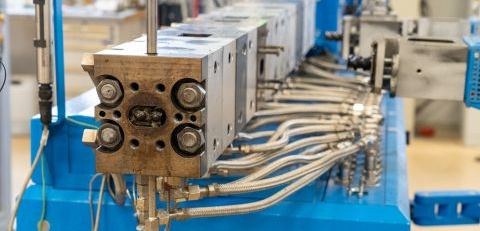
The special feature in this case is the chemical recycling is carried out on a standard twin-screw extruder. The PET recyclates are then transformed into polyester polyols, which can then serve as chemical base material again.

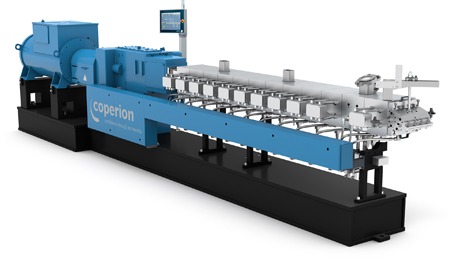
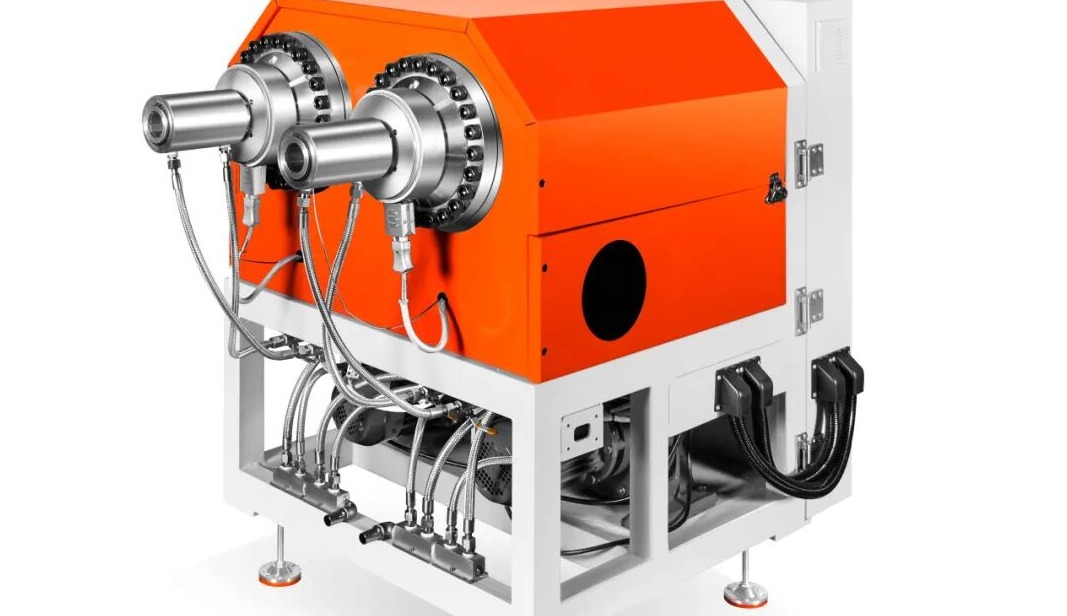
The twin screw extruder in the SKZ pilot plant.
The polyols obtained serve as a base material for a wide variety of technological areas, such as adhesive and even coatings. In the project, these are to be used as starting materials for adhesive formulations and thus transferred directly into an application.
Chemical recycling can be affordable
Although mechanical recycling is now an established technology, it has its own disadvantages which can be compensated by chemical recycling.
In mechanical recycling, plastic waste is not sorted by type. This leads to recyclates consist of a mixture of different plastics and the associated loss of material properties. There is also a certain amount of damage to the material with each recycling cycle, which also negatively affects the properties of the plastics. With these downsides, downcycling is carried out, which is the use of these recyclates in other inferior applications.
For chemical recycling polymers are degraded down to their basic materials, in order to be subsequently recycled with a low input of new raw materials without any loss of quality.
The disadvantage, especially for medium-sized companies, is the high investment in the technology. SKZ’s project with IFAM is working on a method for chemical recycling which is affordable for small and medium-sized enterprises (SMEs) because it uses existing machine technology. A demonstrator plant is also planned at the SKZ in order to make the process accessible to interested medium-sized companies.