













Advanced high-performance engineering plastics empowers future mobility

The latest production and sales data released by China Association of Automobile Manufacturers (CAAM) shows that China produced and sold 30.161 million and 30.094 million vehicles respectively in the year of 2023, representing a year-on-year growth of 11.6% and 12% and hitting a new record high. This achievement marks a new milestone for China's automotive industry, making China a powerhouse of automobile production and sales.
Engineering plastics, especially high-performance engineering plastics, are increasingly used in the automotive industry because of the combination of good mechanical properties and heat resistance, acid resistance, long life, high reliability and other characteristics. With the continuous development of automotive lightweight technology, the application of engineering plastics in various automotive parts is more and more extensive.
Applications in engine compartment and fuel line
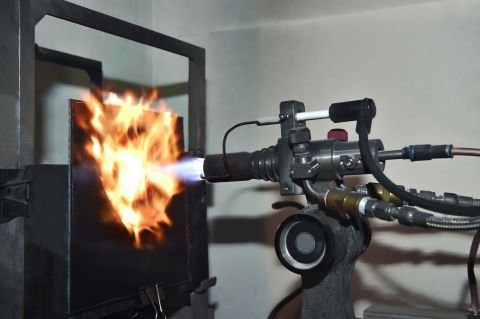
Featuring extreme heat resistance, PA66 is one of the important materials for engine compartment parts. Ascend is one of the world's leading PA66 suppliers. The company's Starflam XProtect flame-retardant polyamide can withstand ultra-high temperatures and direct flames, such as direct flames up to 1,100~C for up to 15 minutes. Its improved resistance to extreme fire and high temperature provides better protection when used in new energy vehicles (NEVs) and in electrical components with ultra-high voltages.
Bio-based nylon materials are emerging in fuel line component applications, such as pentanediamine-based PA56 performing very close to PA66 in the dry state. The melting point of PA56-G30 is between that of PA66-G30 and PA6-G30, namely 255.6~C, 263.3~C and 220.0~C. PA56 has a high density of amide groups and a low density of intramolecular hydrogen bonding, resulting in high water absorption, which leads to significant decrease in wet tensile strength and increase in wet impact strength of PA56-G30. PA56-G30, like PA66-G30 and PA6-G30, shows excellent long-term thermo-oxidative aging properties, with performance retention of ≡90% in all cases.
Due to high water absorption, PA56-G30 has the lowest hydrolysis resistance (alcoholysis), with tensile strength and flexural modulus retention of only 6.3% and 28.4%, respectively. Besides, PA56-G30 shows better oil resistance, comparable to PA6-G30 and PA66-G30.
Bio-based PA56 is a new type of bio-based polyamide polymerized with bio-based pentylenediamine and petroleum-based adipic acid, which is currently being mainly developed and produced by Cathay Biotech Inc. It is a nylon material with high application potential for the future.
Applications in battery and motor of NEVs
With the rapid development of NEVs, the requirements for fire protection, flame retardant and thermal runaway are becoming increasingly stringent. The electrical insulation performance of materials is mainly evaluated by CTI index, volume resistivity and dielectric strength. Syensqo's new high temperature-resistant and flame retardant polymer Xydar LCP G-330HH maintains good electrical insulation after 30 minutes of exposure to temperatures as high as 400~C.
Xydar LCP is an intrinsically flame retardant polymer that does not contain additives such as halogens. It has good fluidity that helps battery designers develop thinner-than-usual parts, compared to existing battery module insulation materials such as PC or aerogel.
It is claimed that the high nickel ternary lithium batteries with higher energy density currently available for commercial use trigger violent spray, combustion and other phenomena in the event of a thermal runaway accident, with a maximum temperature of 1200~C and the release of toxic and harmful gases. Therefore, it is crucial for chemical companies to develop flame retardant and heat insulating materials with excellent performance to improve the safety of NEVs.
LG Chem combines the company's ultra-flame-retardant material technology with LX Hausys' continuous fiber thermoplastic (CFT) manufacturing technology. LX Hausys improves material properties through processing layers of thermoplastics onto the material in the form of tapes.
Relying on the above technologies, LG Chem and LX Hausys have jointly developed an innovative material that can delay thermal runaway of batteries and can sustainably withstand flames at 1500~C for more than 20 minutes. The material, known as Special Flame Retardant CFT, is characterized by its ability to withstand intense flames and high pressures for a longer period of time than existing thermoplastic materials. It can be used for both the top and bottom covers of electric vehicle battery packs.
When LG Chem exposed 1.6mm-thick Special Flame-Retardant CFT to temperatures higher than 1500~C with high pressures, the material did not melt. Its resistance to strong flames and high pressures is more than 14 times that of existing thermoplastics.
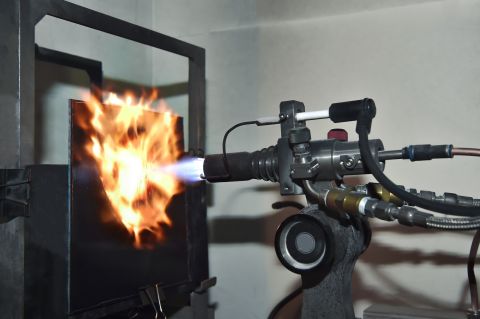
LG Chem and LX Hausys have jointly developed a material that that has higher resistance to strong flames than existing thermoplastics.
For battery pack housings of NEVs, SABIC has introduced a new extrusion grade flame retardant polymer solution that offers a favorable alternative to traditional sheet metal. The material will help the automotive industry achieve its electrification goals and drive global adoption of electric vehicle batteries.
These extrusion grade materials made from SABIC's proprietary materials offer an alternative to traditional metal molding and injection molding, allowing customers to manufacture complex thermoplastic structural components in a more efficient and cost-effective manner.
The new extrusion grade materials include two resin materials: PP compound H1090 and STAMAX 30YH611, both developed exclusively by SABIC for use in battery pack covers, housings and module dividers for electric vehicles. These extrusion grade materials have melt strength and low melt rheology suitable for extrusion molding, two key properties that make the materials flexible enough for producing components that meet desired design specifications without fracture.
Applications in perceived quality parts
With the increasing demand for perceived quality in automobiles, the decorative appearance presents more sophisticated requirements and also needs to look more innovative. For example, IML, IMD, and INS applications are gradually increasing, and various types of surface coating materials are widely used as low-cost decorative solutions.
Mitsubishi Chemical and Honda aim to change the status quo by developing a new PMMA resin that can be used for doors, hoods, front wings, and other auto body parts. The compound consists of an acrylic resin and rubber particles to improve the impact resistance. The acrylic resin is highly transparent and can be tinted to a variety of colors, enabling manufacturers to achieve a glossy finish with the addition of colorants.
Dongguan Bisheng New Material Co., Ltd. specializes in the development and production of high hardness, paint free, scratch resistant plastics, with hardness reaching 1-3H pencil scratch. High-hardness PC is an innovative material that combines the advantages of ordinary PC and PMMA, which effectively solves the problem of scratches on the surface of plastic products. As spraying process is skipped, the overall production cost can be reduced by more than 30%.
BASF has launched the Ultramid Deep Gloss, a new grade of high gloss, spraying free polyamide, which achieves high gloss on automotive interior surfaces and has been used for the first time in the interior trim parts of Toyota Prius.
With the introduction of this product, the requirements for high-quality surfaces, such as excellent resistance to scratches and UV rays, can be met in the spray free process. The high melt fluidity of the new grade improves productivity and yields of automotive parts, allowing faster and easier flow during the manufacturing process.
By direct injection molding of pre-colored plastic resins, various details of the surface can be restored. This helps to reduce production time, energy consumption and costs.
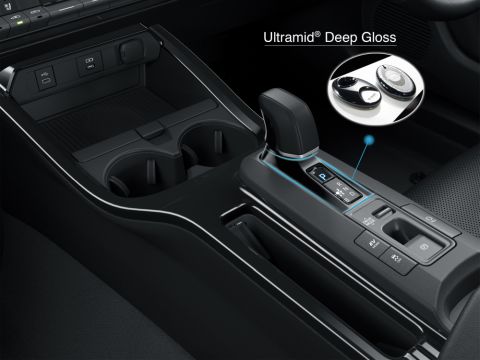
BASF has launched the Ultramid Deep Gloss grade, which achieves high gloss on automotive interior surfaces.
Future trends of high-performance engineering plastics
With the enhancement of automotive lightweighting, intelligence and perceived quality, engineering plastics will continue to pursue higher performance and diversify in functionality.
In the future, high-performance engineering plastics will be upgraded with higher strength and stiffness. They will be more widely used to replace traditional metals in automobiles, which will further enhance the safety performance and collision resistance of automobiles.
With electric vehicles on the rise, engineering plastics need to have higher temperature resistance to cope with high-temperature environments such as battery packs and electric motors. Therefore, plastic materials with higher temperature resistance will become an important trend.
At the same time, the rapid development of intelligent vehicles requires automotive parts with more sensing and detection functions. In the future, high-performance engineering plastics in automobiles will be more closely integrated with sensors and electronics to achieve more intelligent functions.
Sustainability has become important concern for the automotive industry. Future high-performance engineering plastics for automobiles should focus more on renewable and biodegradable properties. Sustainable high-performance plastic materials that are recyclable will be one of the key directions for the future.
In short, future high-performance engineering plastics for automotive will continue to pursue lightweight, high strength, high temperature resistance, intelligence and sustainability. This will bring more innovations and choices for automakers and push the whole automotive industry forward.