










Aduro Clean Technologies studies on recycling hard-to-recycle crosslinked polymer

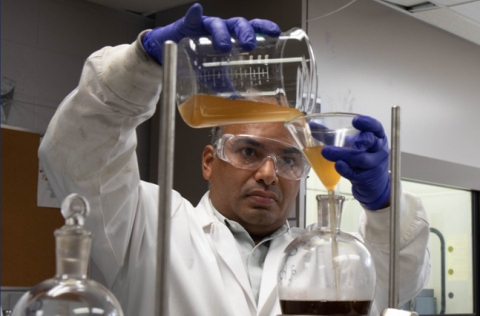
Aduro Clean Technologies, a Canadian technology company with expertise in chemistry to transform lower value feedstocks, like waste plastics, heavy bitumen, and renewable oils, shared exciting results from its preliminary tests with deconstructing crosslinked polymers, using its Hydrochemolytic Technology.
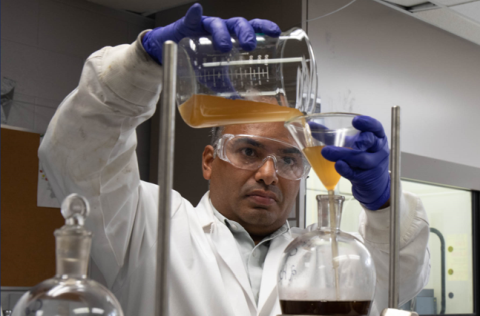
Aduro achieved promising result for recycling crosslinked polymers with its Hydrochemolytic Technology.
Crosslinked polymers, with their exceptional durability, chemical resistance and mechanical strength, are pivotal to numerous industries. However, these characters create significant recycling challenges. Crosslinked polymers do not melt under heat, making them difficult to recycle by traditional technologies.
On March 27, Aduro announced its engagement with a building materials manufacturing company to study the recyclability of crosslinked polymers under Hydrochemolytic Technology. The client provided a sample of crosslinked polyethylene (XLPE), a waste stream from its local production facilities.
From the preliminary tests, Aduro reports promising results with yields up to 84% of lower-molecular-weight hydrocarbons, predominantly in the C8 to C28 range.
These results confirm the effectiveness of Hydrochemolytic Technology in breaking down complex polymers like XLPE, which have high thermal stability and complex decomposition pathways, into valuable hydrocarbons.
Now, Aduro considers tire rubber and elastomeric materials as additional potential feedstock to demonstrate the versatility of Hydrochemolytic Technology in chemical recycling of polymeric materials.