



















TOMRA optical sorting technologies for recycling flexible packaging

Bakcycle Recycling, a Turkish company that recycling packaging waste into granules, uses TOMRA’s advanced sensor-based sorting technologies to produces high-quality granules from post-consumer low-density polyethylene (LDPE) packaging waste.
Bakcycle Recycling’s facility in in Izmir, Turkey, covers an area of 20,000 m² and aims to convert approximately 8,000 tons of LDPE waste from the domestic market into the highest quality rLDPE granules annually.
“TOMRA’s optical sorting systems enable pre-sorting of unwanted fractions from the input waste and sort waste by material type and color,” said Övünç Dirik, General Manager of Bakcycle Recycling.
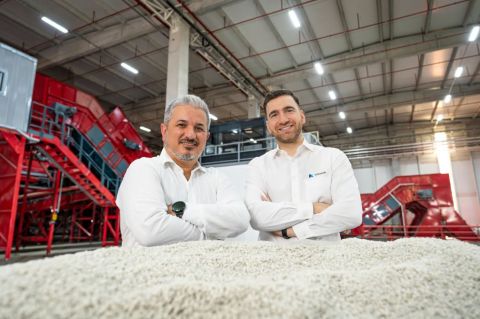
Övünç Dirik (left), General Manager of Bakcycle Recycling and Oral Çimsöken, Sales Manager Emerging Markets from TOMRA Recycling Sorting.
TOMRA’s technologies to achieve high purity
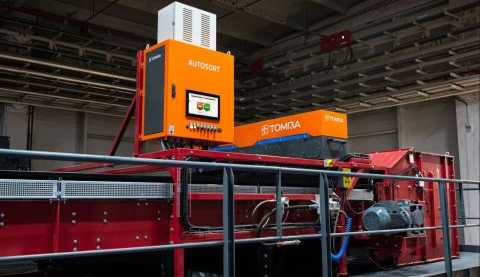
In the processing line of the facility, three AUTOSORT SPEEDAIR systems are located at the front of the line, followed by two AUTOSORT units.
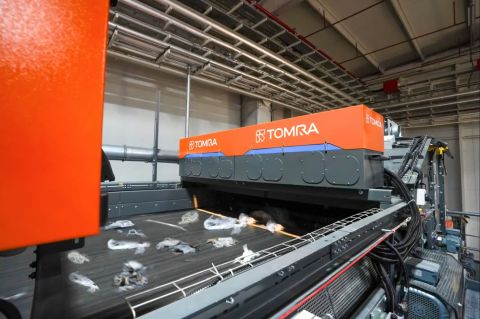
TOMRRA’s AUTOSORT SPEEDAIR system.
The AUTOSORT SPEEDAIR system is developed for film applications, contributing to the high-capacity recycling of lightweight flexible packaging while the AUTOSORT unit is TOMRA’s multifunctional sorting all-rounder.
In the sorting process based on color and polymer, the first and second AUTOSORT SPEEDAIR systems separate transparent LDPE from other materials. The third machine separates the collected transparent LDPE from transparent LLDPE. With consistent airflow, the lightweight LDPE waste materials move stably on the fast-moving conveyor belt.
The two separate AUTOSORT units are tasked with sorting mixed-color and white LDPE in the following step.
Using TOMRA machines, Bakcycle Recycling achieves purity levels of over 98% in the sorting processes.
In addition, Bakcycle Recycling has transformed its optical sorting machines into connected devices with TOMRA Insight cloud-based data platform.
The platform streamlines its sorting processes and improves transparency and data management. This helps accurately assess the quality of the processed materials and allows for detailed, real-time analysis of any material loss during production.