


















New strategy: Alliance to End Plastics Waste releases progress report

The Alliance to End Plastic Waste released its Progress Report 2024: Evolving for Impact, presenting an overview of five years of measurable impact and announcing a new strategy to create a circular economy for plastics.

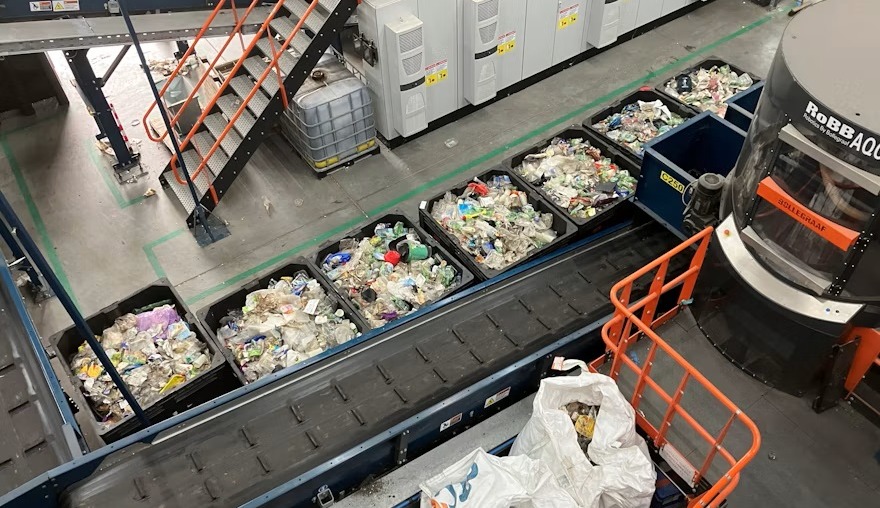
The Alliance to End Plastic Waste released its Progress Report 2024 and new strategy that focuses on waste management and recycling in countries such as India, Indonesia, and South Africa.
The Alliance will concentrate its efforts on larger scale programs to deliver high impact systems change and solutions to reduce and recycle plastic waste. Catalyzing capital will play an increasingly central role, as the Alliance expands its use of innovative financing models and partnerships to unlock the investment necessary to help countries move up the recycling maturity curve.
Since its launch in 2019, the Alliance and its partners have reduced 239,985.48 tons of unmanaged plastic waste and valorized 253,211.80 tons.
Overview of five years of progress
The 2024 Progress Report offers a snapshot of the Alliance’s cumulative impact and maturing portfolio over the past five years:
Six independently assured projects, including the African Reclaimers Organisation in South Africa and Recicleiros in Brazil, have demonstrated tangible outcomes in plastic waste reduction and recycling.
Since inception, US$610.89 million in funding has been committed by third parties and impact investors to initiatives that advance the Alliance’s mission. It provided seed capital to the Plastic Circularity Fund, managed by Lombard Odier Investment Managers (LOIM), which now has four portfolio companies.
As part of its commitment to a just transition, the Alliance has deepened its efforts to support women-owned businesses and enhance working conditions for informal waste workers. 2,134 formal jobs were created through Alliance projects.
Key of new strategy for greater future impact
Drawing on lessons from its first five years, the Alliance is transitioning the way it operates to deliver greater impact at speed and scale, in partnership with governments, development finance institutions, and civil society organizations.
“As we mark five years of action, our focus is sharper than ever. The experience we’ve gained from projects across emerging economies has made clear what works, and where we must go next,” said Jacob Duer, President and CEO, Alliance to End Plastic Waste. “Our Strategy 2030 builds on those lessons, and we are doubling down on what works to drive greater impact at scale.”
Under the new strategy, the Alliance will shift to co-developing larger-scale, integrated efforts with a wide range of partners, including governments and financial institutions. These initiatives will fall into two categories: country-specific, aligned with national priorities, or thematic, addressing persistent global challenges to plastics circularity.
Key components of new strategy include:
Focusing on select markets to improve waste management and increase recycling rates in support of national priorities. India, Indonesia, and South Africa are the first countries selected for this effort.
Initiatives that address systemic barriers to plastics circularity, starting with flexible plastics, a material challenging to recycle
Catalyzing capital through blended finance, concessional funding, and partnerships with public and private finance institutions to unlock investment in high-impact waste management solutions.