










Baumüller Nürnberg: Sustainability and circular economy are absolutely essential

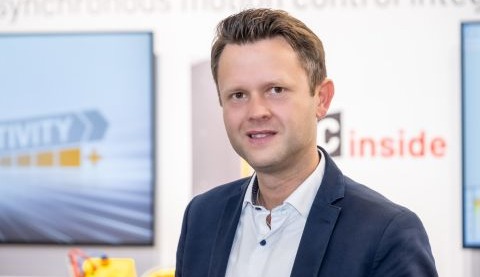
In this VDMA interview on the way to K 2025, Marcel Moeller, Global Branch Manager Plastics Industry at Baumüller Nürnberg GmbH, discussed the topic of energy efficiency, sustainability and digitalization.
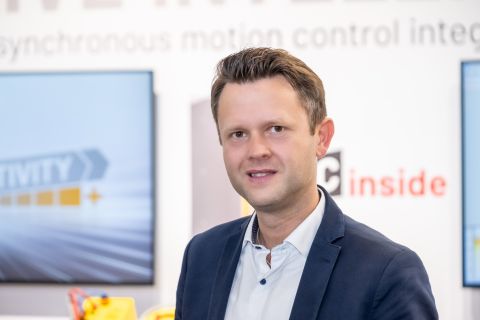
Marcel Moeller, Global Branch Manager Plastics Industry at Baumüller Nürnberg GmbH
Mr. Moeller, how does the electrification trend within the plastics industry contribute towards sustainability?
Mr. Moeller: The excellent efficiency of electric drive systems reduces energy consumption and, as a result, CO2 emissions. This correlates with optimized material usage, and also helps customers to manufacture their products globally, and with high process reliability. Servo hydraulics is a good example. Here, we combine the very high power density of hydraulic power transmission with the control quality and dynamics of energy-efficient electric drive systems, which, when combined with intelligent software, results in energy savings. Another example is the plasticizing or screw drive, which is often one of the main energy consumers. Replacing the hydraulic drive with an electric drive saves a vast amount of energy. Productivity can also be increased, depending on the machine cycle or end product. We are also witnessing the electrification of the so-called clamping drive in injection molding machines, but also in blow molding machines, where energy can be recovered during the braking phase.
Can systems generally be retrofitted with electric drives at all stages, or is this only possible in new systems?
Mr. Moeller: Machines in the field can be retrofitted; this is a very good way to improve the efficiency of existing plants, especially where there is a lack of investment security. I would like to cite servo hydraulics again as an example, where we offer such retrofit solutions to end users in coordination with our machine manufacturing customers.
Things have quietened down around the topic of circular economy. How do you rate its significance at present?
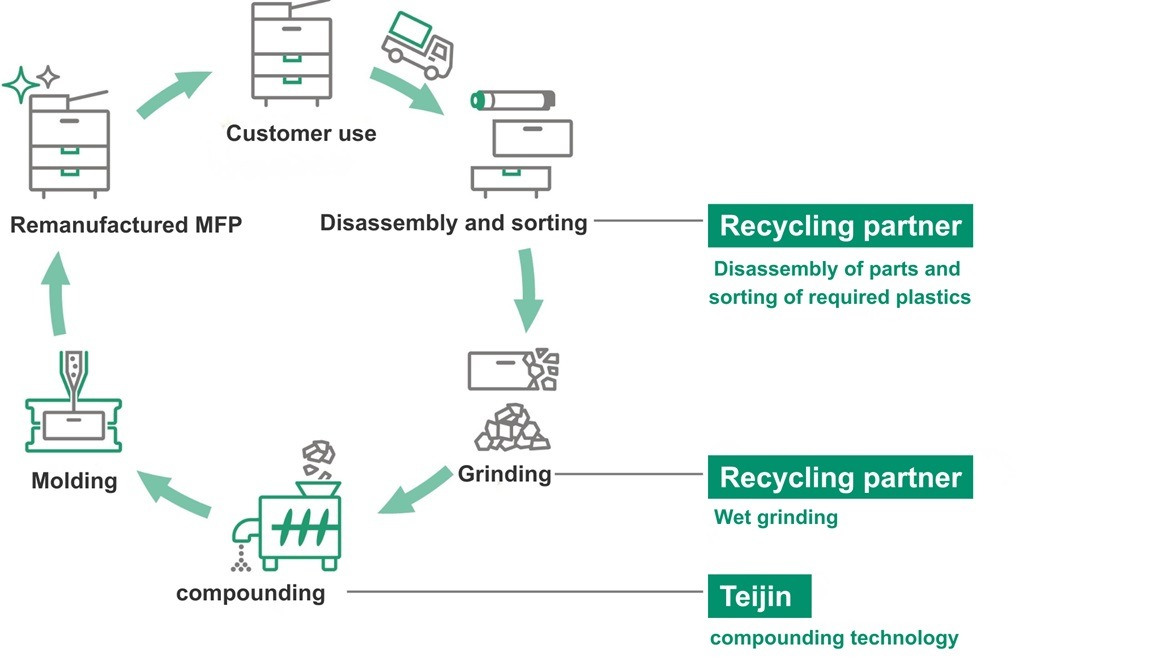
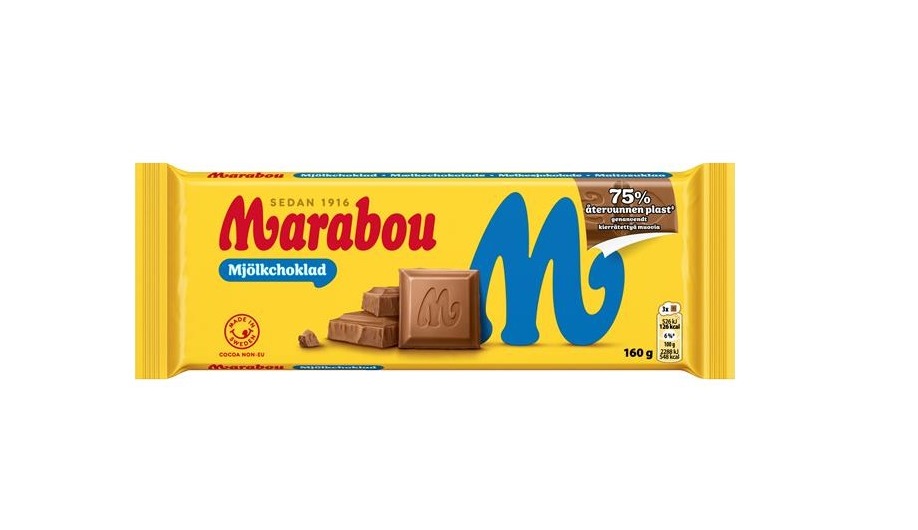
Mr. Moeller: You can already tell from the announcements about K that things have calmed down somewhat. Other topics are coming back into focus alongside sustainability: technological innovations, digitalization and increasing productivity. Behind this is the need to arm ourselves against increasingly tough competition from Asia, but the issue of sustainability or the circular economy is absolutely essential. To achieve the ambitious climate targets, we have no other solution than the circular economy. Currently, only around 10% of demand is met by recycled plastics, perhaps 15% in Germany. There is still enormous room for improvement, but in our opinion, this is a great opportunity to take on a pioneering role through technological innovation, and to expand or secure competitiveness.
What will playing this pioneering role actually involve?
Mr. Moeller: The basic prerequisite is, of course, a recyclable product design, and the efficient collection and sorting of plastic waste. Recyclates must have at least the same conditions as virgin materials in terms of price and availability. I think that since K22, a lot of innovations have emerged in the field of machinery that can ensure or achieve recyclability. However, the necessary framework conditions are not yet in place. There is still significant potential for optimization. And, last but not least, there is the issue of regulation, which should ensure fair competition, and not slow down progress or tie up time and resources.
How far has mechanical engineering advanced in terms of AI, especially in drive systems?
Mr. Moeller: Digitalization is an important tool for our customers to optimize productivity. One example is simulation software, which can be used to design drive components in a digital twin before they are implemented in a real machine. At Baumüller, we are pushing the topic of AI and therefore also our intelligent drive-based solutions, such as an injection regulator for injection molding machines, energy monitoring, and a shock detection function for plasticizing and shredding drives. Another example is communication interfaces in production networks with peripheral devices, or with upstream and downstream value-added stages.