













Search History
Clear History
{{item.search_key}}
Hot Searches
Change
{{item.name}}
{{item.english_name}}
Subscribe eNews
Once A Week Once Every Two Weeks
{{sum}}
Login Register

Applications

R-Cycle unveils AI-based PPWR Compliance Compass at Interpack 2026

BASF expands compostable ecovio portfolio for flexible barrier packaging

Analysis for EU policy on bio-based plastic packaging under PPWR

Products

BASF expands HALS and NOR HALS capacities

Clariant launches new propane dehydrogenation catalyst

ENGEL to show integrated solutions for efficiency and precision at Interplas 2026

Activities

  • 350,000+ visitors! CHINAPLAS 2026 shatters every record in the book

  • CHINAPLAS 2026: 86,504 visitors explore innovations on Day 3

  • Must-attend events: Application in Focus and Additives Seminar

Pictorial

News Videos

Top 10 Technology Trends awards presented at CHINAPLAS 2026

MAAG x SIKORA: Smart pelletizing + precise inspection - More stable, carbon-reduced

CAI Machine: New visual inspection technology debut! More efficient, greener, colorful printing

Conference Videos

Interview: Thailand’s perspective on cross-border circular cooperation

Interview: On Indonesian recycling industry and rising geopolitical tensions

Interview: Vietnam’s progress in circular economy

Corporate/Product Videos

For Rubber & Plastic Extrusion Equipment, trust Hebei Zhongsen! Custom Extruders, Traction Machines & Vulcanizing Lines

Is Your Mold Supplier Really Giving You Peace of Mind?

Kurtz GmbH & Co.

Home > News > Others

AkzoNobel, Arkema and BASF jointly lower carbon footprint of architectural powder coatings

Source:Adsale Plastics Network Date :2025-09-15 Editor :RC
Copyright: This article was originally written/edited by Adsale Plastics Network (AdsaleCPRJ.com), republishing and excerpting are not allowed without permission. For any copyright infringement, we will pursue legal liability in accordance with the law.

AkzoNobel, Arkema and BASF team up along the value chain to lower carbon footprint of architectural powder coatings. From AkzoNobel’s Interpon brand, the superdurable architectural powder coatings have a carbon footprint of 40% lower.


AkzoNobel x Arkema x BASF_The Shard.jpg


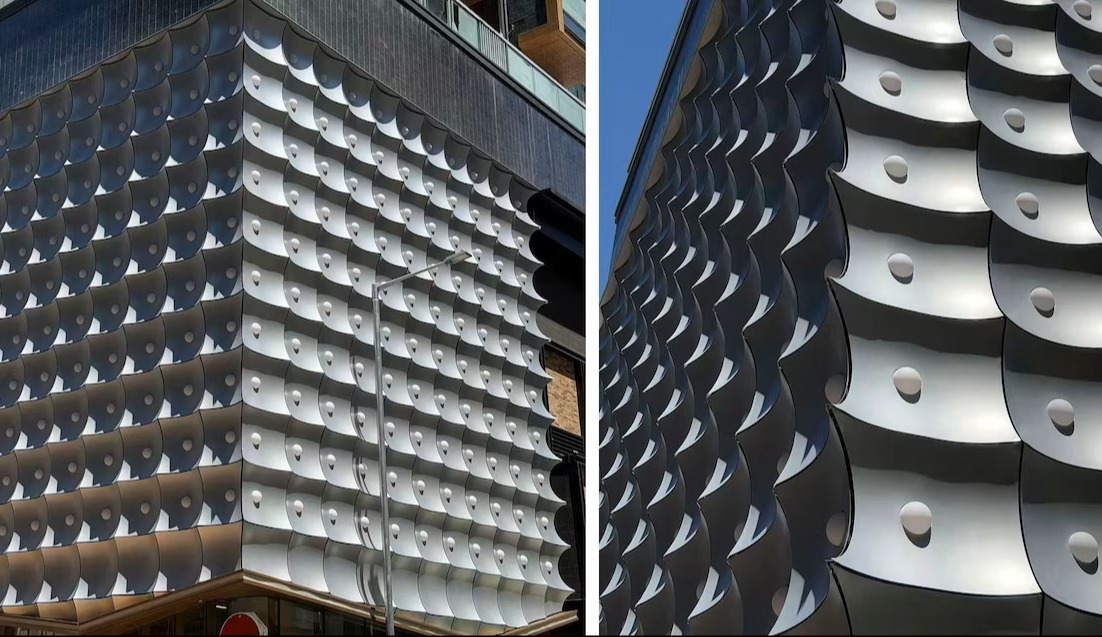
Interpon D2525 was used on the aluminum curtain wall of The Shard in London, which is rated BREEAM Excellent – a globally recognized standard for assessing and certifying the sustainability of buildings and infrastructure. (Source: AkzoNobel)


The improvement has been made possible through a combination of using supplier-specific product carbon footprint (PCF) data and sourcing bio-attributed raw materials.


Previously, the carbon footprint calculations were made on the basis of generic industry averages for polyester resins. By using supplier-specific PCF data instead, these calculations are now more accurate, as they better reflect important variables, such as investments made in process efficiencies and the use of renewable electricity by the partners involved.


Further benefits are gained by using bio-attributed raw materials from BASF which have a zero PCF. Arkema transforms these bio-attributed raw materials to reduce the carbon footprint of low and standard temperature cure superdurable powder coating resins for AkzoNobel.


By leveraging renewable bio-attribution via mass balance and sustainable innovations, we enable continuous improvement in low temperature cure and higher durability solutions. Even more is achievable in terms of mainstream decarbonization along the value chain,” said Richard Jenkins, Senior Vice-President Coating Solutions and Member of the Executive Committee at Arkema.


“By supplying neopentyl glycol (NPG) in a biomass-balanced version manufactured with renewable electricity (NPG ZeroPCF), we’re supporting our value chain partners in advancing their sustainability objectives while at the same time contributing to achieving our own vision,” added Vasilios Galanos, Senior Vice-President of Intermediates Europe, BASF.


The color collections and Low-E architectural powder coatings produced by Interpon in Europe – all of which are superdurable – now use reduced emission bio-attributed material. This means they can play a major role in helping to lower the carbon footprint of the built environment.


The three partners have published an industry case study to offer further insights into the transition to lower carbon footprint powder coatings, including details of the methodology and calculations used.


They are also planning more collaboration across the value chain and welcome a broader network of partners to accelerate the paint and coatings industry’s transformation towards a more sustainable future.


 Like 丨  {{details_info.likes_count}}
Coating
AkzoNobel
Carbon neutral
BASF
Arkema
Other construction materials
 DONGYING JINBANGTAIXIN NEW MATERIAL TECHNOLOGY CO., LTD.      

The content you're trying to view is for members only. If you are currently a member, Please login to access this content.   Login

Source:Adsale Plastics Network Date :2025-09-15 Editor :RC
Copyright: This article was originally written/edited by Adsale Plastics Network (AdsaleCPRJ.com), republishing and excerpting are not allowed without permission. For any copyright infringement, we will pursue legal liability in accordance with the law.

AkzoNobel, Arkema and BASF team up along the value chain to lower carbon footprint of architectural powder coatings. From AkzoNobel’s Interpon brand, the superdurable architectural powder coatings have a carbon footprint of 40% lower.


AkzoNobel x Arkema x BASF_The Shard.jpg


Interpon D2525 was used on the aluminum curtain wall of The Shard in London, which is rated BREEAM Excellent – a globally recognized standard for assessing and certifying the sustainability of buildings and infrastructure. (Source: AkzoNobel)


The improvement has been made possible through a combination of using supplier-specific product carbon footprint (PCF) data and sourcing bio-attributed raw materials.


Previously, the carbon footprint calculations were made on the basis of generic industry averages for polyester resins. By using supplier-specific PCF data instead, these calculations are now more accurate, as they better reflect important variables, such as investments made in process efficiencies and the use of renewable electricity by the partners involved.


Further benefits are gained by using bio-attributed raw materials from BASF which have a zero PCF. Arkema transforms these bio-attributed raw materials to reduce the carbon footprint of low and standard temperature cure superdurable powder coating resins for AkzoNobel.


By leveraging renewable bio-attribution via mass balance and sustainable innovations, we enable continuous improvement in low temperature cure and higher durability solutions. Even more is achievable in terms of mainstream decarbonization along the value chain,” said Richard Jenkins, Senior Vice-President Coating Solutions and Member of the Executive Committee at Arkema.


“By supplying neopentyl glycol (NPG) in a biomass-balanced version manufactured with renewable electricity (NPG ZeroPCF), we’re supporting our value chain partners in advancing their sustainability objectives while at the same time contributing to achieving our own vision,” added Vasilios Galanos, Senior Vice-President of Intermediates Europe, BASF.


The color collections and Low-E architectural powder coatings produced by Interpon in Europe – all of which are superdurable – now use reduced emission bio-attributed material. This means they can play a major role in helping to lower the carbon footprint of the built environment.


The three partners have published an industry case study to offer further insights into the transition to lower carbon footprint powder coatings, including details of the methodology and calculations used.


They are also planning more collaboration across the value chain and welcome a broader network of partners to accelerate the paint and coatings industry’s transformation towards a more sustainable future.

全文内容需要订阅后才能阅读哦~
立即订阅

Recommended Articles

Others
Covestro recycled PC for suitcase
 2026-04-28
Others
TPE solutions for stronger exercise bands
 2026-03-27
Others
Market report: New Energy Market Expands as Plastics Solidify Foundations
 2026-02-13
Others
Covestro to showcase new material technologies for document security
 2025-11-20
Others
KRAIBURG TPE solutions support smart pet trackers
 2025-11-13
Others
Huntsman introduces recycled PU into new midsole for safety footwear
 2025-11-07

You May Be Interested In

Change

  • People
  • Company
loading... No Content
{{[item.truename,item.truename_english][lang]}} {{[item.company_name,item.company_name_english][lang]}} {{[item.job_name,item.name_english][lang]}}
{{[item.company_name,item.company_name_english][lang]}} Company Name    {{[item.display_name,item.display_name_english][lang]}}  

Polyurethane Investment Medical Carbon neutral Reduce cost and increase efficiency CHINAPLAS Financial reports rPET INEOS Styrolution Evonik Borouge Polystyrene (PS) mono-material Sustainability Circular economy BASF SABIC Multi-component injection molding machine All-electric injection molding machine Thermoforming machine

AkzoNobel, Arkema and BASF jointly lower carbon footprint of architectural powder coatings

识别右侧二维码,进入阅读全文
下载
x 关闭
订阅
亲爱的用户,请填写一下信息
I have read and agree to the 《Terms of Use》 and 《Privacy Policy》
立即订阅
Top
Feedback
Chat
News
Market News
Applications
Products
Video
In Pictures
Specials
Activities
eBook
Front Line
Plastics Applications
Chemicals and Raw Material
Processing Technologies
Products
Injection
Extrusion
Auxiliary
Blow Molding
Mold
Hot Runner
Screw
Applications
Packaging
Automotive
Medical
Recycling
E&E
LED
Construction
Others
Events
Conference
Webinar
CHINAPLAS
CPS+ eMarketplace
Official Publications
CPS eNews
Media Kit
Social Media
Facebook
Linkedin