


















WEIMA shredding technology turns 3D printing waste into new printing material

WEIMA WLK 4 shredder empowers Dutch company CEAD to recycle reinforced 3D printing plastic waste and turn the flakes into new printing material.
When prototyping creates waste
Based in Delft, CEAD Group B.V. develops and builds large-format additive manufacturing systems for the marine, construction, and composite industries. Their pellet-based 3D printing technology enables customers to produce full-scale components, from complex molds and rapid prototypes to entire boats, using fiber-reinforced thermoplastic composites (FRP).
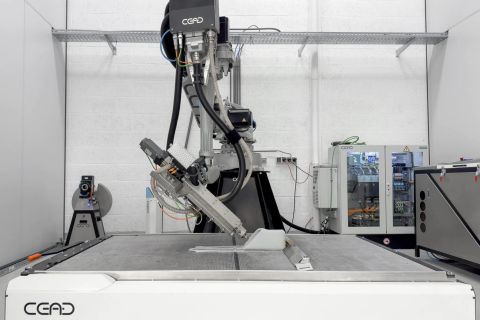
Large-format 3D printer from CEAD.
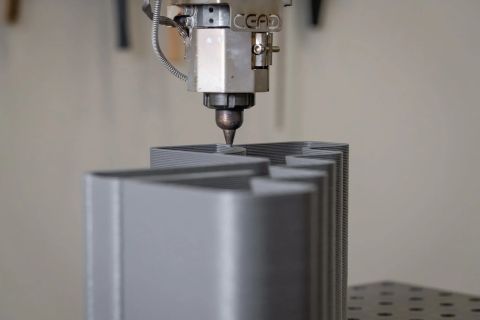
Large-format 3D printing at CEAD.
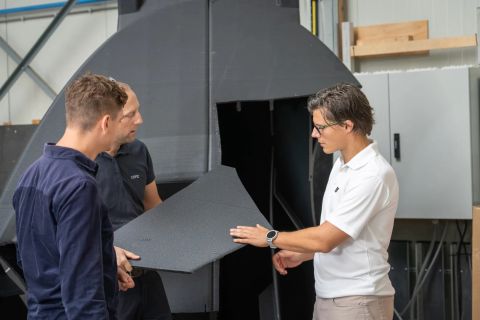
Discarded 3D printing piece at CEAD.
This cutting-edge pellet extrusion process provides maximum design flexibility and an accelerated design-to-production cycle. Yet, discarded prints and prototypes made from glass- or carbon-fiber reinforced polymers are also produced in the research-driven production process.
WEIMA WLK 4 single-shaft shredder
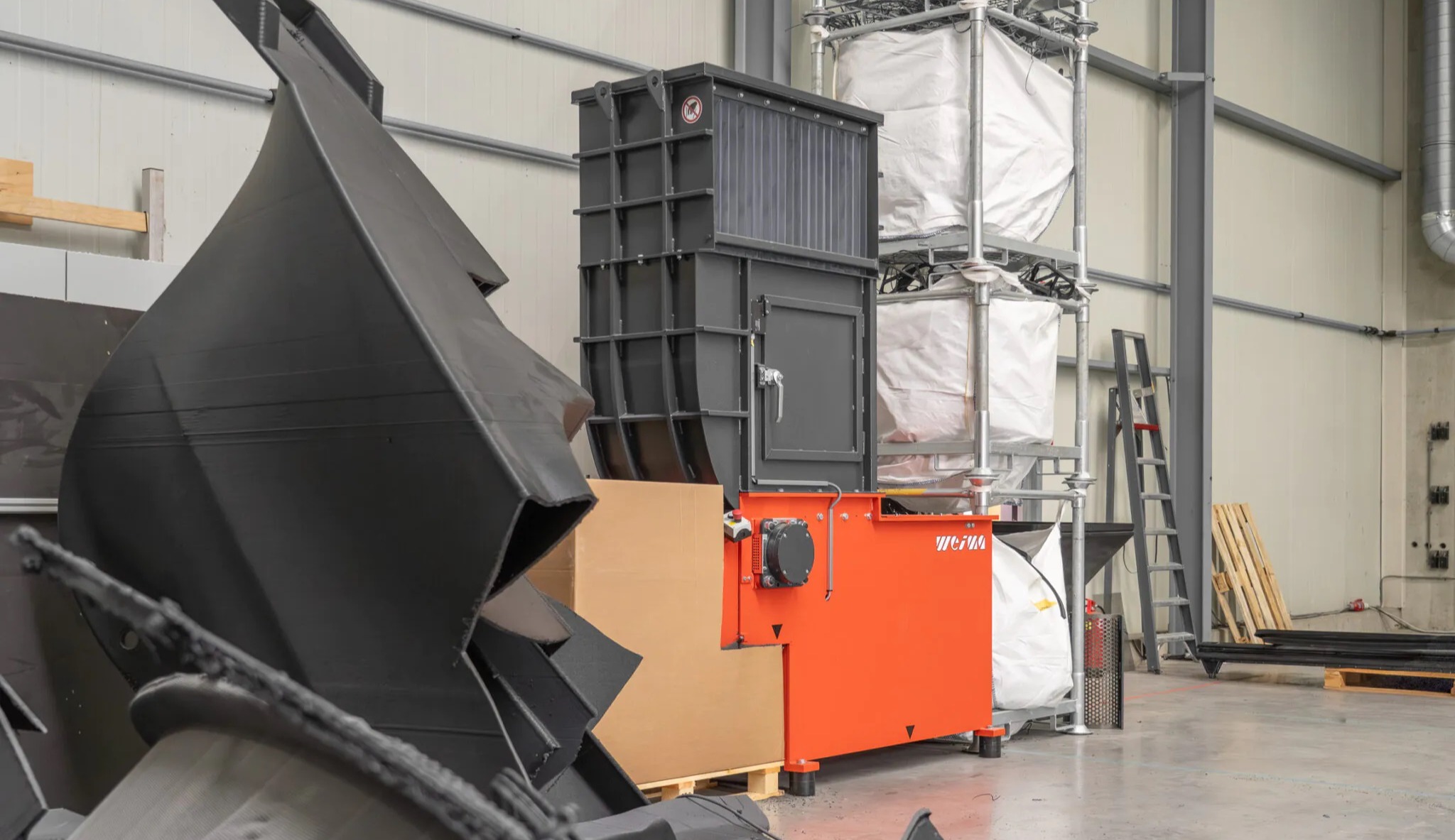
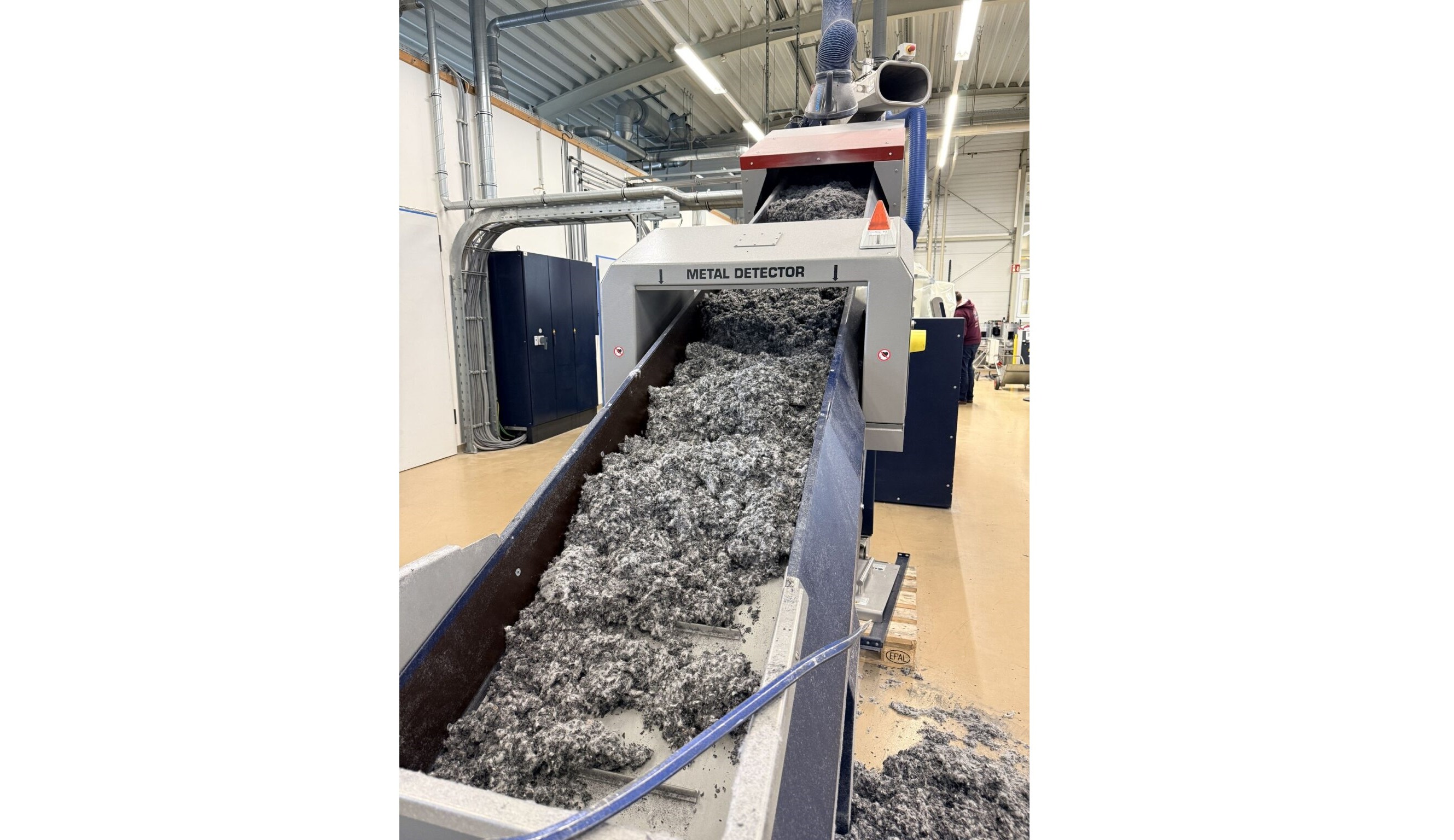
After consulting with industry partners, CEAD found its ideal recycling solution in WEIMA. The installed WEIMA WLK 4 single-shaft shredder with a 10 mm screen easily handles reinforced thermoplastic components and converts them into uniform flakes around 10 mm in size.
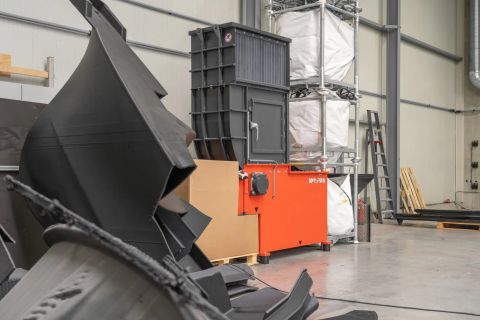
WEIMA WLK 4 at CEAD for 3D printing waste recycling.
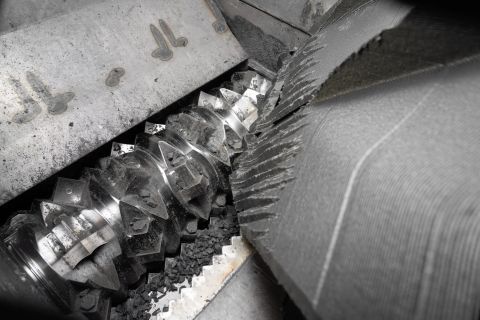
Shredding of a discarded 3D print.
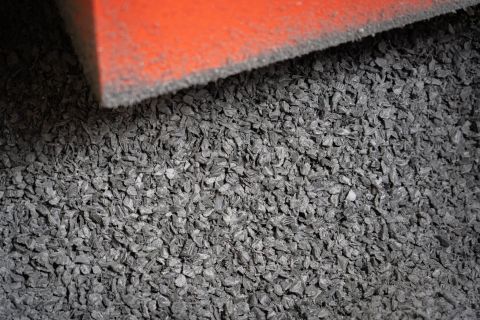
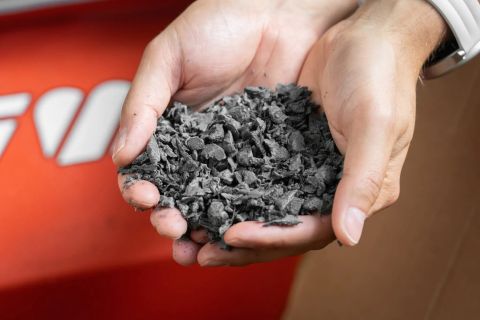
Flakes of fiber-reinforced thermoplastic composites (FRP) after shredding.
These flakes serve as the intermediate material for reprocessing and upcycling, supporting CEAD’s long-term goal of achieving a closed-loop material workflow — from print to product to print again.
WEIMA shredder’s durability and ease of operation make it a reliable asset in CEAD’s additive manufacturing ecosystem.
Next step: Pelletizing for reuse
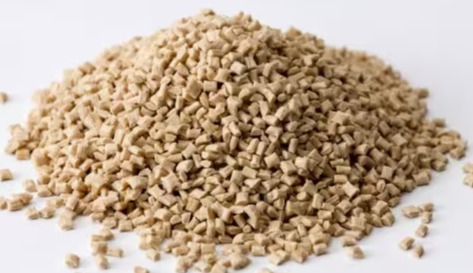
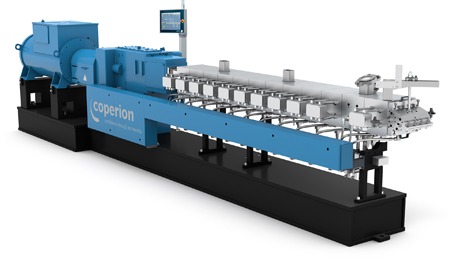
Together with several Dutch R&D partners, CEAD is now exploring how the shredded material can be repelletized for reuse in pellet extrusion 3D printers. Early trials are promising, showing that short fiber-reinforced composites can be successfully transformed into new feedstock materials without compromising print quality.
This approach not only reduces material waste but also opens new pathways for sustainable, closed-loop additive manufacturing.