














BASF starts world-first production plant for 3D-printed catalysts

BASF started up the world’s first production plant for catalysts based on X3D technology at its Ludwigshafen site in Germany. The facility commissioning scales BASF’s additive manufacturing of catalysts to an industrial level and strengthens its leading role in innovative solutions for the chemical industry.
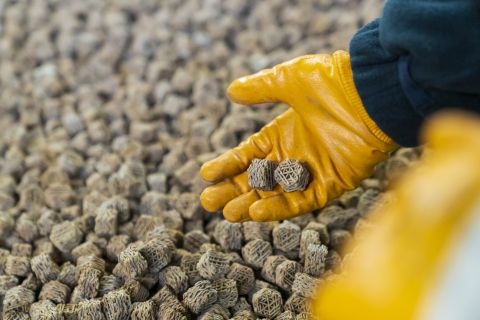
BASF starts world’s first production plant for catalysts at Ludwigshafen site.
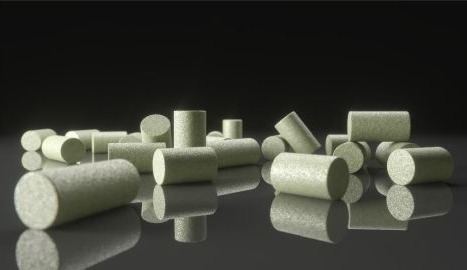
Utilizing X3D technology, catalysts can be produced with optimally designed geometries that combine high mechanical stability with an open structure. This significantly reduces pressure drop in reactors while simultaneously increasing the catalytically active surface area.
As a result, customers achieve higher reactor throughput and improved product quality at substantially lower energy consumption compared to conventional catalysts.
X3D technology already proven in customer applications
BASF has been supplying X3D catalysts to production plants for several internal and external customers for many years. The technology is highly versatile and can be applied to a broad range of catalyst materials, including precious and base metal catalysts as well as various support materials.
The new production plant in Ludwigshafen provides the foundation for making this technology more widely available and for further shortening development and market introduction timelines.
In 2025, the Chinese-based fine chemical company An Hui Jintung filled their production plant with BASF’s sulfuric acid catalysts O4-115 X3D. “The plant started up smoothly, and plant performance has significantly improved compared to before. Production achieved a record high, generating substantial economic benefits for our company,” commented Eter Zhu, General Manager at An Hui Jintung.