
















BASF launches ReducedPCF Elastollan TPU portfolio

BASF launched the Reduced Product Carbon Footprint (ReducedPCF) Elastollan Thermoplastic Polyurethane (TPU) portfolio in Asia Pacific, enabling customers to lower the carbon footprint of their products while maintaining the proven performance of Elastollan.

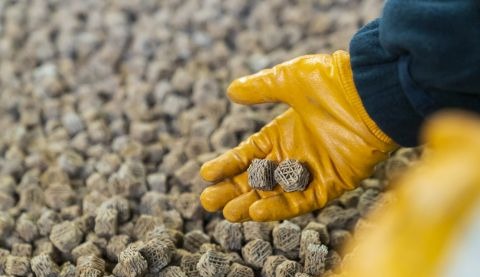
ReducedPCF Elastollan TPU portfolio delivers an estimated 10-30% PCF reduction with mechanical properties equivalent to current Elastollan grades. (Source: BASF, AI generated)
“With the launch of our Elastollan ReducedPCF grades, we are enabling customers to reduce the carbon footprint of their products without compromising on performance,” said Rohit Roop Ghosh, Vice President, Business Management TPU, Performance Materials Asia Pacific, BASF.
Active PCF reduction measures
The ReducedPCF grades are achieved through active PCF reduction measures, including the use of lower‑emission utilities and fossil feedstocks with lower PCF.
The Product Carbon Footprint calculation methodology follows TfS (Together for Sustainability) Guideline requirements and ISO 14067. Through these active measures, the new ReducedPCF grades achieve a PCF reduction of 10-30% compared to the PCF of current Elastollan grades, while remaining technically identical.
Produced in Shanghai: A local-for-local approach
Selected Elastollan TPU products manufactured at the site in Shanghai may additionally incorporate site‑specific mass‑balance biomethane as an active PCF reduction measure.
The Elastollan ReducedPCF portfolio will be produced at BASF’s site in Shanghai, a strategic manufacturing hub that supports the company’s local‑for‑local approach in Asia Pacific, and available regionally and locally.
This enables shorter supply chains, enhanced supply security, and closer support for customers in industries such as Footwear, Sports and Leisure (FSL), Cable & Wire.